
Key facts: Hilliard
- Hilliard is a separate city in western Franklin County with 37,114 residents at the 2020 census [1].
- Since 1994, Hilliard has had two 49-year contracts with Columbus for drinking water and sewage disposal, while it owns and maintains its own sanitary collection system [2].
- Columbus treats wastewater from its contracting suburban communities at the Jackson Pike and Southerly plants [4].
- Hilliard's Building Standards Division handles building permits, which can be filed online [3].
A separate city
Hilliard is a neighboring city, not a Columbus neighborhood
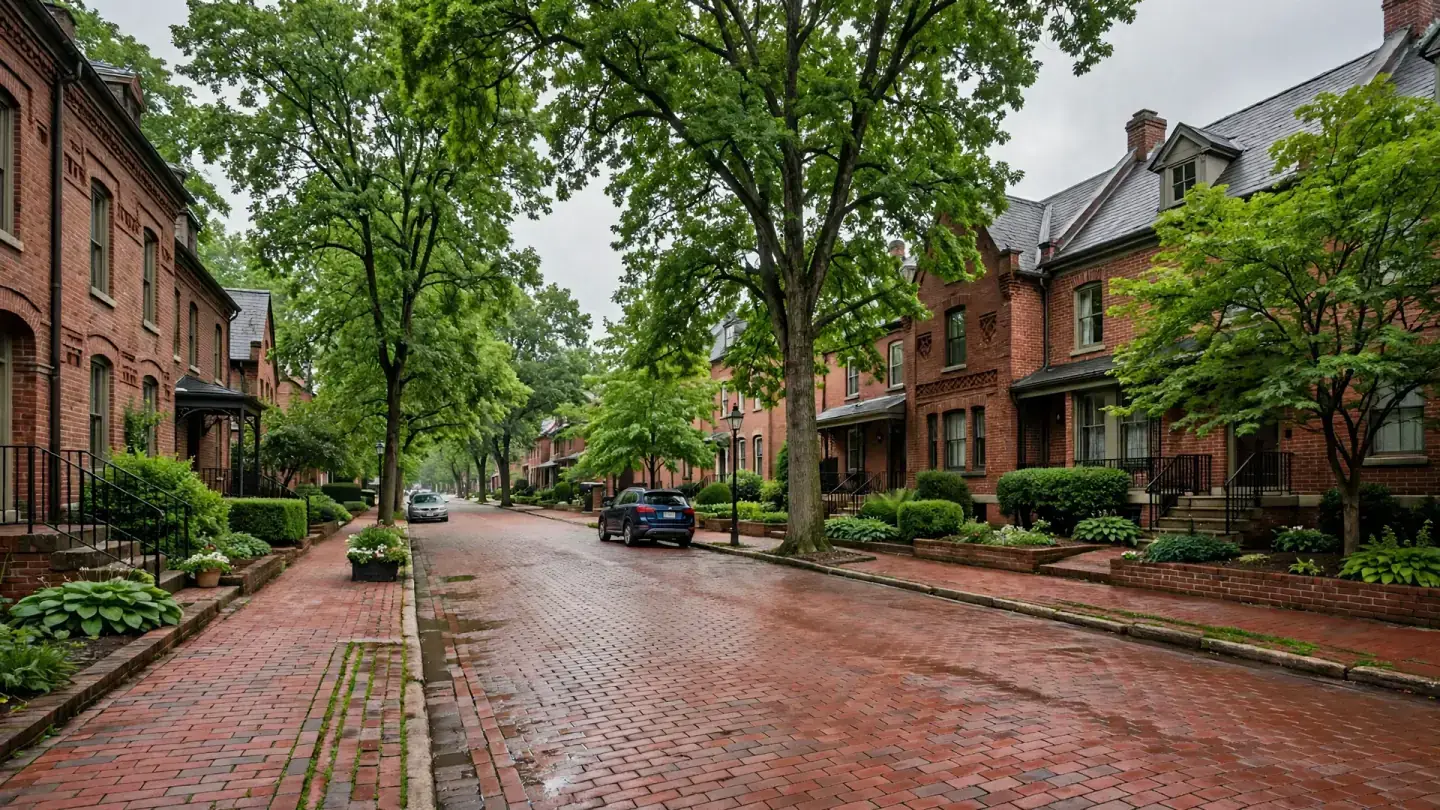
Hilliard borders Columbus on the west, and plenty of people think of it as part of the same place, but it is an independent city. It began in 1852 when John Reed Hilliard bought ten acres of farmland in western Franklin County, and it became a city in December 1960 after reaching a population of 5,633 [1]. By the 2020 census it had 37,114 residents [1].
For drains, the separation matters in two ways. Hilliard issues its own building permits through its Building Standards Division [3], and it owns, operates and maintains the sanitary sewer collection system inside its limits and service area [2]. Columbus programs that apply to Columbus homes do not automatically apply in Hilliard, so questions about the public sewer near your house go to the City of Hilliard first.
We cover Hilliard on this site because it sits right next to Columbus. When you call, the independent contractor you're connected with will confirm whether they work at your address.
The housing
How Hilliard grew: 1950s subdivisions to newer neighborhoods
Hilliard's growth came in waves. Three large residential subdivisions built in the 1950s brought the first big jump, and a second surge followed when the I-270 outerbelt connected to the area in the early 1970s [1]. The city's own planning documents show 11,796 residents in 1990, 24,230 in 2000 and 28,435 in 2010 [5], so a large share of its homes were built in the last few decades of the twentieth century and since.
That gives Hilliard two broad housing profiles. The older 1950s neighborhoods have houses now around seventy years old, often with original drain lines and laterals from that era. The newer subdivisions have plastic drain, waste and vent piping and plastic laterals, which do not scale or rust and resist roots much better than older materials.
In newer homes, clogs are mostly about use: grease from cooking, wipes, hair, food waste from garbage disposals and laundry lint. In the 1950s houses, those same habits combine with older pipe, and roots from now-mature yard trees become part of the picture.
Common calls
Drain issues that come up in Hilliard homes
Garbage disposal and kitchen clogs
Disposals grind food into a slurry that settles in long kitchen runs, especially mixed with grease. See kitchen drain cleaning.
Finished basements and floor drains
Many homes have finished lower levels, so a backup at a floor drain or basement bath does real damage. The floor drain backup guide covers what to do first.
Sump pump discharge questions
A sump that empties into a floor drain or laundry tub sends ground water into the sanitary line, which can overwhelm it during storms.
Roots in older laterals
1950s neighborhoods with large trees see root intrusion in older lateral materials. Root cutting clears them; a camera shows the pipe's condition.
The sewer system
Who runs the sewer in Hilliard, and where does it go?
In 1994, Hilliard entered two 49-year contracts with the City of Columbus, one for drinking water and one for disposal of sanitary sewage [2]. Under those agreements, Hilliard owns, operates and maintains the water distribution and sanitary collection systems within its limits and a designated service area [2]. Columbus treats the wastewater; it operates the Jackson Pike and Southerly treatment plants that serve its contracting suburban communities [4].
In plain terms: the pipes under Hilliard's streets are Hilliard's responsibility, and the treatment plants downstream are Columbus's. If you suspect a backup started in the public main rather than your own line, for example because several neighbors had backups in the same storm, contact the City of Hilliard about it. Keep notes and photos; they help whoever looks into it.
Your own drain lines and the lateral that carries wastewater from your house toward the public sewer are a different matter. Blockages there, which cause most household backups, are what a drain contractor handles. Where exactly the city's responsibility begins at your connection is something to confirm with Hilliard directly.
Older neighborhoods
What should owners of Hilliard's 1950s houses know about their drains?
The houses from Hilliard's first big building wave [1] are now roughly seventy years old. Homes of that period were commonly built with cast iron drain lines inside, and laterals of clay or other materials used at the time. Many have been updated since; many have not, or only partly. A kitchen remodel may have replaced everything you can see while the line below the floor stays original.
Seventy-year-old drain lines are not necessarily failing, but they behave differently from new ones. Cast iron roughens and narrows inside as it ages, so grease and paper catch more easily. Clay laterals have frequent joints where roots from yard trees planted when the houses were new can find their way in. Ground settling around a house over decades can also leave a small offset at a joint, a ledge that snags debris.
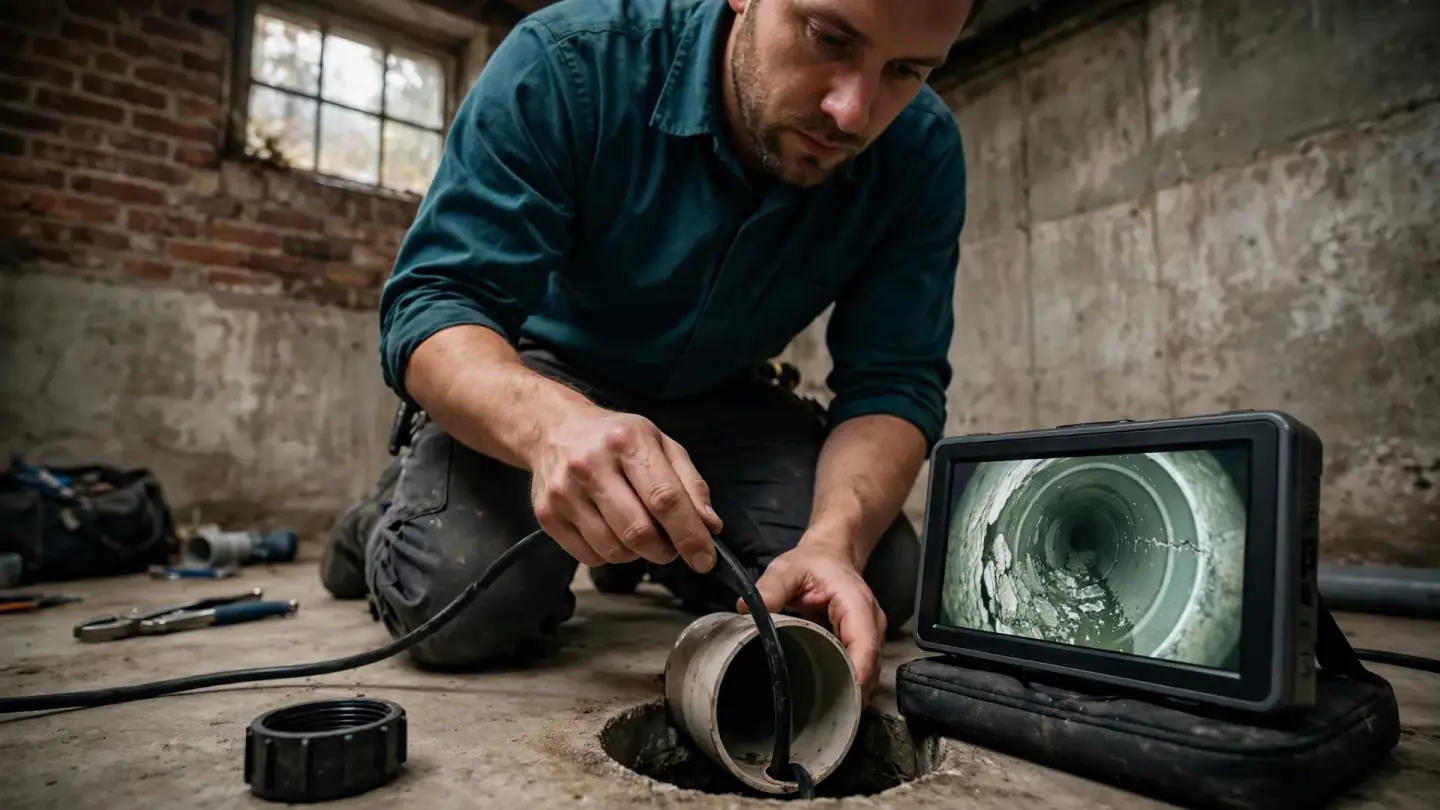
If you own one of these homes and have never had the main line looked at, the first time it backs up is a good moment to do it. Clearing the line restores flow; a camera run afterward tells you whether the pipe is sound, rooted or damaged. That footage lets you plan instead of reacting, and it is useful to keep if you ever sell the house. The tree roots guide and the replace vs clean guide explain what the findings usually mean.
Wet basements
Sump pumps, storms and Hilliard basements
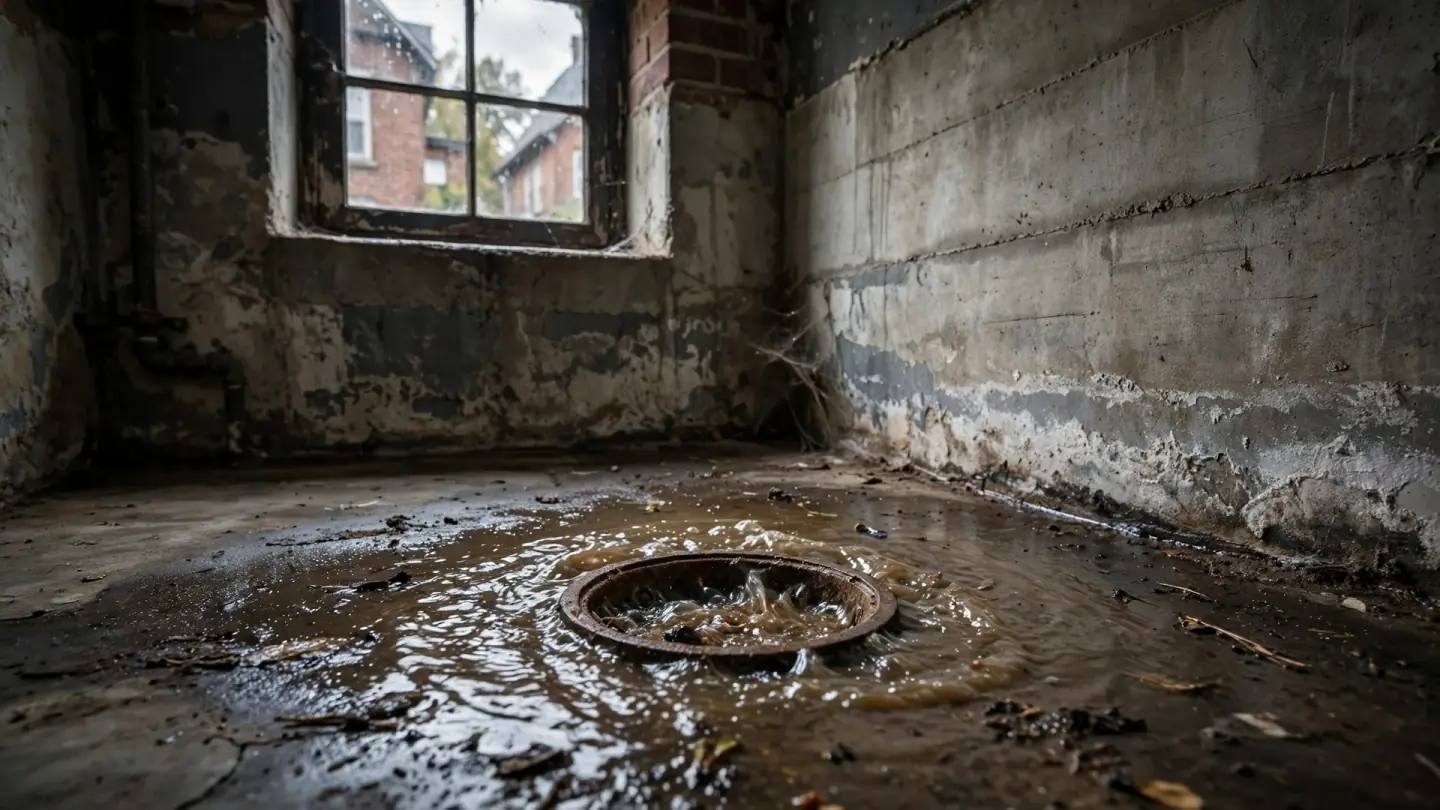
A sump pump removes ground water that collects in a pit below the basement floor [6]. In many homes it discharges outside through a pipe to the yard or a storm line. In some, it was set up to empty into a floor drain or a laundry sink, which sends that ground water into the sanitary sewer. During a long rain, the pump may run every few minutes, and all that water competes with household wastewater in the same lateral.
If your basement drain backs up mainly during storms, check where the sump discharges and where downspouts go before you call. A partly blocked lateral that copes on a dry day can fail once storm water is added. The contractor on the call can help you work out whether you are dealing with a blockage, extra water, or both.
Keep the sump pit clear, test the pump before the wet season by pouring water into the pit, and make sure the discharge pipe is not frozen or buried in winter. A pump that cannot discharge may fail just when it is needed.
If a storm backup has already reached a finished lower level, stop using water upstairs, keep everyone out of the wet area, and turn off power to that level at the panel only if you can reach the panel without standing in water. Then call, and say plainly that sewage has reached a finished space so the contractor can plan for it.
Before you call
A quick Hilliard drain checklist
- Confirm your address is in the City of Hilliard rather than Columbus or a township.
- Note which fixtures are slow, and whether the basement drain is involved. Several fixtures at once suggests the main line; see the multiple drains guide.
- Stop running water if anything is backing up, and keep people away from contaminated water in finished areas.
- Do not mix chemical drain products. Some combinations release harmful gases.
- Locate your main cleanout and your sump discharge.
- If your neighborhood has an HOA, check whether exterior work needs notice.
Permits
Permits in Hilliard: the Building Standards Division
Hilliard's Building Standards Division handles building permits, and permits can be filed online through the city's portal [3]. Routine drain cleaning maintains existing plumbing and does not usually need a permit. Repairs or replacement of drain lines and laterals are where permits apply. Plumbing permit handling in Franklin County varies between cities, so check with Hilliard's Building Standards Division about the exact process for plumbing work at your address.
Plumbing work in Ohio follows the Ohio Plumbing Code, Ohio Administrative Code chapter 4101:3 [7]. Any repair that needs digging also requires notice to OHIO811 a minimum of two working days in advance; private lines such as your lateral are not marked [8]. Plumbing contractors are licensed by Ohio's Construction Industry Licensing Board, and you can check a licence at license.ohio.gov [9].
Planning
Planning a drain visit at a Hilliard home
- 1
Tell the contractor about the house
Which drains, how long, after rain or not, and the age of the home. Mention a finished basement so the contractor knows to protect it.
- 2
Clear the path
In finished basements, the cleanout may be behind a panel or in a utility room. Move furniture and stored items so it can be reached.
- 3
Driveway and HOA
Most homes have driveways for equipment. If outdoor work is possible, check HOA rules and mark irrigation lines or pet fencing.
- 4
Inspect after clearing
For main line backups, especially in 1950s neighborhoods, ask about a drain camera inspection so you know the line's condition.
- 5
Plan for prevention
If the line keeps collecting grease or roots, ask about a maintenance schedule rather than waiting for the next backup.
Right service
Picking the right drain service for a Hilliard house
For a single slow sink, tub or toilet, clogged drain repair is the place to start. For water at a basement floor drain or several fixtures slowing together, main sewer line cleaning clears the line to the street, and a camera afterward shows whether anything is wrong with the pipe itself.
In newer subdivisions, a camera often shows a sound pipe with a debris problem, and changing what goes down the drain fixes it. In the 1950s neighborhoods, the footage may show roots or older materials that need regular attention or eventual repair. Preventative drain maintenance explains how people schedule cleanings for lines that need them.
Hilliard sits beside the Hilltop page on the west side; the areas we cover list explains how suburbs differ from Columbus neighborhoods.
FAQ
Hilliard drain questions
Does the City of Columbus maintain the sewer pipes in Hilliard?
No, Hilliard owns, operates and maintains its own sanitary collection system under contracts with Columbus dating from 1994 [2]. Columbus only treats the wastewater, at its Jackson Pike and Southerly plants [4]. Questions about the public sewer near your Hilliard home, including a backup you think started in the main, go to the City of Hilliard.
Where do I get a plumbing permit for a sewer repair in Hilliard?
Hilliard's Building Standards Division handles building permits, and filings can be made through the city's online portal [3]. Routine drain cleaning normally does not need one. For a lateral repair or replacement, confirm the plumbing permit steps with the division or ask the contractor you are connected with.
Why is the main line clogged in my newer Hilliard subdivision home?
Newer plastic pipe resists rust and roots, but grease, wipes, disposal waste and hair still build up at fittings and on long, flat runs. Hilliard grew fast after 1990 [5], so many homes have this kind of pipe. Clearing the line and changing what goes down the drain usually solves it.
Why does my Hilliard basement floor drain back up only when it rains hard?
Heavy-rain backups usually point to extra water entering the sanitary line or a partly blocked lateral. Check whether your sump pump or downspouts empty into a floor drain or laundry tub [6]. If several neighbors see backups at the same time, the public sewer may be involved, and that report goes to the City of Hilliard.
Can Hilliard homeowners use Columbus Project Dry Basement?
Project Dry Basement is a City of Columbus program for homes inside Columbus, not Hilliard. Hilliard maintains its own collection system [2], so ask the City of Hilliard what help applies to your property. A contractor can still clean and camera your lateral and explain whether a backflow device makes sense.
Are the 1950s ranch houses in Hilliard due for sewer line problems?
Many are at an age where problems show up. Hilliard's first big wave of homes came from three 1950s subdivisions [1], so those laterals are about seventy years old. Clay joints, older cast iron and root intrusion are common at that age. A camera inspection after cleaning shows how much life the line has left.
Do I need to call OHIO811 before digging up a Hilliard sewer lateral?
Yes, the person excavating must notify OHIO811 two working days or more ahead [8]. That service marks public utilities, not your private lateral, so contractors usually trace the lateral with a camera locator before digging. Plumbing repairs must also meet the Ohio Plumbing Code [7], whichever city you live in.
Sources and citations
- [1]Wikipedia: Hilliard, Ohio
- [2]City of Hilliard comprehensive plan: utilities chapter (archived copy)
- [3]City of Hilliard: Building Standards Division
- [4]City of Columbus: water and sewer contract communities
- [5]City of Hilliard comprehensive plan: community profile (archived copy)
- [6]Wikipedia: Sump pump
- [7]Ohio Administrative Code 4101:3 (Ohio Plumbing Code)
- [8]OHIO811: information for homeowners
- [9]Ohio eLicense: licence lookup