Key facts: Floor drain smell in the basement
- Floor drains that are rarely used can lose their trap seal to evaporation, letting sewer gas into the room [1].
- A trap primer is a device that automatically adds water to a trap to keep the seal in place [1].
- The City of Columbus says backflow devices installed under Project Dry Basement should be inspected and cleaned monthly, including the lid's O-ring [2].
- Hydrogen sulfide in sewer gas gives the rotten-egg odour and becomes dangerous in higher concentrations in a closed basement [3].
Short answer
Why does the floor drain itself smell like sewage?
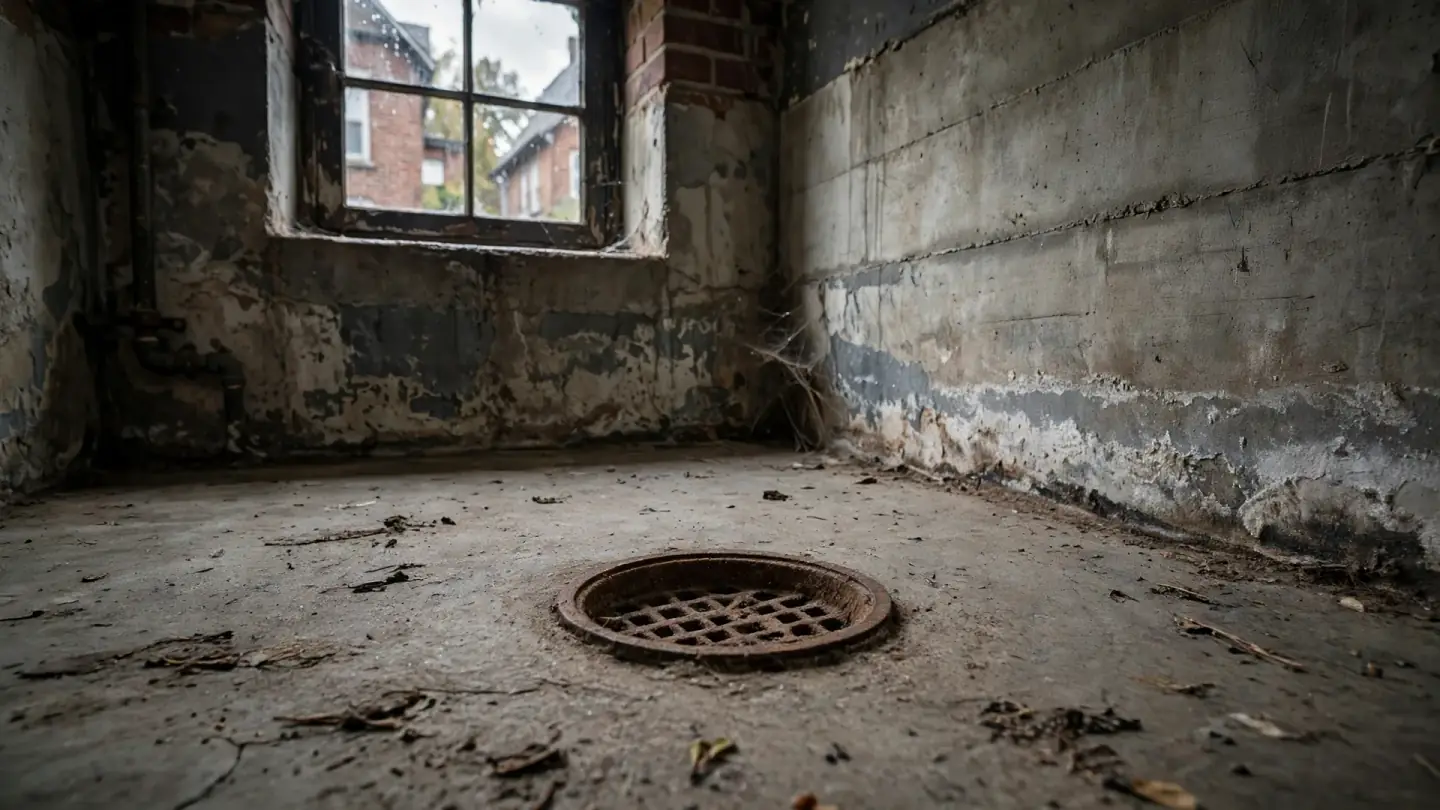
Under every basement floor grate is a trap that should hold a plug of water. That water is the only thing between the room and the sewer gas in the building drain [1]. In many Columbus basements the floor drain is used only when the water heater or a dehumidifier discharges, so the trap slowly dries out, especially in a heated basement through winter. Pour a bucket of water into the drain and the smell usually fades within the hour.
If it does not, look beside the grate rather than through it. Many older floor drains have a cleanout plug or a backwater valve lid built into the same fitting, and a missing gasket or loose lid lets gas bypass the trap entirely.
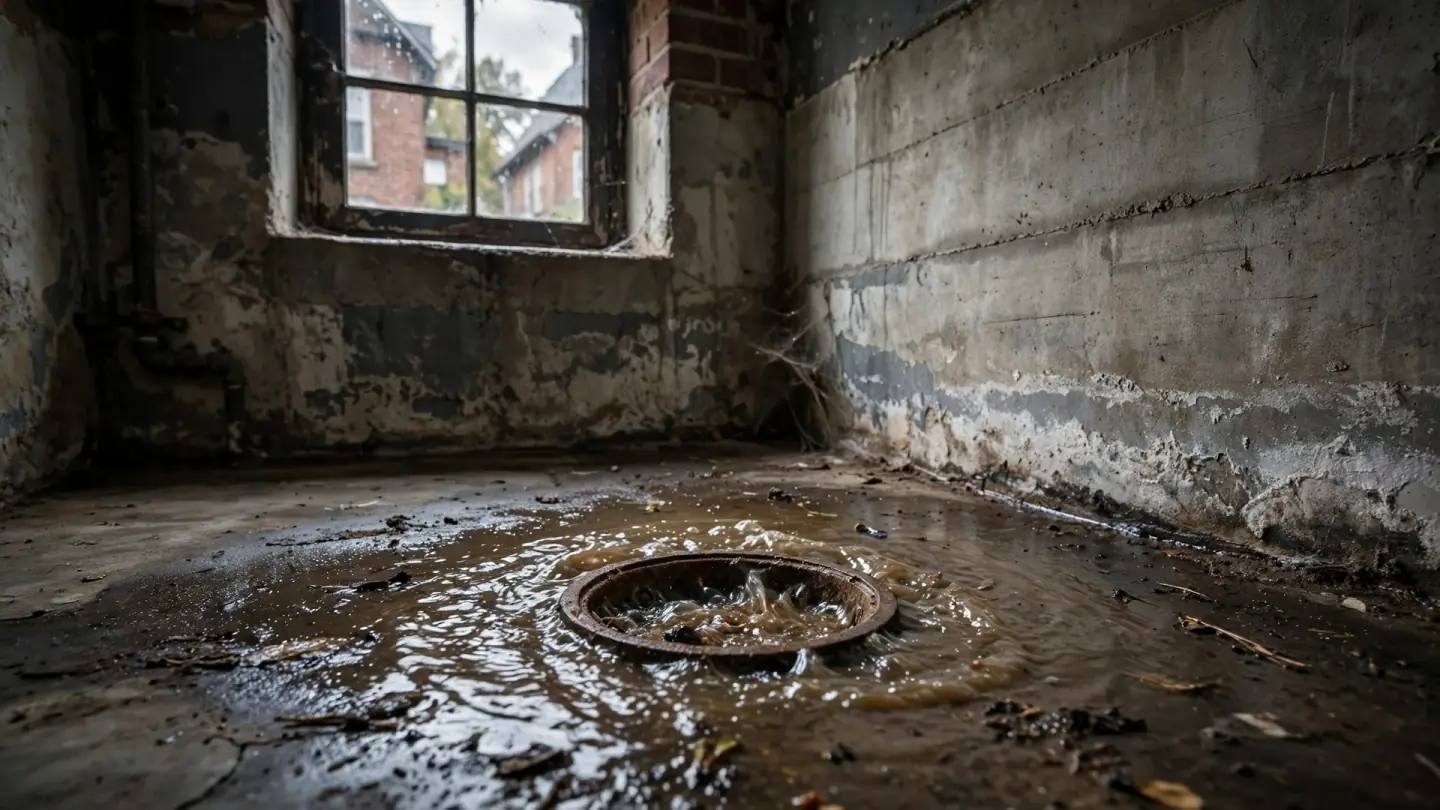
This guide stays at the floor drain. For an odor you cannot place, the sewer smell in the house guide traces it room by room. If water is rising out of the grate, go to the basement floor drain backing up guide instead.
Odor clues
Floor drain odor clues and their usual causes
| What you see | Likely cause | What to do |
|---|---|---|
| Smell fades after pouring water in | Trap seal evaporated | Refill the trap regularly or ask about a trap primer |
| Smell returns within a day or two | Trap leaking or being siphoned | Have the trap and venting checked |
| Smell strongest at a small screw-in plug near the grate | Cleanout plug loose or missing its seal | Tighten or replace the plug |
| Smell around a larger round lid in the floor | Backwater valve lid or O-ring not sealing | Clean the O-ring and tighten the lid |
| Damp concrete and odor around the drain body | Cracked drain body or broken pipe below the floor | Ask for a camera inspection |
A dry trap under a quiet grate
Safe checks
Five checks at the basement grate
- Lift the grate and pour in a bucket of water slowly, then note whether the smell fades.
- Look for a small square or hex-head plug in the drain body or nearby floor; make sure it is in place and snug.
- If you have a backwater valve lid in the floor, check that it is closed and tight with its key [2].
- Shine a flashlight into the drain. Water should be visible a short way down; if it disappears within days, note that.
- Ventilate the basement and leave if anyone feels dizzy or sick; do not use flames to mask the odor [3].
Dry traps
Evaporation, siphoning and the trap primer fix
Evaporation is slow but steady. Furnace heat and dry winter air speed it up, which is why many Columbus households notice the smell in the colder months. Topping up the trap every couple of weeks works, but it is easy to forget. A trap primer is a small device that adds water to the trap automatically, often from a nearby supply line [1]. Another approach is a seal insert that sits in the drain and lets water pass down while blocking gas from rising.
If the trap empties quickly, evaporation is not the whole story. Poor venting can pull water out of a trap as other fixtures drain [1], and a cracked trap can let water leak into the soil. Both need a contractor to look. Drainage, traps and venting in Ohio fall under the Ohio Plumbing Code [4], so changes to that piping may need a permit.
Plugs and lids
Cleanout plugs and backwater valve lids that leak gas
Older floor drains often combine the grate with a cleanout, a threaded opening used to run a cable toward the main line. If the last person to clean the line left the plug loose or lost its gasket, gas can escape there even though the trap is full. Tightening or replacing the plug usually ends the smell.
Many Columbus homes now have a backflow valve set into the basement floor, some installed through Project Dry Basement. The city's maintenance steps include cleaning the lid's O-ring, giving it a light coat of silicone grease, and tightening the lid securely with the key; the city also notes that a loose lid may stop the valve's alarm from working [2]. A dried or dirty O-ring is a common source of odor right at the floor. The backwater valves and Project Dry Basement guide covers that maintenance in more depth.
Below the slab
Cracked drain bodies under older basement floors
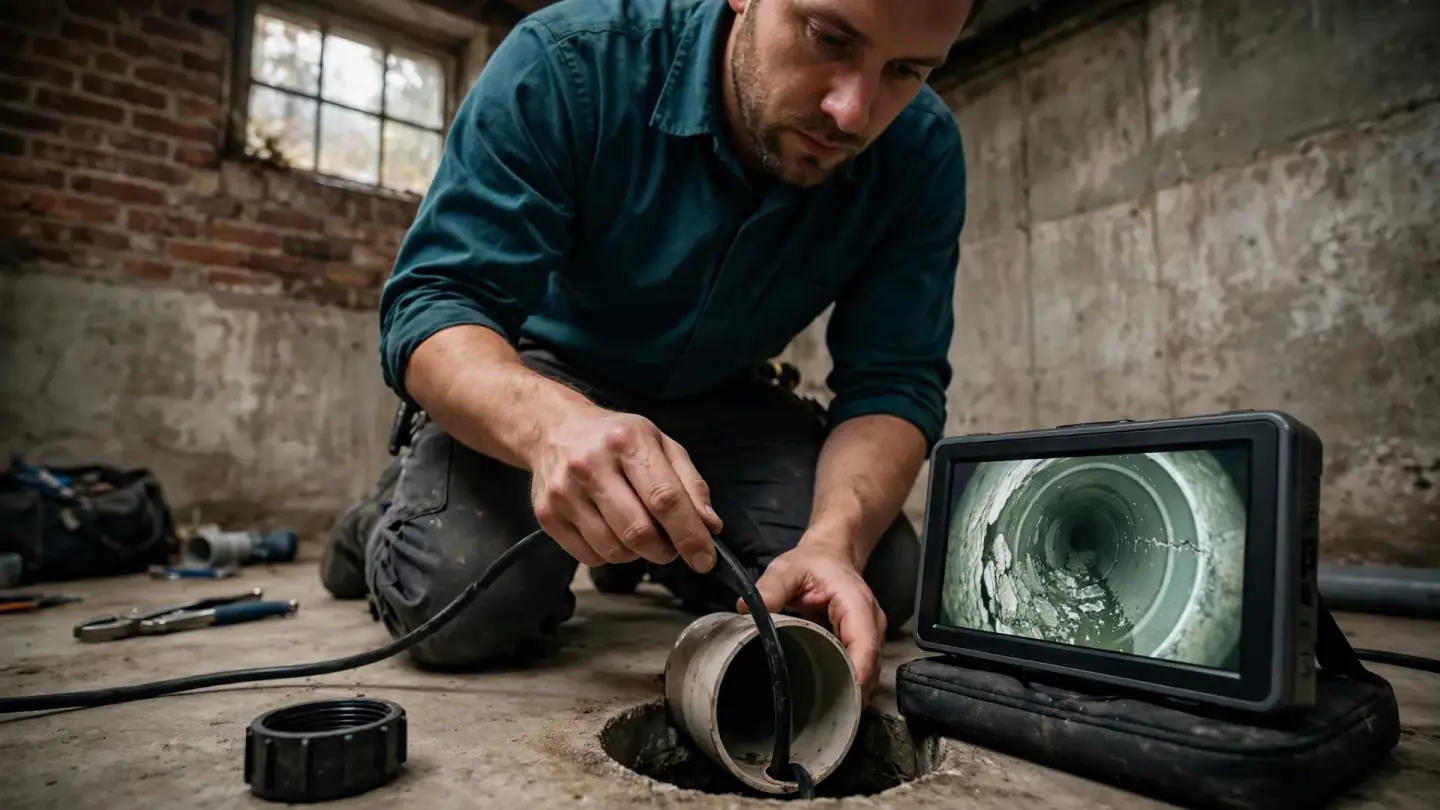
In houses built before the second world war, the floor drain and the pipe beneath it may be cast iron or clay. Corrosion or settling can crack the drain body or the pipe just below the slab. Signs include damp concrete around the grate, a smell that stays after the trap is full, and sometimes small insects. A drain camera inspection through the floor drain or a nearby cleanout shows the inside of that pipe without breaking concrete.
The city also notes that downspouts and foundation drains were often tied into the sanitary sewer in older Columbus homes [5]. A foundation drain connected near the floor drain can carry sewer gas into the space under the slab, so mention any old pipes entering the drain area.
Diagnosis
How a contractor pins down a floor drain odor
- 1
Refill and wait
The trap is filled and checked again later to see whether the water level holds.
- 2
Check every opening
Cleanout plugs, valve lids and any unused pipe stubs near the drain are checked for seals.
- 3
Look at venting
If the trap empties when other fixtures drain, the vent serving that area is examined.
- 4
Camera the drain body
A small camera shows cracks, a broken trap or a separated joint below the floor.
- 5
Smoke the grate area last
Harmless smoke pushed into the drain shows exactly where gas escapes.
Prevention
Keeping the basement grate odor-free
- Pour water into the floor drain every two weeks, more often in winter.
- Ask about a trap primer or seal insert for a drain that is rarely used.
- Clean and lubricate the backwater valve lid O-ring monthly, as the city recommends [2].
- After any floor drain cleaning, confirm the cleanout plug went back tight.
- Consider preventative drain maintenance for older lines that also clog.
FAQ
Basement floor drain odor questions
How often should I pour water into my basement floor drain to stop the smell?
Every two weeks is a sensible routine, and weekly in a heated, dry basement during winter. The water rebuilds the trap seal that blocks sewer gas [1]. If you keep forgetting or the seal disappears faster than that, ask a contractor about a trap primer or a seal insert for the drain.
Can a backwater valve make my basement smell like sewer?
It can if the lid or its O-ring is not sealing. Columbus says to clean the O-ring, coat it lightly with silicone grease and tighten the lid securely with its key during monthly maintenance [2]. A loose lid lets gas escape at floor level and may also stop the valve alarm from sounding.
What is a trap primer and does my floor drain need one?
A trap primer is a device that automatically adds water to a trap so its seal does not dry out [1]. It suits a floor drain that rarely receives water. Adding one involves plumbing connections covered by the Ohio Plumbing Code, so a contractor should advise whether it fits your basement layout [4].
Why does the floor drain smell worse in winter?
Heated indoor air in winter is dry, so the water in a seldom-used floor drain trap evaporates faster and the seal disappears sooner. Many basements also stay closed up, so the odor builds. Topping up the trap more often during the heating season usually solves it.
Is it safe to cover a smelly floor drain with tape or a mat?
Covering the grate hides the problem but means the drain cannot take water in a leak or backup, which is its whole job. It also leaves any open plug or cracked pipe untouched. Refill the trap, check plugs and lids, and use a proper seal insert instead.
Could the smell come from under the basement floor instead of the drain?
Yes, when the trap is full and every plug and lid is tight, a cracked drain body or broken pipe below the slab is the next suspect. Damp concrete around the grate is a clue. A camera inspection through the drain can confirm it without breaking up the floor.