Key facts: Sewer smell in the house
- Plumbing traps hold a small amount of water that blocks sewer gas from entering the room [1].
- Sewer gas contains hydrogen sulfide, which smells of rotten eggs and is harmful at higher concentrations [2].
- Drain venting and traps are governed in Ohio by the Ohio Plumbing Code, OAC Title 4101:3 [3].
- A smell from a basement floor drain that is rarely used is most often an evaporated trap [1].
Short answer
Where does an indoor sewer odor usually start?
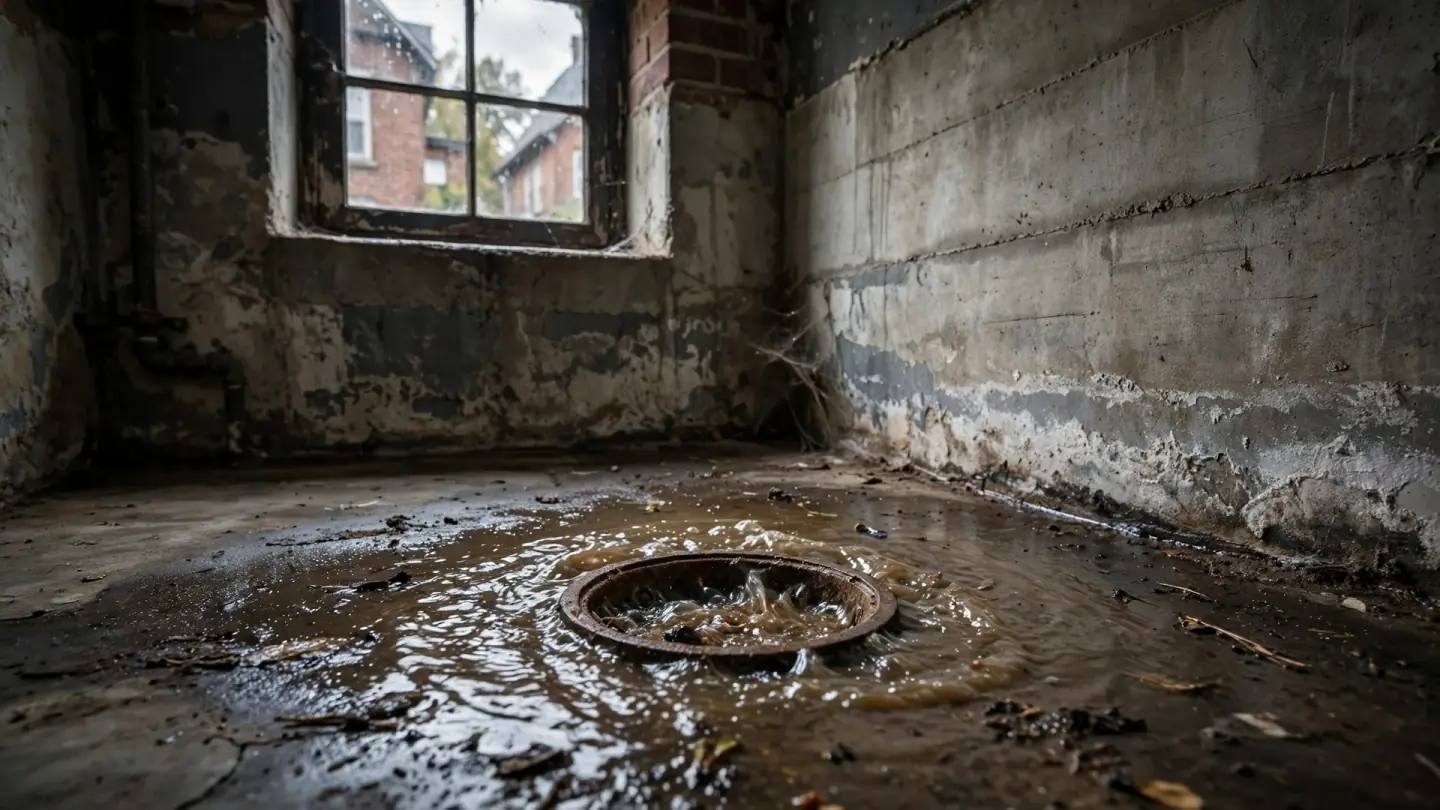
The most common source of a sewer smell indoors is a dry trap: a floor drain, guest shower or utility sink that has not been used for weeks, letting the water seal evaporate. Pouring water into every rarely used drain fixes this in minutes. If the smell persists, the next suspects are a toilet that has lost its wax seal, a vent that is blocked or disconnected, and finally a cracked or open drain pipe hidden in a wall, ceiling or crawl space.
Pay attention to when and where the smell is strongest. A smell that appears only after a toilet flushes points to that toilet or its vent. A smell that is strongest in the basement points to floor drains, the cleanout cap or the main line. A smell that comes and goes with wind or weather often points to venting.
Odor table
Odor patterns and their usual causes
| What you see | Likely cause | What to do |
|---|---|---|
| Smell near an unused drain | Evaporated trap | Run water into the drain for a minute |
| Smell around the toilet base, water on the floor | Failed wax ring or loose toilet | Stop using it and have the toilet reset |
| Smell plus gurgling sinks | Blocked or undersized vent | Have the vent and drain checked together |
| Smell in the basement near the cleanout | Loose or missing cleanout cap | Check the cap is in place and tight |
| Persistent smell, damp spot on a wall or ceiling | Cracked or leaking drain pipe | Call for a camera inspection to locate it |
A dry floor drain is the usual suspect
Safe checks
Room-by-room checks that are safe to do
- Run water for a minute in every sink, tub, shower and floor drain, including guest bathrooms and laundry tubs.
- Check the toilet base for movement, water or staining. A toilet that rocks has probably broken its seal.
- Look at the basement cleanout and make sure its cap is present and screwed down.
- Open windows and ventilate. If the smell is strong and anyone feels unwell, leave the house and call for help [2].
- Do not light candles or use open flames to mask the smell, and do not pour bleach and other cleaners together into drains.
Traps and seals
Dry traps and failed toilet seals
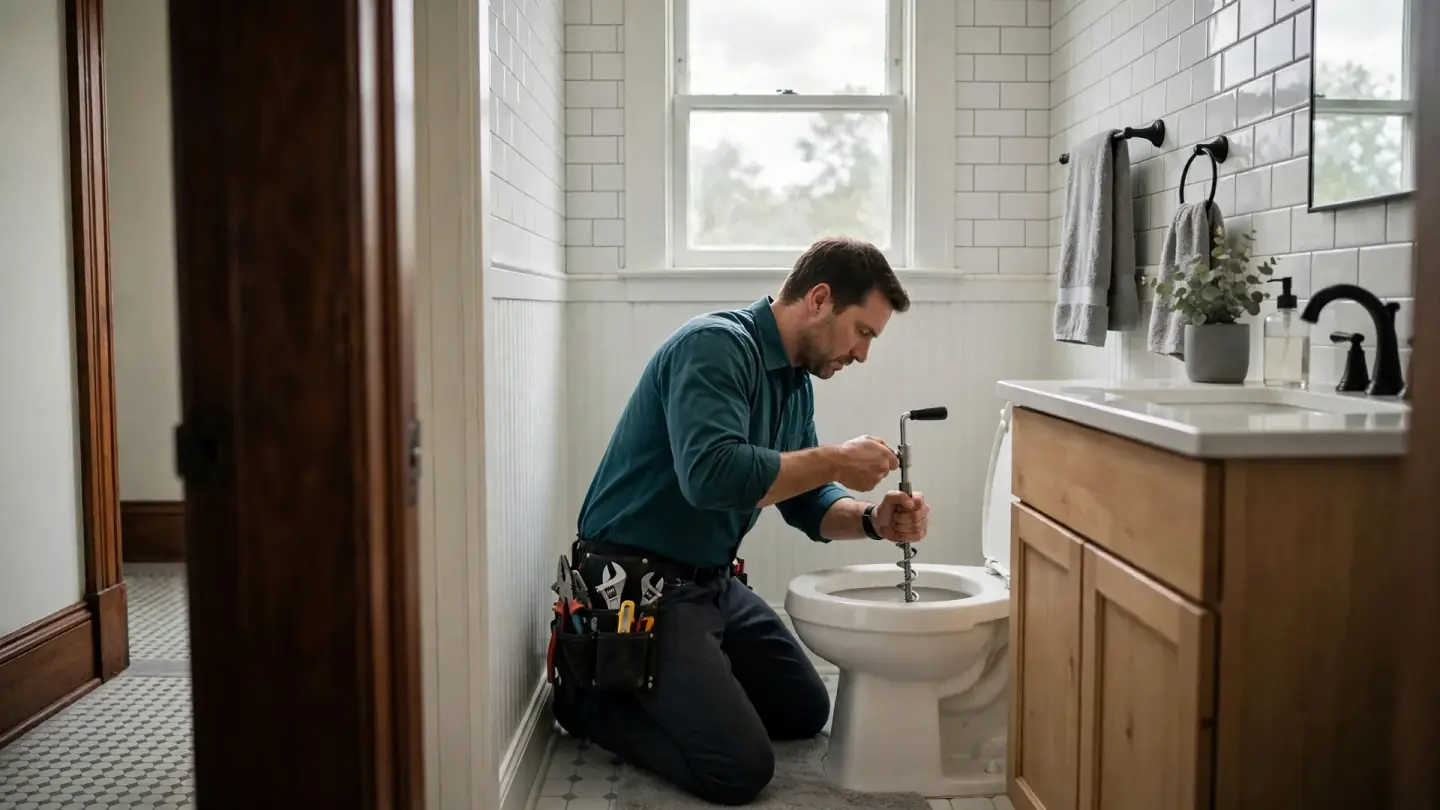
Every fixture connects to the drain through a trap that holds water as a barrier [1]. Evaporation, especially in heated basements during winter, can empty a floor drain trap within a few weeks. A trap can also be siphoned dry if the venting nearby is poor, which shows up as a smell that returns soon after you refill it. Toilets use a wax or foam ring between the bowl and the floor flange instead of a visible trap seal at the floor. When a toilet rocks or the floor flexes, that ring breaks and gas escapes at the base. Resetting the toilet on a new seal, often combined with toilet drain clearing if it was also slow, solves it.
Venting
Can a blocked vent make the whole house smell?
Vents let air in and out of the drain system so water flows smoothly and traps stay full. If a roof vent is blocked by leaves or a nest, draining water pulls the trap seals in nearby fixtures, and gas finds its way in. Renovations sometimes leave vents cut or capped inside a wall. The Ohio Plumbing Code sets out how fixtures must be trapped and vented [3], so a contractor can usually tell from the layout whether venting is adequate.
Hidden damage
Cracked drain pipes behind walls and floors
When traps, toilets and vents all check out, the remaining cause is a pipe that is open somewhere it should not be: a cracked cast iron stack (a frequent find during main sewer line cleaning), a separated joint under a slab, or a clay lateral broken near the foundation [5]. These often come with damp patches, insects or a smell that is worst in one wall. Finding them without opening walls is the job of a drain camera inspection, sometimes combined with a smoke test, where harmless smoke is blown into the system and watched for where it escapes.
Diagnosis
How the contractor traces a sewer smell
- 1
Map the pattern
Expect questions about where the smell is strongest, when it appears and whether it follows rain, wind or particular fixtures.
- 2
Check traps and seals
Every fixture trap is filled and each toilet is checked for movement and seal failure.
- 3
Inspect venting
The contractor looks at how fixtures are vented and whether the roof vent is open.
- 4
Camera the drains
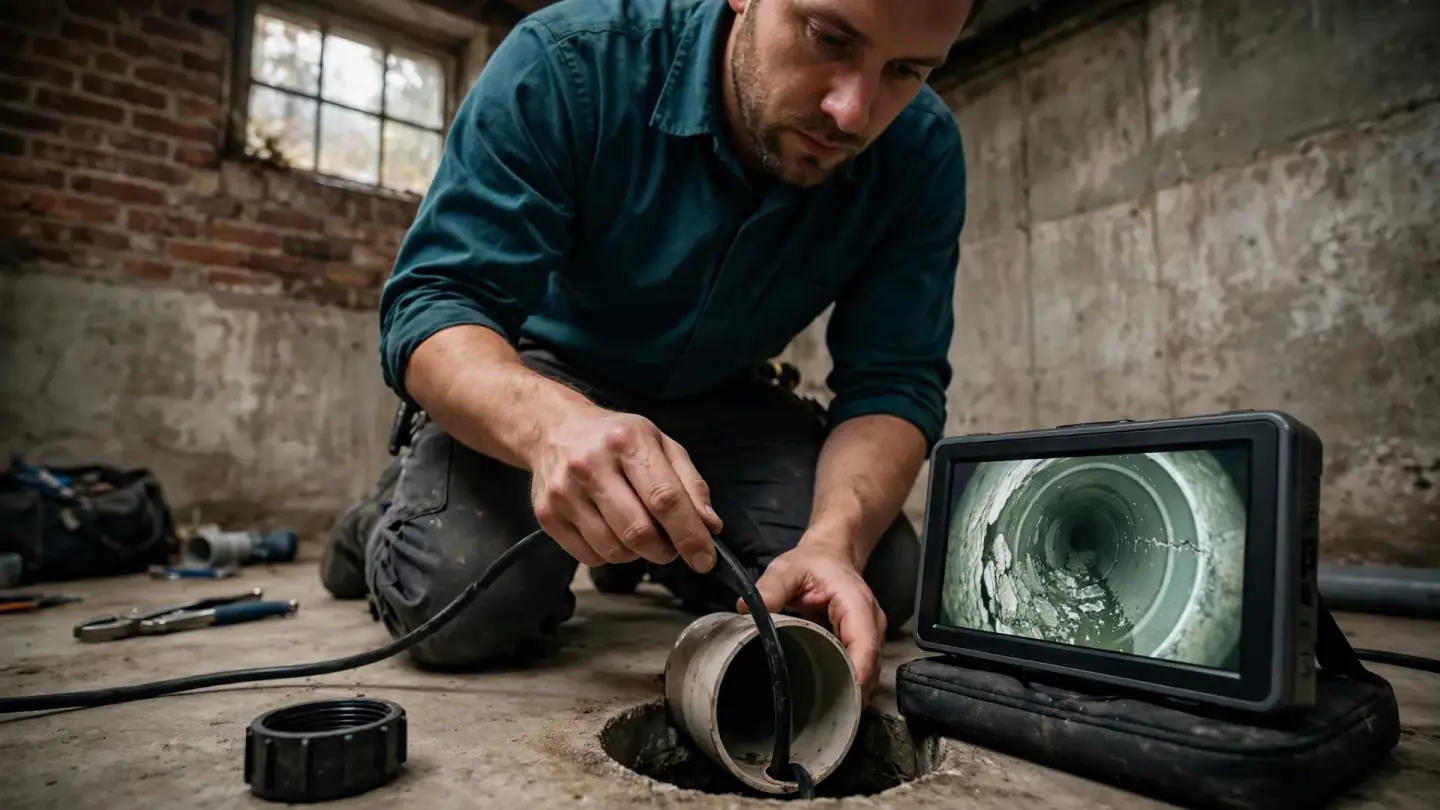
If the source is still unclear, a camera goes into the stack or main line to look for cracks and open joints.
- 5
Smoke test if needed
For stubborn odors, a smoke test shows exactly where gas escapes.
Fix decision
From refilling a trap to repairing a pipe
Most odor problems end with a simple fix: water in a trap, a reset toilet, a cleared vent or a new cleanout cap. A trap that keeps going dry in a seldom-used basement can be fitted with a trap primer or a seal insert. Cracked pipes need repair, and the camera footage shows how much. Work on drain and vent piping in Columbus falls under the Ohio Plumbing Code [3] and may need a permit, which the contractor will explain on the call.
Prevention
Keeping odors out for good
- Run water in guest bathrooms and basement floor drains every couple of weeks.
- Fix a rocking toilet promptly before the seal fails.
- Keep cleanout caps tight and replace cracked ones.
- After roof work, confirm vents were not covered.
On the call
Useful details about a sewer smell
- Which room or floor smells strongest, and when.
- Whether the smell follows flushing, rain, wind or furnace use.
- Any slow drains, gurgling or damp spots.
- Recent remodeling or roof work.
- Whether anyone has felt unwell.
FAQ
Questions about sewer odors indoors
Is it dangerous to breathe sewer gas smell in the house?
A faint, occasional sewer odor is mostly unpleasant, but a strong or lasting one should be treated seriously. Sewer gas contains hydrogen sulfide, which is harmful at higher concentrations [2]. If anyone has headaches, dizziness or nausea, open windows, leave the area and get the source found before spending more time in those rooms.
Why does the basement smell like sewer only some of the time?
An on-and-off basement sewer smell usually comes from a floor drain trap that dries out between uses, so gas slips through until water refills it [1]. Venting problems can also let odors in only when wind or weather changes air pressure. Refill rarely used traps every few weeks and note when the smell appears; the pattern helps the contractor narrow it down.
Why does the bathroom smell like sewage right after the toilet is flushed?
A sewage smell right after flushing often means the toilet wax ring has failed or the drain vent is blocked. A failed ring lets gas escape at the base, sometimes with water stains or a rocking bowl. A blocked vent lets the flush pull water out of nearby traps. Toilet drain clearing covers what the contractor checks.
Can a drain camera find where a sewer smell is coming from?
A drain camera can find cracks, open joints and broken fittings inside drain pipes that let sewer gas out. Leaks that are hard to see on video are often confirmed with a smoke test, which pushes harmless smoke through the system so it appears where gas escapes. Ask about both when the smell persists after traps are refilled.
Does pouring water into an unused drain stop sewer smell?
Pouring water into an unused drain stops sewer smell when a dried-out trap is the cause, because the water rebuilds the seal that blocks gas [1]. A quart or so is enough for most sinks and floor drains. If the smell comes back within days, the trap may be siphoning or leaking, or the odor has a different source.
Should a sewer smell from the kitchen sink worry me?
A sewer smell from the kitchen sink is usually rotting food and grease in the trap or disposal rather than true sewer gas. Run hot water and clean the disposal first. If the odor smells like rotten eggs and returns quickly, the trap seal or vent may be failing, and the slow draining sink guide explains the next checks.