Key facts: Basement Backup in Heavy Rain
- Columbus asks residents to report a basement backup to its Sewer Maintenance Operations Center at 614-645-7102; that report is the first step toward Project Dry Basement eligibility [1][2].
- The city says many homes built before the early sixties still have downspouts or foundation drains tied into the sanitary sewer, which adds rain water to it [2].
- Downtown Columbus and the surrounding areas are served by a combined sewer that carries sewage and storm water in one pipe [2].
- Project Dry Basement covers an approved backflow prevention device for qualifying single and two-family Columbus homes [1].
- Blueprint Columbus targets the rain water that enters the sanitary sewer through cracked laterals and foundation drains [3].
Rain timing
Why does the floor drain come up only when it storms?
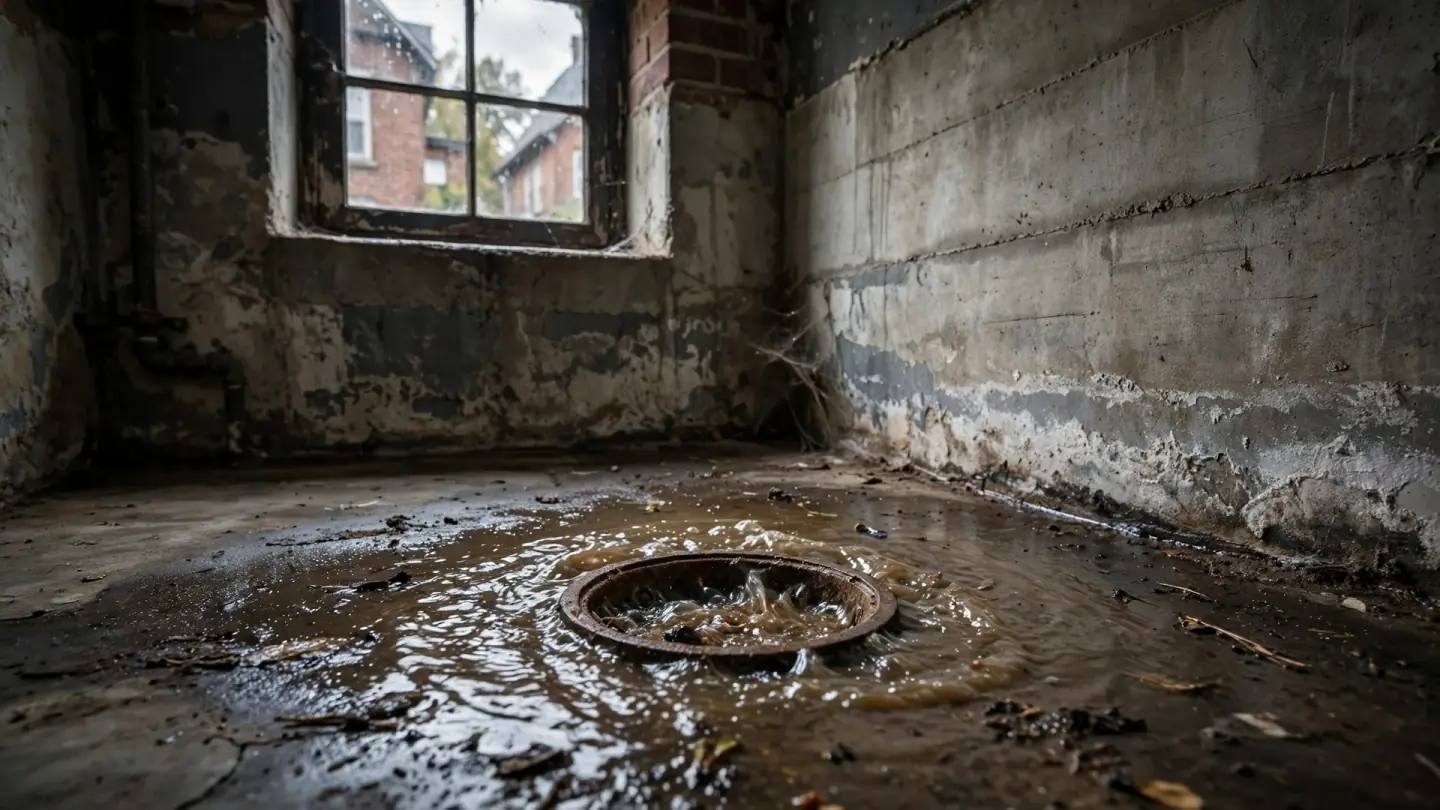
A drain that works all week and overflows during a thunderstorm is giving you a strong clue. In dry weather the sewer under the street has room to spare. During a long, heavy rain, water gets into the sanitary system through cracked private laterals, leaky joints, foundation drains and downspouts that were connected to it decades ago. The pipe fills, the level rises, and the lowest opening it can reach is often a basement floor drain.
Columbus says that many houses built before the early sixties still have downspouts or foundation drains tied into the sanitary sewer [2]. Those connections were normal practice when much of Clintonville, the Hilltop and the near east side were built. Each one feeds roof and soil water into a pipe sized for household waste. Downtown and the neighborhoods around it are served by a combined sewer, which is designed to carry storm water and sewage together, so in a large storm that system is working at its limit too [2]. The combined sewers guide explains how the two systems differ.
This is a different situation from a private line blocked by roots or grease. If your own lateral is the problem, the backup happens whenever you run enough water, rain or not. That case is covered on the emergency sewer line cleaning page. This page is about the backup that starts with the storm.
Warning signs
Signs the storm, not a clog, is pushing water in
It began as the rain got heavy
Water at the drain appeared during or just after a downpour, even though nobody was running laundry or showers.
Neighbors report the same thing
Other houses on the street have water coming up too. A shared problem points to the public sewer rather than one lateral.
Water rises and falls with the rain
The level climbs while it pours and drops back slowly as the storm passes, without anyone clearing anything.
Street flooding nearby
Inlets and gutters are overwhelmed at the same time. Report street flooding separately through the city's service line.
Report it now
Why report the storm backup to Columbus right away
Reporting quickly matters more in a storm than at any other time. The city uses the report to work out whether the public sewer surcharged, and that finding is the starting point for Project Dry Basement, which covers an approved backflow prevention device for qualifying single and two-family homes [1]. The report needs a service request number, and a backup logged while the sewer is still full gives staff the best chance to see what caused it. Waiting until the cleanup is finished can make that much harder.
When you call, give the address, when the water started, roughly how high it rose and whether neighbors are affected. Keep the service request number somewhere safe. The department that runs the sewer system now operates as Columbus Water & Power [4]. Flooded streets and blocked inlets are a separate report through the city's non-emergency service line [1].
Valve status
What if the house already has a backwater valve?
A backwater valve has a flap that closes when sewage tries to flow toward the house [5]. If you have one and water still came up, there are a few usual explanations. Debris can hold the flap open. A loose lid can leak and can stop the alarm from sounding. Some drains, such as a laundry standpipe or a floor drain upstream of where the valve sits, may not be protected by it at all. The city asks owners to inspect and clean these devices monthly [1].
Do not open the valve lid while the sewer is surcharged; the pressure on the far side is what you are trying to keep out. Once the storm passes and the water has dropped, the contractor can open it, clean the seat and flap, and confirm it seals. The backwater valve and Project Dry Basement guide walks through how the devices work and how the city program fits in.
The visit
What a contractor does after a storm backup
- 1
Confirm the water has gone down
If the public sewer was surcharged, work on the private line waits until levels in the street drop, otherwise cleaning will not help.
- 2
Test the private lateral
Water is run from upstairs fixtures while the floor drain is watched. If it backs up in dry conditions, the private line has its own blockage.
- 3
Clear what is found
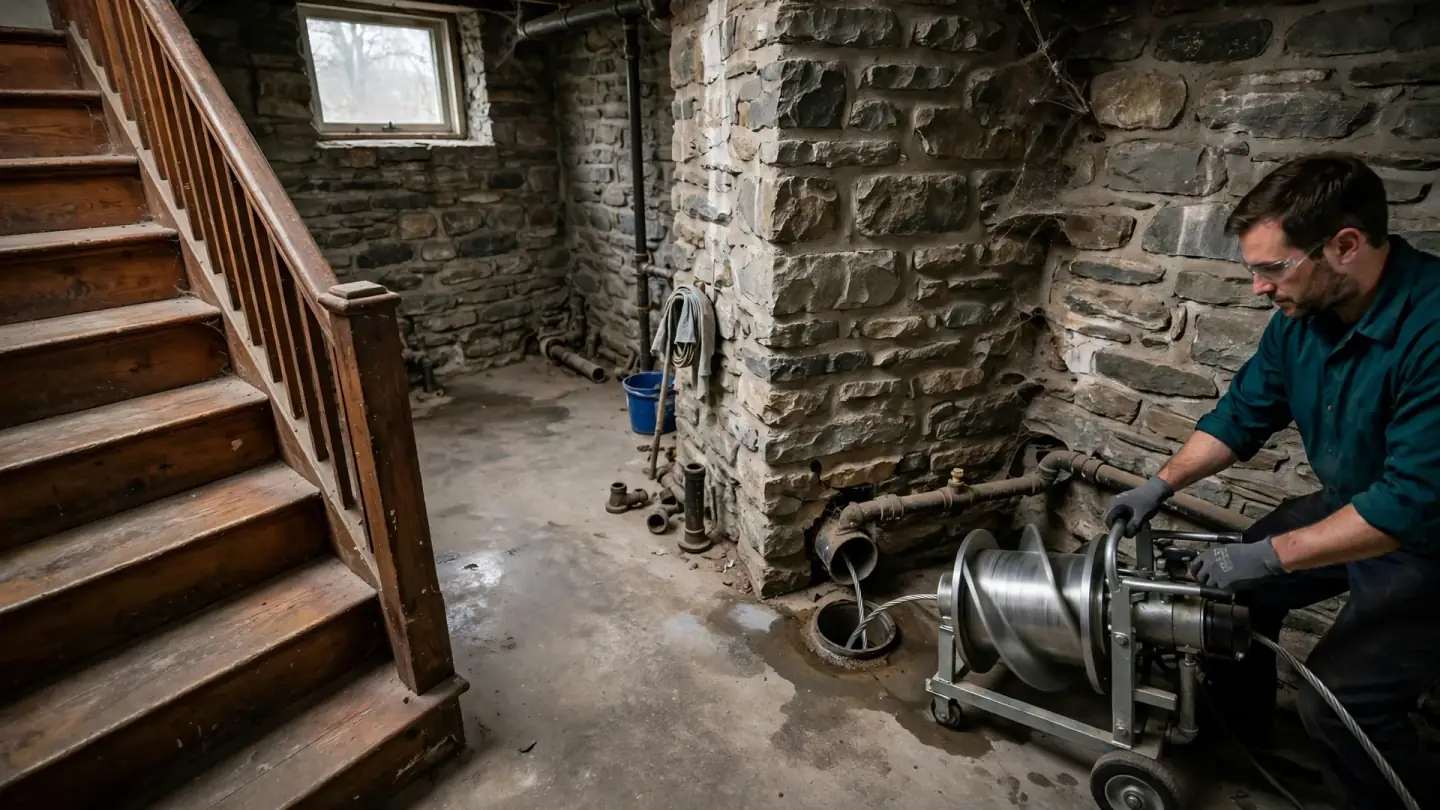
Roots, silt or grease in the lateral are cut and flushed through to the city connection, as described on the main sewer line cleaning page.
- 4
Look for rain water entry
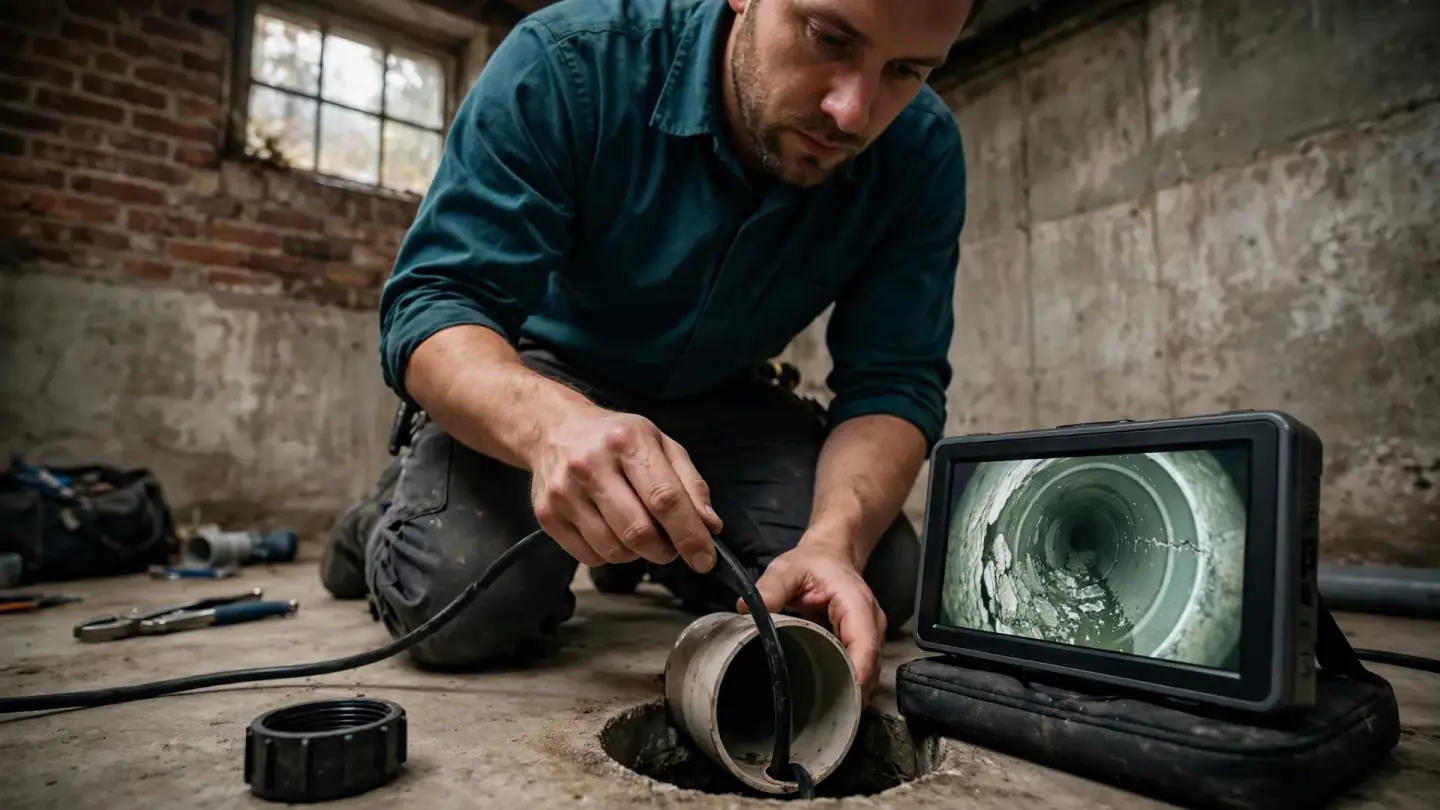
A camera pass can show cracked joints where groundwater enters, and the contractor can check for downspouts or foundation drains tied into the sewer.
- 5
Talk through protection
You hear what was found and the options: valve cleaning, disconnecting a downspout, lateral repair or lining, or applying to the city program.
Avoid
Mistakes that make a storm backup worse
- Plugging the floor drain with a rag or ball while the sewer is surcharged; the water simply finds the next lowest fixture.
- Pumping sewage from the floor drain into the laundry tub, which drains back into the same pipe.
- Running a rented cable machine into a line that is full because the street sewer is full; there is nothing for it to clear.
- Pouring chemical openers into the drain, which leaves a caustic mix for the next person who opens the line.
- Starting cleanup before reporting and photographing the backup.
Local factors
Columbus conditions behind storm backups
The city's long-term answer to wet-weather backups is Blueprint Columbus, which lines leaking private laterals, redirects roof water away from the sanitary sewer, offers sump pumps for foundation water and adds green infrastructure in targeted neighborhoods [3]. If your street is in a Blueprint area, some of that work may already be planned or done. Ask the city, because the program changes what a contractor should recommend.
Houses on lower ground near the Olentangy or in ravine neighborhoods tend to notice storm effects first, because their basement drains sit low relative to the sewer. Older homes with clay laterals, common across Clintonville and the Hilltop, can let groundwater in through every joint. Both make it worth having the lateral inspected once things are dry, through a sewer line inspection.
When the rain has stopped but the drain has not
If the storm has passed, the street is draining and your floor drain is still holding water a day later, the public sewer is probably no longer the main factor. That points to a private blockage, and the general emergency drain cleaning page or the full emergency hub will help you choose the right next call.
FAQ
Questions Columbus owners ask when storms flood the basement drain
Why is sewage coming up my basement drain every time it rains hard in Columbus?
Heavy rain can fill the sanitary sewer through leaky laterals, foundation drains and old downspout connections, so it pushes back up the lowest drain in the house. The city says such connections are common in homes built before the early sixties [2]. Report each backup, then have the lateral and any connections checked once it is dry.
How soon do I have to report a rain backup for Project Dry Basement?
Report it while the water is still up if you can, because the city uses the report to work out whether the public sewer caused it. Call the Sewer Maintenance Operations Center at 614-645-7102 and keep the service request number it gives you [1].
Should a drain contractor come out while the storm is still going?
A contractor can help with safety and a private blockage, but nobody can clear a public sewer that is running full. Call to check emergency availability and describe the timing. If the street sewer is surcharged, the useful work usually starts once levels drop, when the private lateral can be tested.
My backwater valve did not stop the water, so is it broken?
Not necessarily broken, but it needs checking once the water drops. Debris can hold the flap open, a loose lid can leak, and some drains may sit upstream of the valve. The city asks owners to clean these devices monthly [1]. Do not open the lid while the sewer is surcharged.
Can disconnecting my downspouts stop basement backups in a storm?
It can help if your downspouts drain into the sanitary sewer, because that adds roof water to an already full pipe. Columbus asks owners to disconnect such connections [2]. Ask the contractor to check where downspouts and foundation drains go, and whether your street is in a Blueprint Columbus area [3].
Is storm water in my basement drain dangerous to touch?
Yes, treat it as sewage. Water from a surcharged sanitary or combined sewer carries household waste and germs. Wear boots and gloves, keep children and pets away, stay clear of electrical equipment, and disinfect hard surfaces after the water drains. Throw out soaked cardboard and other porous items.