
Key facts: Combined sewers and your basement
- A combined sewer carries sewage and urban runoff together, and heavy rain can push the mix back out through household fixtures [1].
- Columbus's combined sewer system serves downtown and the surrounding areas [2].
- The city says downspout and foundation drain connections to the sanitary sewer are common in homes built before nineteen sixty-three [2].
- The OARS deep tunnel relieves the Olentangy Scioto Interceptor Sewer, built in the nineteen thirties as a combined sewer [3].
Short answer
Does the kind of sewer under my street change basement risk?
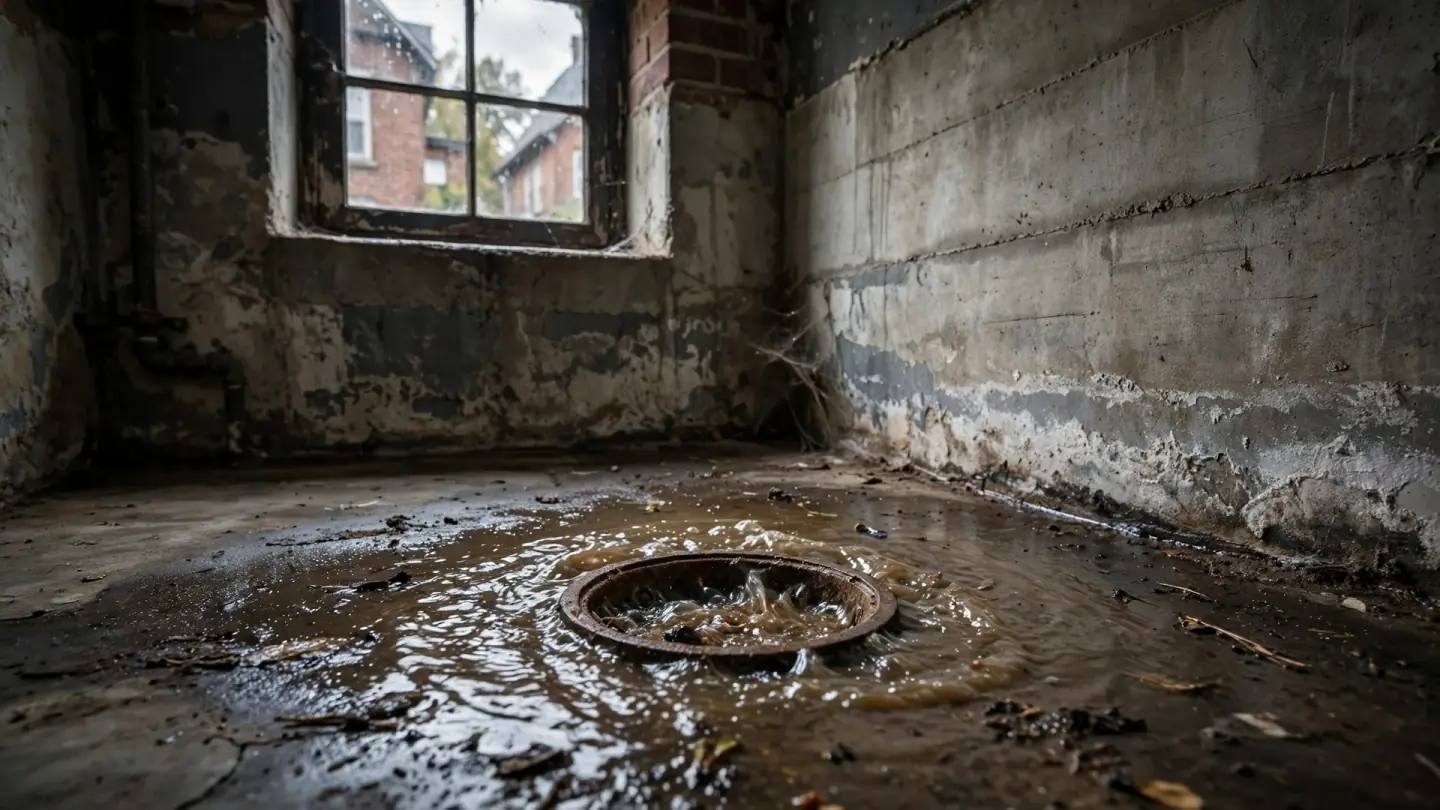
Yes. A combined sewer is built to carry both what leaves your house and what runs off roofs and streets. In dry weather it has plenty of room. In a heavy storm the runoff can fill it, and once the pipe is full the mix of rain and sewage looks for the lowest opening, which can be a basement fixture [1]. Columbus's combined system serves downtown and the surrounding areas [2], which is where many of the city's oldest homes stand.
A separate sanitary sewer is meant to carry wastewater only, but it is not immune. Rain sneaks into it through cracked laterals, leaky joints and roof or foundation drains connected to the sanitary line, and that inflow can overload it too [2][4]. The difference is mainly in what you can influence: on a combined sewer much of the storm water is the city's design, while on a separate sewer a lot of the extra water comes from private property.
Storm table
Storm-time basement signs and the sewer behind them
| What you see | Likely cause | What to do |
|---|---|---|
| Floor drain rises only in hard rain, several neighbours affected | Public sewer running full | Report to the city and ask about Project Dry Basement |
| Water at the floor drain soon after a downpour, just your house | Rain entering your own lateral or a connected downspout | Check downspouts, then book a camera inspection |
| Backup on a dry day | Blockage in your own line | Call about clearing the lateral |
| Clear water seeping at the floor edge | Groundwater, not the sewer | Look at grading and the sump, not the drain |
| Gurgling in the lowest toilet during rain | Air pushed back by a filling sewer | Limit water use until the storm passes |
A grey floor drain after rain tells only half the story
Safe checks
Lot-level checks before the next big storm
- Walk the house and see where each downspout ends: on the lawn, in a pipe into the ground, or unknown.
- In the basement, look for a foundation drain or tile line that ties into the floor drain or the sewer pipe.
- Ask neighbours whether their basements took water in the last heavy storm.
- Note the date and rain conditions of every backup you have had.
- Keep valuables and electrical items off the floor near the lowest drain.
Combined system
How Columbus's older combined sewers behave in a storm
Combined systems were the normal way to build sewers when central Columbus grew, and they include relief points that let excess flow overflow to rivers in wet weather. The city explains that those overflow points originally existed to keep sewage from backing into homes [2]. Overflows protect basements but pollute the rivers, so the city has worked for years to hold more water back.
The largest example is the OSIS Augmentation and Relief Sewer, a deep tunnel in service since two thousand seventeen that relieves the nineteen-thirties Olentangy Scioto Interceptor Sewer downtown [3]. Big projects like this change how often the system runs full, but no sewer is sized for every storm. A house on a combined sewer still benefits from a backwater valve, which the backwater valve guide covers.
Separate system
Why separate sanitary sewers still back up in wet weather
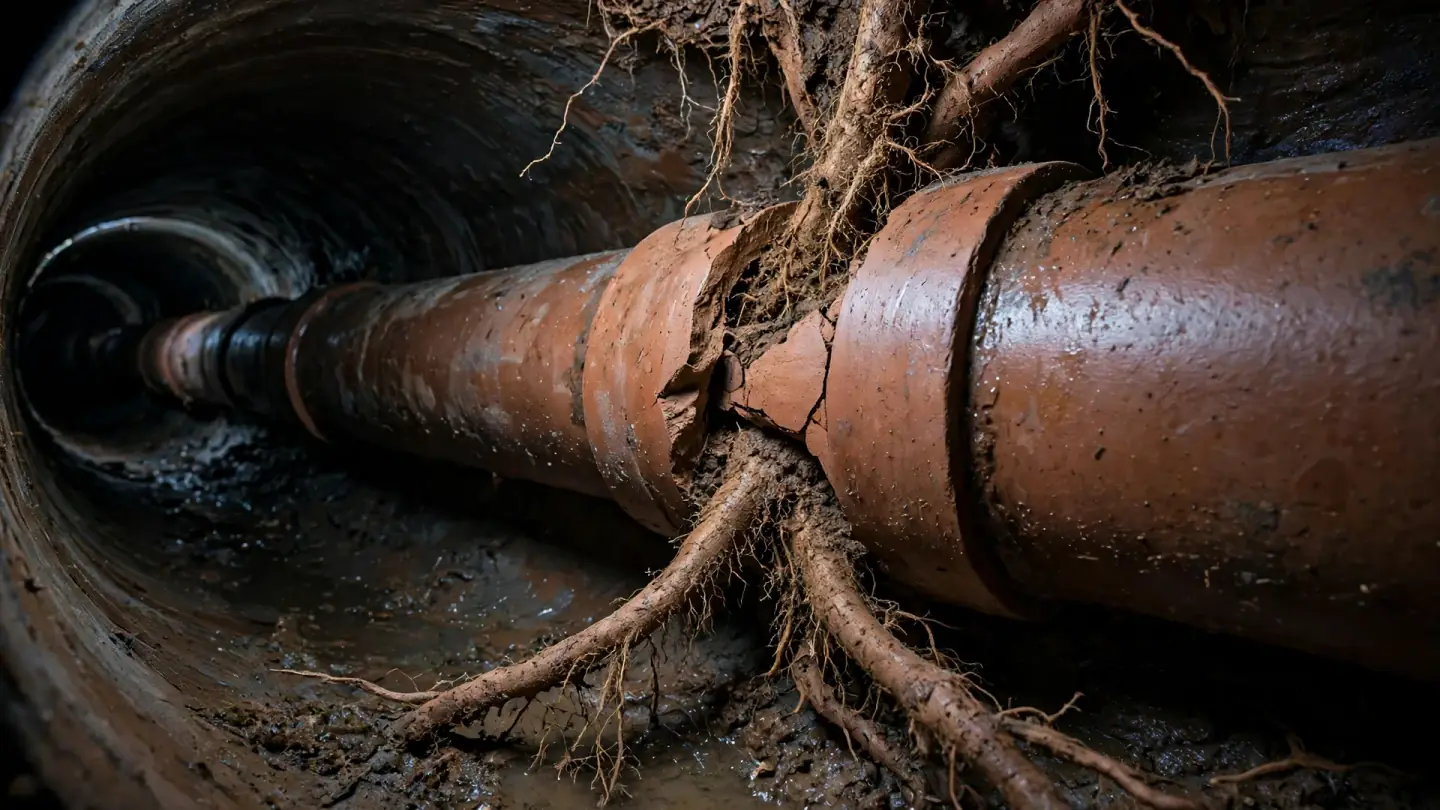
Outside the combined area, the sanitary sewer should carry only wastewater. In practice, rain gets in through private property: roof downspouts piped to the sewer, foundation drains tied to the floor drain, and cracked clay or cast-iron laterals. The city says those connections are common in homes built before nineteen sixty-three [2].
Blueprint Columbus targets exactly this inflow through four pillars: lining laterals, redirecting roof water, a voluntary sump pump program and green infrastructure [4]. When many houses on a street stop sending rain into the sanitary line, the sewer has more room and basement backups drop. That is also why your own lateral matters even if the city main is fine.
Diagnosis
How a contractor works out which sewer caused the backup
- 1
Timeline first
Expect questions about rain, neighbours and whether the backup cleared on its own once the storm ended.
- 2
Uncap the cleanout during a dry spell
Standing water at the cleanout after the storm points to a blockage in your own line.
- 3
Clear if needed
A blocked lateral is opened with a cable or jetter before anything else.
- 4
Film the private lateral
A sewer line inspection looks for cracks, offset joints and tie-ins from downspouts or foundation tile.
- 5
Talk through the fix
You hear whether the problem is mainly the street sewer, your lateral, or both.
Prevention
Ways to lower storm backup risk on either kind of sewer
- Report every backup to the city so it is on record and you can be considered for Project Dry Basement [5].
- Disconnect downspouts from the sanitary line where the city allows it and send the water away from the foundation.
- Have a cracked or root-filled lateral cleaned and assessed through main sewer line cleaning.
- Keep the floor drain clear so ordinary flow is not already slowed before a storm.
On the call
What to tell the contractor about a storm backup
- Your neighbourhood and roughly how old the house is.
- Whether neighbours also had water in the basement.
- Where your downspouts end and whether you know of foundation tile.
- Whether the backup came during rain or on a dry day.
- Any city service request number from reporting it.
FAQ
Combined sewer questions from Columbus homeowners
How can I find out if my Columbus home is on a combined sewer?
Ask Columbus Water & Power. The city says the combined system serves downtown and the surrounding areas [2], but neighbourhood boundaries are not something to guess. When you report a backup or call with questions, ask which kind of sewer serves your street.
Why does my basement only flood when it rains really hard?
Rain-only backups usually mean the sewer is running full, either because it is a combined sewer carrying runoff or because rain is entering a separate sanitary sewer through cracks and connected drains [1][2]. Report each one to the city and have your own lateral checked.
Is it my job to disconnect my downspouts from the sewer in Columbus?
The city asks residents to check that downspouts and foundation drains are not connected to the sanitary sewer and to disconnect them [2]. Blueprint Columbus also redirects roof water in some project areas [4]. Ask the city what applies on your street before changing anything.
Did the big sewer tunnel downtown fix basement backups?
The OARS tunnel relieves the old Olentangy Scioto interceptor and reduces strain on the downtown system [3], but no sewer is built for every storm. Basements can still take water in extreme rain, so a backwater valve and a sound lateral remain worth having.
Can a camera tell if rain is getting into my sewer lateral?
A camera shows cracks, offset joints, roots and pipes joining the lateral where foundation tile or downspouts tie in. Those are the usual entry points for rain on private property. A sewer line inspection records the footage so you can see it yourself.
Should I stop doing laundry when a big storm is coming?
It helps to hold off during the heaviest rain if your basement has backed up before. Every load sends a burst of water into a sewer that may already be full, and that water can surface at your floor drain. Wait until the storm passes.