Key facts: Commercial Drain Cleaning
- Columbus requires food service establishments to write and carry out a FOG Best Management Plan, with a grease interceptor cleaning log at its center [1].
- Columbus's fats, oils and grease program applies to food service businesses in the city and in contracted communities [1].
- Grease traps and interceptors slow kitchen wastewater so fats separate and float before the water reaches the sewer [2].
- Inside Columbus, a repair permit is filed with Building and Zoning Services by a contractor holding city registration [3].
How it works
How commercial drain work differs from a house call
A commercial building has the same basic drain parts as a home, just more of them and under harder use. A restaurant kitchen might have a three-compartment sink, a prep sink, a mop sink, several floor drains and a dishwasher all feeding one line toward a grease interceptor. A mixed-use building above a row of storefronts may have apartment stacks, retail restrooms and a café sharing the same building drain to the street.
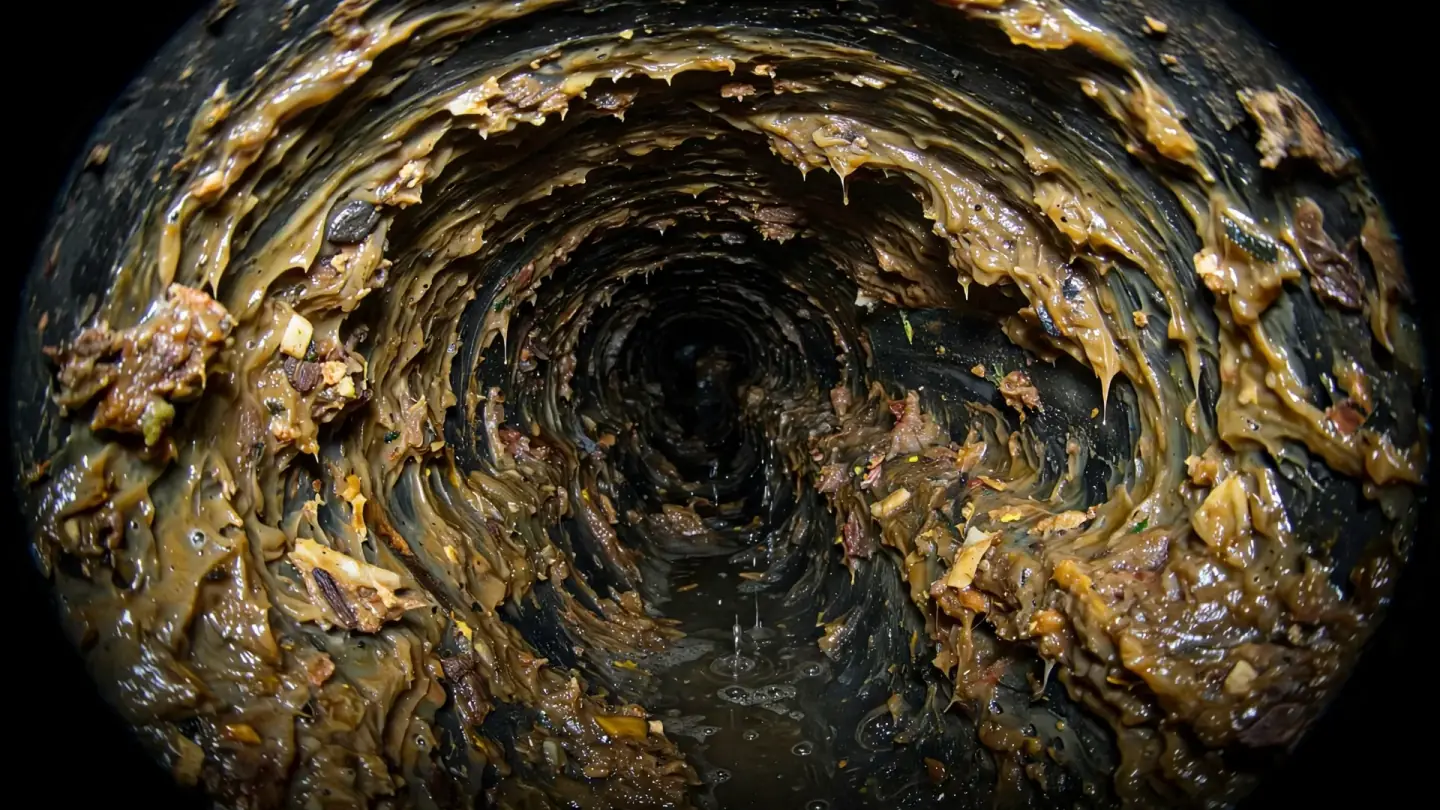
That changes how the work is done. Commercial lines are often larger, longer and busier. Grease is the dominant problem in food service, and it builds up along pipe walls in a way a cable alone does not remove, which is why hydro jetting is a standard tool. Floor drains in kitchens collect food solids and mop water. Restroom lines in offices and bars collect paper and items that should never be flushed.
Timing is the other big difference. Work usually has to be planned around opening hours, deliveries and tenants, and an access point may be in a basement shared with other businesses. The contractor you're connected with will want to know the layout and the schedule as much as the symptoms.
Finally, there are records. Food service establishments in Columbus need to show they manage grease, and drain cleaning paperwork is part of that picture alongside interceptor service [1].
Business owners can scan the complete Columbus service list or read about jetting greasy lines and scheduled drain upkeep.
Signs
What warning signs should a restaurant or building manager watch for?
Floor drains holding water after close
Kitchen floor drains that stay wet or bubble when sinks drain mean a slow line downstream. The basement floor drain guide covers the same mechanics at home.
Odor near the dish area
Grease and food solids rot in a partly blocked line. See sewer smell in the house for the trap and vent causes too.
Several units report slow drains
When tenants on different floors complain together, the shared stack or building drain is the suspect. The multiple drains guide explains the logic.
Sinks slow during the dinner rush
A line that copes at quiet times but backs up under full load is narrowing. Compare with a slow draining sink at home.
The service
How a commercial drain service is usually organized
- 1
Describe the property on the call
Type of business, which fixtures are affected, opening hours, where cleanouts and the interceptor are, and whether other tenants share the line.
- 2
Agree a time that limits disruption
Many kitchens prefer before opening or after close; offices may prefer a weekend. This is settled between you and the contractor on the call.
- 3
Open the line
A cable clears a full blockage so water can move again.
- 4
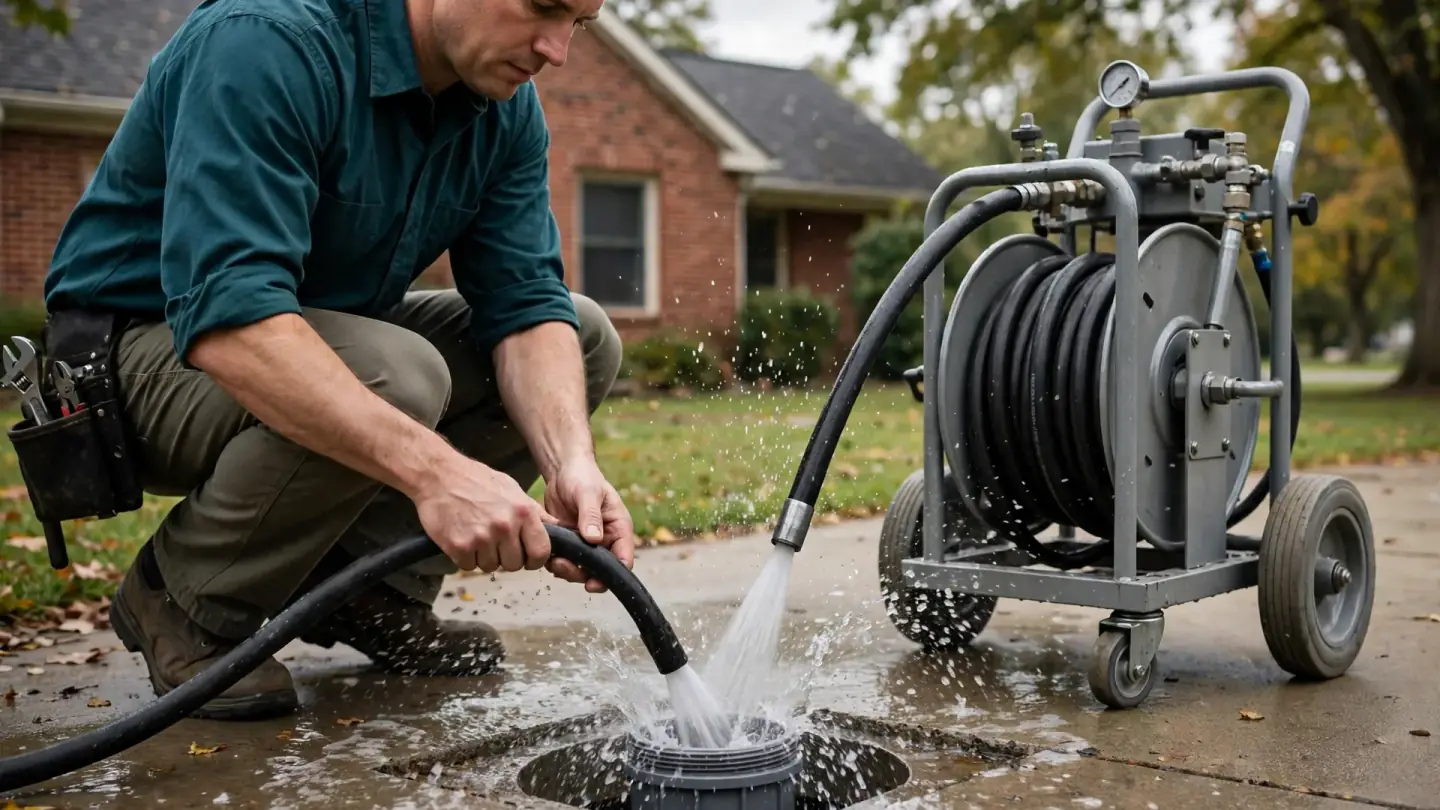
Jet the grease-prone runs
Kitchen branch lines and the line to the interceptor are scoured to remove the wall coating.
- 5
Camera where it matters
A camera check confirms the line is clean and finds sags, breaks or bad fittings that cause repeat calls.
- 6
Record the work
Ask for a written note of what was cleaned and found, to keep with your FOG plan and maintenance records.
Business types
Drain trouble spots by type of commercial property
| Property type | Typical problem lines | Usual approach |
|---|---|---|
| Restaurant or bar | Three-compartment sink, dish line, kitchen floor drains, line to interceptor | Jetting on a schedule, interceptor service, camera checks |
| Café or bakery | Prep sinks, mop sink, floor drains with flour and dough residue | Cable and jet; screens on floor drains |
| Office or retail | Restroom lines, break-room sinks | Cable clearing; camera if recurring |
| Mixed-use with apartments | Shared stacks, building drain, ground-floor restaurant line | Main line cleaning and camera; coordination among tenants |
| Salon or barbershop | Shampoo bowls with hair buildup | Cable and enzyme upkeep; hair traps |
| Small warehouse or garage | Trench and floor drains with grit and silt | Flushing with a jetter; sediment removal |
Staff and managers
Kitchen and building habits that keep commercial lines open
- Scrape plates and pans into the trash before they reach the dish sink.
- Keep strainers in every sink and floor drain, and empty them into the trash, not down another drain.
- Never pour fryer oil or grease into a sink or floor drain; store it for collection.
- Keep the grease interceptor on its service schedule and record each cleaning in the log your FOG plan requires.
- Do not use enzyme or chemical products to push grease past the interceptor; it re-solidifies further down the line.
- Tell tenants in shared buildings what not to flush, and give them a way to report slow drains early.
- If a line backs up, stop using the fixtures on it until it is cleared, to avoid overflow into the dining room or a tenant below.
Local specifics
Columbus grease rules, Short North buildings and suburban sites
Columbus treats fats, oils and grease as a sewer system issue. Its FOG program requires each food service establishment to write and carry out a FOG Best Management Plan, and the grease interceptor cleaning log is a central part of it [1]. The program covers food service businesses in the city and in the communities that contract with Columbus for sewer service [1]. Drain cleaning does not replace interceptor service, but jetting records and camera notes show that the lines downstream are being looked after too.
Grease interceptors and traps work by slowing the flow so fats float and solids settle before the water continues to the sewer [2]. When an interceptor is overdue, or bypassed by a dishwasher or floor drain that was connected the wrong way, grease travels downstream and coats the building drain or the public sewer. Grease combined with wipes and other solids is how hardened sewer blockages form [4].
The Short North is a good example of where commercial drain work gets complicated. Its stretch of High Street is lined with tightly packed brick buildings from the early twentieth century, and since about 2000 taller mixed-use buildings have filled in lots [5]. Restaurants, bars and galleries sit below apartments and offices, so a grease problem in one kitchen can affect a whole building.
In suburban office parks and strip centers in places like Westerville and Hilliard, the buildings and pipes are newer, but restaurant tenants still produce the same grease load. Those are separate cities with their own building departments. Inside Columbus, plumbing permits for repairs go through Building and Zoning Services, where the permit form records the contractor's city registration [3].
Cleaning or correction
When scheduled cleaning is enough for a business, and when to fix the line
For many kitchens, scheduled jetting is the right long-term answer. Grease is produced every day, and a line that is cleaned before it narrows rarely backs up. The interval is set by experience: how fast the camera shows buildup returning. The preventative drain maintenance page explains how that schedule is built.
A schedule is not enough when the line itself is the problem. A sag that collects grease, a broken section under the kitchen floor, an interceptor that is too small for the menu, or a fixture plumbed around the interceptor will keep causing backups however often the line is cleaned. A camera inspection, ideally with distances marked, is what shows which of these you are dealing with.
In a shared building, the right fix may also involve the owner or management company and other tenants. A contractor's findings, on video, are the clearest way to show everyone what is happening in the pipe.
Preparing the site
Getting a commercial property ready for drain work
A little preparation shortens the visit and keeps the business running. Before the contractor arrives, find out where the cleanouts are. In restaurants they are often under the dish area, behind equipment or in a basement storage room; in older storefront buildings they may be in a shared cellar that requires a key from the owner or another tenant.
Clear the area around the access point and the affected fixtures. Move stock, mats and cleaning supplies, and make sure there is a path for hoses from the street or the back door. If the job involves jetting from outside, check whether the service vehicle can park nearby, since busy streets and alleys can limit where equipment can sit.
Tell staff what to expect. Fixtures on the line being cleaned should not be used while it is open, and the dish machine and ice machine drains may need to be paused. In a building with apartments above, letting residents know that water use should be light for a short period avoids surprises.
Finally, have records ready: the interceptor log, any previous drain cleaning notes and anything known about past repairs. A contractor who can see the history can often spot a pattern quickly, and the notes from this visit can be added to the same file afterward.
FAQ
What do Columbus businesses ask about commercial drains?
Does hydro jetting a restaurant line count toward a Columbus FOG program?
Line jetting can support a Columbus restaurant's grease records, but it does not replace interceptor or trap service. The city's fats, oils and grease program expects food service businesses to manage grease at the source [1]. Keep the contractor's service report with your interceptor pumping records and ask the city which documents it wants to see.
Can commercial drain cleaning be done after closing time?
Many commercial drain contractors can schedule work before opening or after closing, depending on their crew availability. Ask about timing during the call. Night or early-morning work keeps jetting noise and water away from customers, and it gives the kitchen time to restock before service if a line needs a full flush.
Who pays for a drain clog in a building with several tenants?
Responsibility for a clog in a multi-tenant building usually depends on the lease and on where the blockage sits. A clog in one tenant's branch may fall to that tenant; a blocked shared stack or building sewer often falls to the owner. A camera report showing the location helps settle the question.
Why does a restaurant kitchen line clog even with a grease interceptor?
A restaurant kitchen line can still clog with a grease interceptor if the interceptor is overdue for pumping, sized too small or bypassed by some fixtures. Grease that cools between the sink and the interceptor also coats the pipe. Regular jetting plus a pumping schedule matched to volume usually breaks the cycle.
Can a business get emergency drain help in Columbus?
A business in Columbus can call to check whether emergency drain help is available. Availability depends on the independent contractors at that moment, so no timing is promised. Describe the drain, whether wastewater is spreading and whether the kitchen is open, and you will be told what options exist.
How often should an office building have its drains cleaned?
Office buildings typically need drain cleaning less often than restaurants, with timing set by how quickly problem lines slow down. Break room sinks and restroom branches are common trouble spots. A camera inspection can show buildup rates, and the contractor can suggest a schedule based on what the pipe actually looks like.