Key facts: German Village
- German Village was platted in 1814 and developed mainly between 1840 and 1914, largely as small brick cottages and Dutch doubles on narrow lots [1].
- Exterior changes inside the district need a Certificate of Appropriateness from the German Village Commission, applied for through the Columbus Historic Preservation Office [2].
- Columbus's Project Dry Basement covers an approved backflow device for eligible single and two-family homes after a reported public-sewer backup [3].
- Plumbing permits in Columbus are issued by Building and Zoning Services, and the application asks for the contractor's city registration number [5].
The housing
What German Village homes are like underneath
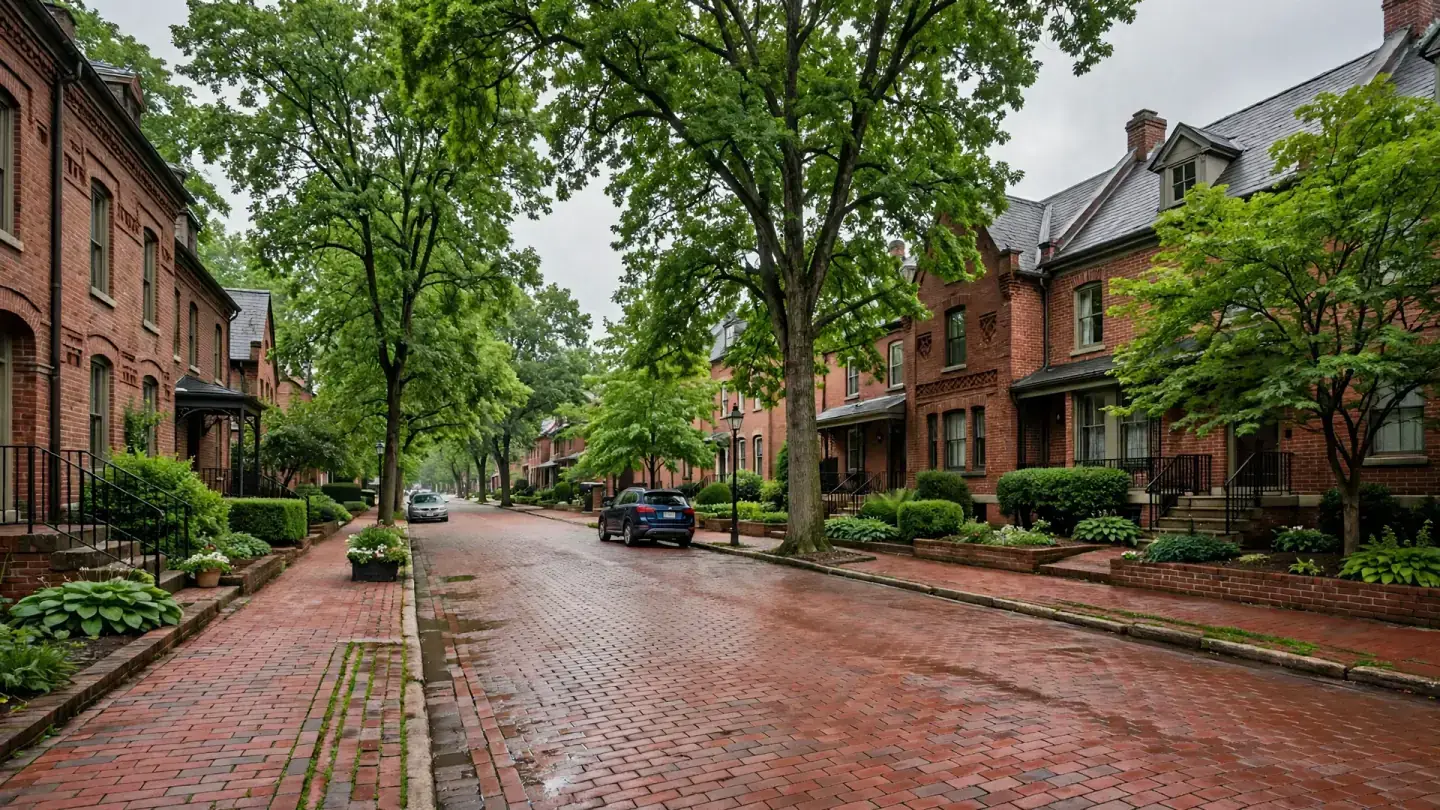
Walk any block between Livingston Avenue and Nursery Lane and the pattern is consistent: sturdy red brick houses, wrought iron fences, brick-paved streets and lots that leave very little room between one house and the next [1]. The typical home is a small brick cottage or a Dutch double, which is essentially a cottage that was enlarged, often sideways or upward, as families grew [1]. That history matters for drains because the plumbing was rarely planned all at once. Most of these houses were built before indoor bathrooms were common, so the drain lines inside them were added later, extended again when kitchens moved, and patched a third time when a basement laundry or a second-floor bath arrived.
The result is a drain system with more joints, more changes of direction and more mixed materials than a house built after the Second World War. It is common in homes of this era to find a cast iron stack, a section of galvanized steel branch line, newer plastic under the kitchen, and a clay pipe leaving the foundation toward the street. Each material ages differently. Cast iron scales and narrows from the inside. Galvanized steel rusts shut at threaded joints. Clay holds up well to wastewater but its short sections are joined at many points, and every joint is a place where a fine root or a shifted section can catch debris [7].
Because the district developed over roughly seven decades [1], two houses side by side can have very different plumbing histories. One may have had its lateral replaced during a renovation; the next may still drain through whatever was laid when the sewer first reached the street. Nobody can tell which from the sidewalk, which is why a camera is often the most useful first look at a recurring problem here.
Common calls
What drain contractors run into most in German Village
Roots in old clay joints
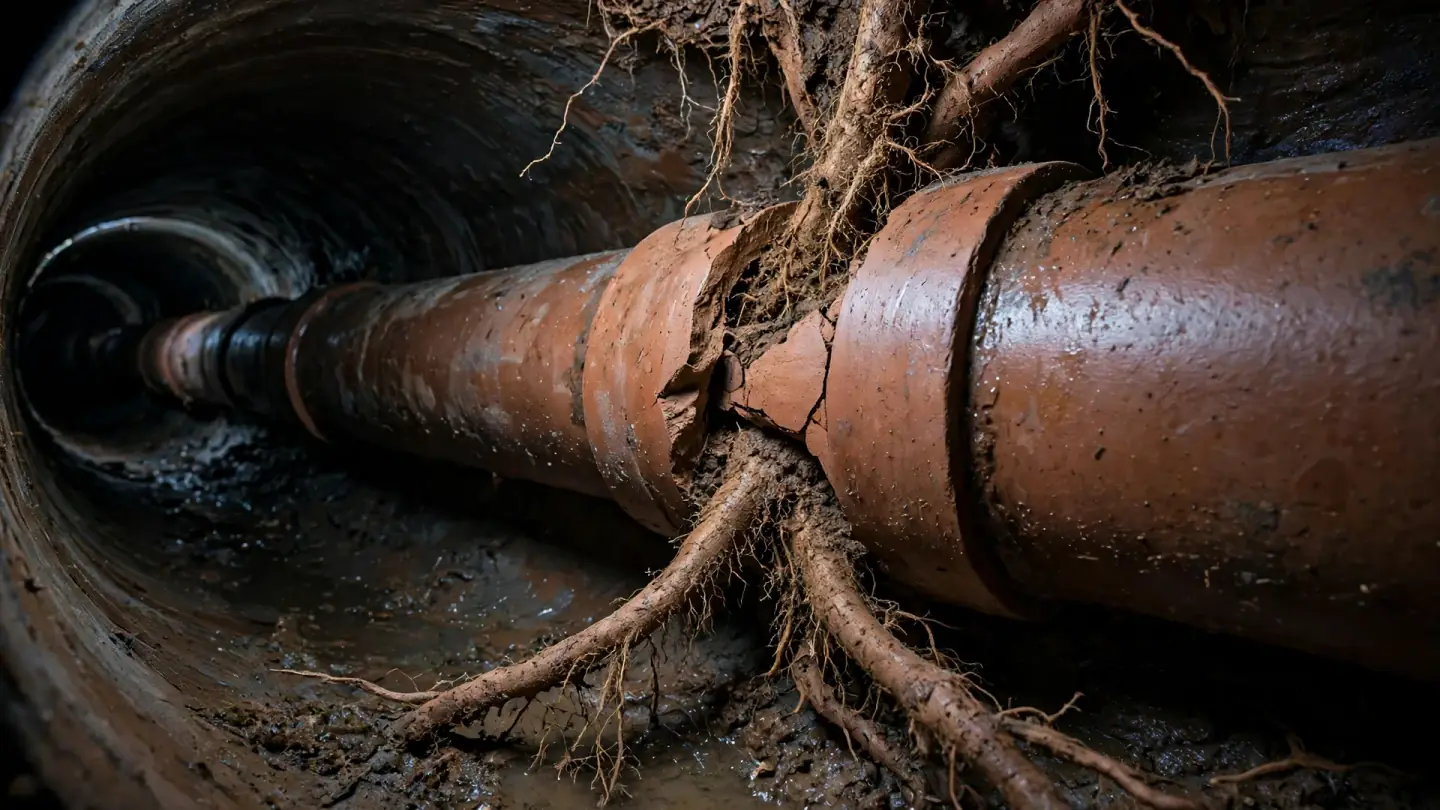
Mature street trees and short clay sections are a classic pairing. Roots find the joints, the line slows a little more each season, and one day the basement drain gurgles when the washer empties. See the tree roots guide for the warning signs.
Basement floor drains that back up
Many cottages have a floor drain at the lowest point of a shallow basement. When the lateral is partly blocked, that drain is where water shows up first. Floor drain cleaning starts by finding out whether the problem is the drain or the line beyond it.
Scaled cast iron stacks
Original cast iron can lose a surprising amount of its inside diameter to scale and rust. Kitchen and laundry water then moves slowly no matter how often the trap is cleaned.
Fixtures added to tight spaces
Bathrooms tucked under stairs or into former closets often have long, flat drain runs with little slope. They clog more easily and need gentler tools to clear without damage.
Historic district
Do historic district rules affect drain work in German Village?
The German Village Commission is appointed by the mayor and reviews proposed construction, reconstruction and exterior alteration inside the district boundaries, issuing Certificates of Appropriateness under the city code and the district guidelines [2]. Applications go to the Columbus Historic Preservation Office, not to the German Village Society [2]. Ordinary drain cleaning happens inside the house and in the pipe itself, so it does not change anything the Commission reviews. The question only comes up if a cleaning or camera inspection turns into a repair that would alter the outside of the property.
Examples that are worth asking about before any work starts include adding an exterior cleanout that would stand up from a front yard, cutting through a brick walk or patio to reach a broken section, or changing visible features such as downspouts at the front of a house. The contractor you're connected with can tell you on the call whether the job they're describing stays inside the walls and the pipe. If it does not, you should check with the Historic Preservation Office about whether a certificate is needed before agreeing to a date. That small step avoids having a repair stopped halfway through.
Trenchless methods and lining work are often discussed in historic neighborhoods because they disturb less of the surface. Whether either suits a particular German Village lateral depends entirely on what the camera shows: a line with a collapsed section or severe offsets may not be a candidate. A careful contractor will show you the footage and explain what they see rather than recommending a method before the pipe has been looked at.
Streets and lots
Brick streets, alleys and narrow lots
German Village's brick-paved streets are part of its character [1], and they also explain why many owners prefer to start with cleaning and inspection rather than digging. The sewer lateral from a cottage typically runs under a small front yard or side passage and then under the sidewalk and street toward the public main. Digging under brick paving, mature trees and wrought iron fences is disruptive. The more you know about the exact location and condition of a problem before anyone picks up a shovel, the better your options.
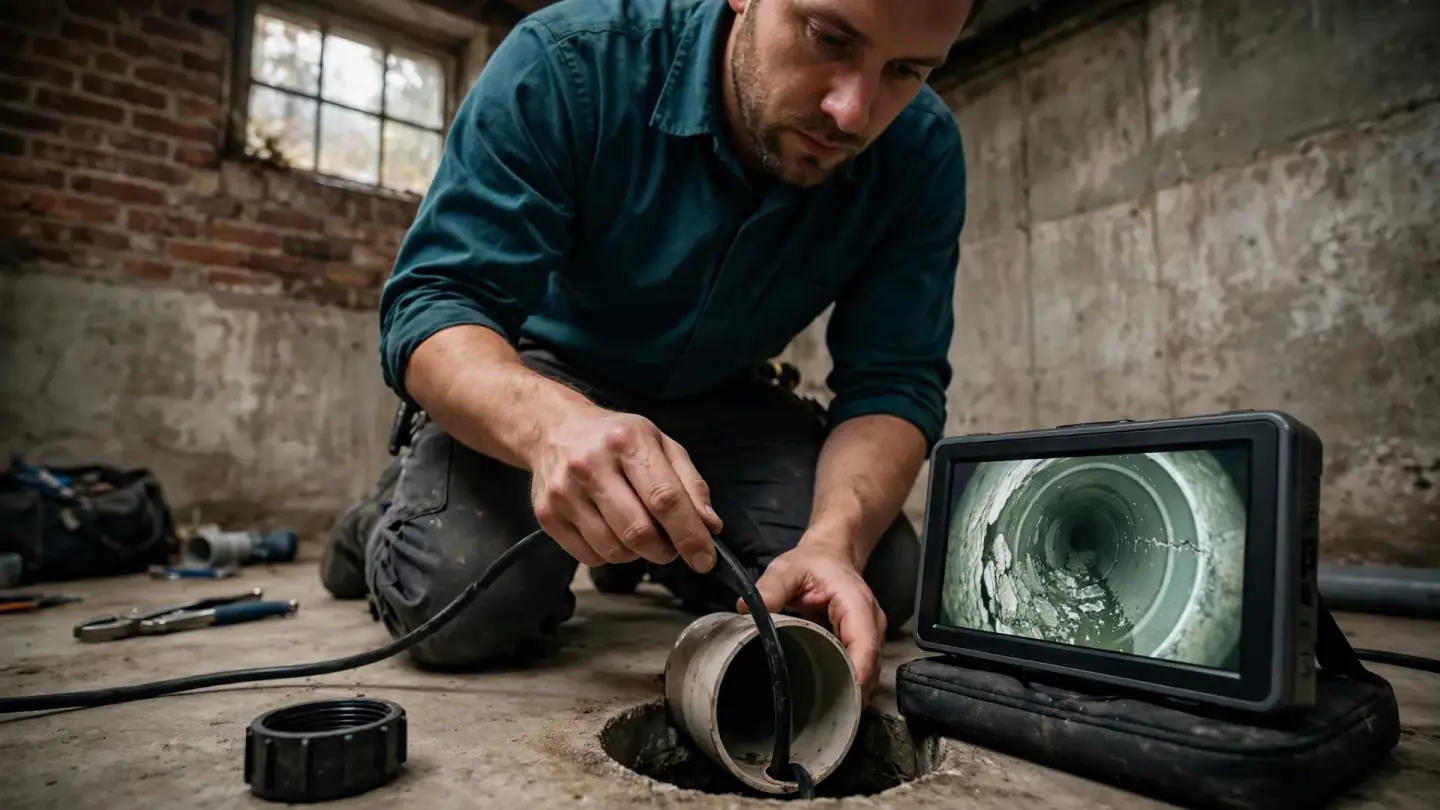
A drain camera inspection records the inside of the line and, with a locating transmitter on the camera head, can mark where on the surface a root mass or break sits and roughly how deep it is. In a district where lots are small and neighbors are close, that mark can be the difference between a narrow access point and a long trench. It also gives you something concrete to bring to the Historic Preservation Office if an exterior repair becomes necessary.
Because houses share walls in places and stand close in others, access is also a practical matter. Many cottages have their only cleanout in a basement corner, behind a furnace, or beneath a stair. If yours is hard to reach, clear a path before the visit and mention it on the call so the contractor can bring the right length and size of equipment.
Wet weather
Why do German Village basements back up during storms?
Not every basement backup in German Village starts in your own line. During heavy rain the public sewer can surcharge, meaning the water level in the main rises high enough to push back up laterals into the lowest drains of nearby houses. Columbus's Project Dry Basement program exists for exactly this situation: it pays for an approved backflow preventer at one- and two-unit homes where the public sewer has surcharged into the basement, whether from public system during wet weather or from blockages [3].
The city's process starts with a report. The first step is a call to the city sewer maintenance line at 614-645-7102, answered at all hours, and the city asks you to keep the service request number you receive [3]. If you are not sure whether a backup came from the main or from your own line, report it anyway and also have the line checked. A contractor can clear a private blockage and tell you whether the lateral looked open after cleaning; if water still came up during a storm with a clear line, that points back toward the public system.
If you do end up with a backflow device, the city says to inspect and clean it monthly [3]. In a small basement where the device sits in or near a floor drain, keep that spot clear of boxes and storage so you can reach it. The broader city effort to keep rain out of the sanitary sewer, Blueprint Columbus, works through lateral lining, downspout redirection, optional sump pumps and green stormwater projects [4]. If your downspouts are tied into an underground pipe that disappears near the foundation, ask the contractor whether it might connect to the sanitary line.
Before you call
Checks worth doing in an older German Village house
- Note which fixtures are slow. One sink alone suggests a branch line or trap; the basement drain plus the toilet suggests the main line. The multiple drains guide explains the pattern.
- Stop running water if any drain is backing up. Every flush or load of laundry adds to what has to come back out.
- Do not pour chemical drain openers into old cast iron or galvanized lines. They are hard on aging metal and make the job more hazardous for whoever opens the line next.
- Find the main cleanout if you can, and check whether it has a cap you can see. Do not open it if water is standing in the basement drain.
- Look at your downspouts. Note which ones drain onto the ground and which disappear into a pipe.
- If the backup happened during or after rain, report it to the city's Sewer Maintenance Operations Center and keep the request number [3].
Permits
Permits and who to ask in German Village
German Village is inside the City of Columbus, so plumbing permits come from Columbus Building and Zoning Services. The city's 2026 plumbing permit application asks for the property owner, the contractor and the contractor's City of Columbus registration number [5]. A homeowner doing their own plumbing work needs a separate homeowner affidavit [5]. Routine cleaning of an existing drain does not alter the plumbing system, so it is usually not permitted work; repairs and replacements are where the permit question becomes real. Ask the contractor on the call which category the work they are describing falls into.
Plumbing work in Ohio follows the Ohio Plumbing Code, which the Board of Building Standards publishes as Title 4101:3 of the Ohio Administrative Code [8]. Any digging also brings in OHIO811: the person excavating must notify no less than two business days ahead, and private lines like your own sewer lateral are not marked by that service [6]. On narrow German Village lots with gas, water and electric lines close together, that notice is not optional paperwork.
For anything that involves the public sewer, including where the city's responsibility begins at your connection, ask Columbus Water & Power directly. For exterior changes that the Commission reviews, ask the Historic Preservation Office [2]. Keeping those three contacts separate (building permits, the utility and historic review) makes it much easier to get a clear answer.
Planning
Planning a drain visit on a German Village street
- 1
Tell the contractor what the drain is doing
Say which drains are affected, when it started, whether it got worse after rain, and how old you think the plumbing is. That lets the contractor on the call suggest whether a drain machine, a camera, or both make sense.
- 2
Sort out parking
Streets are narrow and parking is tight. Tell the contractor if there is an alley, a rear gate, or a nearby spot where a work vehicle can stand while hoses or cables run to the house.
- 3
Clear the route to the cleanout
Move stored items from the basement stairs and the area around the floor drain and cleanout. Protect old wood floors along the path if you are worried about them.
- 4
Watch the camera footage
If the line is inspected, ask to see the recording and ask what each feature is: a root, a joint, an offset or a belly. Ask for a copy if one is available.
- 5
Agree next steps before any exterior work
If the plan involves anything outside, confirm with the Historic Preservation Office whether review is needed before scheduling it.
Cleaning or more
When cleaning is enough and when to look further
A single clog in a sink or tub in an older cottage is usually just that: hair, soap or grease caught in a trap or an old, rough branch line. A cable machine of the right size clears it and the drain behaves again. The pattern to watch for is repetition. If the same basement drain backs up every few months, or the main line needs clearing every spring and fall, something in the line is catching debris. In German Village that is very often roots at clay joints [7].
In that case cleaning alone keeps buying time without fixing the cause. Main sewer line cleaning with a cutting head removes the roots that are there; hydro jetting can scour a line more completely where its condition allows; and a camera tells you whether the pipe is otherwise sound. With footage in hand you can decide between a maintenance schedule and a repair, based on what the pipe really looks like. The replace vs clean guide walks through how people usually make that call.
Nearby, the Short North page covers dense commercial lines, and the full list of covered areas shows every neighborhood with its own notes.
FAQ
German Village drain questions
Does German Village Commission approval apply to cleaning my drain?
No approval is normally involved for cleaning from inside the house, because the Commission reviews exterior changes [2]. If the job grows into a repair that alters the outside, such as cutting a brick walk or adding a yard cleanout, ask the Historic Preservation Office about a Certificate of Appropriateness before work is scheduled [2].
Why does my German Village basement drain back up when it storms?
A storm backup in German Village usually means either a partly blocked lateral or a surcharging public sewer. Report it on the city’s 614-645-7102 sewer line and note the request number [3]. Then have the line checked, because a cleaning plus camera run tells you which of the two caused it.
Are the clay sewer pipes under German Village houses worn out by now?
Not necessarily; clay resists wastewater well [7]. The weak spots are its many joints, where roots and shifting soil catch debris. Because houses here were built over about seven decades [1], neighbors can have very different pipes. A camera inspection shows whether yours needs only root cutting or has damage cleaning cannot fix.
Can a drain contractor work on a narrow German Village street with no parking?
Usually, yes, though you should mention parking on the call. Narrow lots and brick-paved streets are typical here [1]. Hoses and cables can run a fair distance from the truck, and an alley or rear gate often helps. The contractor can say how much space their equipment needs.
Who issues plumbing permits for a German Village house?
Columbus Building and Zoning Services issues plumbing permits, since German Village is part of Columbus [5]. Routine cleaning normally needs no permit. Repairs are different: the 2026 permit form wants the installer's city registration on it [5], and plumbing work follows the Ohio Plumbing Code [8].
Is a backflow device worth it for a German Village double with a basement?
A backflow prevention device can stop public-sewer surges from reaching a German Village basement. Columbus's Project Dry Basement covers an approved device for eligible single and two-family homes after a reported backup [3]. A Dutch double may qualify as a two-family home. The city says to inspect and clean the device monthly [3].
Why would a contractor suggest cleaning instead of digging up my German Village lateral?
Brick streets, walks and tight lots make excavation disruptive here [1], so many owners start with cleaning and a camera inspection. If the camera shows the clay is mostly intact with root intrusion at joints [7], regular cleaning may be enough. Digging is usually reserved for collapsed or badly offset sections.
Sources and citations
- [1]Wikipedia: German Village
- [2]City of Columbus: German Village Commission
- [3]Columbus Water & Power: Project Dry Basement
- [4]Blueprint Columbus: the four pillars
- [5]Columbus Building and Zoning Services: plumbing permit application 2026
- [6]OHIO811: information for homeowners
- [7]Wikipedia: Vitrified clay pipe
- [8]Ohio Administrative Code 4101:3 (Ohio Plumbing Code)