Key facts: Restaurant Drain Backup
- Columbus requires food service operations to keep a FOG Best Management Plan that includes a grease interceptor cleaning log [1].
- The city's FOG program covers food service operations in Columbus and the suburban communities that contract with it for wastewater treatment [1].
- Fats, oils and grease are a leading cause of sewer blockages and can cause overflows and basement backups nearby [1].
- A grease interceptor slows kitchen wastewater so fats float and solids settle before the water reaches the sewer [2].
Mid-service
What is happening when the dish pit and floor sinks back up together?
In a commercial kitchen almost every drain ends up in the same place: the three-compartment sink, the dish machine, prep sinks and floor sinks all feed a grease line that runs to the interceptor. When that line or the interceptor itself is blocked, the water has to come out somewhere, and it usually appears first in a floor sink or a floor drain near the dish station. If you see greasy grey water rising there while the dish machine is running, the shared kitchen line is the problem, not one fixture.
The cause is almost always the same material. Fats, oils and grease cool and stick to the pipe wall, food solids get caught on that layer, and the opening shrinks until a busy rush finally exceeds it. The City of Columbus calls grease a leading cause of sewer blockages and points out that those blockages can also cause overflows and backups into nearby basements [1]. An interceptor that has not been pumped on schedule makes the same thing happen faster, because grease and solids carry straight through it into the outlet line.
This page is written for food service operations. Offices, apartment buildings and retail spaces with drain emergencies are covered on the broader emergency commercial drain cleaning page.
Kitchen signals
Warning signs a restaurant grease line is closing up
Floor sinks slow to empty
Water from the dish machine sits in the floor sink longer than usual before it drains, especially at the end of a rush.
Gurgling at the prep sink
Air bubbling back through one sink when another drains means the line they share is partly full.
Rancid smell near the interceptor
A strong sour odor around an in-floor or outdoor interceptor often means it is overdue for pumping.
Grease at the cleanout or manhole
Visible grease where the line leaves the building means material is passing through the interceptor into the sewer lateral.
Keep cooking?
When should a manager stop service?
That decision belongs to the operator, and most managers make it quickly once wastewater reaches the floor in food areas. If dirty water is backing up into the kitchen, food contact surfaces, ware washing and hand sinks can no longer be used safely, and continuing to run water feeds the backup. Many kitchens switch to a limited menu with no dish washing while they wait, or close until the line is open. Your food safety plan and Columbus Public Health are the right references for what is required; this page does not replace them.
Whatever you decide, write down the time the backup began, which drains overflowed and what was done. That record is useful for the contractor, for your landlord if you lease the space, and for the FOG paperwork afterward.
The visit
How a commercial contractor opens a restaurant grease line
- 1
Check the interceptor first
If the interceptor is full, cleaning the line alone will not hold. The contractor looks at levels and the outlet before choosing where to work.
- 2
Choose the access point
Work usually starts from a cleanout between the kitchen and the interceptor, away from food areas, so the line can be opened without dragging cable through the kitchen.
- 3
Open the stoppage
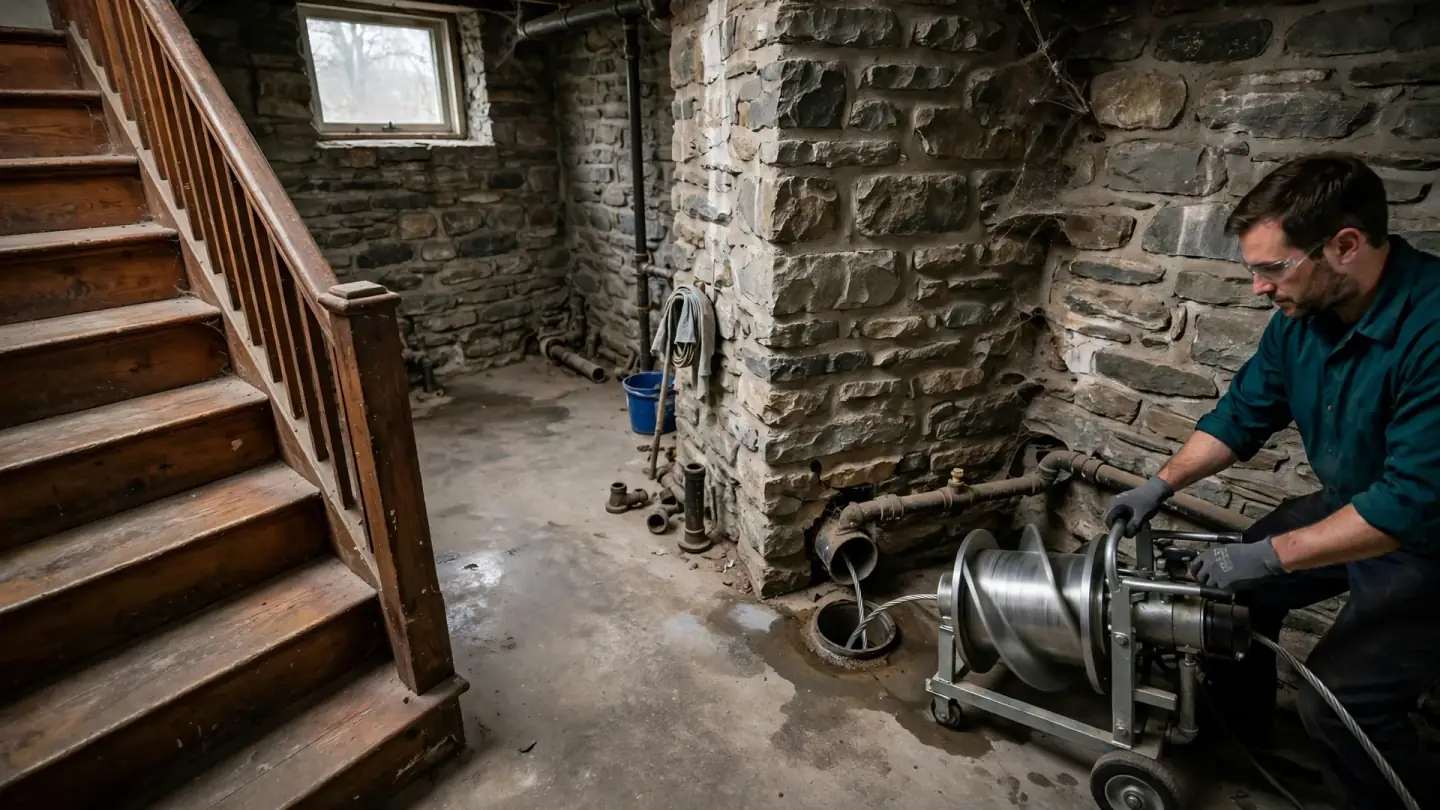
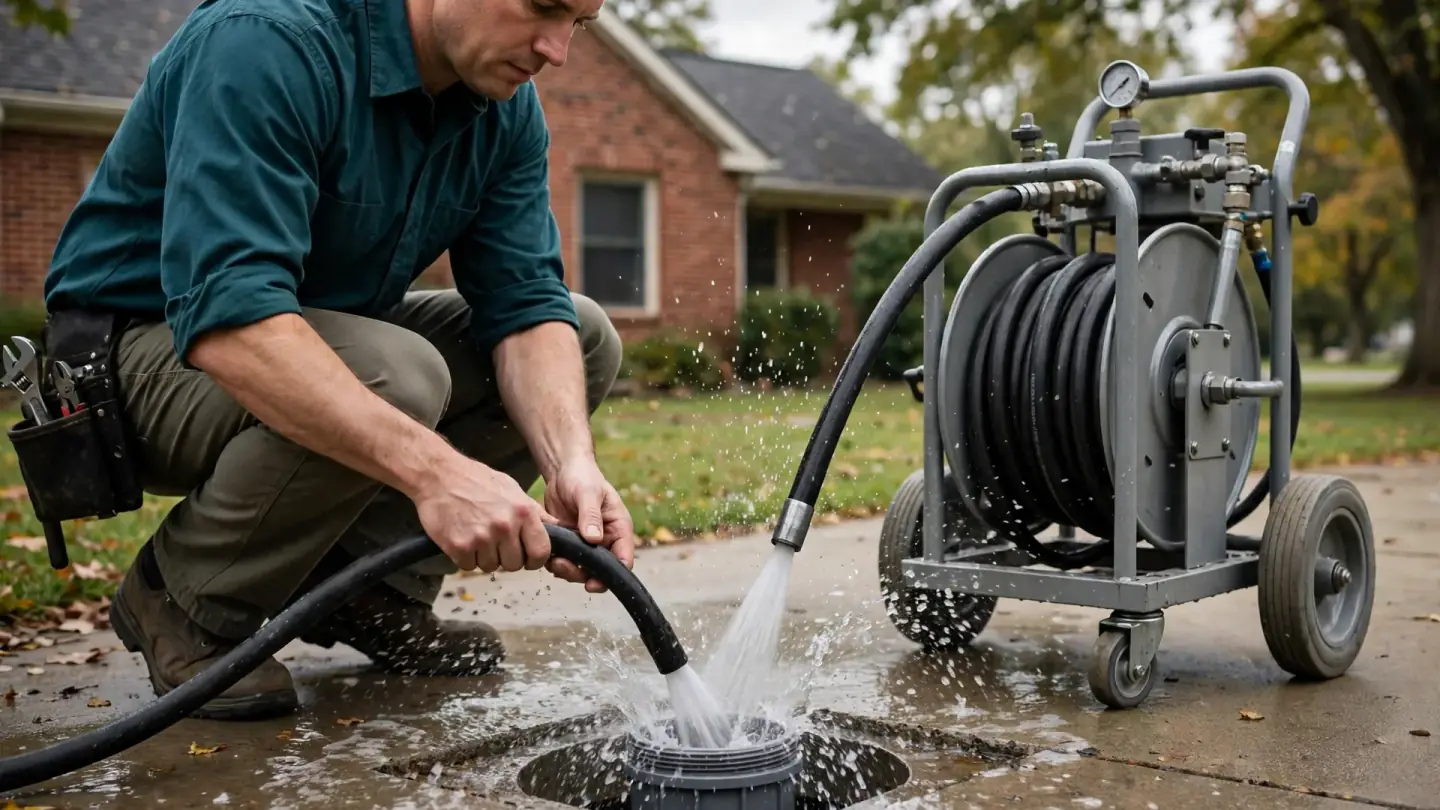
A cable machine may make a first opening, then hydro jetting scours grease from the walls so the line does not close again in a few days.
- 4
Arrange pumping if needed
A full interceptor is pumped by a waste hauler. Columbus rules require haulers to complete or pass on the cleaning log details [1].
- 5
Camera and report
A camera pass can show sags or broken sections where grease collects. You get a plain account of what was found to keep with your records.
Columbus rules
The Columbus FOG program and your paperwork after a backup
Columbus requires food service operations to develop and follow a FOG Best Management Plan, and that plan includes a grease interceptor cleaning log [1]. The program applies inside the city and in the suburban communities that send their wastewater to Columbus for treatment, so a kitchen in a contract community is usually covered too [1]. Where grease separation is required, the device itself needs plan approval through Building and Zoning Services [1].
After a backup, update the log with the date of any emergency pumping and keep the contractor's notes with it. If the backup reached the public sewer or caused grease to show up downstream, the city may follow up. Questions about the program go to the Division of Sewerage and Drainage's industrial pretreatment staff, listed on the city's FOG page. For ongoing maintenance between emergencies, the commercial drain cleaning page covers scheduled jetting and interceptor coordination, and the fats, oils and grease guide covers kitchen habits that keep grease out of the line.
Avoid
What not to do while the kitchen line is blocked
- Do not keep running the dish machine to see if it clears; hot water moves grease downstream and then it sets again.
- Do not open the interceptor lid during service near food prep without containment ready.
- Do not use enzyme or caustic products as a quick fix; they are not a substitute for pumping and clearing.
- Do not let staff mop contaminated water toward a floor drain that is already backing up.
Local factors
Older buildings in the Short North and downtown
Many Columbus restaurants operate in tightly packed early twentieth-century brick buildings along High Street, often below apartments or offices [3]. Those buildings were not designed around commercial kitchens, so grease lines can be long, have several bends, or share a building drain with upstairs units. When a restaurant line backs up in a mixed-use building, residents above may notice slow drains too. Tell the contractor about any shared lines and who manages the building. For any other urgent drain problem, start at the emergency drain cleaning page or the emergency hub.
FAQ
Restaurant owners' questions about kitchen drain backups in Columbus
Who do I call when my restaurant floor drains back up in the middle of dinner service?
Call a commercial drain contractor and check emergency availability, describing which fixtures are overflowing and when the interceptor was last pumped. If the interceptor is full, you may also need a waste hauler to pump it. Stop running water at the dish machine and sinks while you wait.
Do I have to close my restaurant if the kitchen drain backs up?
That is your decision under your food safety plan, but wastewater on the kitchen floor usually means ware washing and prep must stop. Many operators close or run a limited menu until the line is cleared. Columbus Public Health is the authority to ask about specific requirements.
What is the FOG Best Management Plan Columbus asks restaurants to keep?
It is a written plan for keeping fats, oils and grease out of the sewer, required for food service operations under the city code. It includes a grease interceptor cleaning log that records each pumping [1]. Update it after any emergency pumping and keep the contractor's notes with it.
Will jetting the grease line fix the backup if the interceptor is full?
Not for long. If the interceptor is full, grease and solids pass straight into the outlet line and the blockage returns. The interceptor needs pumping as well as the line being cleared. The contractor checks the interceptor first, then decides where to clear.
Can a grease backup in my restaurant affect the apartments upstairs?
Yes, if the restaurant and the apartments share a building drain. A grease plug downstream of where the lines join can slow or back up fixtures upstairs too. Tell the contractor about shared lines, and let the building manager know so residents stop running water.
Why does the city care about grease from a single restaurant?
Grease that passes through to the public sewer builds up in city pipes and can cause overflows and backups into nearby basements. Columbus calls grease a leading cause of sewer blockages and runs its FOG program to reduce it [1].