Key facts: Clintonville
- South Clintonville was mostly built before 1930, including many catalog kit homes; North Clintonville was built from about 1910 through the late 1950s [1].
- Six glacial ravines cross Clintonville east to west, and land west of North High Street sits lower than land to the east [1].
- Blueprint Columbus has a lateral-lining project for the Clintonville and Old Beechwold area as part of its plan to keep rain water out of sanitary sewers [2][3].
- Basement backups in Columbus should be reported to the Sewer Maintenance Operations Center, which issues a service request number [4].
The housing
Clintonville's housing, from kit homes to postwar ranches
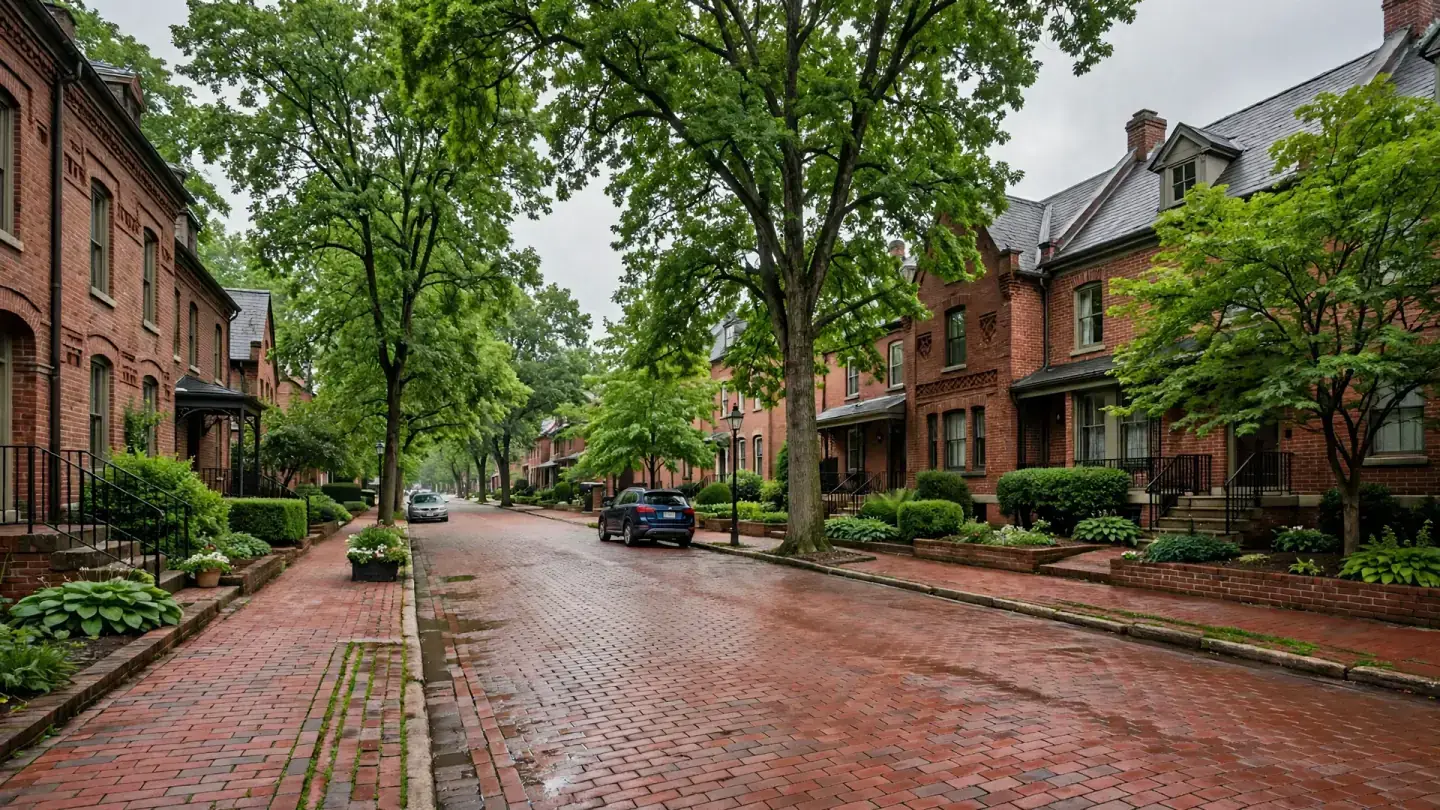
Clintonville runs from Glen Echo Creek in the south to Henderson Road in the north, with the Olentangy River along its western edge [1]. Streetcar lines pushed north from downtown in the early 1900s and turned farmland into subdivisions, so the neighborhood is often described as a streetcar suburb [1]. South Clintonville was built mostly before 1930 and includes many catalog kit homes, the houses that arrived as numbered lumber and were assembled on site. North Clintonville filled in from about 1910 through the late 1950s, with larger lots and driveways instead of alleys [1].
For drains, that spread of decades means there is no single Clintonville plumbing profile. A 1920s bungalow near the south end may still send its waste through a clay lateral and a cast iron stack. A 1950s house further north may have cast iron inside and clay or early composite pipe outside. Some owners have replaced their main lines; many have not. What they share is age: almost every original drain here has been in the ground for seventy years or more, and the yard trees planted when the houses were new are now very large.
Kit homes deserve a note of their own. They were designed around the plumbing fixtures of their day, and later owners often added bathrooms, moved laundries to the basement and expanded kitchens. Those additions are frequently tied into the original lines at awkward angles. When a single fixture in one of these houses keeps clogging, the cause is often the geometry of the connection rather than anything the household is doing.
Common calls
Drain trouble that shows up most in Clintonville
Roots from mature yard and street trees
Big trees and old clay joints mean roots are a frequent cause of slow main lines. The tree roots guide covers the signs and what root cutting can and cannot do.
Water at the basement floor drain after storms
Low basements and slopes toward the river mean storm timing matters. If the floor drain only misbehaves in heavy rain, say so on the call.
Laundry drains overwhelming old lines
A modern washer empties fast into a basement standpipe that was never sized for it. Gurgling and overflow at the standpipe often point to a partly blocked main.
Odd-angled additions
Second bathrooms and kitchen moves tied into original lines can create flat runs and tight turns that collect debris.
Terrain
Does a ravine or river-side lot change how a Clintonville drain behaves?
Six glacial ravines cut across Clintonville from east to west, and four of them have been developed [1]. In 1913 Glen Echo was set aside as parkland, the earliest of the ravines to be protected that way [1]. The other notable piece of geography is a simple slope: property west of North High Street sits lower than property east of it [1]. Those details are not trivia for anyone with a basement. Houses on ravine edges and on the lower, river side of the neighborhood can have deep basements, long laterals or laterals that drop steeply toward the street.
Slope affects how a drain line behaves. A lateral with too little fall lets solids settle; one with a sharp drop can separate water from solids so that paper and waste are left behind in a lower section. Ground movement on slopes can also shift clay sections out of line over the decades, creating small ledges at joints. A camera inspection shows these offsets plainly, and they explain why some lines clog again soon after being cleared.
If your house sits near a ravine or on the west side of High Street, mention it when you call. It helps the contractor think about cable length, the likely depth of the line and whether a camera is worth bringing on the first visit.
City program
Blueprint Columbus lateral lining in Clintonville and Old Beechwold
Blueprint Columbus is the city's plan to stop rain water from getting into the sanitary sewer, where it can cause overflows and basement backups. Its four pillars are sealed laterals, disconnected downspouts, voluntary sump pumps and rain gardens or similar green features [3]. The problem it targets is familiar in older neighborhoods: cracked pipes, leaky joints and foundation drains tied into the sanitary system let storm water in [3].
The city has a lateral-lining project covering part of Clintonville and Old Beechwold [2]. Old Beechwold, bounded by High Street and the Olentangy, carries historic listings at the city, state and national level, which no other part of Clintonville does [1]. If your street is inside a Blueprint project area, the city may already have plans for your lateral, and it is worth knowing that before you arrange private repair work on the same pipe. Ask Columbus Water & Power whether your address is included.
Lining is not the same as cleaning. A liner is installed inside an existing pipe after it has been cleaned and inspected; it does not fix a sink that is clogged with grease, and it does not change what goes down your drains. If you are inside a project area and have a blockage now, a cleaning to restore flow is still a separate job. The contractor on the call can explain the difference for your situation.
Wet basements
Sump pumps, downspouts and Clintonville basements
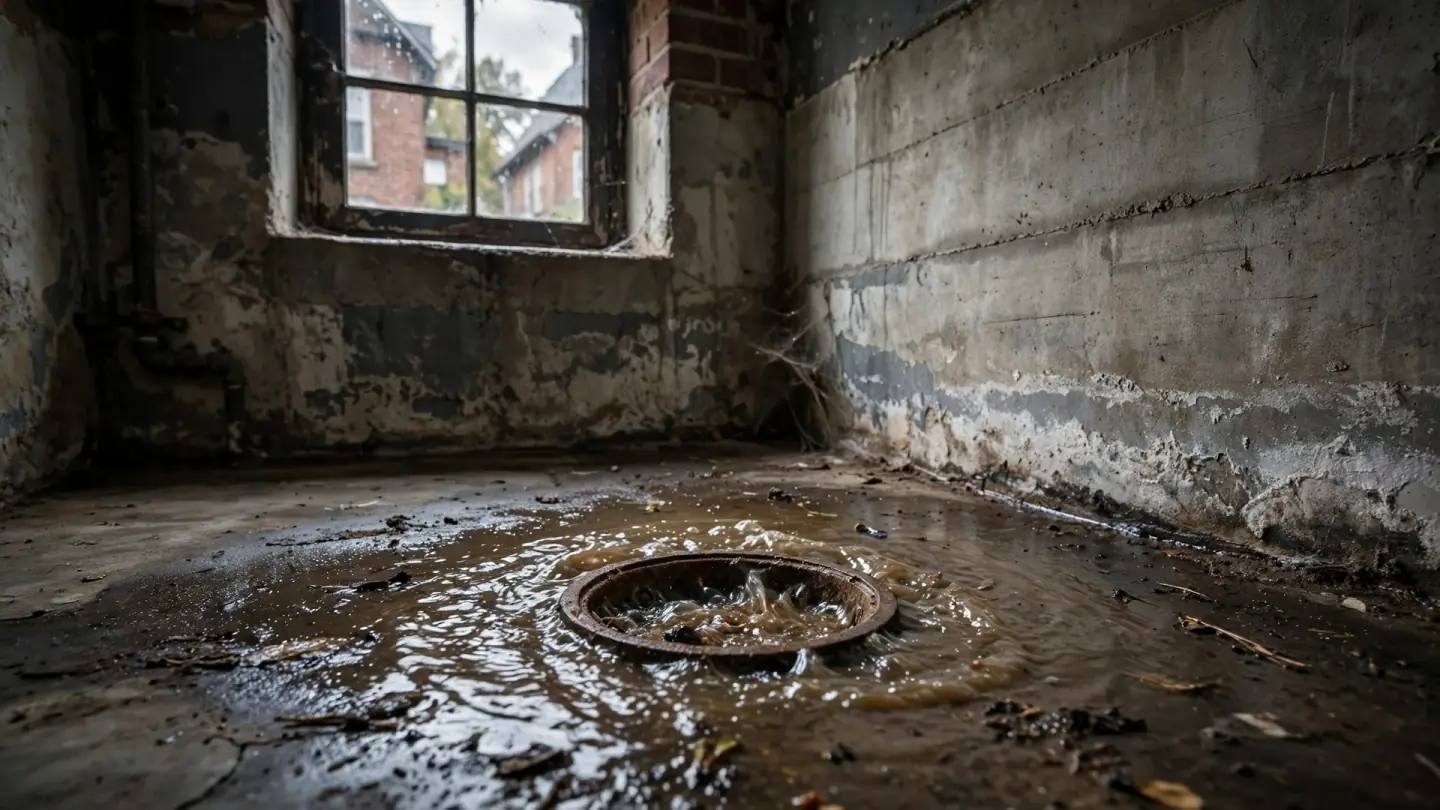
A sump pump collects ground water from around a foundation and pumps it out of the basement [7]. Where it discharges matters. A sump that empties into a floor drain or a laundry tub sends ground water into the sanitary sewer, which is exactly the kind of flow Blueprint Columbus is trying to remove [3]. The same goes for downspouts that feed an underground pipe connected to the sanitary lateral. During a long rain, that extra water can push a partly blocked line over the edge.
If your basement drain backs up mainly during storms, look at where the sump discharge and downspouts go before you call. Tell the contractor what you find. It helps them separate a blockage in your line from a capacity problem, and it may point to a change you can ask the city about through the voluntary sump pump program [3].
For backups that came from the public sewer during wet weather, Columbus's Project Dry Basement covers an approved backflow prevention device for eligible single and two-family homes. Call the city sewer maintenance line at 614-645-7102, which is staffed around the clock, and write down the request number it gives you [4].
Before you call
What a Clintonville homeowner can check first
- Note whether the problem is one fixture or several. Several fixtures at once, especially the lowest ones, points at the main line. The multiple drains guide explains why.
- Check whether it is worse after rain. Write down dates if it keeps happening.
- Find where your sump pump and downspouts discharge.
- Stop using water if anything is backing up, and keep children and pets away from standing water in the basement.
- Skip chemical openers. In old metal lines they add risk without fixing roots or offsets.
- If you have had the line scoped before, find the footage or notes so you can compare.
Permits
Who handles permits and the public sewer for a Clintonville address?
Clintonville sits inside Columbus city limits; the township land was absorbed into the city by the 1950s [1]. Plumbing permits are therefore handled by Columbus Building and Zoning Services. The 2026 plumbing permit application has a field for the contractor's Columbus registration, and a homeowner who does their own work needs a separate affidavit [5]. Cleaning an existing drain is normally maintenance rather than permitted work; repairs or replacement of the line are where permits apply.
Columbus Water & Power is the utility for the public sewer and runs Blueprint Columbus. Questions about whether your address is in a lining project, or where city responsibility starts at your connection, go to them. If a repair involves digging in your yard, OHIO811 must be notified at least two working days ahead, and private lines such as your lateral are not marked by that service [6]. On wooded lots, the contractor should also plan around large roots near the dig.
Planning
How to plan a drain visit in Clintonville
- 1
Give the history
On the call, mention the age of the house, any previous root cutting, and whether problems follow storms. Those three facts narrow the likely cause quickly.
- 2
Point out the cleanout and trees
Know where the basement cleanout is, and which large trees stand between the house and the street. That is often where roots enter.
- 3
Driveway or alley access
North Clintonville homes tend to have driveways; south end homes may have alleys. Tell the contractor which side gives the easiest access for equipment.
- 4
Ask about a camera
For a repeat main-line clog, a drain camera inspection after cleaning shows whether the problem is roots, an offset or a sag.
- 5
Check for a Blueprint project
Before agreeing to private lateral work, confirm with the city whether your street is in a lining project area.
Choosing a service
Matching the service to a Clintonville drain problem
A slow bathroom sink or tub in an old bungalow is usually a local clog that a small cable clears. A kitchen line that keeps slowing is often grease building up on a rough interior, and kitchen drain cleaning with the right head restores the diameter. A main line that backs up at the floor drain calls for main sewer line cleaning, usually with a root-cutting blade in this neighborhood, followed by a look with a camera.
If the footage shows roots at many joints but the pipe is otherwise intact, a regular cleaning schedule can keep it working, and preventative drain maintenance explains how people set that up. If it shows a broken or collapsed section, cleaning will not hold, and the conversation becomes one about repair. Either way, you decide with the footage in front of you.
For the wider picture, compare the notes on other Columbus neighborhoods or the German Village page, where clay joints cause similar trouble.
FAQ
Clintonville drain questions
Why do old Clintonville houses get tree roots in the sewer line so often?
Clintonville combines old clay laterals with big mature yard trees, and roots find water at the pipe joints. South Clintonville was mostly built before 1930 [1], so many lines have dozens of joints. Root cutting reopens the pipe, and a camera run afterward shows whether the line is sound or has cracks that roots will keep using.
Should I still get my drain cleaned if my Clintonville street is in a Blueprint lining project?
Yes, a drain that is blocked today still needs clearing, because city lateral lining is a separate scheduled project and does not remove an active clog [2]. Clear the blockage first, then ask Columbus Water & Power where your street sits in the lining schedule before you arrange any private lateral repair.
Can living on a Clintonville ravine make my sewer line sag?
A ravine edge can affect a lateral, mainly through deeper basements and uneven slope. Six glacial ravines cross the neighborhood and land west of North High Street sits lower [1]. A sag or offset holds water and debris, so clogs come back; a camera inspection after cleaning is the usual way to find one.
Is it a problem that my Clintonville sump pump drains into the floor drain?
Yes, it can be, because a sump emptying into a floor drain or laundry tub pushes ground water into the sanitary sewer during storms [3]. That extra flow can overwhelm a partly blocked lateral and cause backups. Mention the sump discharge on the call; the city also runs a voluntary sump pump program under Blueprint Columbus [3].
Do Clintonville kit homes from the 1920s have different drains than newer ranches?
Often they do. Pre-1930 kit homes in South Clintonville [1] usually have cast iron inside and clay outside, while houses built into the late 1950s further north may have different materials or later replacements. Telling the contractor the house age and any past sewer work helps them bring the right cable heads and camera.
Who do I report a sewer backup to if I live in Clintonville?
Call the city’s sewer backup line, 614-645-7102, and keep the request number [4]. Clintonville is inside Columbus [1], so the public sewer belongs to the city. The request number matters if you later apply to Project Dry Basement for a backflow device [4].
Do I need to call OHIO811 before a sewer repair in my Clintonville yard?
Yes, whoever does the digging must notify OHIO811 two working days or more ahead [6]. Keep in mind that OHIO811 marks public utility lines only; your private sewer lateral is not marked [6], so the contractor usually locates it with a camera sonde before any shovel goes in.
Sources and citations
- [1]Wikipedia: Clintonville (Columbus, Ohio)
- [2]City of Columbus: Blueprint Clintonville and Old Beechwold lateral lining environmental review
- [3]Blueprint Columbus: the four pillars
- [4]Columbus Water & Power: Project Dry Basement
- [5]Columbus Building and Zoning Services: plumbing permit application 2026
- [6]OHIO811: information for homeowners
- [7]Wikipedia: Sump pump