Key facts: Slow bathroom sink fixes
- The trap under a sink holds water that blocks sewer gas, and it also catches hair and debris that need cleaning out [1].
- Most traps can be taken apart or have a cleanout for cleaning [1].
- Sink drains can include a strainer, a shut-off device and an overflow-prevention outlet [2].
- Chemical drain cleaners can be caustic and may harm skin, eyes and some pipe materials [3].
Short answer
What fixes a slow bathroom sink fastest?
Pull the pop-up stopper. On most bathroom basins it lifts straight out, or comes free after you loosen a nut on the pivot rod behind the drain under the sink. Hair, toothpaste and soap usually form a grey mat around the stopper's lower end, and cleaning it often restores full flow in minutes.
This guide is a hands-on walkthrough for the bathroom basin only. The broader slow draining sink guide compares kitchen, bathroom and laundry sinks and helps you decide which kind of clog you have.
Sink clues
Bathroom sink symptoms and the fix that matches
| What you see | Likely cause | What to do |
|---|---|---|
| Water drains slowly with the stopper fully up | Hair wrapped on the stopper | Remove and clean the stopper |
| Musty smell from the small hole under the rim | Slime in the overflow channel | Flush and brush the overflow |
| Slow even with the stopper out | Buildup in the trap | Remove and clean the trap over a bucket |
| Still slow with a clean trap | Clog in the branch line in the wall | Use a small hand snake or call |
| Sink and tub both slow | Shared bathroom branch blocked | Call about clearing the bathroom line |
Hair and soap on the pop-up stopper
Safe checks
Before you take the basin drain apart
- Clear the cabinet and put a bucket and old towel under the trap.
- Have rubber gloves and a flashlight ready.
- Do not use a chemical opener first; if one is already in the sink, flush with plenty of water and wear eye protection [3].
- Take a photo of the parts under the sink before loosening anything, so they go back the same way.
- Hand-tighten plastic nuts; tools can crack them.
Step one
Pulling and cleaning the pop-up stopper
- 1
Try lifting it out
Raise the stopper and twist. Some lift free; others are held by the pivot rod under the sink.
- 2
Loosen the pivot nut
Under the sink, unscrew the nut where the horizontal rod enters the drain pipe and slide the rod back.
- 3
Clean the stopper
Pull out the stopper, wipe off hair and soap, and scrub the slot with an old toothbrush.
- 4
Reassemble
Drop the stopper in, slide the rod back through its hole and tighten the nut by hand.
- 5
Test the flow
Run the tap. If it drains freely and nothing drips under the sink, you are done.
Step two
Clearing the overflow channel
The small hole under the basin rim is an overflow outlet that lets water escape before it spills over [2]. Its channel runs down inside the basin and joins the drain below the stopper. Toothpaste, soap and bacteria coat that channel and cause the musty smell many people blame on the main drain. A bottle brush and a kettle of hot, not boiling, water poured into the overflow clean it out. Air also enters through the overflow while the sink drains, so a clogged overflow can make draining slower.
If the basin is a vessel sink or has no overflow, skip this step.
Step three
Removing the P-trap under a bathroom basin
The curved pipe under the sink is the trap. It holds water to block sewer gas and also catches hair and debris, which is why it needs cleaning now and then [1]. Most bathroom traps are plastic or chrome with two slip nuts that loosen by hand; some have a small cleanout plug at the bottom instead [1]. Loosen both nuts, let the water drain into the bucket, and clean the inside of the curve and the short pipe going into the wall.
Put the trap back with the washers in the same order, tighten by hand, then run water and check for drips. A trap that keeps leaking may need new washers. In older Columbus houses the trap may be metal that has thinned; if it crumbles or the nuts will not move, stop there and let a contractor replace it, since drain work falls under the Ohio Plumbing Code [5].
Step four
When the clog is past the wall
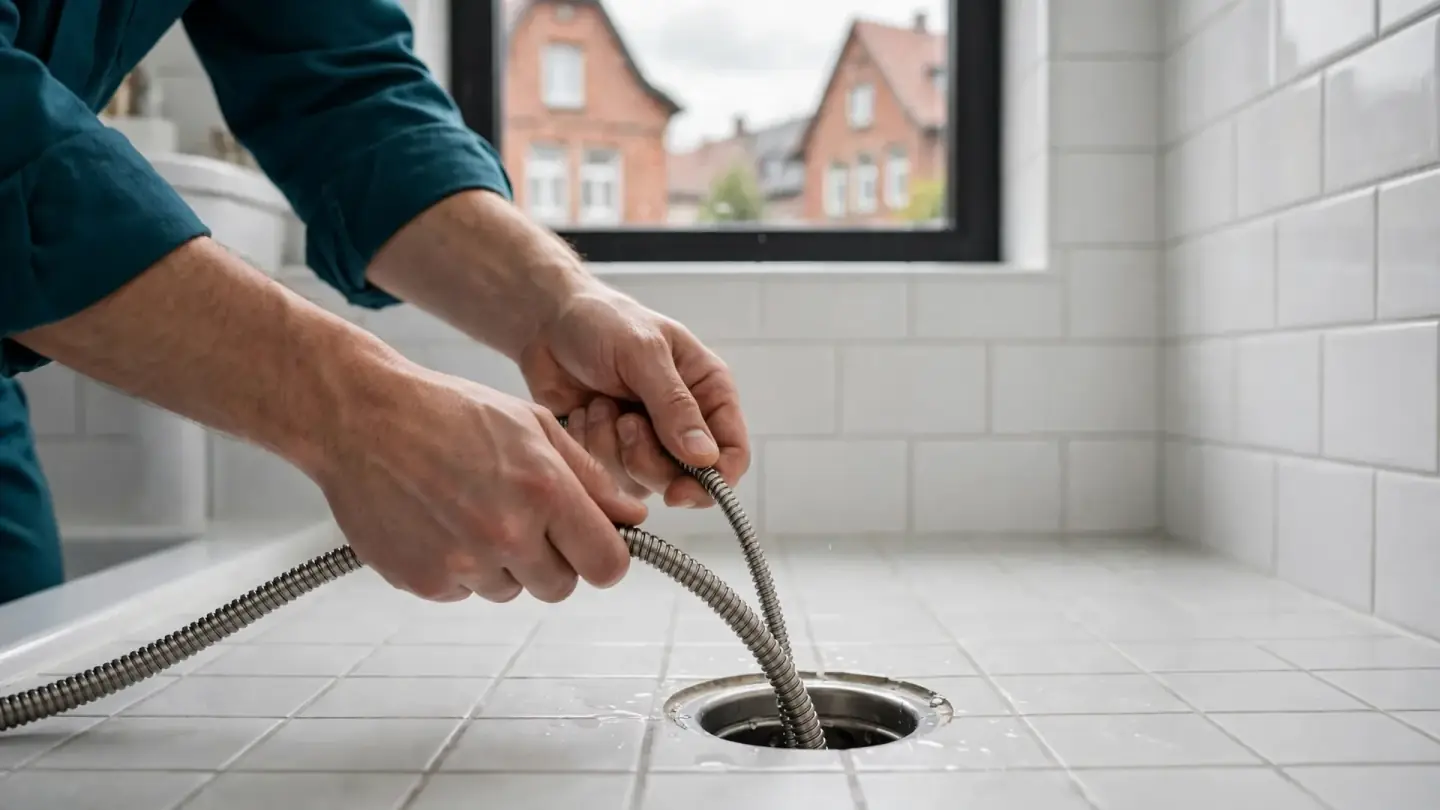
With the trap off, you can feed a small hand snake into the pipe that goes into the wall [4]. Turn it gently as it goes; if it catches a hair mass, pull it back slowly. Stop if you meet hard resistance, because in an older home that branch may be galvanized or cast iron and can be fragile.
If the bathtub or shower in the same room is also slow, the clog is probably in the shared bathroom branch, not the basin. That is a job for bathroom drain cleaning, where the contractor clears the whole branch from a better access point. For a tub drain alone, see shower and bathtub drain cleaning.
Diagnosis
How a contractor works on a stubborn basin drain
- 1
Check the stopper and overflow
The simple parts are checked first in case the cause is right at the top.
- 2
Pull the trap
Removing the trap gives direct access to the wall pipe and shows the pipe material.
- 3
Run a small cable
A hand or small powered cable is fed through the wall branch to the vent and stack.
- 4
Test with other fixtures
Running the tub and toilet shows whether the clog was local or shared.
- 5
Replace worn parts
Corroded traps, leaking washers or a broken stopper are noted so you can decide on replacing them.
Prevention
Keeping a bathroom basin draining freely
- Pull and rinse the pop-up stopper every month or two.
- Brush hair into the bin rather than rinsing it into the basin.
- Flush the overflow with hot water now and then.
- Rinse thick toothpaste and shaving foam down with plenty of water.
- Avoid regular chemical openers; they can attack older metal pipe [3].
On the call
Basin drain details that help on the phone
- What you have already tried: stopper, overflow, trap or snake.
- Whether the tub, shower or toilet in the same bathroom is also slow.
- What the pipes under the sink are made of, if you can see.
- Whether any chemical opener is in the drain now.
- Which floor the bathroom is on.
FAQ
Bathroom basin questions answered
How do I get the stopper out of my bathroom sink?
Lift and twist it first, because many stoppers come straight out. If it will not budge, look under the sink for a horizontal rod entering the drain pipe, unscrew the nut holding it, slide the rod back and the stopper will lift free. Reverse the steps to put it back.
Why does my bathroom sink smell musty even though it drains?
A musty smell usually comes from slime in the overflow channel or on the stopper, not from the sewer. Clean the stopper and flush the overflow with hot water and a bottle brush. A rotten-egg smell that returns is different and may point to a trap or vent problem [1].
Is it safe to take apart the pipe under my bathroom sink?
Yes for most modern plastic or chrome traps, which loosen by hand. Put a bucket underneath, take a photo first, and keep the washers in order. If the pipes are old corroded metal or the nuts will not turn, stop and call, because forcing them can crack the trap or wall connection.
Should I use a drain cleaner on a slow bathroom sink?
It is better to clean the stopper and trap by hand first. Chemical cleaners can be caustic and harmful to skin, eyes and some pipes [3], and they make it unsafe to open the trap afterwards. If you already used one, flush with lots of water before touching any part of the drain.
Why is my sink still slow after cleaning the trap?
The clog is further down, in the branch pipe inside the wall, or the bathroom vent is blocked. A small hand snake through the wall pipe may reach it. If the tub is also slow, the shared bathroom line needs clearing, which is covered under clogged drain repair.
How often should a bathroom sink stopper be cleaned?
Every month or two in a busy bathroom, especially where people with long hair wash, shave or brush teeth. A quick pull-and-rinse takes a few minutes and prevents most slow drains. If the stopper is hard to remove, ask about a simpler style when the drain is next serviced.