Key facts: Emergency Hydro Jetting
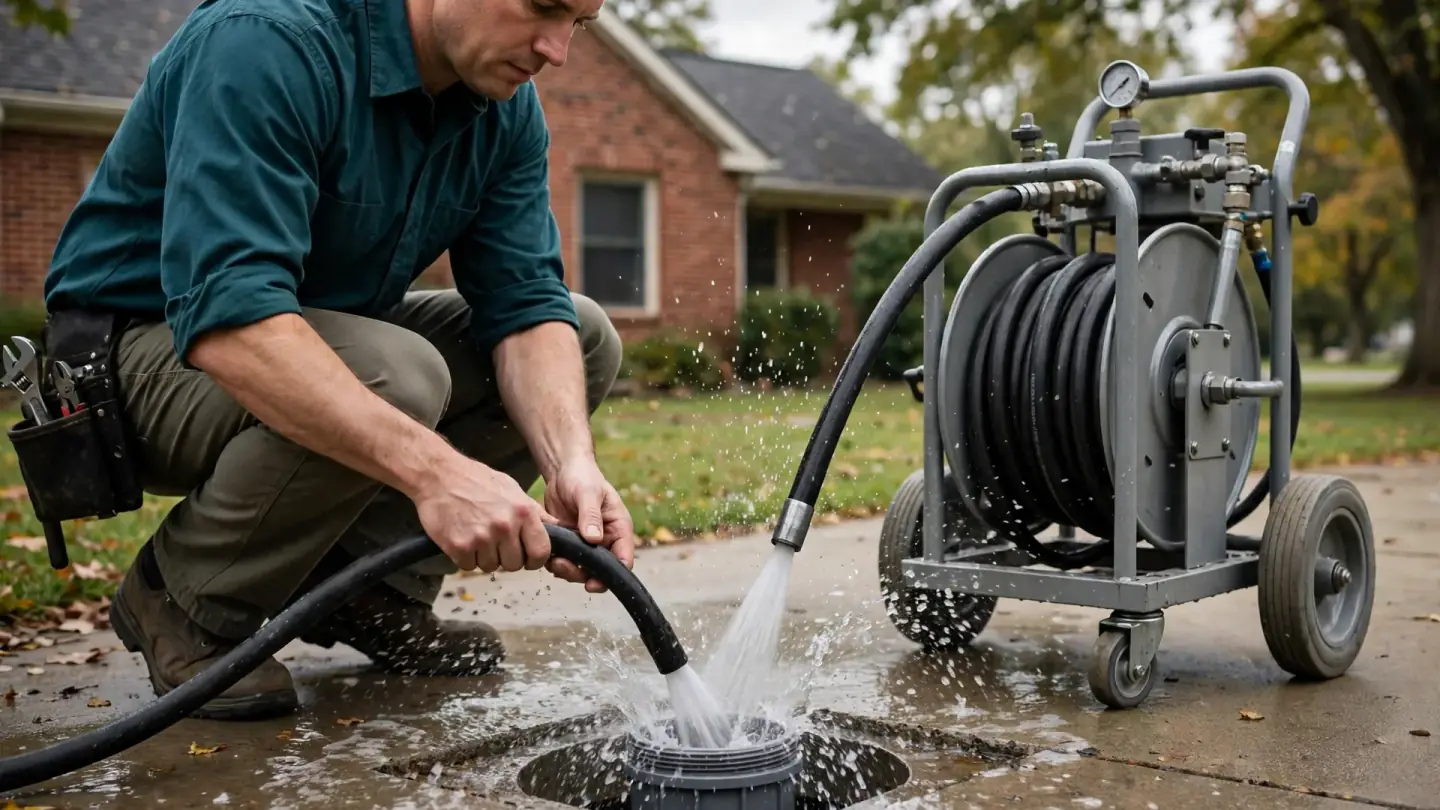
- Hydro jetting uses a high-pressure water hose with a rear-facing nozzle to scour a pipe's full circumference, rather than boring a hole through a blockage the way a cable does.
- Grease and food solids can harden into large masses known as fatbergs that a cable often cannot fully remove [1].
- Older lines made of bituminised fibre (Orangeburg pipe) can deform or fail and are poor candidates for aggressive cleaning [2].
- Commercial kitchens in Columbus must keep a fats, oils and grease plan and an interceptor cleaning log [3].
Why jetting
When does an emergency call for water instead of a cable?
Most emergency drain calls are handled with a cable machine. The cable reaches the blockage, its cutter head breaks through, water starts flowing and the crisis is over. That works well for a wad of wipes or a root mass at a joint. It works less well when the whole pipe is coated. Grease and sludge can line a kitchen or main line from top to bottom, so the cable bores a narrow channel and the rest stays behind. Within days the channel closes and the backup is back.
Jetting attacks that problem differently. A hose with a nozzle that sprays water backwards and sideways is fed into the line, and the water pressure pulls the hose forward while scouring the pipe walls as it goes. The loosened material is flushed downstream. On a grease-packed line that is the difference between a temporary opening and a pipe that is close to its full diameter again.
That makes urgent jetting most useful in a few specific situations: a line that backed up again shortly after cabling, a commercial kitchen line packed with grease, a building main shared by several units, or a line with fine roots that grow back quickly through a cable's path.
Signals
Signs a backup may need jetting rather than another cable run
Backup returns within days
A line that was cabled open and is slow again within a week usually has buildup along its length, not one plug.
Grease on the cable head
If the last cleaning brought back thick white or grey grease, the pipe walls are almost certainly still coated.
Sludge rather than a solid plug
Some lines carry a soft layer of sediment and grease that a cable passes through without clearing.
Fine root regrowth
Roots cut by a cable can leave fine hair roots behind at the joints; jetting can flush those out more completely.
The visit
How an urgent jetting visit is usually run
- 1
Getting water moving
If the line is completely stopped, the contractor may first cable a path so the jetting water has somewhere to go.
- 2
Checking the pipe
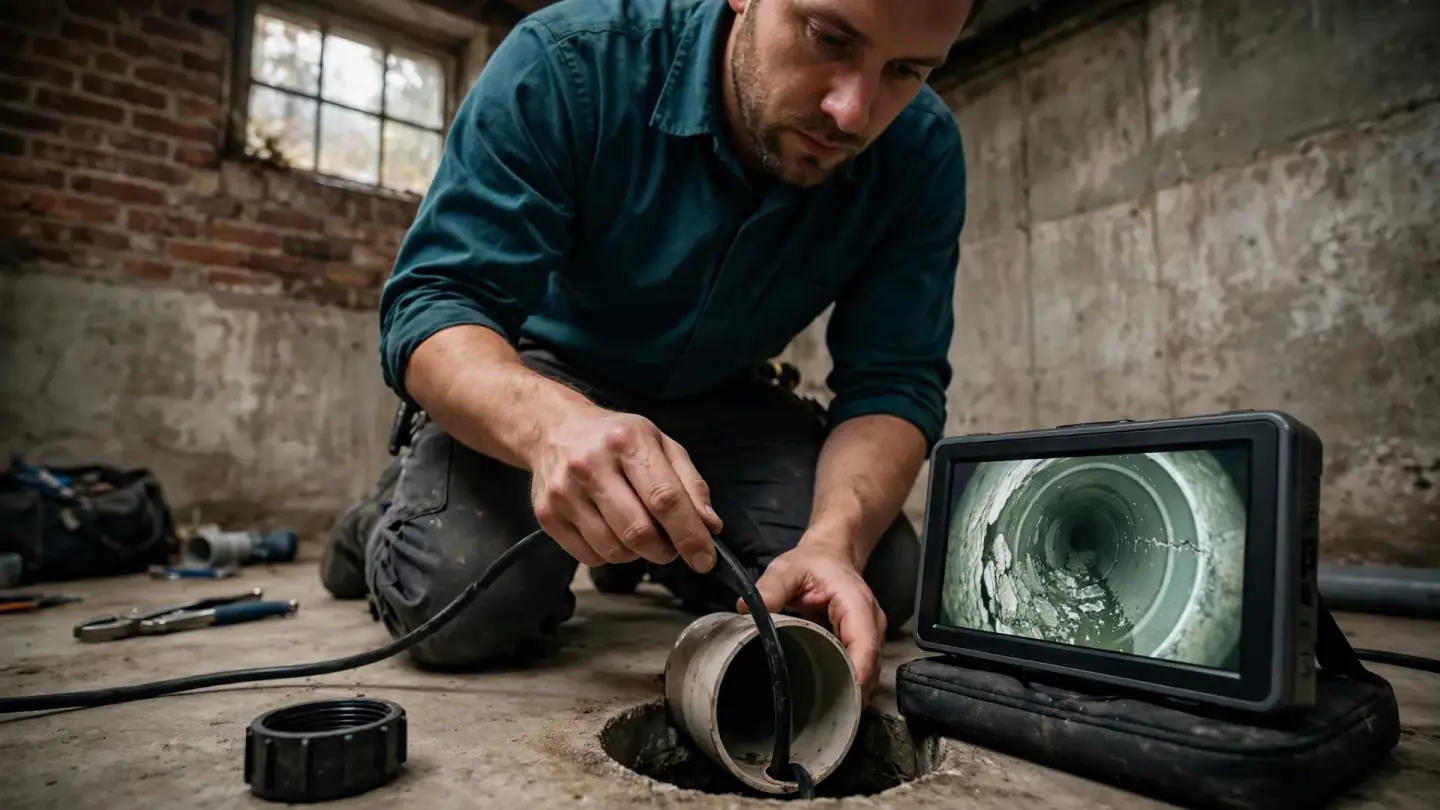
Where possible, a camera is run to make sure the pipe is intact. A broken or badly sagging section changes the plan.
- 3
Choosing the nozzle
Different nozzles cut roots, scour grease or push through sediment. Pressure and flow are set for the pipe size and material.
- 4
Jetting in passes
The hose is worked up and down the line in sections, flushing debris toward the sewer until the water runs clear.
- 5
Confirming the result
A second camera pass, when available, shows how clean the walls are and where any damage sits.
Tool choice
Cable machine or jetter in an urgent backup
| Situation | Cable machine | Hydro jetter |
|---|---|---|
| Single hard plug (wipes, object) | Usually the right first tool | Rarely needed |
| Grease coating the whole line | Opens a channel only | Scours the full pipe wall |
| Heavy roots at a joint | Cuts the mass | Flushes fine roots after cutting |
| Cracked, collapsed or fibre pipe | Use with care | Usually avoided until repaired |
Older Columbus lines
Jetting older house laterals: what to ask first
Many Columbus neighbourhoods were built long before plastic sewer pipe. Houses from the early 1900s often have vitrified clay laterals with joints every few feet, and some mid-century homes used bituminised fibre pipe that can soften and lose its shape over time [2]. Both can be cleaned, but they need care. A clay line with an offset joint or a fibre line that has started to flatten can be damaged further by a high-pressure nozzle used without looking first.
Before agreeing to urgent jetting on an older house, ask whether the contractor plans a camera look first, what nozzle and pressure they intend to use, and what happens if the camera shows a broken section. Good answers to those questions are a better sign than any promise of speed. If the line turns out to be damaged, the emergency step may be limited to opening it enough to restore flow, with a repair discussed afterwards.
Is jetting ever the wrong first answer?
If the line has never been cleaned before, or you are not sure what material it is, start from the general emergency drain cleaning page; a cable may be the safer first tool and jetting can follow once a camera has seen the pipe.
FAQ
Emergency hydro jetting questions
Can high-pressure hydro jetting break an old cast iron or clay sewer pipe?
Jetting can damage pipe that is already cracked, badly corroded or made of weak material such as Orangeburg fibre pipe [2]. A camera look first shows whether the line can take the pressure. Ask the contractor what pressure and nozzle they plan to use and whether they will inspect before and after the jetting.
Why did my drain clog again a few days after it was cleaned with a cable?
A cable bores a hole through a blockage but often leaves grease, sludge or roots on the pipe walls. Those remains catch new waste and the line closes again. Jetting scours the whole circumference, which is why it is considered when a line keeps failing after cabling. See the standard jetting page for the planned version.
Will emergency hydro jetting remove tree roots from a sewer lateral permanently?
Jetting with a root-cutting nozzle can clear roots from a lateral, but it does not stop them growing back through the same joints. Roots enter through cracks and loose joints, so the regrowth timeline depends on the pipe. The tree roots guide covers repair options when roots keep returning.
Do homeowners ever need emergency hydro jetting, or is it only for restaurants?
Homes need jetting less often than restaurants, but it does happen. A house lateral packed with grease, or one that roots fill quickly, can call for urgent jetting. Restaurants and apartment buildings use it more, because their lines carry more grease. The urgent commercial page covers businesses.
Should a camera inspection happen before urgent hydro jetting of a main sewer line?
A camera look before jetting is a sensible step whenever the pipe age or material is unknown. It shows breaks, bellies and sags that jetting could make worse. In a full backup the line may need to be opened first so water can drain and the camera can see. Ask the contractor about the order they plan.
What happens to the water and debris during an emergency jetting job inside a home?
The water and loosened debris flow down the line to the public sewer, which is why the line must be open before jetting starts. The contractor works from a cleanout, often outside or in the basement, and protects the area around it. Expect some noise from the jetter and a short wait while the line flushes.
What should I ask before agreeing to urgent hydro jetting of my drain line?
Ask why jetting is needed instead of another cable run, what the pipe is made of, whether a camera will be used, and what happens if the jet finds a break. The main line cleaning page and the list of services explain the alternatives so you can compare.