Key facts: Tree roots in sewer lines
- Vitrified clay sewer pipe is laid in short lengths, so an old lateral has many joints where roots can enter [1].
- Blueprint Columbus uses lateral lining to stop rain water entering sanitary sewers through cracked pipes and leaky joints [2].
- Clintonville developed as a streetcar suburb, with much of South Clintonville built before 1930 [3].
- Anyone excavating in Ohio must notify OHIO811 two working days or more before digging, and private lines are not marked [4].
Short answer
How do roots get into a sewer lateral?
If your main line backs up every year or two, gurgles when the washer drains, or slows down most in late summer, roots are a strong suspect, especially in a house built before the 1960s with large trees between the foundation and the street. Roots enter through openings that already exist: loose joints, cracks, or the seam where the lateral meets the city connection. Once inside they thicken and branch, forming a net that catches paper and grease until the line closes.
The immediate fix is mechanical: a cutting head on a cable machine, or a high-pressure jetter, to clear the pipe. The lasting fix is closing the openings, either by lining the pipe or replacing the damaged sections. A camera inspection after cutting tells you which joints let the roots in and how many of them there are.
Symptom table
Root warning signs and what they usually mean
| What you see | Likely cause | What to do |
|---|---|---|
| Main line slows every 12 to 24 months | Root regrowth at the same joints | Cut, then camera to map entry points |
| Toilet gurgles when the tub drains | Partial root mat restricting air and water | Limit use, schedule a main line clearing |
| Backup into the basement floor drain | Root mat has closed the line | Stop water use and call to have it cleared |
| Fine roots or soil in the cleanout | Roots plus a crack letting soil in | Ask for a camera inspection after cleaning |
| Lush, wet patch of lawn over the line | Possible leak feeding nearby roots | Have the line inspected before digging |
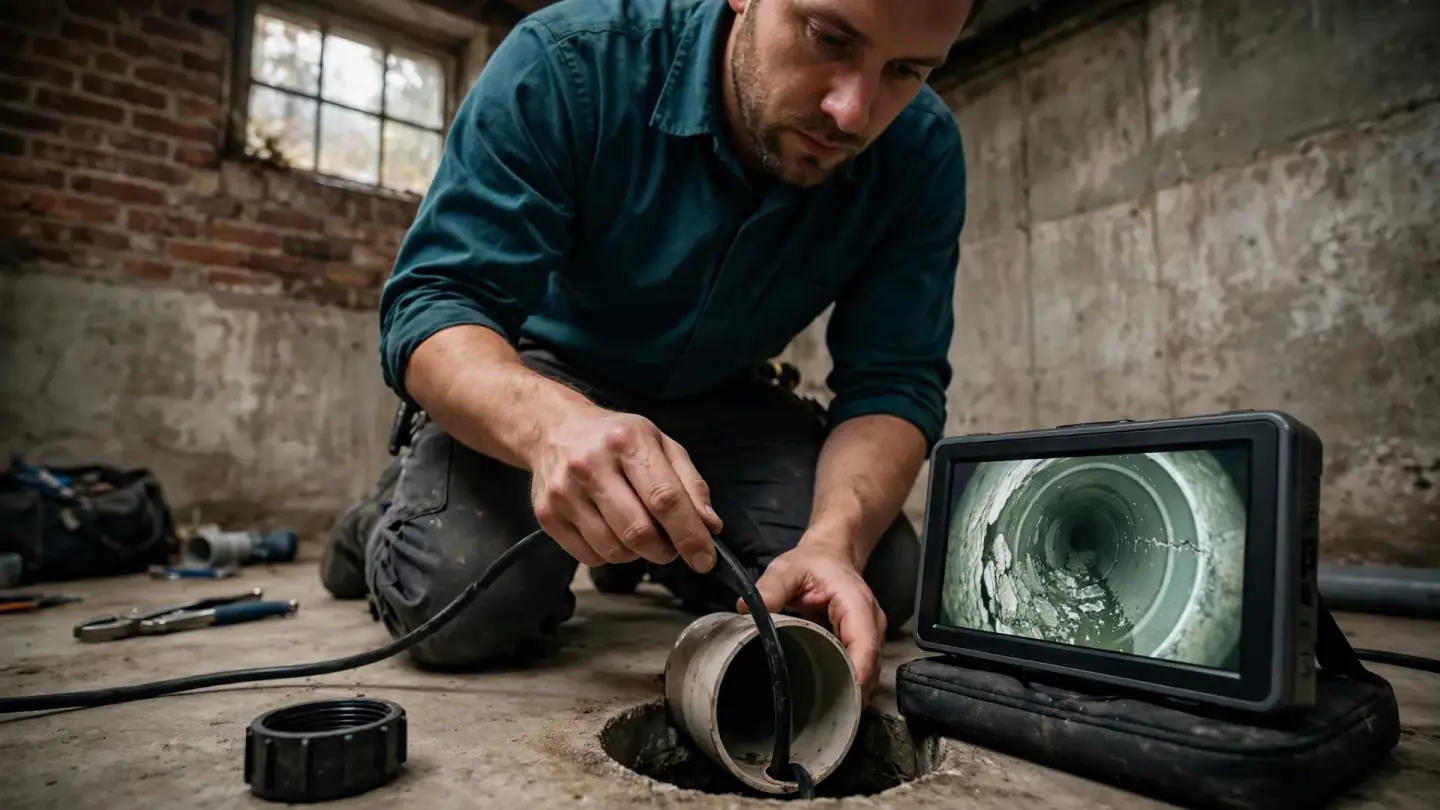
What roots look like on camera
Safe checks
What you can check yourself without opening the line
- Note where the large trees are relative to the path from your cleanout to the street.
- Track how often the line slows down. A regular pattern points strongly to roots.
- Look in the cleanout only if it is dry and not under pressure; never open a cap with water behind it.
- Skip root-killing chemicals until you know the pipe's condition. They will not reopen a blocked line and can harm whoever cleans it next.
- If you plan to dig or plant near the line, contact OHIO811 first; your private lateral will not be marked, so locating it needs a camera with a locator [4].
Pipe material
Why clay and older laterals invite roots
Many laterals in Columbus's older neighborhoods are vitrified clay. The material itself is durable, but it was laid in short lengths joined at bells, and those joints are where roots get in [1]. Some mid-century homes may also have bituminous fibre pipe, often called Orangeburg, which can deform and blister with age and leave gaps that roots exploit [6]. Newer PVC laterals with glued joints are far more resistant, which is why root problems are concentrated in neighborhoods built before the 1960s.
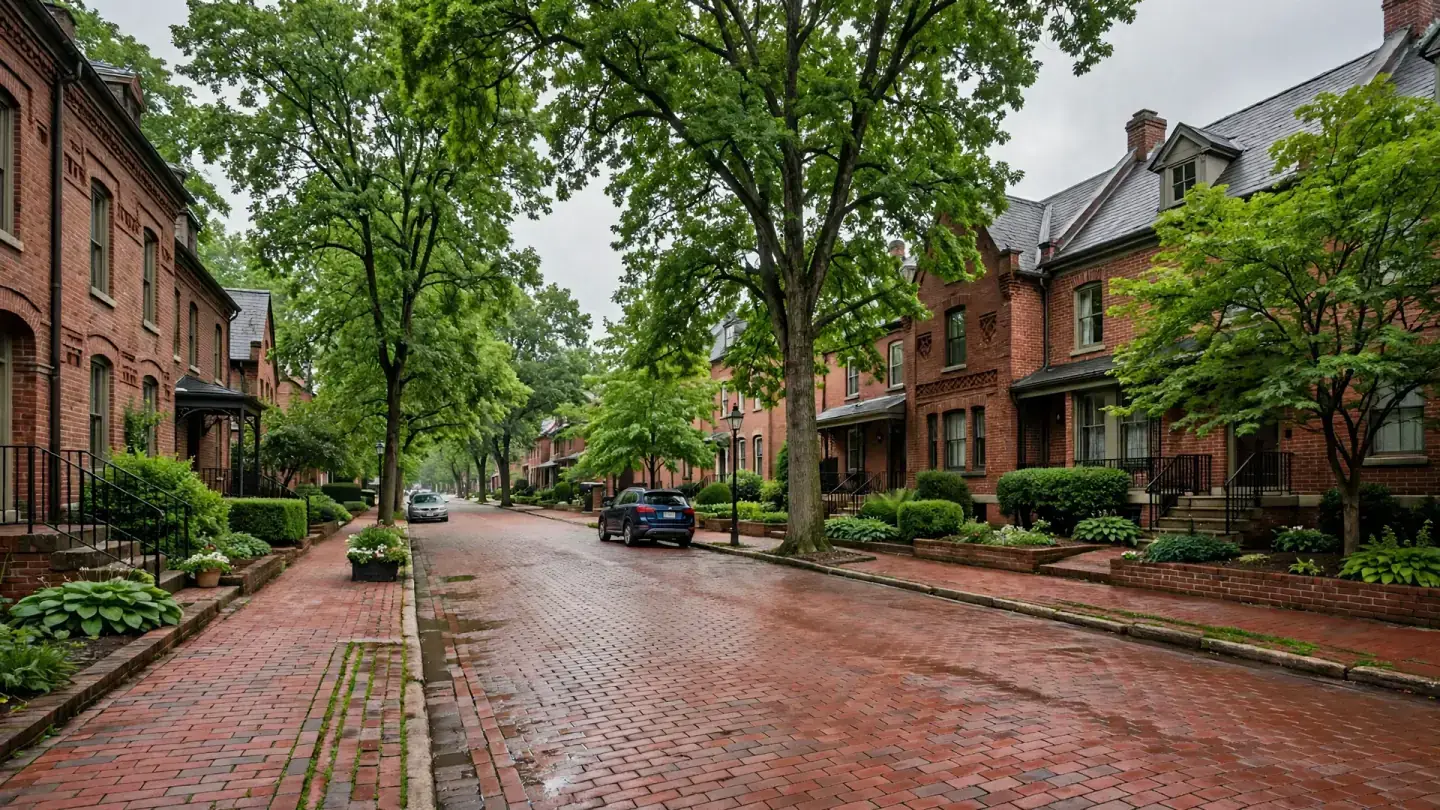
Clintonville is a good example. Its southern half was mostly built before 1930 as a streetcar suburb [3], and its streets have the mature canopy that comes with that age. The city's Blueprint Columbus program has a lateral-lining project covering part of Clintonville and Old Beechwold [5], which reflects how common leaky older laterals are there. [2] Read more on our Clintonville area page.
Tree types and timing
Why do roots get worse in dry weather?
Roots follow water. When the soil is wet, they have plenty of moisture around them; in a dry late summer, the warm, nutrient-rich vapor escaping a cracked sewer joint is the best water source in the yard. That is why many households notice slow drains in August and September. Fast-growing species with aggressive roots planted close to the line make it worse, but any mature tree near a leaky joint can find it. Removing the tree does not repair the joint, and the roots already inside the pipe still need to be cut out.
Cutting versus jetting
Choosing the clearing method
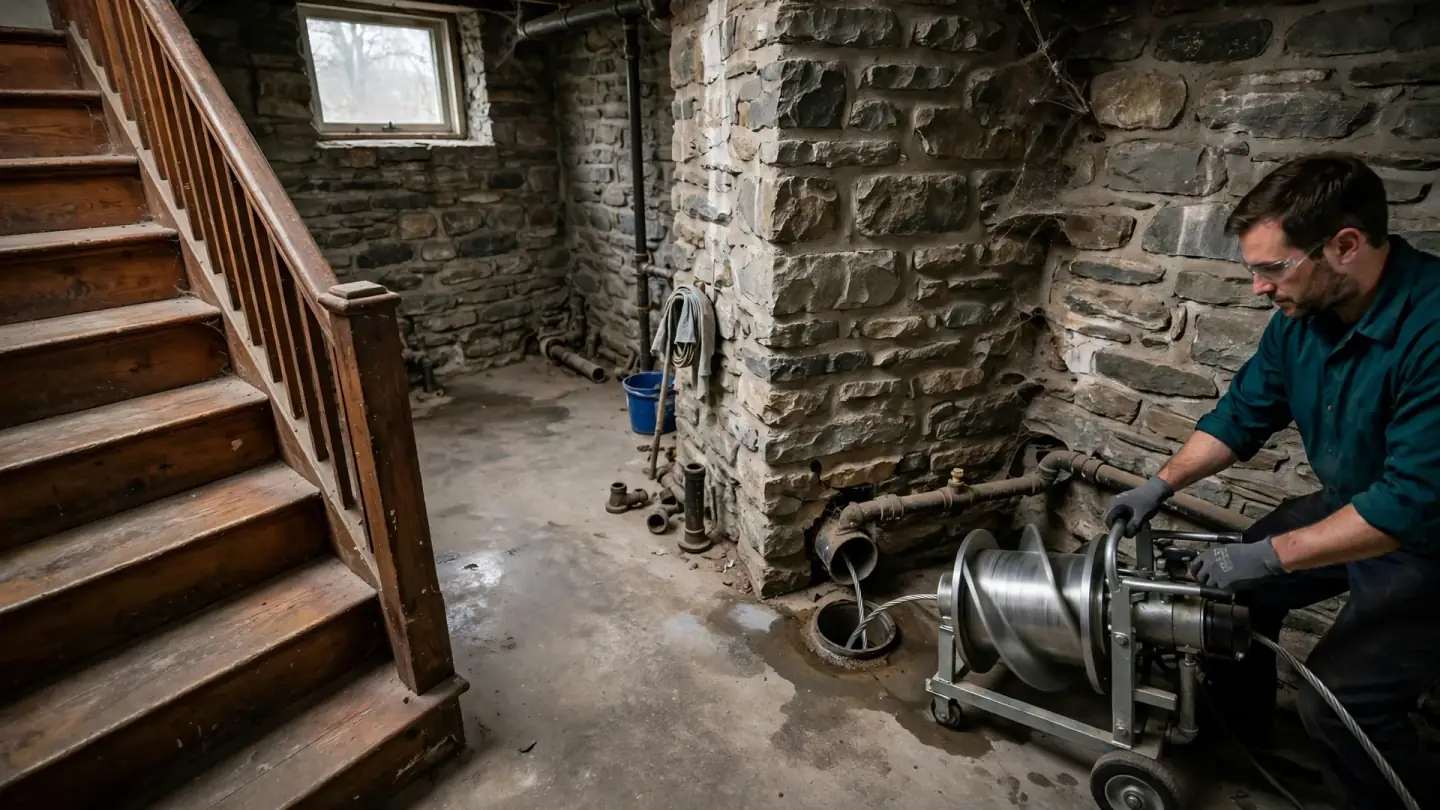
A cable machine with a cutting blade is the traditional root tool [7]. It opens a channel through the mat quickly and is often the right first step when the line is fully blocked. Hydro jetting uses a high-pressure water nozzle that can cut roots and also scour grease and sludge from the pipe wall, leaving a cleaner bore for the camera. Jetting is usually avoided on pipe that is already broken or badly offset, so many contractors cable first, look with a camera, then decide whether to jet.
Diagnosis
How the contractor confirms roots and maps the damage
- 1
Clear a path
The line is opened from the cleanout with a cutter or jetter so water flows again.
- 2
Run the camera
A camera travels the lateral recording each joint, with distance shown on screen.
- 3
Locate the trouble spots
A sonde in the camera head lets the contractor mark the ground above root entry points, which matters if any digging follows.
- 4
Assess the pipe
The contractor looks for cracks, separated joints, sags and the material of each section.
- 5
Explain options
You hear whether routine cutting will manage it, or whether lining or a sectional repair would close the openings.
Fix decision
Ongoing cutting, lining or replacement
If the camera shows one or two root joints in otherwise sound pipe, periodic cleaning may be a reasonable way to manage it, and a sewer line inspection every few years confirms it is not getting worse. If roots come through many joints, or the pipe is cracked or sagging, lining or replacement closes the openings for good. Any repair to drain piping must meet the Ohio Plumbing Code [8], and excavation needs the OHIO811 notice [4]. Our guide on when to replace versus clean a sewer line goes through that decision in detail.
Prevention
Making roots less likely to return
- Plant new trees well away from the line's path, and choose smaller species near it.
- Schedule maintenance cleaning before the late-summer slowdown if you already know roots are present.
- Keep grease and wipes out of the drains; they bind to root hairs and speed up blockages.
- Ask for a camera check after any backup so you know whether the problem is getting worse.
On the call
What to mention when you call about roots
- How often the line has backed up and when it was last cleared.
- Roughly how old the house is and where the large trees stand.
- Where your cleanout is, and whether there is one outside as well as in the basement.
- Whether you have video from a previous inspection.
- Whether your street has had Blueprint Columbus lateral lining work.
FAQ
Tree root questions from Columbus homeowners
What are the signs that tree roots are in my sewer line?
Repeated main line slowdowns, gurgling toilets and water rising through the basement floor drain are the classic signs of roots in a sewer line. The symptoms often return on a cycle of months. A camera inspection after clearing confirms roots and shows exactly which joints they entered through, which decides the lasting fix.
Does cutting tree roots out of a sewer line fix it for good?
Cutting tree roots out of a sewer line restores flow but does not fix it for good. Roots regrow through the same open joints, often thicker, so cutting manages the problem on a schedule. Sealing those joints by lining or replacing the damaged section is the lasting repair, and the replace or clean guide explains the choice.
Should I remove the tree to stop roots growing into my sewer?
Removing the tree is rarely the right first step. Taking it down does not seal the open joint, and the roots already inside the pipe still need clearing. Other trees nearby can find the same opening. Get the pipe cleared and inspected first, then decide with the contractor whether sealing the joints makes the tree a non-issue.
Is hydro jetting safe for an old clay sewer lateral with roots?
Hydro jetting is often safe for an old clay lateral that is structurally intact, and root-cutting nozzles can clear fine root mats well. Jetting is usually avoided on broken, crushed or badly offset clay pipe [1]. That is why many contractors run a camera first. The hydro jetting page covers how the method is chosen.
Does Blueprint Columbus line private sewer laterals in Clintonville?
Blueprint Columbus has included private lateral lining in selected project areas, including parts of Clintonville and Old Beechwold [5]. Lining is offered only where the city has an active project, so check with Columbus whether your street is included before arranging private work. A lined lateral should also be mentioned on any call, since it changes which cleaning tools are suitable.
How often should a sewer line with roots be cleaned?
A sewer line with roots should be cleaned on a schedule based on how fast the roots regrow, which a camera inspection can show. Many owners pick an interval that clears the line before late summer, when roots seek moisture most. Reassess after each cleaning; if the interval keeps shrinking, sealing the joints is usually the better plan.
Are older Columbus neighborhoods more likely to have root problems?
Older Columbus neighborhoods with mature street trees tend to see more root problems, because early laterals were often laid in short clay sections with many joints [1]. Much of South Clintonville was built before 1930, for example [3]. Newer subdivisions with plastic pipe and fewer joints usually see fewer intrusions, though damaged plastic can still let roots in.
Sources and citations
- [1]Wikipedia, Vitrified clay pipe
- [2]City of Columbus, Blueprint Columbus four pillars
- [3]Wikipedia, Clintonville (Columbus, Ohio)
- [4]OHIO811, Information for homeowners
- [5]City of Columbus, Blueprint Clintonville Old Beechwold lateral lining review
- [6]Wikipedia, Orangeburg pipe
- [7]Wikipedia, Plumber's snake
- [8]Ohio Administrative Code 4101:3, Ohio Plumbing Code