Key facts: Floor Drain Cleaning
- A basement floor drain usually connects to the main building drain, so water rising from it often signals a main-line or public-sewer problem rather than a floor-drain clog.
- Columbus's Project Dry Basement covers an approved backflow device for qualifying single and two-family homes after a reported wet-weather or blockage backup [1].
- That process begins with a call to the city sewer maintenance line, 614-645-7102, which answers at any hour [1].
- Floor drain traps dry out when unused, letting sewer gas into the basement; adding water restores the seal [3].
How it works
What a basement floor drain is connected to
A floor drain looks like a simple grate in the concrete, but underneath it there is a trap, sometimes a sediment bucket, and a pipe that ties into the main building drain on its way to the sewer lateral. In many Columbus basements, the laundry tub, the washing machine standpipe, the water heater relief line and a dehumidifier or air conditioner condensate line all empty into or near that same drain. Because it is the lowest point, the floor drain is also the escape route for anything that cannot get out of the house any other way.
That double role is what makes floor drains confusing. A floor drain can be slow because its own trap is full of silt, lint and debris that washed across the floor over the years. Or it can be perfectly clean and still overflow because the main line beyond it is blocked, and water from upstairs fixtures is rising out of the lowest opening. Those two situations need different work, and the first job on any floor drain call is telling them apart.
Cleaning a floor drain itself involves lifting the grate, removing any sediment basket, scooping out the trap and then running a cable through the trap toward the main. Many older floor drains also have a cleanout plug inside the drain body, which gives a straight path into the line without going through the trap. Once the floor drain is clear, the contractor runs water from upstairs fixtures to see whether it disappears or backs up, which reveals whether the main line needs attention too.
Some floor drains are fitted with a backwater valve or a float-type check that closes when water tries to come back up. Those devices work only if they are kept clean, and a valve jammed open with debris gives no protection at all. Part of a thorough floor drain visit is checking that any backflow device moves freely.
Related pages: the drain services index, main line clearing and camera diagnostics for one drain.
Signs
What are the signs of floor drain trouble in a Columbus basement?
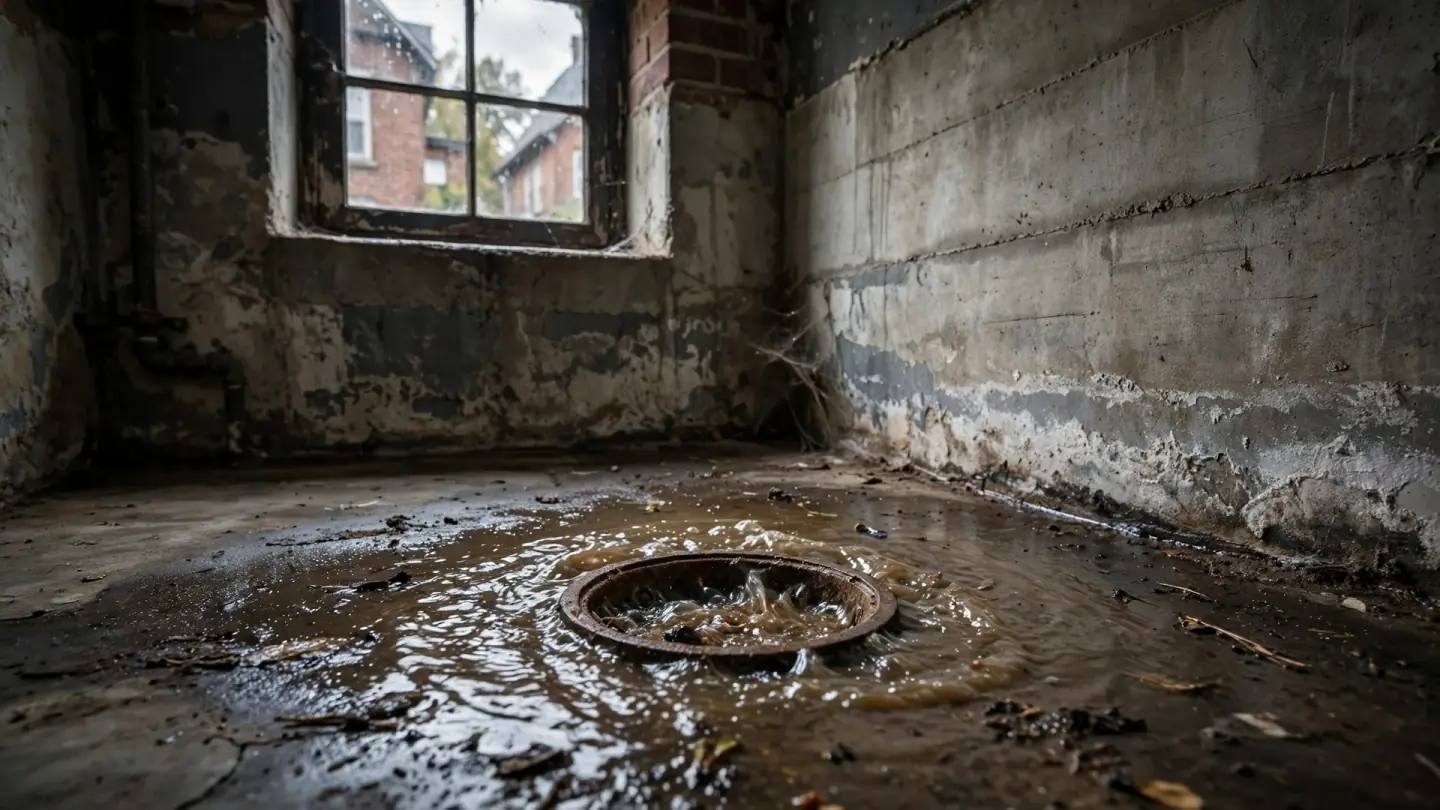
Water appears when the washer drains
The washing machine pumps a lot of water fast. If it surfaces at the floor drain, the main line or the floor drain's own trap cannot keep up. See basement floor drain backing up.
Sewage rises during heavy rain
A storm-only backup points to the public sewer surcharging or rainwater entering the sanitary line. Report it to the city before anything else.
A sewer smell in the basement
Usually a dry trap in a floor drain that rarely sees water. Our sewer smell guide explains how to check.
Standing water that drains very slowly
Silt, lint and debris have filled the trap. Common in laundry areas and garages.
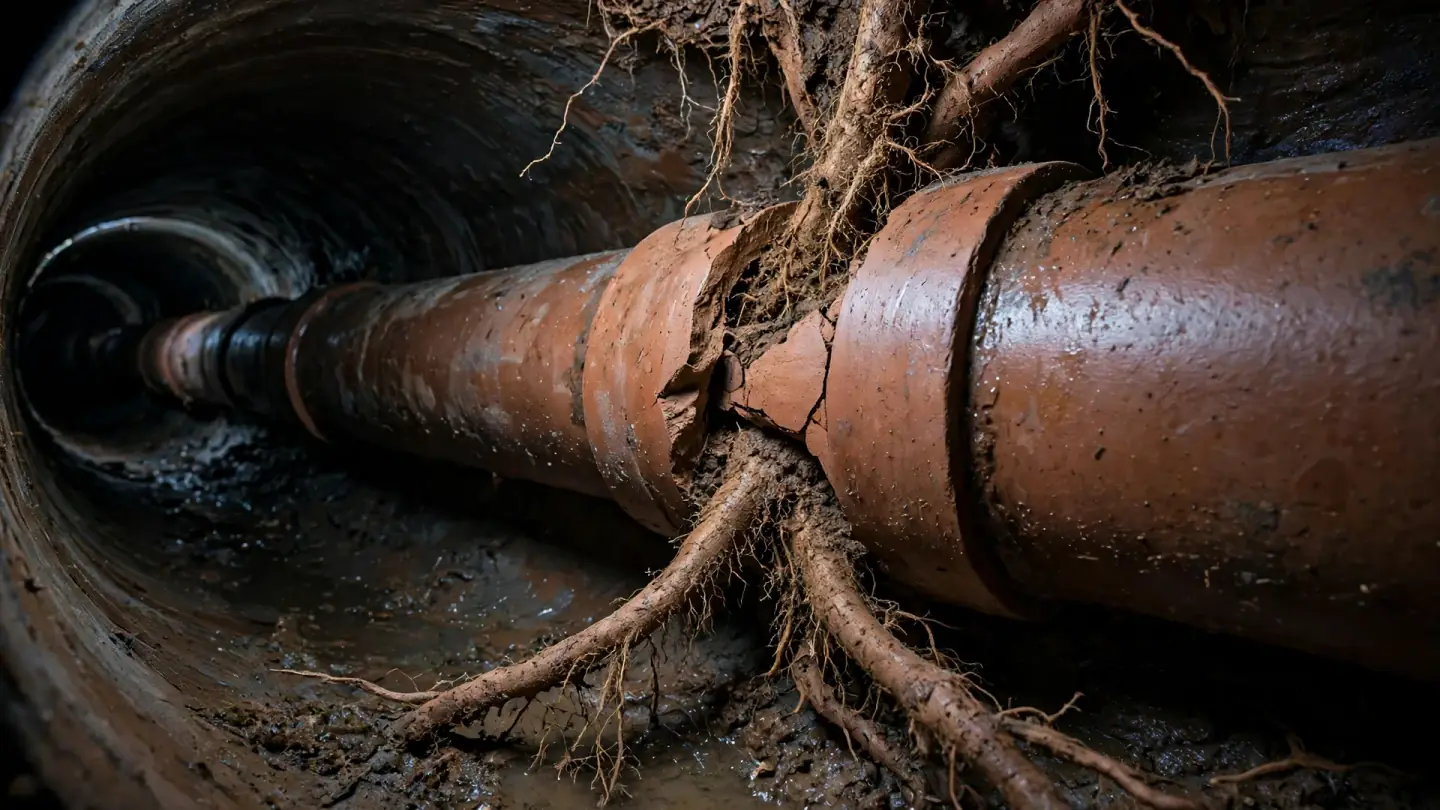
Roots or soil visible in the drain
Material from outside is entering the line, which suggests a cracked lateral. Read tree roots in sewer lines.
Upstairs drains slow at the same time
When the floor drain and other fixtures are all affected, the main line is the shared factor, as covered in multiple drains backing up.
The repair
Floor drain cleaning from grate to main line
- 1
Check for an active backup
If water is standing, the contractor first finds out whether it is coming up from the drain or failing to go down, and whether rain or upstairs use is feeding it.
- 2
Lift the grate and remove debris
The strainer and any sediment basket come out, and silt, lint and gravel are scooped from the trap by hand or with a wet vacuum.
- 3
Open the internal cleanout if present
Where the drain has a cleanout plug, it is opened carefully, since it can release trapped water, and gives a straight route to the line.
- 4
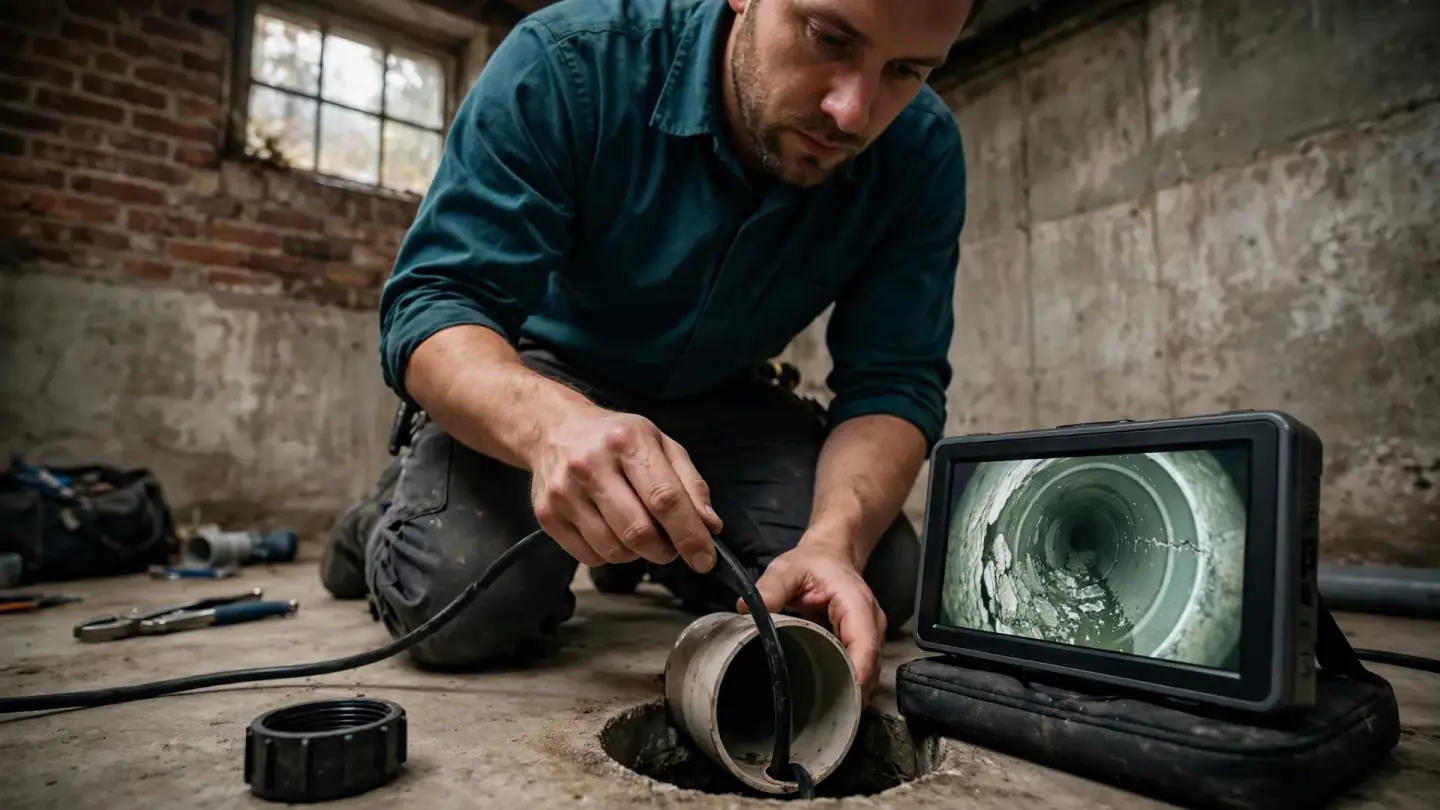
Cable toward the main
A cable is fed through the trap or cleanout until it reaches the building drain. The distance where it meets resistance tells the contractor whether the clog is local or in the main.
- 5
Check any backflow device
If a backwater valve or float check is fitted, its flap or ball is cleaned and tested so it seals when needed and opens freely otherwise.
- 6
Flood test and refill the trap
Upstairs fixtures and the washer are run to load the line, then the trap is topped up so the seal blocks sewer gas.
Floor drain types
Floor drains found in Columbus homes and what each needs
| Drain type | Typical location | What it needs |
|---|---|---|
| Cast-iron floor drain with internal cleanout | Older basements | Trap cleaning; cleanout plug may be seized |
| Floor drain with sediment bucket | Laundry areas | Bucket emptied regularly; lint is the main clog |
| Floor drain with float or flap check | Basements prone to backups | Device cleaned so it seats properly |
| Inline backwater valve | On the building drain near the floor drain | Regular inspection and cleaning as the city advises |
| Garage trench or area drain | Garages and driveways | Sand and gravel removal; check where it actually discharges |
| Sump pit (not a drain) | Basement corner | Pump test; should discharge outdoors, not to the sanitary line |
What you can do yourself
Floor drain jobs for the homeowner, and the ones to leave
- Pour water into idle floor drainsA bucket of water every few weeks keeps the trap seal intact and the basement free of sewer odor.
- Empty the sediment basketLift the grate and clear lint and grit from any basket, especially near the washing machine.
- Use a lint trap on the washer hoseA mesh sleeve on the discharge hose catches most of the lint that otherwise packs the floor drain trap.
- Stop using water during a backupIf the floor drain is rising, every flush or sink upstairs adds to it. Pause all water use until the cause is known.
- Do not open a cleanout under pressureA cleanout plug below standing water can release sewage with force. That is a job for the contractor.
- Do not tie a sump pump into the floor drainSending groundwater into the sanitary line overloads the sewer in storms, which is exactly what the city is working to reduce.
Local specifics
Floor drains, rain and the Columbus sewer system
Basement backups are a well-documented Columbus issue, and the city has built programs around them. Blueprint Columbus targets the ways rainwater gets into the sanitary sewer: cracked pipes, leaky joints, connected foundation drains and roof drains. When that extra water exceeds the system's capacity, the surplus can spill to the rivers or push up through basement drains [2]. The program rests on four parts: lining private laterals, steering roof water away from the sewer, an optional sump pump program and green infrastructure [2].
For individual homes, the city runs Project Dry Basement. Since July 2004 it has paid for a city-approved backflow device at eligible one- and two-unit Columbus houses that took a sewer backup from surcharging of the public sewer in wet weather or from blockages [1]. Log the backup with the city's round-the-clock sewer maintenance line at 614-645-7102 and save the request number; questions go to 614-645-8404 [1]. Street flooding is reported through 311 [1].
Once a backflow device is installed, the city asks homeowners to inspect and clean it monthly [1]. That is where floor drain maintenance and the city program meet: a valve clogged with lint or silt does not close, and a backup can still reach the basement.
In Westerville and Hilliard, which are separate cities, the Columbus program does not apply in the same way. Hilliard owns and maintains its own sanitary collection system under its long-term agreement with Columbus [4], so floor drain backups there start with the City of Hilliard. Residents of those cities should check with their own city for any backflow or sewer programs.
When it is worth repairing
Clean the floor drain, or look further down the line?
If the floor drain was simply full of silt and lint and now drains freely under a full washer load, cleaning was the fix. Keep the basket empty and the trap wet.
If the floor drain was clean but still backed up, the problem is the main building drain or the lateral, and the next step is main sewer line cleaning, often followed by a camera inspection to see why it blocked. Roots, a collapsed section of old clay or a sag in the line are the usual findings in older neighborhoods.
If the backups happen only in heavy rain, cleaning alone will not stop them. That pattern points to the public sewer surcharging or to rainwater entering your own lateral through a downspout connection or cracks. Reporting it to the city, and asking about a backwater valve, is the right order.
If sewage is on the floor right now, keep children and pets away, stop using water and see emergency drain cleaning.
FAQ
What do homeowners ask about basement floor drains?
Why does my basement floor drain back up when the washing machine drains?
A floor drain that backs up during the washer cycle usually has a partly blocked trap or a restricted main line downstream. The washer pumps water out faster than the narrowed pipe can carry it, so water rises at the lowest opening. Lint buildup in the floor drain trap is a frequent cause.
Why does my basement smell like sewer gas near the floor drain?
A sewer smell near a basement floor drain usually means the trap has dried out and no longer seals out gas. Pouring a bucket of water into the drain restores the seal. If the odor returns quickly, the trap may be cracked or a cleanout cap nearby may be loose or missing.
Does the City of Columbus help homeowners with basement backups?
The City of Columbus runs Project Dry Basement, which helps eligible homeowners with backwater valves to protect against sewer backups [1]. Eligibility and program details are set by the city, so check its page before calling a contractor. A clean floor drain line helps any valve work properly.
Is it okay for a sump pump to drain into the basement floor drain?
A sump pump generally should not discharge into the sanitary floor drain, because it sends groundwater into the sewer system. Columbus works to keep clean water out of sanitary sewers through its Blueprint program [2]. Ask a contractor how your sump discharge is routed if it ends at a floor drain.
How often should a basement floor drain be cleaned out?
Most basement floor drains only need cleaning when they slow down, smell or back up. Drains near laundry areas collect lint and may need attention more often. Pouring water in every few weeks keeps the trap sealed, and a quick look under the grate shows when silt is building up.
Can tree roots get into a basement floor drain line?
Tree roots can grow into the line that a basement floor drain connects to, especially in older clay or cast iron pipe. Roots usually enter the main lateral outside the foundation, and the floor drain is simply where the backup appears. A camera can show whether roots are the cause.