Key facts: Westerville
- Westerville is a separate city in Franklin and Delaware counties, incorporated in 1858, with 39,190 residents at the 2020 census [1].
- Westerville's Building Division requires plumbing permits for replacing a sanitary sewer lateral and for spot repairs on a lateral [2].
- Sewer lateral work in Westerville follows City of Columbus standards and is inspected before the line is covered [2].
- Anyone excavating in Ohio must notify OHIO811 two working days or more before digging; private laterals are not marked [3].
A separate city
Westerville is its own city, and that changes who you call
It is easy to think of Westerville as part of Columbus, but it is an independent city with its own government, departments and permits. It sits northeast of Columbus and spans two counties, Franklin and Delaware [1]. Settlers arrived along Alum Creek around 1810, the town was platted by 1856 and it incorporated in 1858 with 275 residents [1]. By the 2020 census it had 39,190 [1].
For anyone with a drain problem, the practical point is this: Columbus programs and Columbus permit offices do not apply inside Westerville. Project Dry Basement, for example, is a City of Columbus program for homes in Columbus. Permits for plumbing work in Westerville come from Westerville's own Building Division, part of its Planning and Development department [2]. If you are not sure which city your address is in, check your property tax bill or the city's website before assuming.
We include Westerville on this site because it is close to Columbus and people search for drain help across the boundary. The independent contractor you're connected with on the call will tell you whether they work at your address.
The housing
Uptown blocks and the subdivisions that grew around them
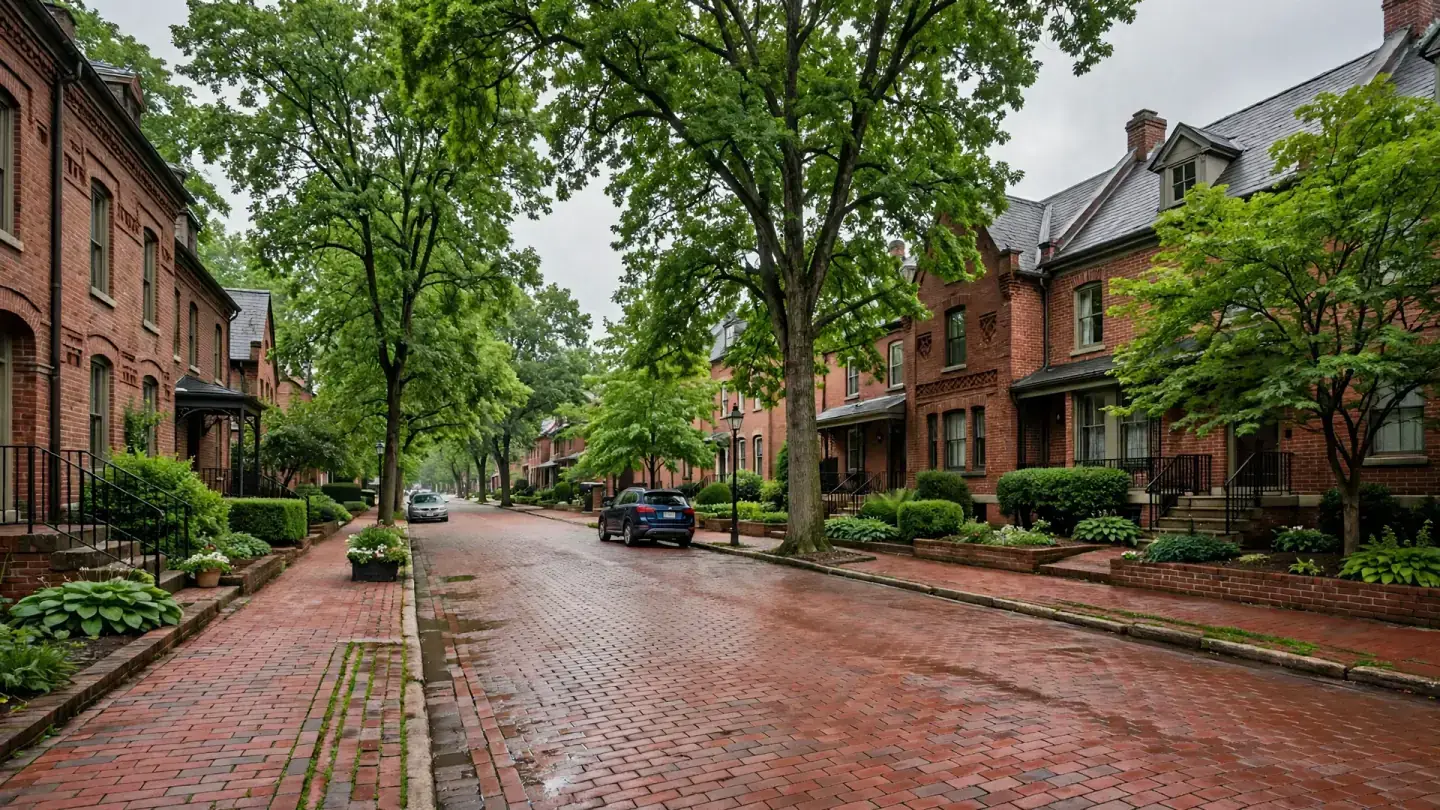
Westerville's old town center is Uptown, where State Route 3 runs through as State Street [1]. Otterbein University, which began as a seminary chartered in 1839 and was bought by the United Brethren church in 1846, sits nearby [1]. The older houses around Uptown and the campus are the city's oldest housing stock, with the plumbing history that comes with age: original lines, later additions and laterals that may be decades old.
Most of Westerville's homes, though, came with the city's long growth. The number of housing units rose from 13,143 in 2000 to 14,467 in 2010 and 15,872 in 2020 [1], and the city had already grown a great deal before that. Houses from the later decades generally have plastic drain lines and laterals, which do not rust or scale and resist roots far better than old clay.
Newer pipe does not mean no clogs. In suburban houses, what goes down the drain matters more than the age of the pipe: kitchen grease, wipes flushed as if they were toilet paper, hair in tubs and showers, and lint from laundry. The lines are smooth, but they are also often long, running from a kitchen at the back of the house, across a basement ceiling and out to the street.
Common calls
Drain problems common in Westerville homes
Kitchen grease in long runs
Grease cools and sticks in long horizontal kitchen lines, especially where they cross unheated spaces. Kitchen drain cleaning clears and scours it.
Wipes in the main line
So-called flushable wipes do not break down like paper and collect in the main line, often near the cleanout or at a fitting.
Hair in tubs and showers
Master bath showers and kids' tubs collect hair and soap. Shower and bathtub drain cleaning covers what works without damaging finishes.
Roots near older Uptown homes
Older houses around the historic center are more likely to have clay or other older lateral materials where roots can enter at joints.
Permits
Do you need a Westerville permit for sewer lateral work?
Westerville's Building Division is part of the city's Planning and Development department and handles permits and inspections [2]. The city's guidance lists plumbing permits for replacing a sanitary sewer lateral or line and for spot repairs on a sewer lateral, as well as for new sanitary drain lines in additions and new homes [2]. Water, sanitary sewer and stormwater questions go to the city's Engineering Division [2].
Two details stand out. First, sewer lateral work in Westerville follows City of Columbus standards [2], so materials and methods line up with what is used across the boundary. Second, the sewer inspection happens before the lateral is covered [2]. In practice that means a trench or access pit stays open until the inspector has seen the work. If a contractor proposes lateral repair, ask how they schedule that inspection so the hole is not open longer than it needs to be.
Drain cleaning itself is maintenance of existing pipe and does not usually need a permit. If a camera inspection after cleaning finds a break that needs a spot repair, that repair is permitted work in Westerville [2]. The contractor on the call can tell you which side of that line the job they are describing falls on.
Attached homes
Condos and townhome communities in Westerville
Westerville also has condominium and townhome communities where units share walls and sometimes share drain lines. In those buildings, find out from your association which pipes are yours and which are common before arranging work. A backup in a lower unit that started in a shared line is usually the association's to address, and many associations have a preferred process for access and records. You can still call to describe the problem and understand what is likely happening, which makes the conversation with the board easier.
If you own a townhome with its own lateral, the same checks as a detached house apply: know where your cleanout is, keep grease and wipes out of the drains, and if a slow line keeps coming back, ask about preventative drain maintenance so cleanings happen on a schedule rather than during a backup.
Digging
Before anyone digs in a Westerville yard
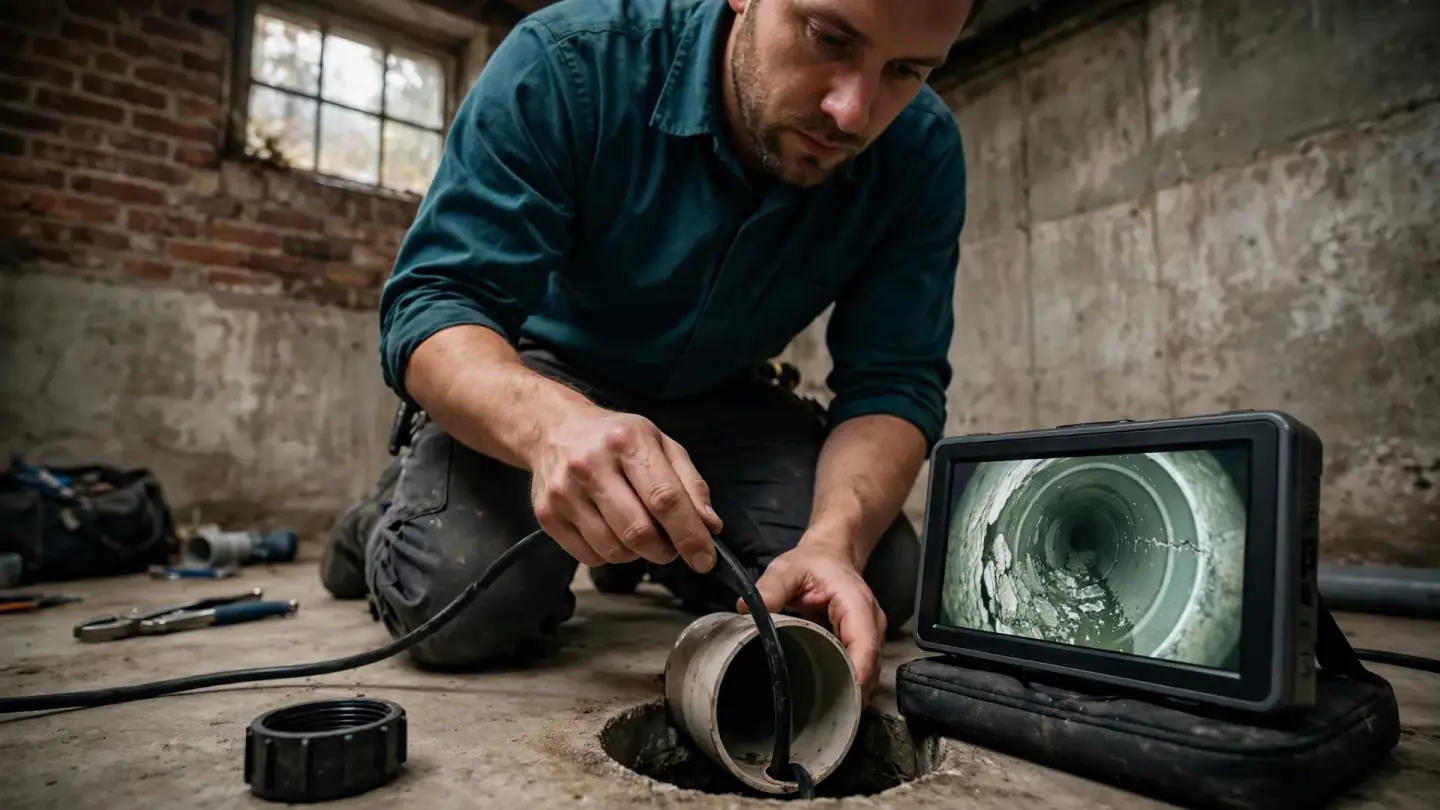
If a repair requires excavation, OHIO811 must be notified no less than two business days before digging, and the notice must come from whoever is doing the excavating [3]. Utility owners mark their own lines; private lines such as your sewer lateral, a private water line to a detached garage or a lighting circuit are not marked by that service [3]. A camera with a locating transmitter can help find the lateral's path and depth before anyone breaks ground.
In subdivisions with mature landscaping, fences and irrigation systems, it is worth knowing exactly where the problem sits. A single, well-located access pit disturbs far less than a long trench. Ask the contractor how they would locate the problem before you agree to any digging.
Before you call
Westerville drain checklist
- Confirm your address is in the City of Westerville and not a neighboring township or Columbus.
- Note which fixtures are slow. Several at once usually means the main line; see the multiple drains guide.
- Stop using water if anything is backing up.
- Skip chemical drain openers, especially if you might need someone to open the line soon. Mixing products can release harmful fumes.
- Find the main cleanout; in many newer homes it is in the basement or just outside the foundation.
- If you belong to an HOA, check whether any work outside the house needs notice or approval.
Sewer questions
Who handles public sewer problems in Westerville?
Because Westerville is a separate city, questions about its public sanitary sewer, including whether a backup started in the main, go to Westerville's Engineering Division rather than to Columbus [2]. If water comes up in your lowest drain during a storm and your line was recently cleared, report it to the city so it can check the public side.
On your own side of the connection, the same principles apply as anywhere: keep rain water out of the sanitary line. Downspouts and sump pump discharges that feed a floor drain or an underground pipe tied into the lateral add storm water to a line meant for wastewater. If you are not sure where yours go, mention it on the call.
Planning
Planning a drain visit at a Westerville home
- 1
Describe it on the call
Explain which drains are affected, how long it has been going on and anything you have tried. If you know your lateral was replaced, say so.
- 2
Driveway access
Most Westerville homes have driveways, which makes equipment access simple. Mention if the cleanout is on the far side of the house.
- 3
HOA and landscaping
If outdoor work is possible, check HOA rules and point out irrigation heads or invisible fencing near the cleanout.
- 4
Camera after clearing
For main line backups, ask about a drain camera inspection after cleaning, especially in older homes near Uptown.
- 5
Permit if repairs follow
If the visit turns into a lateral repair, the contractor will need a Westerville plumbing permit and an inspection before backfill.
Contractor checks
Checking a contractor who works in Westerville
Ohio's Construction Industry Licensing Board licenses plumbing contractors, and you can look up a licence at license.ohio.gov [4]. Plumbing work must meet the Ohio Plumbing Code, OAC 4101:3, the Ohio plumbing code [5]. Ask the contractor you're connected with for their licence information before work begins, and confirm it yourself. For work that needs a Westerville permit, the permit is pulled under the contractor responsible for the job.
For one-off clogs in a newer home, clogged drain repair is usually enough. For a main line that keeps slowing, a camera look after cleaning tells you whether you are dealing with debris or a pipe problem.
Heading south toward the city, the Clintonville page covers older Columbus homes, and the service areas overview lists the rest.
FAQ
Westerville drain questions
Does Westerville use Columbus for plumbing permits?
No, Westerville is a separate city with its own Building Division in its Planning and Development department [2]. Plumbing permits come from that division, and public water, sanitary sewer and stormwater questions go to Westerville's Engineering Division [2], not to Columbus offices. Mention your city on the call so the contractor plans for the right inspector.
Do I need a permit to repair my sewer lateral in Westerville?
Yes, Westerville's guidance lists plumbing permits for replacing a sanitary sewer lateral and for spot repairs on one [2]. Routine drain cleaning normally needs no permit. If a camera finds a break after cleaning, the repair becomes permitted work, so ask the contractor how they handle the permit.
Why does Westerville require Columbus standards for sewer lateral work?
Westerville's own guidance says sewer lateral work follows City of Columbus standards [2], which keeps materials and methods consistent across the boundary. The inspection still comes from Westerville, and it happens before the lateral is covered [2], so the trench stays open until the inspector signs off.
Can Westerville homeowners sign up for Columbus Project Dry Basement?
No, Project Dry Basement is a City of Columbus program for homes in Columbus, and Westerville is a separate city. Westerville handles its own public sewer questions through its Engineering Division [2], so ask that division what applies to your property after a backup and keep notes on when it happened.
Why does the main line clog in a newer Westerville subdivision house?
Plastic pipe in newer Westerville homes does not rust or scale, but wipes, grease and debris still collect at fittings and on long flat runs. Westerville added thousands of housing units after 2000 [1]. Cleaning the line and running a camera shows where material is catching.
Who arranges drain cleaning in a rented house near Otterbein University?
The property owner usually arranges and approves drain work, so tenants should report a slow or backed-up drain to the landlord right away. Otterbein has more than 3,000 students [1], and some older houses near Uptown are shared by several renters, which means heavier daily use of kitchen and shower drains.
Do I need OHIO811 before digging up a Westerville sewer line?
Yes, the excavator must notify OHIO811 a minimum of two working days before digging [3]. Utility owners mark their own lines, but private lines such as your sewer lateral are not marked [3]. Check a contractor's Ohio licence on the state eLicense lookup [4] before excavation work starts.