Key facts: Historic Home Sewer Backup
- Vitrified clay pipe was widely used for sewer laterals and is prone to root intrusion at its joints [1].
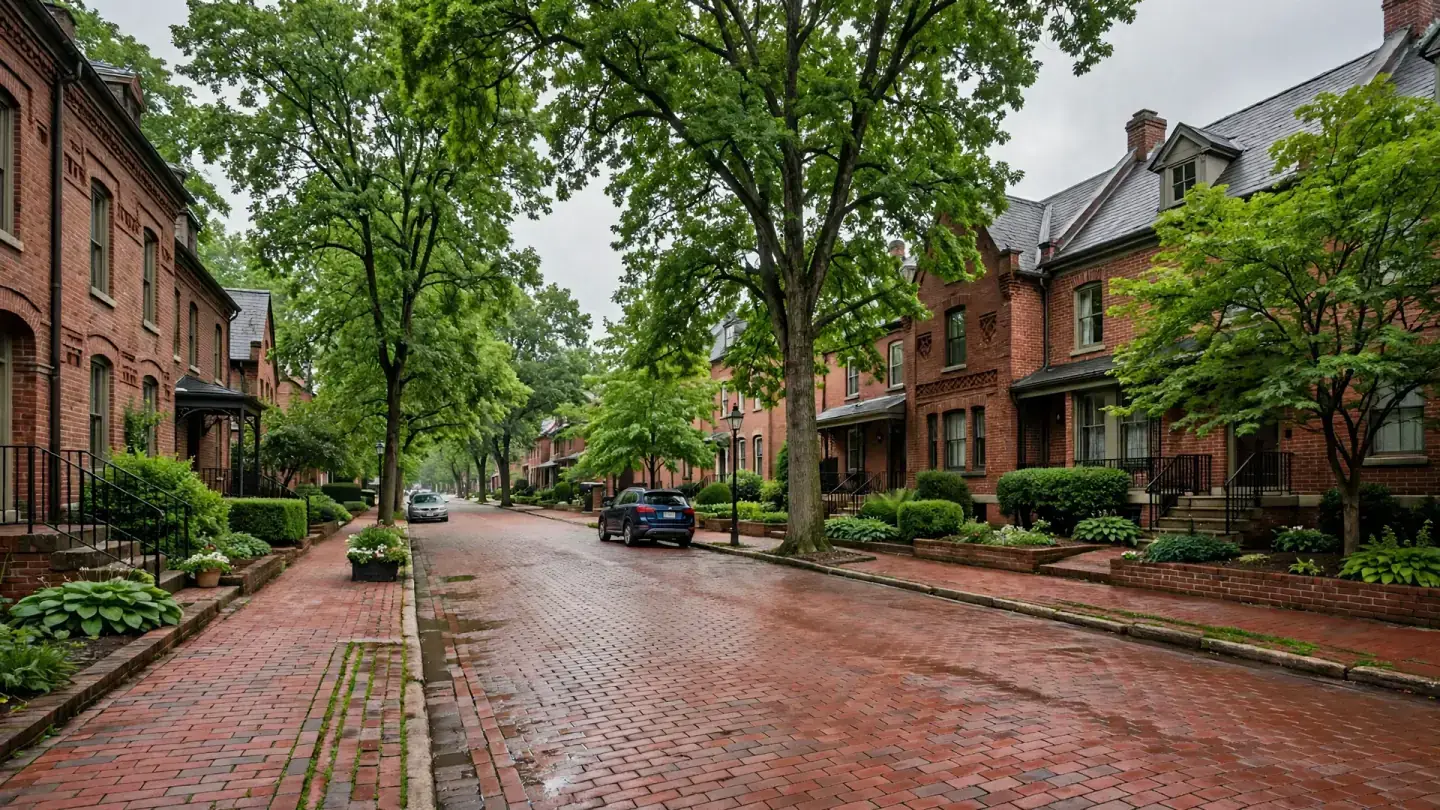
- German Village was developed mainly in the nineteenth and early twentieth centuries, with small brick cottages on small lots [2].
- Clintonville's southern section is mostly pre-war housing, including catalog kit homes, and Blueprint Columbus has a lateral-lining project there [3][4].
- Columbus says homes built before the early sixties commonly have downspouts or foundation drains tied into the sanitary sewer [5].
Older drains
Why do sewer backups in old Columbus houses need a different approach?
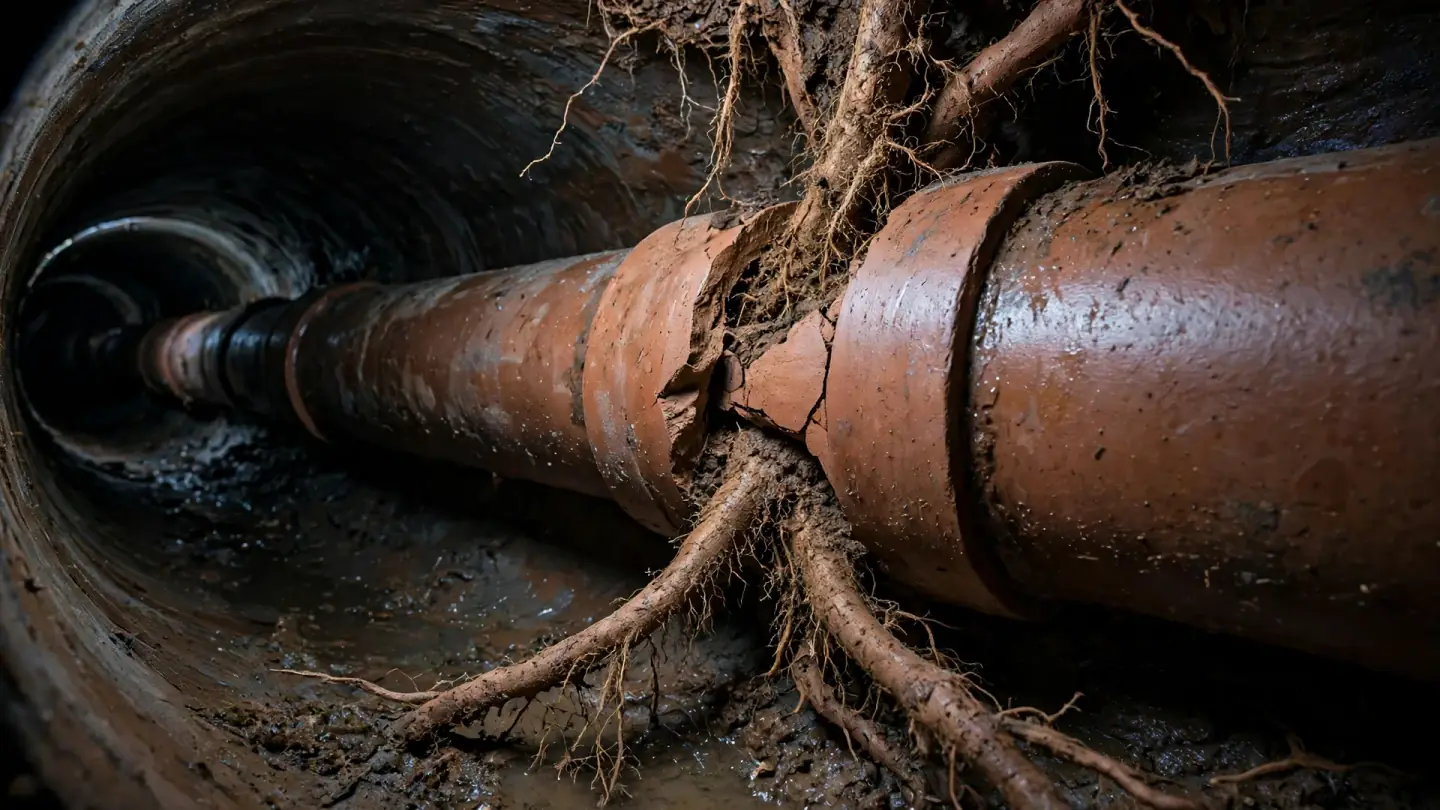
A house in German Village, Victorian Village, Old North Columbus or South Clintonville may still drain through the materials it was built with. Inside, that often means a cast iron stack and cast iron under the basement floor. Outside, the lateral to the street is frequently vitrified clay laid in short sections with mortar or early gasket joints [1]. Both materials can last a long time, but by now they have weak points: clay joints that roots have found, cast iron that has scaled inside or thinned at the bottom, and sections that have settled into a belly where solids collect.
In an emergency those weak points change the job. A cable that is fine in modern plastic can catch on an offset clay joint or a broken hub. Aggressive cutting heads can damage thin cast iron. And many older houses have no outside cleanout at all, or a basement cleanout plug that has been painted over and rusted in place for decades. The contractor's first questions will be about the house's age and where the line can be reached.
If your house is newer and the backup is in a modern line, the general emergency sewer line cleaning page fits better. This page is for the older house where the pipe itself needs care.
Old-pipe signals
Signs the trouble is in old clay or cast iron
Backups that return every year or two
A lateral that blocks, gets cleared and blocks again on a similar timetable usually has roots coming back through the same joints.
Rust flakes or grit in the floor drain
Dark scale or sandy grit coming up with the water suggests corroded cast iron or soil entering a broken clay section.
Large trees between the house and the street
Mature street trees over an old clay lateral are the classic setup for root intrusion.
A damp patch in the yard or a sinking spot
Wet ground or settling above the lateral's path can mean a cracked or separated section underneath.
The visit
How a careful contractor opens an old clay or cast iron line
- 1
Pick the gentlest access
The contractor chooses the access point that gives a straight run toward the street without forcing fragile fittings.
- 2
Relieve the water under control
Containment goes down first, then the line is opened slowly so sewage does not surge across the floor.
- 3
Size the cutter to the pipe
A cable with a cutter matched to the pipe's diameter is run to open the stoppage, avoiding oversized blades that can catch an offset joint.
- 4
Flush and look
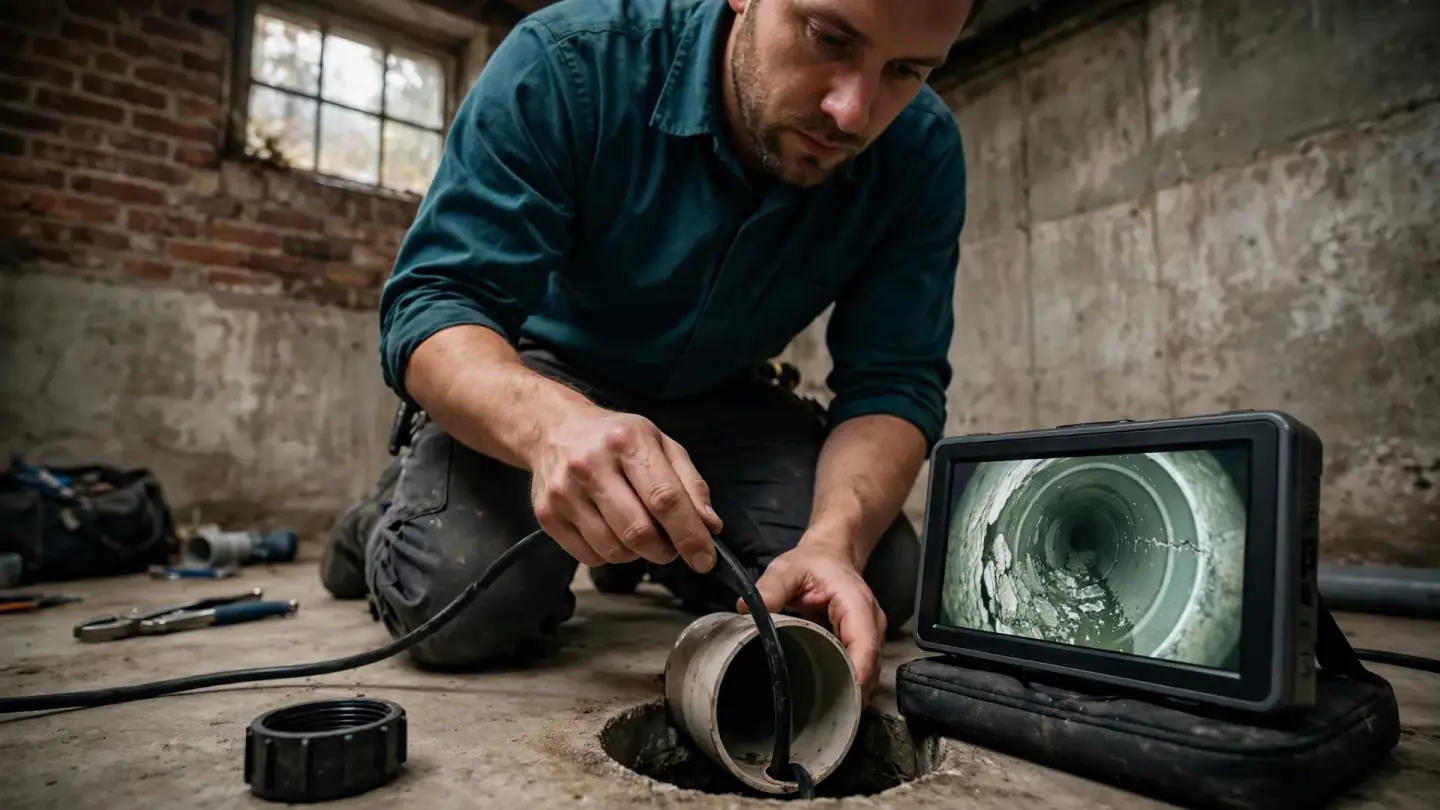
With water flowing, a camera pass is strongly worth considering in an older lateral to see roots, scale and any broken sections.
- 5
Explain the condition plainly
You hear whether the pipe is sound enough for routine cleaning, needs spot repair or lining, or is near the end of its life. The decision stays yours.
Historic districts
Historic district houses and sewer work
Columbus has several local historic districts, including German Village, Victorian Village and Italian Village, each with a commission that reviews exterior changes through Certificates of Appropriateness [2][7]. Emergency drain cleaning happens inside the pipe and does not change the exterior. Follow-up work that does, such as digging up brick walks, cutting into a front yard or adding a visible cleanout cover, may need review. The rules have been changing, so check with the city's Historic Preservation Office before planning exterior repairs.
Brick streets and walks, small lots and houses built close together are also practical issues. Equipment may have to be carried through a narrow side yard, and any digging has to be located first: OHIO811 must be notified before excavation, and it does not mark private lines like your lateral [8]. That is one reason a sewer line inspection with locating is so useful in an old house.
After it drains
Planning for the next backup in an old house
If roots caused the backup, the joints that let them in are still there. Routine main sewer line cleaning on a schedule keeps many clay laterals working, while lining or replacing a section addresses the cause. If your street is in a Blueprint Columbus project area, the city may line private laterals as part of that work, so ask before committing to your own repair [4]. The cast iron and clay drains guide explains how each material ages. For other urgent drain problems, start at the emergency drain cleaning page or browse the emergency hub.
FAQ
Questions owners of older Columbus houses ask about sewer backups
Is it safe to run a drain snake through a hundred-year-old clay sewer line?
Usually yes, when the contractor uses a cutter sized to the pipe and works carefully at offset joints. Clay itself is hard; the risk is catching a broken or shifted section. A camera pass afterward shows whether the line is sound or needs repair [1].
What happens if my old house has no sewer cleanout?
The contractor can usually still reach the line by pulling a toilet, entering through a roof vent or carefully opening an old plug. Tell them on the call what openings you know of. Afterward, adding a proper cleanout is permit work in Columbus and makes future clearing much easier [6].
Should I try to unscrew the rusted cleanout plug myself during a backup?
No. A seized plug on a full line can release sewage under pressure, and forcing it can crack an old cast iron fitting. Leave it for the contractor, who will have containment ready and the tools to remove it without damaging the pipe.
Do I need historic commission approval for emergency sewer work in German Village?
Clearing a blocked line from inside the house changes nothing visible, so it is not normally a review matter. Exterior follow-up work, like digging up a brick walk or adding a visible cover, may need a Certificate of Appropriateness. Check with the city's Historic Preservation Office first [2][7].
Why do roots keep coming back into my old clay sewer pipe?
Roots enter through gaps at clay joints, and cutting them out does not close those gaps. They grow back toward the moisture inside the pipe. Regular cleaning controls them, while lining or replacing the affected section removes the entry point [1].
Can the city line my old sewer lateral through Blueprint Columbus?
In some neighborhoods, yes. Blueprint Columbus includes lining private laterals in targeted project areas, including a Clintonville and Old Beechwold project [3][4]. Ask Columbus Water & Power whether your street is included before arranging lining yourself, because the city work may change what a private contractor should recommend.
Sources and citations
- [1]Wikipedia: Vitrified clay pipe
- [2]Wikipedia: German Village
- [3]Wikipedia: Clintonville (Columbus, Ohio)
- [4]City of Columbus: Blueprint Clintonville and Old Beechwold lateral lining review
- [5]City of Columbus: Sewer Overflow FAQs
- [6]City of Columbus: Plumbing permit application
- [7]City of Columbus: Victorian Village Commission
- [8]OHIO811: Homeowners