Key facts: Basement floor drain backing up
- Columbus wants basement sewer backups logged with its round-the-clock sewer maintenance line (614-645-7102); hold on to the request number [1].
- Project Dry Basement covers an approved backflow prevention device for qualifying single and two-family homes after a public sewer surcharge [1].
- Blueprint Columbus targets rain water leaking into sanitary sewers through cracked pipes, leaky joints and connected foundation drains [2].
- A backflow device closes when sewer water rises, keeping it out of the basement drain [3].
Short answer
Why does the lowest drain in the house overflow first?
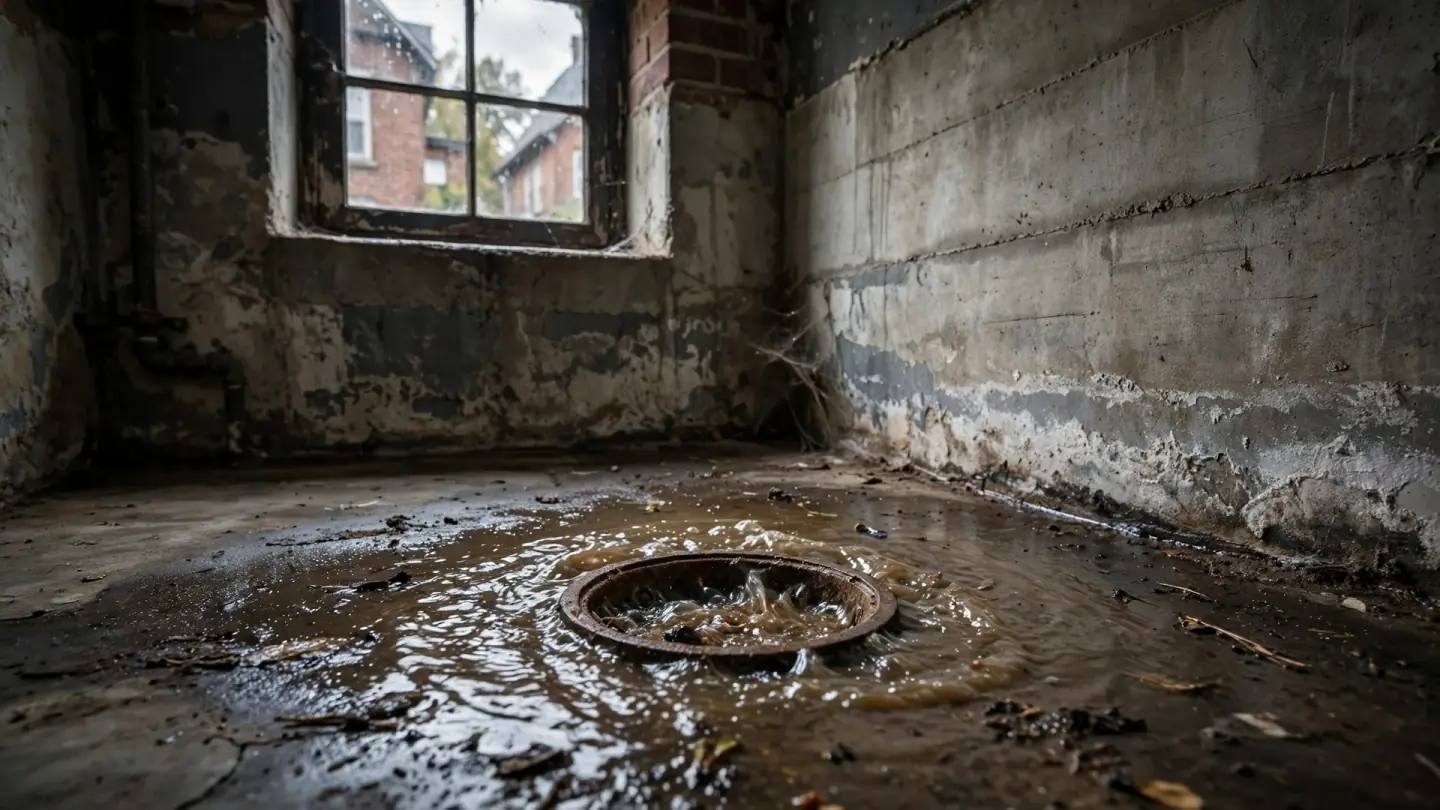
A basement floor drain backs up for one of two reasons. Either something is blocking the pipe between that drain and the public sewer, so water from upstairs fixtures has nowhere to go but out of the lowest opening, or the public sewer itself is full and pushing water back up your lateral. The first is a private clog that a drain machine or jetter can clear. The second is a surcharge, usually during heavy rain, and no amount of cleaning on your side will stop it.
The quickest way to tell them apart is timing. If the drain overflows when the washing machine empties or someone showers, and the weather is dry, suspect a blockage in your own line. If it rises during or just after a storm, with no fixtures running, suspect the public sewer. Columbus treats those surcharge events seriously: the city wants each one logged by phone with its sewer maintenance staff at 614-645-7102, a line that is always answered [1], and a report is the first step toward the Project Dry Basement program.
At a glance
Floor drain symptoms matched to causes
| What you see | Likely cause | What to do |
|---|---|---|
| Water rises when the washer drains, dry weather | Partial clog in the main line or floor drain branch | Stop laundry, call to have the line cleared from a cleanout |
| Water rises during heavy rain with nothing running | Public sewer surcharge or rain water entering the system | Report to SMOC at 614-645-7102 and keep the request number [1] |
| Gurgling in the floor drain when toilets flush | Restriction downstream of the toilets | Limit water use and have the main line checked |
| Sewage smell but no water | Dry trap in the floor drain | Pour water into the drain to refill the trap |
| Silt, sand or roots in the backed-up water | Cracked or root-invaded lateral | Ask for a camera inspection after clearing |
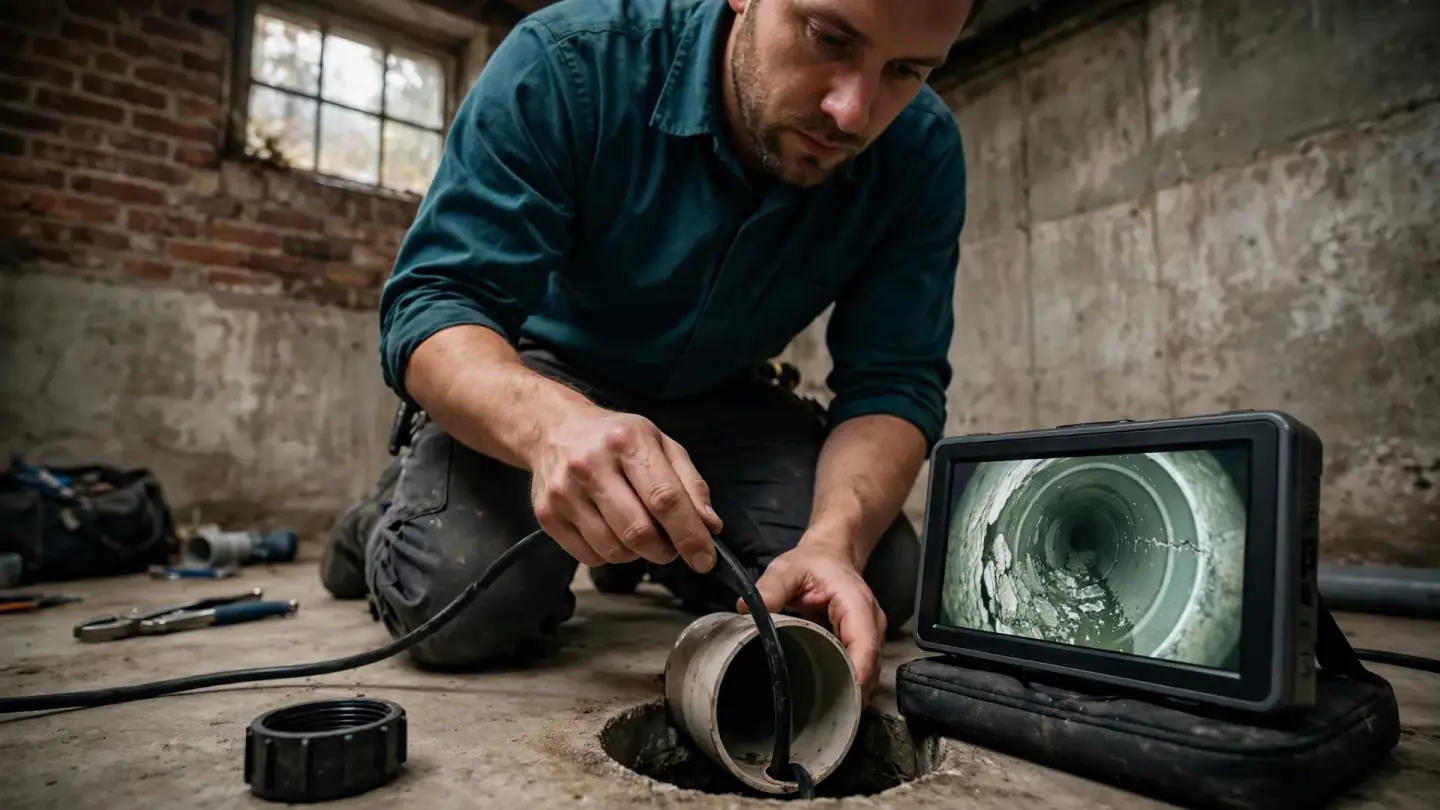
A basement cleanout gives the contractor access
Safe checks
Checks you can make before anyone arrives
- Stop running water anywhere in the house: no laundry, dishwasher, showers or flushing until you know where the water is going.
- Look at the weather. Rain in the last few hours points toward the public sewer; dry weather points toward your own line.
- Check whether neighbors on the street are having the same trouble. Several homes backing up at once is a strong sign of a public sewer problem.
- Find your cleanout, usually a capped pipe near the front foundation wall, and note whether water is standing in it. Do not open a cleanout cap under pressure.
- Keep children and pets away from the water. Sewage carries bacteria, and standing water near outlets or appliances is an electrical hazard.
- Do not pour chemical drain cleaner into a floor drain. It rarely reaches the blockage and leaves caustic water for whoever opens the line next [4].
Cause one
Blockages in your own building drain and lateral
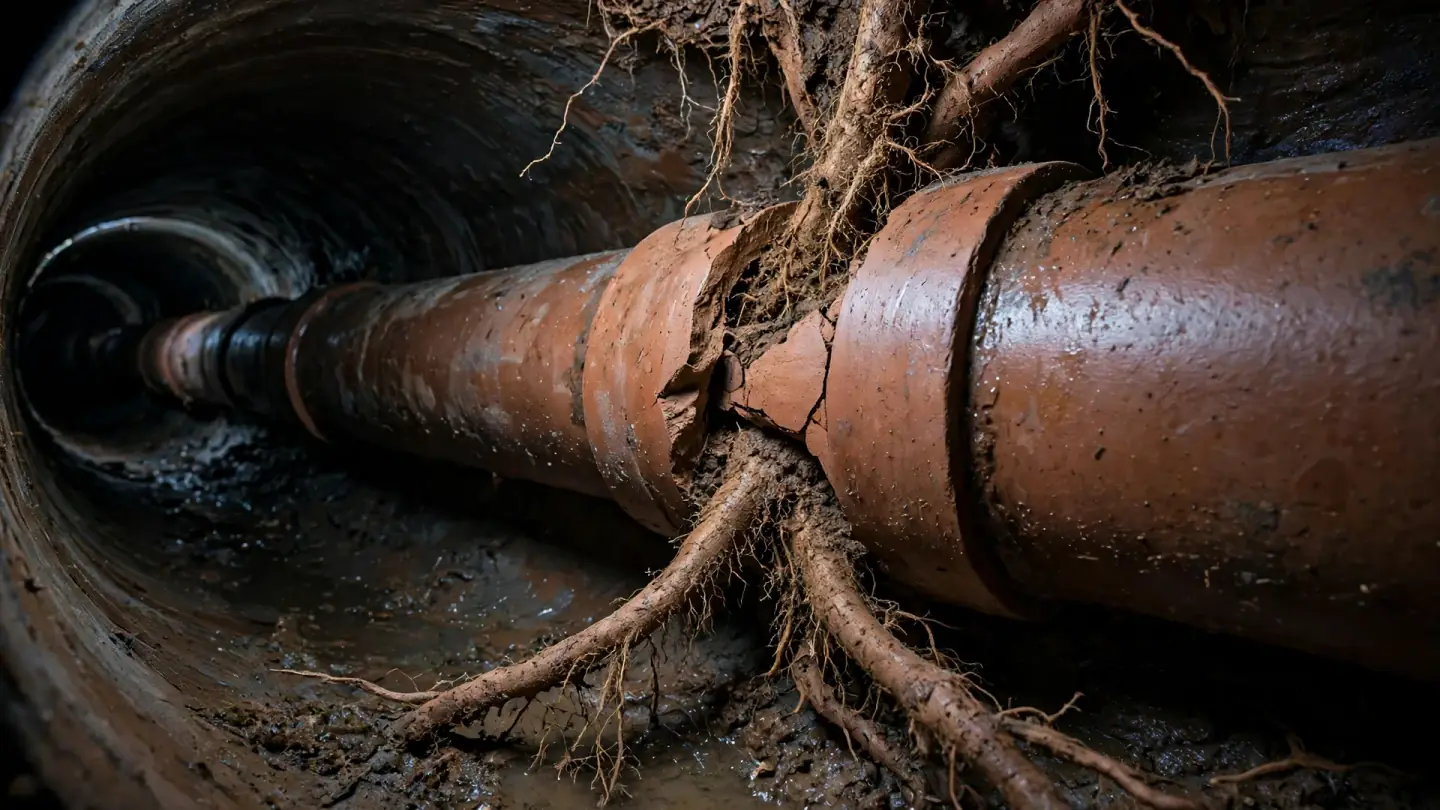
Most dry-weather floor drain backups come from the main building drain or the lateral that runs under the yard to the street. Grease from years of kitchen use, wipes labelled flushable, paper towels and laundry lint collect where the pipe changes direction or where a joint has sagged. In older Columbus neighborhoods the lateral is often vitrified clay with a joint every few feet, which gives roots an easy way in [5]. A partial blockage can sit unnoticed for months because small amounts of water still get past it; it only shows itself when a large volume, like a washer's drain cycle, arrives all at once.
Clearing this kind of clog is the work of main sewer line cleaning: a cable machine through the cleanout to open the line, and often a camera afterwards to see why it blocked.
Cause two
Is the city sewer pushing water into my basement?
The second cause has nothing to do with what you flushed. During heavy rain, water leaks into sanitary sewers through cracked pipes, leaky joints and foundation drains connected to the system. The city describes exactly this problem as the reason for Blueprint Columbus, which works through lateral lining, downspout redirection, optional sump pumps and green stormwater projects [2]. When the public pipe fills beyond capacity, the extra water travels backwards up house connections and appears at the lowest fixture: your floor drain. The EPA notes that sanitary sewer overflows can back up into basements as well as reach streets and streams [6].
Where a one- or two-unit Columbus house has taken a backup because the public sewer surcharged during wet weather or blockages, Project Dry Basement covers an approved backflow prevention device [1]. The device closes automatically when sewer water rises [3]. You must report the backup to the city's operations center to start that process, so call 614-645-7102 even if the water has already gone down.
Cause three
Floor drains that smell, seep or never quite dry
Not every floor drain problem is a flood. A drain that smells of sewage but stays dry usually has a trap that has evaporated, especially in basements that are rarely used. Pouring a bucket of water into it refills the trap and restores the seal. A drain that seeps a little water during storms but never smells may be tied to foundation drainage rather than the sanitary line, or may sit near a sump pit whose discharge is misrouted [7]. These cases need someone to trace where the drain actually goes before deciding what to do, which is part of floor drain cleaning work.
Diagnosis
How the contractor works out where the water comes from
- 1
Questions on the call
Expect to be asked when it started, whether it was raining, which fixtures were running, and whether neighbors are affected. Those four answers often settle private versus public before anyone arrives.
- 2
Access at the cleanout
The contractor opens the cleanout carefully, watching for standing water that shows the line is full beyond that point.
- 3
Clearing the line
A sectional or drum cable machine is run toward the street to open a path. If the cable reaches the city connection without finding a blockage, the problem may be outside your property.
- 4
Camera inspection
A drain camera inspection after clearing shows roots, offsets, sags or broken sections and how far from the house they sit.
- 5
Next-step advice
You hear whether the line needs routine cleaning, repair, or a report to the city, and whether a backwater valve makes sense for your house.
Fix decision
Clearing, repairing or protecting the basement
If the cause is a clog in a sound pipe, cleaning is the fix. If the camera finds roots at clay joints or a sagging section that holds water, cleaning restores flow but the problem will return, and a repair or lining becomes worth discussing. If the cause is the public sewer, the protection is on the house side: a backflow device, ideally through Project Dry Basement if you qualify [1]. Changes to drain piping fall under the Ohio Plumbing Code [8], and the contractor will tell you on the call whether a permit is involved.
Prevention
Keeping a Columbus basement drain flowing
- Keep wipes, grease and paper towels out of every drain in the house, since they all end up in the same building drain.
- Fit a lint filter on the washing machine discharge if it drains into a laundry tub or floor drain.
- Pour water into rarely used floor drains every few weeks to keep the trap sealed.
- If you have a backflow device, the city advises inspecting and cleaning it monthly [1].
- Point downspouts away from the foundation so roof water does not end up in foundation drains.
On the call
Details to give when you call about a floor drain
- Whether it was raining and when the water appeared.
- Which fixtures were running and whether toilets or tubs upstairs also drain slowly.
- How old the house is and, if you know, what the lateral is made of.
- Where the cleanout is and whether it is reachable.
- Whether you have already reported the backup to the city and have a service request number.
FAQ
Floor drain backup questions, answered plainly
Who do I call first when my basement floor drain backs up during a storm?
Call the City of Columbus Sewer Maintenance Operations Center at 614-645-7102 first when a backup arrives with heavy rain or neighbors report the same thing [1]. Keep the service request number. A storm-timed backup often means a surcharged public sewer, and the report is the record the city looks at for Project Dry Basement. If the weather is dry and only your house is affected, a private drain contractor is the more likely fix.
How quickly should a Columbus sewer backup be reported to the city?
Report a suspected public-sewer backup to Columbus as soon as you notice it, while water or fresh staining is still visible. The city tracks each report under a service request number, and Project Dry Basement eligibility for qualifying single and two-family homes starts from a reported surcharge [1]. Photos of the water level and the time it began also help if you need to explain the event later.
Is it okay to run the washing machine when the basement floor drain is slow?
Running the washer with a slow floor drain is a bad idea, because a washer empties dozens of gallons in a few minutes. That surge is what lifts water out of a partly blocked drain onto the floor. Hold off on laundry, showers and the dishwasher until the line has been cleared and a full bucket of water drains away from the floor drain without pooling.
Why does the basement floor drain smell like sewage even when no water comes up?
A sewage smell from a dry floor drain usually means the water in its trap has evaporated, leaving an open path for sewer gas [8]. Pour a bucket of water into the drain to refill the seal. If the odor returns within a few days, the trap may be cracked or a cleanout cap loose, and the sewer smell guide explains how to trace it.
What does a backwater valve do on a basement floor drain?
A backwater valve closes when sewer water starts flowing toward the house, stopping it from rising through the basement floor drain [3]. Homes that have flooded from a surcharged public sewer gain the most from one. Columbus offers an approved backflow device through Project Dry Basement for qualifying homes after a reported backup, so check eligibility with the city before arranging private work [1].
Can a sewer camera show whether my lateral caused the floor drain backup?
A sewer camera usually can show whether your lateral caused the backup, once the line has been cleared enough for the camera to travel. The footage reveals roots, cracked clay joints, offsets and low spots, with the distance from the cleanout to each defect. Ask the contractor you are connected with about a drain camera inspection if the floor drain has backed up more than once.
Does a sump pump stop sewage from coming up the floor drain?
A sump pump does not stop sewage from rising through a floor drain, because the two handle different water. The sump pit collects groundwater around the foundation and pumps it out [7], while the floor drain connects to the sanitary sewer. Blueprint Columbus adds sump pumps in some project areas to keep clean water out of the sewer [2], which can reduce surcharging nearby.
Sources and citations
- [1]City of Columbus, Project Dry Basement
- [2]City of Columbus, Blueprint Columbus four pillars
- [3]Wikipedia, Backflow prevention device
- [4]Wikipedia, Drain cleaner
- [5]Wikipedia, Vitrified clay pipe
- [6]U.S. EPA, Sanitary sewer overflows
- [7]Wikipedia, Sump pump
- [8]Ohio Administrative Code 4101:3, Ohio Plumbing Code