Key facts: Multiple drains backing up
- When several fixtures back up together, the blockage is usually in the shared building drain or lateral, not in any one fixture.
- The lowest drain in the house, often a basement floor drain, is where a main line backup appears first [1].
- Columbus asks residents to report sewer backups caused by the public sewer to its 24-hour operations center at 614-645-7102 [1].
- A drain auger or sewer machine is fed through a cleanout to clear a main line blockage [2].
Short answer
Why do several fixtures back up at the same time?
Every drain in a house feeds into one building drain, which leaves the foundation as the sewer lateral and runs to the public sewer. When that shared pipe is blocked, water from any fixture has nowhere to go and rises out of the lowest opening. The classic pattern: you flush an upstairs toilet and water bubbles up in the bathtub or the basement floor drain. Running the washing machine floods the floor drain. Sinks on upper floors may seem fine at first because their water is the last to back up.
The fix is to clear the main line from a cleanout, not to plunge fixtures one by one. Before that, the most useful thing you can do is stop using water anywhere in the house.
Pattern table
Which drains are acting up, and what that suggests
| What you see | Likely cause | What to do |
|---|---|---|
| Toilet flush makes the tub or shower gurgle or fill | Main line partially blocked | Stop using water; arrange main line clearing |
| Washer drain floods the basement floor drain | Blockage between floor drain and street | Stop laundry; call to clear from the cleanout |
| All drains slow, worse during rain | Public sewer surcharge or rain water entering the line | Report to 614-645-7102 if water rises [1] |
| Two fixtures on one floor slow, others fine | Shared branch line clog | Clear the branch rather than the main |
| Backups return every year or two | Roots or a sag in the lateral | Clear, then camera inspection |
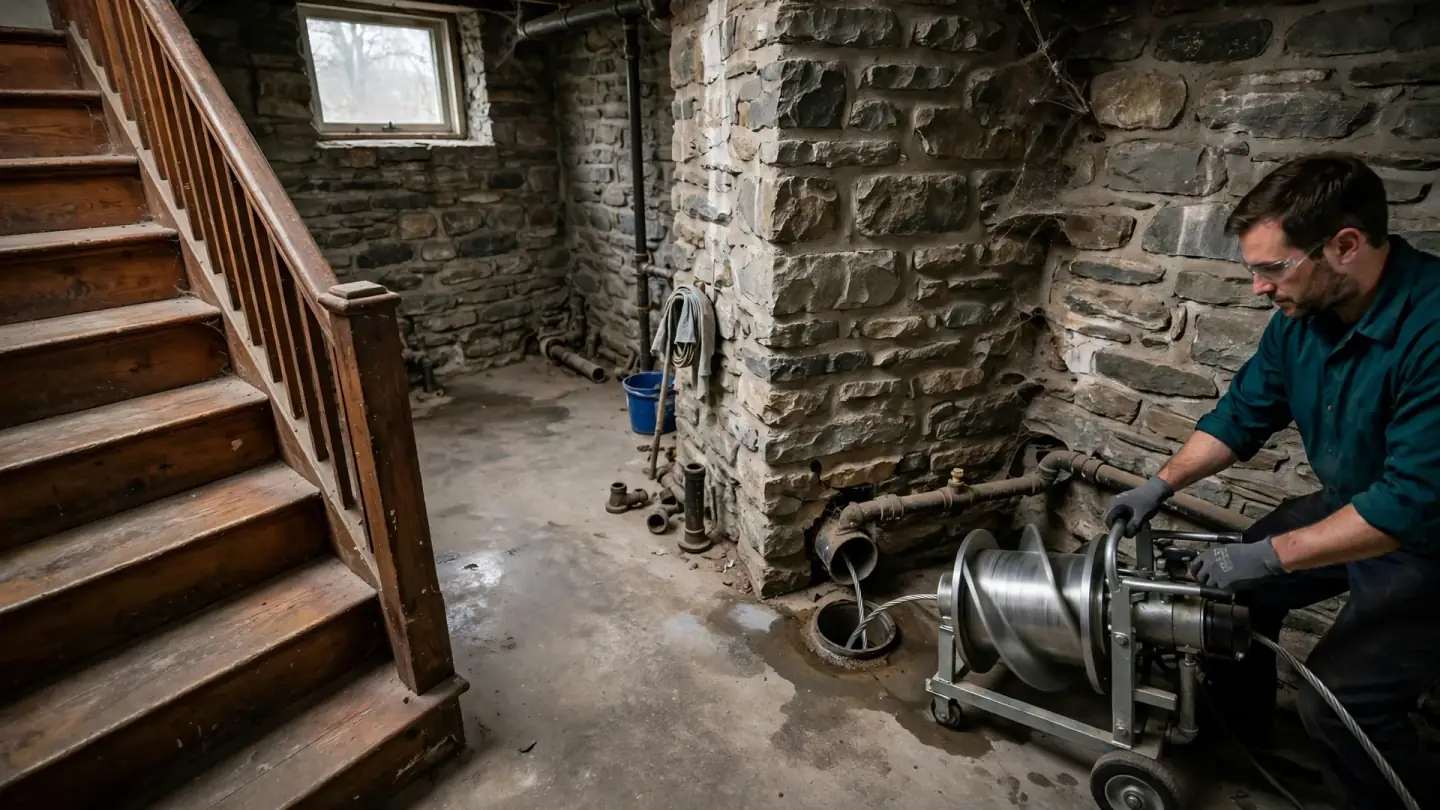
Main lines are cleared from the cleanout
Safe checks
What to do in the first hour
- Stop all water use: no flushing, showers, dishwasher or laundry. Tell everyone in the house.
- Check the weather and ask a neighbor whether they have the same trouble. A street-wide problem means calling the city.
- Find the cleanout, usually a capped pipe near the front of the basement or outside near the foundation. Do not open it if water may be behind it.
- Move belongings away from floor drains and keep children and pets out of any sewage.
- Skip chemical cleaners. They will not reach a main line clog and make the work hazardous [2].
Common cause
Wipes, grease and paper in the building drain
In many homes, the main line blockage is simply accumulated material: wipes that do not break down, paper towels, feminine products, and grease that has coated the pipe for years. These collect where the pipe changes direction, often right where the building drain leaves the house. A cable machine opens these quickly, and main sewer line cleaning is usually all it takes if the pipe itself is sound.
Older laterals
Roots, sags and old pipe materials
Older Columbus houses add other causes. Clay laterals have frequent joints where roots enter [3], and mid-century bituminous fibre pipe can deform with age [4]. In neighborhoods like German Village, where homes were built mainly between 1840 and 1914 [7], laterals may have been repaired in pieces over the years, with different materials and transitions that catch debris. A sag, or belly, holds water and solids, and the line backs up again a few months after each clearing. These are the cases where a camera after cleaning is essential; see sewer line inspection.
Public sewer
What if the blockage is in the city sewer?
Sometimes the blockage or overload is in the public sewer. Heavy rain leaking into sanitary sewers through cracked pipes and connected foundation drains can push the system past capacity [5], and water rises up house connections. If backups follow storms or neighbors are affected, report it to the Columbus sewer maintenance team at 614-645-7102 and keep your service request number [1]; that report is also the first step toward Project Dry Basement for qualifying homes. Columbus's utility department began operating as Columbus Water & Power in 2025 [6].
Diagnosis
How the contractor confirms and clears a main line
- 1
Talk through the pattern
On the call, describe which fixtures backed up and in what order; it shows where the blockage sits.
- 2
Open the cleanout
The contractor opens the main cleanout carefully, ready for water that may be held behind it.
- 3
Run the sewer machine
A cable with a cutting head is fed toward the street until the line opens and water drains.
- 4
Confirm the flow
Fixtures are run at volume to make sure the line is fully open.
- 5
Camera the line
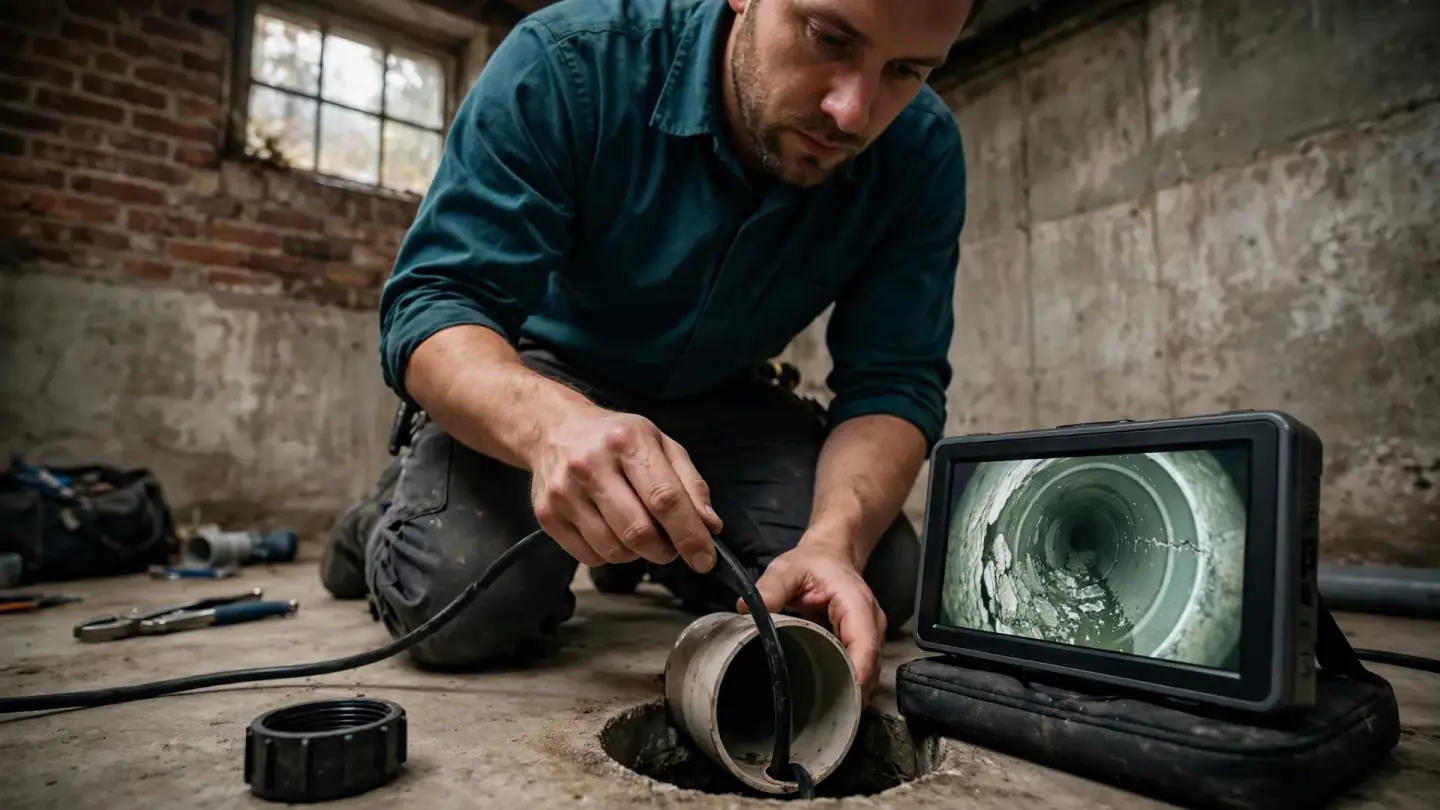
A camera run shows whether the cause was debris, roots, a sag or broken pipe.
Fix decision
Clearing now and deciding what comes next
If the camera shows a sound pipe and the cause was debris, clearing is the whole job. If it shows roots at joints, a belly, or cracks, clearing restores use of the house, and you can plan the next step without water rising in the basement. That might be maintenance cleaning, a spot repair, lining or replacement. Repairs to drain lines follow the Ohio Plumbing Code [8]. For backups at night or on a weekend, see emergency drain cleaning and call to check emergency availability.
Prevention
Keeping the main line clear
- Only toilet paper goes down toilets; bin wipes, even those labelled flushable.
- Keep cooking grease out of sinks.
- Know where your cleanout is and keep it accessible.
- If the line has roots or a sag, ask for a maintenance cleaning interval based on the camera findings.
On the call
What to report about a multiple-drain backup
- Which fixtures backed up and in what order.
- Whether it was raining and whether neighbors are affected.
- Where the cleanout is and how to reach it.
- When the line was last cleared, and any previous camera findings.
- Whether sewage has reached finished areas of the basement.
FAQ
Main line backup questions
Why does the bathtub fill with dirty water when I flush the toilet?
A tub that fills when the toilet flushes is a classic sign of a main line clog. The flush cannot get past the blockage in the shared drain, so the water rises from the next lowest opening, often the tub or shower drain. Stop flushing and running water, and have the main line cleared from a cleanout rather than plunging the toilet.
Will plunging one toilet clear a clog in the main sewer line?
Plunging one toilet will not clear a clog in the main sewer line, because the blockage sits beyond the fixture where the plunger has no reach. Pressure from the plunger can instead push sewage out of a lower drain, such as a basement floor drain or tub. A main line blockage needs a sewer machine or jetter fed through a cleanout [2].
How can I tell whether the Columbus city sewer is causing my backup?
A city sewer problem is likely when the backup starts during heavy rain or several neighbors have water coming up at the same time. Report those cases to the Columbus Sewer Maintenance Operations Center at 614-645-7102 so the city can check the public main [1]. A backup in dry weather affecting only your house usually points to your own lateral.
Can I stay in the house while sewage is backing up through the drains?
Staying in the house is usually fine if you stop using water and keep everyone away from the sewage. Ventilate the affected area, keep children and pets out, and do not touch wet electrical equipment or appliances. Wear gloves and boots if you must walk through the space, and leave cleanup of soaked materials until the line has been cleared.
Will the main line back up again after it has been cleared?
The main line may stay clear for years if the cause was wipes or grease in a sound pipe. Roots, a sag or broken clay pipe usually bring the backup back, sometimes within months [3]. A camera inspection after clearing shows which situation you have and whether cleaning, lining or replacement makes sense next.
Which drain should I watch to know if the main line is blocked?
Watch the lowest drain in the house, usually a basement floor drain or a basement shower. Water in a blocked main line rises from the lowest opening first, so damp edges, gurgling or standing water there while upstairs fixtures run is a strong clue. The basement floor drain guide explains what each pattern suggests.
Sources and citations
- [1]City of Columbus, Project Dry Basement
- [2]Wikipedia, Plumber's snake
- [3]Wikipedia, Vitrified clay pipe
- [4]Wikipedia, Orangeburg pipe
- [5]City of Columbus, Blueprint Columbus four pillars
- [6]City of Columbus, About Columbus Water & Power
- [7]Wikipedia, German Village
- [8]Ohio Administrative Code 4101:3, Ohio Plumbing Code