Key facts: Shower and Tub Drains
- Tub and shower clogs are mainly hair knotted with soap scum, usually within the first foot of drain below the strainer or stopper.
- Tubs are cleaned most effectively through the overflow opening, which gives a straighter path to the trap than the drain itself.
- Some older houses still have drum traps under tubs, which clog easily and are no longer allowed for new work under the plumbing code [3].
- A tub that fills when a toilet flushes is a branch or main-line backup, not a tub clog [4].
How it works
What happens below a shower or tub drain
A bathtub drain has more moving parts than most people realize. Water leaves through the drain in the floor of the tub and through the overflow opening on the end wall, and both pipes meet in a fitting called the waste and overflow before dropping into a trap under the floor. The stopper mechanism, whether a lift-and-turn, a toe-touch, a push-pull or a lever linkage hidden behind the overflow plate, sits right in the flow path. A shower pan is simpler: a strainer, a short drop and a trap.
The clog almost always begins at the top. Long hair is the main ingredient, and it wraps around the stopper post or the crossbars under the strainer. Soap scum, conditioner and body oils coat the hair and harden into a mat. That mat slowly grows down into the drain body and the trap, which is why a shower that drained a little slowly last month now holds water for ten minutes.
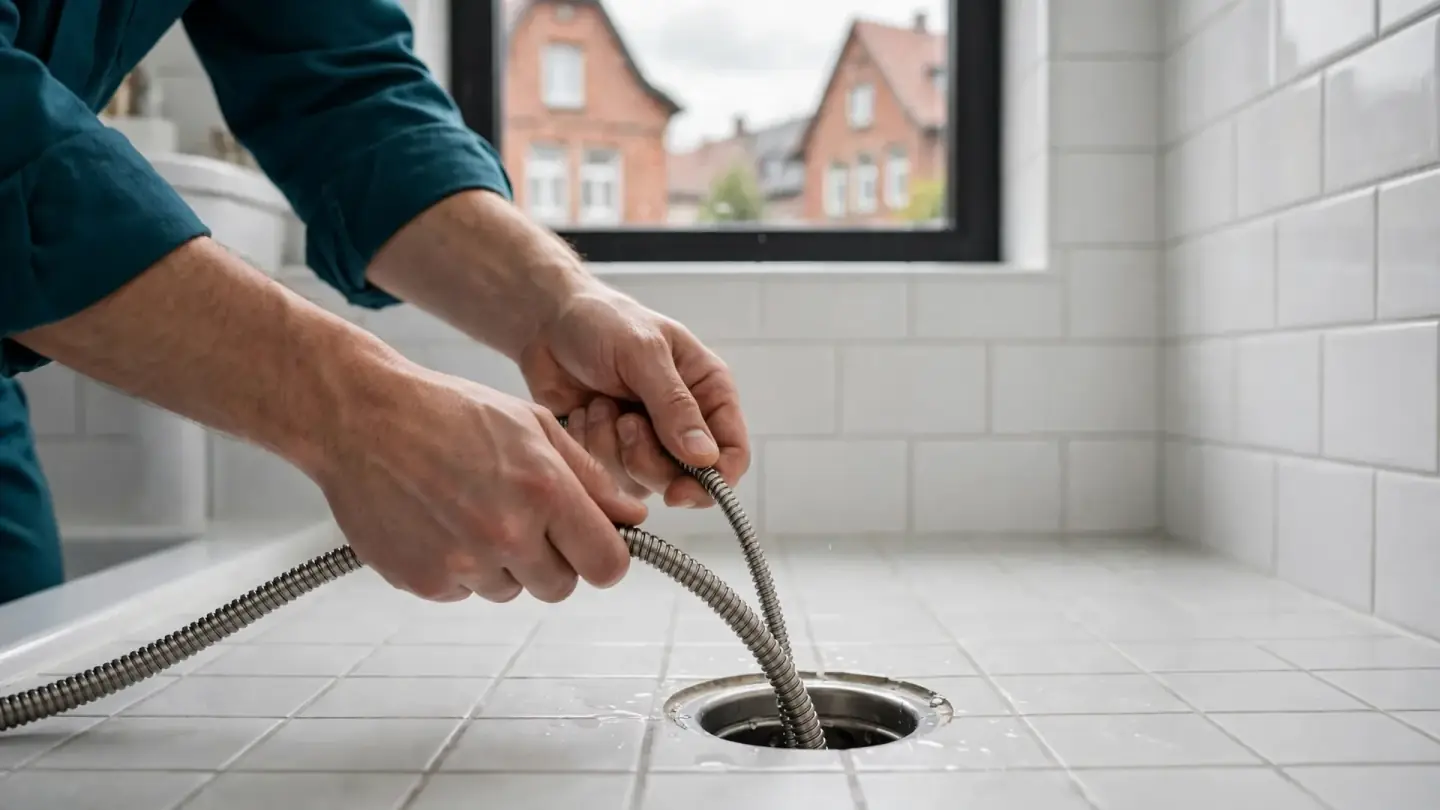
Cleaning starts with removing the stopper or strainer to reach the mat directly. If the clog is deeper, the contractor usually goes in through the overflow opening on a tub. Removing the overflow plate gives a straighter angle into the trap than feeding a cable through the drain crossbars, and it avoids scratching the tub finish. On showers, the strainer is unscrewed or pried out and a small cable is fed straight down.
Some homes built before plastic drains became common have a drum trap under the tub: a metal canister with a screw-off lid set into the bathroom floor or accessible from the ceiling below. Drum traps hold a large pocket of water that collects hair and sludge, they do not self-clean the way a curved trap does, and modern plumbing codes no longer allow them in new work [3]. They can be cleaned, but if the lid is seized or the canister is corroded through, replacing it with a standard trap is the usual recommendation.
Other bathroom work: sink and vanity clogs and toilet clearing, or the full Columbus service list. When the tub is only one of several slow fixtures, start with the general clog page instead.
Signs
Which shower and tub signals should you pay attention to?
Water pooling around your feet
The drain cannot keep up with the shower head's flow. Almost always a hair mat at the strainer or stopper.
The tub empties, but slowly and noisily
Gurgling at the end of draining suggests the restriction is in the trap or the line beyond. Compare with our slow draining sink guide, which shares the same causes.
Dirty water rising from the drain
If water comes up into the tub when you flush or run the washer, the problem is below the tub. Read multiple drains backing up.
A sour smell from the overflow
Slime builds up inside the overflow pipe where it is never flushed. Cleaning it removes most bathroom drain odors.
Stopper will not seal or stay open
A worn linkage or a stopper jammed with hair causes both problems; it is often fixed during cleaning.

The repair
Clearing a shower or tub drain, stage by stage
- 1
Protect the finish
A towel or mat goes in the tub so tools, the cable and the stopper parts do not chip enamel or scratch acrylic.
- 2
Pull the stopper or strainer
Each stopper style comes out differently. Toe-touch caps unscrew, lift-and-turn stoppers release with a set screw, and lever types come out through the overflow.
- 3
Remove the hair mat
Most of the clog comes out here with a retrieval tool. It is not pleasant, but it is quick and solves the majority of slow showers.
- 4
Cable through the overflow or drain
If water still drains slowly, a small cable goes through the overflow on a tub or straight down a shower drain into the trap and branch.
- 5
Service a drum trap if present
Where an older drum trap exists, its lid is opened, the canister cleaned out and the gasket checked before it is closed.
- 6
Reinstall and flood test
The stopper is refitted and adjusted, the tub filled to the overflow and released, and the shower run at full flow to confirm the drain keeps pace.
Stopper and drain types
Tub stoppers, shower strainers and how each comes apart
| Hardware | Where hair collects | How it is opened |
|---|---|---|
| Toe-touch stopper | Around the spring cartridge and post | Cap unscrews, then the body unscrews from the crossbars |
| Lift-and-turn stopper | Under the stopper body | Small set screw under the knob releases it |
| Trip-lever with plunger | On the plunger inside the overflow pipe | Overflow plate unscrews and the linkage lifts out |
| Pop-up rocker arm | On the rocker arm in the drain | Rocker arm pulls straight up out of the drain |
| Shower grid strainer | Just beneath the grid | Screws out or pries up depending on style |
| Drum trap (older homes) | Inside the canister | Threaded lid in the floor or ceiling below |
What you can do yourself
Tub and shower clogs you can tackle, and the limits
- Pull and clean the stopperThis alone fixes most slow tubs. Wear gloves and have a bag ready for what comes out.
- Use a hair catcherA silicone or mesh catcher over the drain stops most hair before it ever reaches the stopper.
- Plunge with the overflow sealedOn a tub, cover the overflow opening with a wet cloth so the plunger's pressure goes down, not out the overflow.
- Avoid drain openers on enamel and acrylicHarsh chemicals can etch tub finishes and damage rubber stopper seals, and they rarely dissolve a hair mat.
- Do not unscrew a stuck drum trap lidOld brass lids can crack the canister or the floor tile around them when forced. That is one to leave to the contractor.
- Stop if other fixtures respondIf the toilet bubbles or the tub refills when other drains run, the problem is further along the line.
Local specifics
Shower and tub drains in Columbus housing
The age of a Columbus house says a lot about what is under its tub. In neighborhoods such as Clintonville, where much of South Clintonville was built before 1930 and North Clintonville from about 1910 through the late 1950s [1], original bathrooms were plumbed with cast-iron tubs, lead or brass waste fittings and in some cases drum traps. Many of those bathrooms have since been remodeled, but the drain under the floor is not always replaced when the tub is.
On the Hilltop, where the population grew from about 2,000 in 1900 to around 15,000 by 1924 [2], similar early-1900s houses appear block after block. In these homes it is common to find a newer tub sitting on an older drain, and the joint between the two is a frequent source of slow draining and leaks into the ceiling below.
If a contractor recommends replacing a drum trap or a corroded tub waste, the new work must meet the Ohio Plumbing Code, which is the 4101:3 section of Ohio's administrative code [3]. In the City of Columbus the permit for that kind of alteration goes through Building and Zoning Services and is issued to a registered contractor [5]. A straightforward cleaning, where nothing is cut or replaced, generally needs no permit.
In newer subdivisions, fiberglass and acrylic tub-shower units with plastic drains are the norm. Their clogs are almost entirely hair and soap, and they are among the quickest drain calls to resolve once the stopper is out.
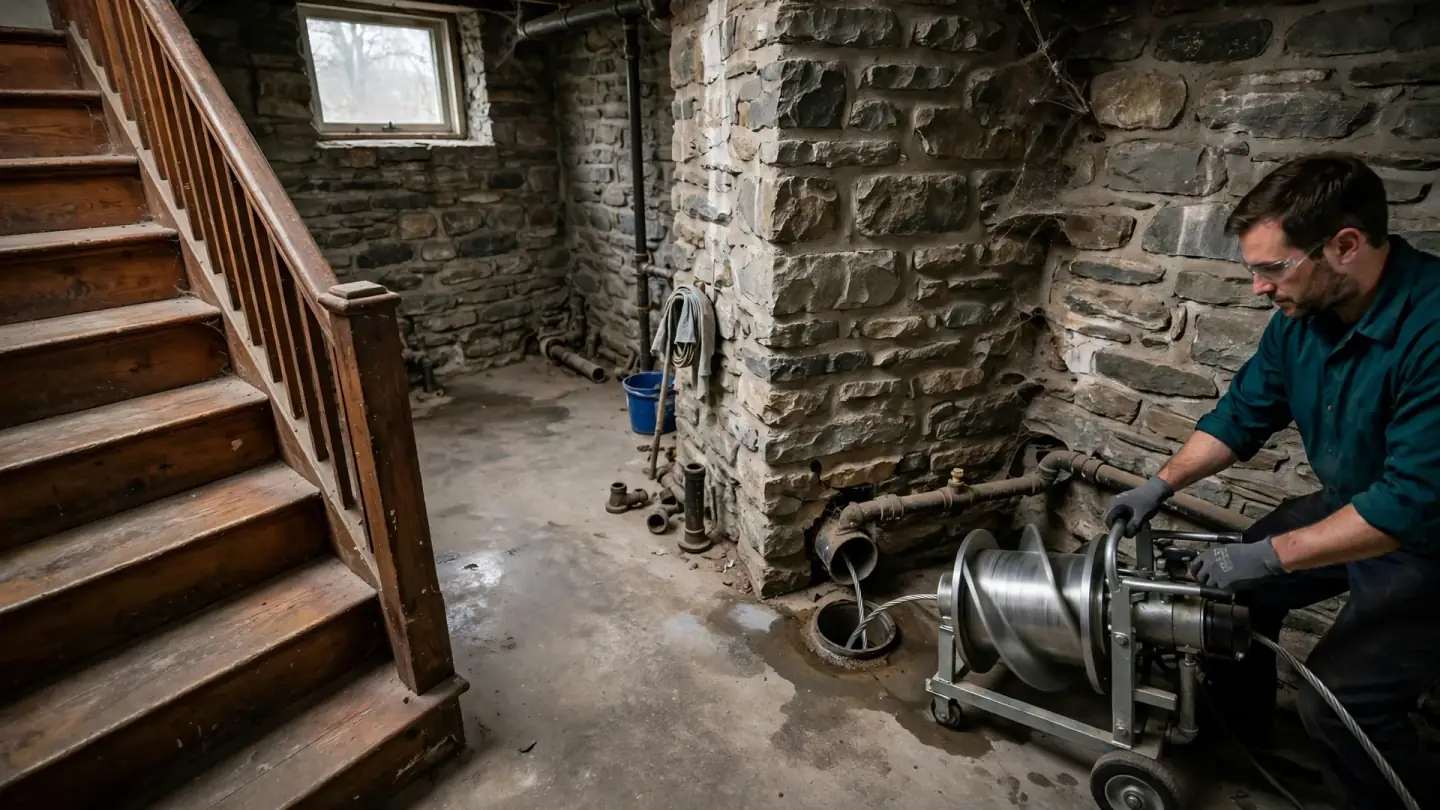
Basement showers deserve a separate mention. Many Columbus houses gained a shower in the basement long after they were built, and because that shower drains into the lowest part of the system, it is often the first fixture to show trouble when the main line slows. A basement shower that fills with gray water after laundry or a flush is almost never a shower clog. It is a signal to look at the building drain and lateral, the same line a floor drain depends on, and in wet weather it may be worth asking whether the public sewer is surcharging.
When it is worth repairing
When a slow tub needs cleaning and when it needs parts
If the drain runs freely once the hair is out, the job is done. Fit a hair catcher and clean the stopper every month or two and the problem rarely returns.
Parts come into it when the stopper mechanism is broken, the drain flange is corroded, or the waste and overflow fitting leaks. Those are common in tubs more than twenty or thirty years old and are usually replaced as a set.
When the tub drains slowly even with the trap clear, the bathroom branch or main line is the next suspect. A drain camera inspection shows what is past the trap. If the tub is overflowing or dirty water is coming up, see emergency bathroom drain cleaning. Sinks in the same room are covered on bathroom drain cleaning.
FAQ
What do people ask about shower and tub drains?
Why does my shower drain slowly even after I cleaned the strainer?
A shower that stays slow after the strainer is cleaned usually has hair and soap packed in the trap below. Strainer cleaning only removes what is visible. A small cable through the drain or tub overflow reaches the trap, and that is usually enough unless the shared bathroom branch is also partly blocked.
What is a drum trap, and should I worry about one in an old bathtub?
A drum trap is an older canister-style trap found under some bathtubs in older homes. Hair collects in it, and its shape makes it hard to clear with a cable [4]. Many plumbing codes no longer allow new drum traps. If an old tub drains poorly, ask the contractor whether one is present.
Can cleaning a bathtub drain scratch the tub finish?
Cleaning a bathtub drain can scratch enamel or acrylic if tools rest on the surface. Contractors usually work through the overflow plate and pad the tub. Ask about protection on the call if your tub is antique cast iron, freshly refinished or a stone shower base.
Why does water come up in my bathtub when the toilet flushes?
Water rising in a bathtub when a toilet flushes usually means a blockage farther down the shared line, often in the main sewer. The flushed water cannot pass the clog, so it rises at the lowest nearby opening. Stop using water and call, because the main line likely needs clearing.
How can I keep my shower drain clear for longer?
A hair catcher over the shower drain and a quick weekly clean stop most shower clogs. Rinse the drain with hot tap water after use if you use heavy conditioners or oils. Avoid pouring chemical openers into a standing-water shower, since they can harm fittings and the person clearing it later.
Is it normal for a new shower drain to clog quickly?
A new shower drain that clogs quickly is not normal and can point to a construction issue, such as a flat drain pipe, debris left during building or a missing vent. Hair alone rarely blocks a well-built new drain within weeks. A camera look can show whether the pipe slope is wrong.