Key facts: Backwater valves and Project Dry Basement
- Project Dry Basement, running since July two thousand four, provides an approved backflow prevention device for qualifying single and two-family Columbus homes [1].
- A qualifying backup must be reported to the city's Sewer Maintenance Operations Center, and the service request number kept [1].
- Columbus asks owners to inspect and clean the valve monthly, including the lid O-ring and the flapper [1].
- A backflow prevention device lets flow go one way and blocks it from reversing [2].
Short answer
What a backwater valve actually does in a Columbus basement
A backwater valve sits in the building drain between your lowest fixtures and the street. Normally its flapper hangs open and household water passes through toward the public sewer. When the public sewer surcharges and water starts to push back toward the house, the flapper is lifted against its seat and closes the pipe [2]. Sewage that would have come up through the floor drain stays in the street sewer instead.
Columbus offers this protection through Project Dry Basement. The program has run since July two thousand four and provides an approved backflow prevention device for single and two-family homes that had backups caused by the public sewer surcharging in wet weather or by blockages [1]. The path into the program begins with one step that many owners skip: reporting the backup to the city when it happens.
Valve table
Backwater valve situations and what each one means
| What you see | Likely cause | What to do |
|---|---|---|
| Sewage at the floor drain during a storm, no valve fitted | Public sewer surcharging | Report to the city line and keep the service request number |
| Backup during rain even though a valve is fitted | Flapper held open by debris or a loose lid | Clean the valve as the city describes and check the lid |
| Fixtures upstairs slow while the valve is closed | Valve doing its job while the street sewer is high | Hold off on water use until the sewer drops |
| Backup on a dry day with a valve fitted | Blockage in your own line, not the city sewer | Call about clearing the lateral |
| Valve alarm sounding | Backwater event or lid not sealed | Stop water use and inspect once it is safe |
The valve only guards against a rising street sewer
Safe checks
Valve checks a Columbus homeowner can do safely
- Find the valve access lid in the basement floor and confirm you have the key that opens it.
- Look for an alarm on or near the valve and note whether it has ever sounded.
- Only open the valve when the street sewer is normal and nobody upstairs is running water.
- Wear gloves and eye protection; the inside of the valve is part of the sewer.
- Never open a valve while it is closed against a backup; the pressure behind it is sewage.
The program
Who qualifies for Project Dry Basement?
The city describes the program as covering an approved backflow prevention device for single and two-family homes in Columbus whose basements backed up because the public sewer surcharged during wet weather or because of blockages [1]. Larger apartment buildings and commercial properties fall outside that description, and so do homes in separate suburbs with their own systems, so check with your own city if you live outside Columbus.
Eligibility starts with a report. Call the Sewer Maintenance Operations Center at 614-645-7102, describe the backup and write down the service request number [1]. The city's fact sheet stresses reporting promptly, because staff need to judge whether excess rainwater in the sanitary sewer caused it [4]. Photographs of the water level and the date help when you follow up.
Why it happens
Why rain turns the public sewer into a backup risk
Sanitary sewers are meant to carry household wastewater only, but rain finds its way in through cracked laterals, leaky joints and roof or foundation drains tied into the sanitary line. The city notes those connections are common in homes built before nineteen sixty-three and asks owners to disconnect them [3]. When the sewer fills, the lowest opening it can reach is often a basement floor drain.
A valve stops that reverse flow at your house. It does nothing about rain entering your own lateral, which is why the city pairs valves with programs that line laterals and redirect roof water. If you want the bigger picture, the combined sewers guide explains how the type of sewer under your street changes the risk.
Upkeep
Monthly valve cleaning, step by step
Columbus asks owners to inspect and clean the device every month [1]. Open the lid with the key, using a length of hollow pipe for leverage if it sticks. Clean the lid's O-ring and give it a light coat of silicone grease. Pull the T-handle to lift out the flapper, soak it in soapy water and rinse both sides with dish soap, avoiding acidic or corrosive cleaners.
Then clean the lip where the flapper seats and the inlet side of the valve with dish soap and a soft brush. Reinsert the flapper so its indentation sits in the groove, confirm it is locked and does not spin, and tighten the lid firmly. The city warns that a loose lid can keep the alarm from sounding during a backwater event [1].
Diagnosis
How a contractor checks a valve that let sewage through
- 1
Confirm the source
The first question is whether the backup came from the street sewer or from a blockage in your own line.
- 2
Open and inspect
With the sewer flowing normally, the valve is opened and the flapper, seat and lid seal are examined.
- 3
Clear the lateral beyond the valve
If roots, grease or debris sit downstream, the main sewer line cleaning step comes next.
- 4
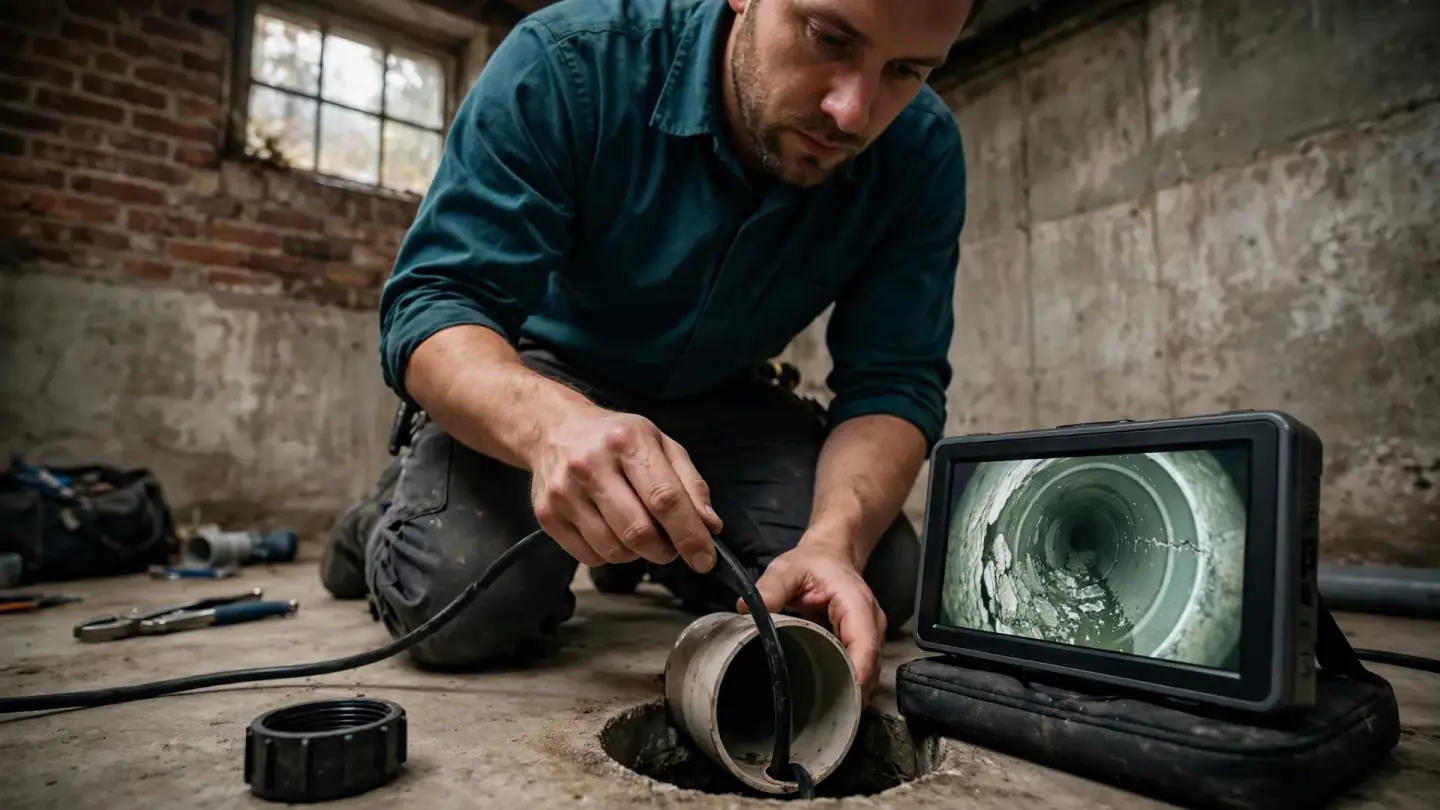
Camera the lateral
A sewer line inspection shows cracks or joints letting rain water in.
- 5
Explain your options
You hear what was found and decide what happens next.
Prevention
Habits that keep a backwater valve working
- Put the monthly cleaning on the calendar and keep the key where you can find it in a storm.
- Keep grease, wipes and grit out of drains so debris does not hold the flapper open.
- Disconnect downspouts and foundation drains from the sanitary line where the city allows it.
- Test the alarm battery if your model has one.
FAQ
Questions about backwater valves in Columbus
How do I sign up for Project Dry Basement after my basement flooded?
Start by reporting the backup to the city's Sewer Maintenance Operations Center at 614-645-7102 and keeping the service request number. That report is the first step toward the program, which covers approved backflow devices for qualifying single and two-family Columbus homes [1]. Report it promptly so staff can judge the cause.
Can a backwater valve stop a clog in my own sewer pipe?
No. A backwater valve only blocks sewage pushing back from the public sewer. A clog in your own lateral still backs water up inside the house, upstream of the valve. That needs the line cleared, usually through main sewer line cleaning.
How often should I clean the backflow valve in my basement?
Columbus asks owners to inspect and clean the device every month [1]. That means opening the lid, cleaning and greasing the O-ring, washing the flapper with dish soap, cleaning the seat and locking everything back in place with the lid tight.
Why did my basement still back up when I have a backwater valve?
Usually either debris held the flapper open, the lid was loose, or the blockage was in your own line rather than the street sewer. A camera inspection after the line is cleared shows which. Mention the valve on the call so the contractor checks it first.
Is it okay to use the sinks upstairs while the backwater valve is closed?
Avoid it. While the flapper is closed, water from your own fixtures cannot leave the house, so it collects in the pipe and can surface at the lowest drain. Hold off on laundry, showers and flushing until the street sewer drops.
Does Project Dry Basement cover apartment buildings in Columbus?
The city describes the program as serving single and two-family homes [1]. Owners of larger buildings should ask Columbus Water & Power what applies to them, and talk with a contractor about backflow protection as a private project.