Key facts: Fats, oils and grease disposal
- Columbus tells residents never to pour grease down drains, even where the home has a garbage disposal [1].
- The city's advice is to cool grease, pour it into a sealed container and put it in the trash [1].
- Fats, oils and grease are a leading cause of sewer blockages and can cause backups into nearby basements [1].
- Grease mixed with wipes and other debris can form solid masses known as fatbergs inside sewers [3].
Short answer
Where should leftover cooking grease go in a Columbus home?
Let it cool, pour it into a container with a lid, and put it in the household trash. That is the advice from the city's own grease program, which also asks residents to scrape food scraps into the bin and wipe greasy pans with a paper towel before they go in the sink [1]. Hot water and dish soap do not change the outcome: liquid fat cools a short way down the pipe and sticks to the walls.
This page is about everyday habits in a house or apartment kitchen. If you run a restaurant and a line or interceptor is overflowing now, the restaurant drain backup page covers that situation.
Grease table
Kitchen grease habits and what they lead to
| What you see | Likely cause | What to do |
|---|---|---|
| Kitchen sink drains slower each week | Grease coating the trap and the branch line | Stop pouring fat in, then have the kitchen line cleaned |
| White, waxy lumps when the trap is opened | Fat that hardened as it cooled | Bin the lumps; switch to the container habit |
| Sour smell from the disposal | Grease and food film rotting inside it | Scrape plates first and run cold water while grinding |
| Basement floor drain fills when the dishwasher runs | Grease narrowing the main line downstream | Stop water use and call about the main line |
| Neighbors received a city door hanger about grease | Grease blockages in the street sewer nearby | Follow the city's disposal advice in every kitchen on the block |
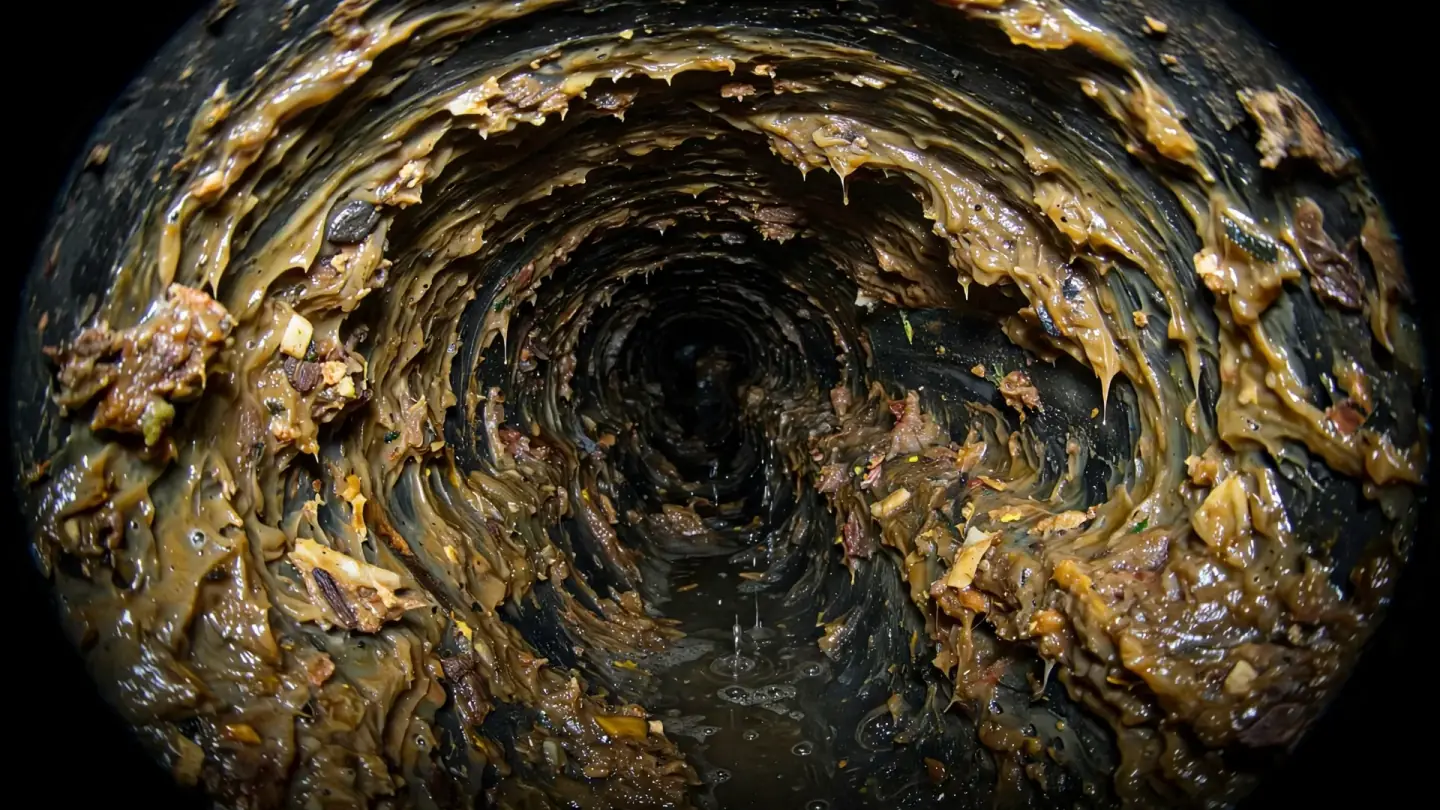
Grease builds up long before the sink stops
Safe checks
Quick grease checks you can do at the sink
- Fill the sink partway and pull the plug. A gurgle and a slow swirl point to buildup in the trap or branch line.
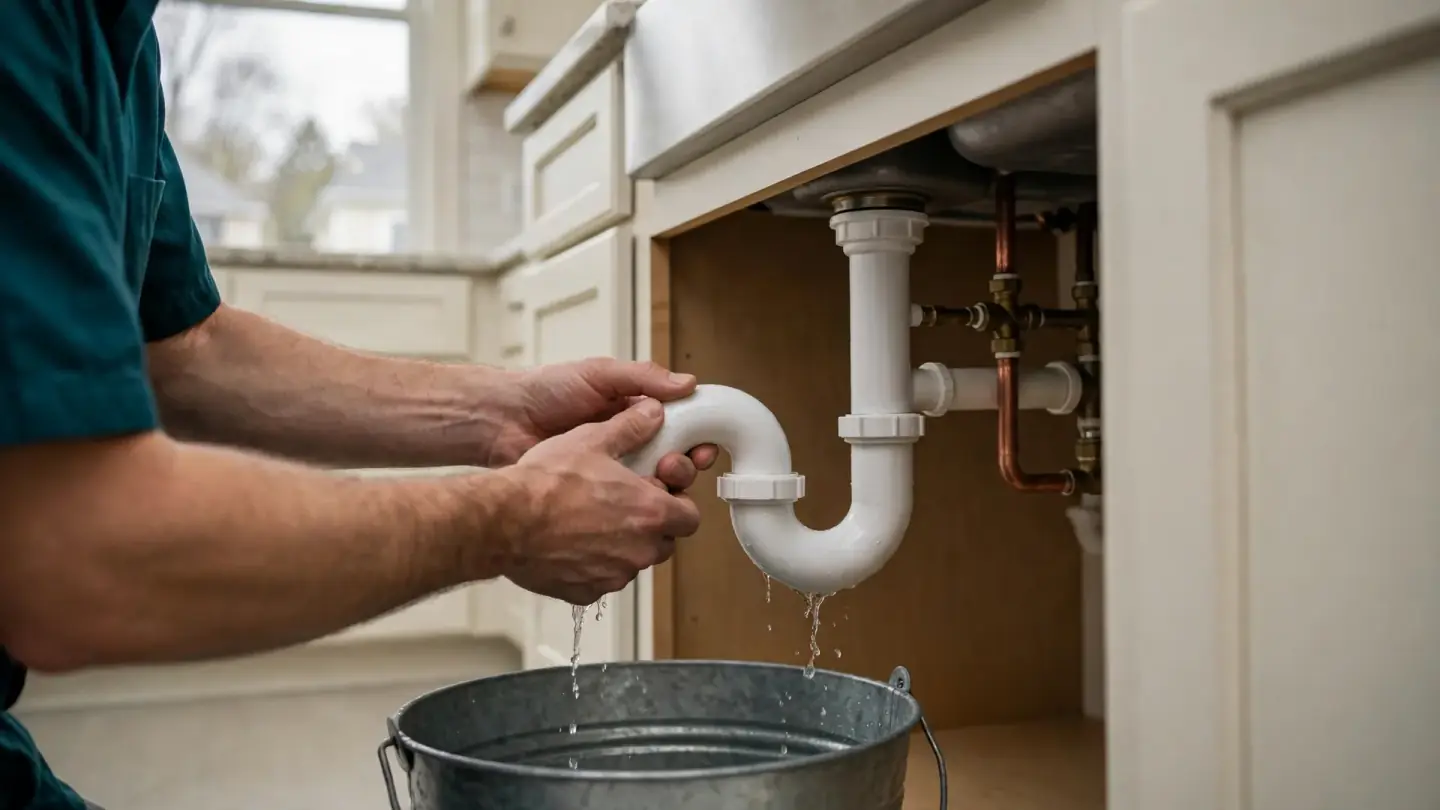
- Look under the sink for a trap you can unscrew by hand; a bucket underneath catches what comes out [4].
- Wipe the inside of the disposal splash guard. A greasy film there means fat is going into the drain.
- Ask whether anyone in the house pours pan drippings or fryer oil away after cooking.
- Skip chemical openers on a grease clog. They often fail to dissolve hardened fat and leave caustic water in the sink for whoever opens it [5].
Why it sticks
Why hot grease turns solid inside a drain
Bacon fat, butter, shortening and meat drippings are liquid on the stove and solid at room temperature. As they move into a cooler pipe, they cling to the walls in thin layers. Each load of dishes adds another layer, and food particles, coffee grounds and soap scum get trapped in it. Over months the opening gets smaller until water backs up.
Vegetable and fryer oils stay liquid longer, which makes people think they are safe to pour away. They still separate from water, float, and coat pipes further downstream, where they mix with other debris. In public sewers, that mixture can form the large solid masses known as fatbergs [3].
Disposals
Does a garbage disposal make grease safe to rinse away?
No. The city's guidance is explicit that grease should not go down the drain even if the home has a disposal [1]. A disposal chops solids; it does nothing to keep fat liquid. Ground food actually gives grease something to bind to, so a kitchen with a busy disposal and a habit of rinsing pans can clog faster than one without a disposal.
If you use a disposal, scrape plates into the trash first, feed small amounts, and run cold water so any fat firms up and moves on in pieces rather than coating the line. The slow draining sink guide has more on disposal-related clogs.
Beyond the sink
How kitchen grease reaches the basement and the street
Grease that gets past the kitchen trap travels into the building drain and the sewer lateral. In older Columbus houses with cast iron or clay pipes, rough walls and joints catch fat easily, and a partial grease blockage in the main line can send water up the basement floor drain when the washer or dishwasher empties. That is when a household habit turns into a main sewer line cleaning call.
Grease that reaches the public sewer does not disappear either. The city says fats, oils and grease are a leading cause of sewer blockages and can cause backups into nearby basements and overflows into waterways [1]. It also lists keeping grease out of sinks as one of the ways residents can help reduce wet-weather backups [2]. The combined sewers guide explains how those public pipes behave in heavy rain.
Diagnosis
How a contractor confirms a grease clog
- 1
Ask about kitchen habits
Expect questions about cooking, disposal use and which drains slowed first.
- 2
Open the trap or cleanout
Waxy grey or white material on the cable or in the trap points to fat rather than hair or roots.
- 3
Clear the branch line
A cable opens a path, but grease often smears back, so the contractor may suggest flushing the line.
- 4
Jet if the coating is heavy
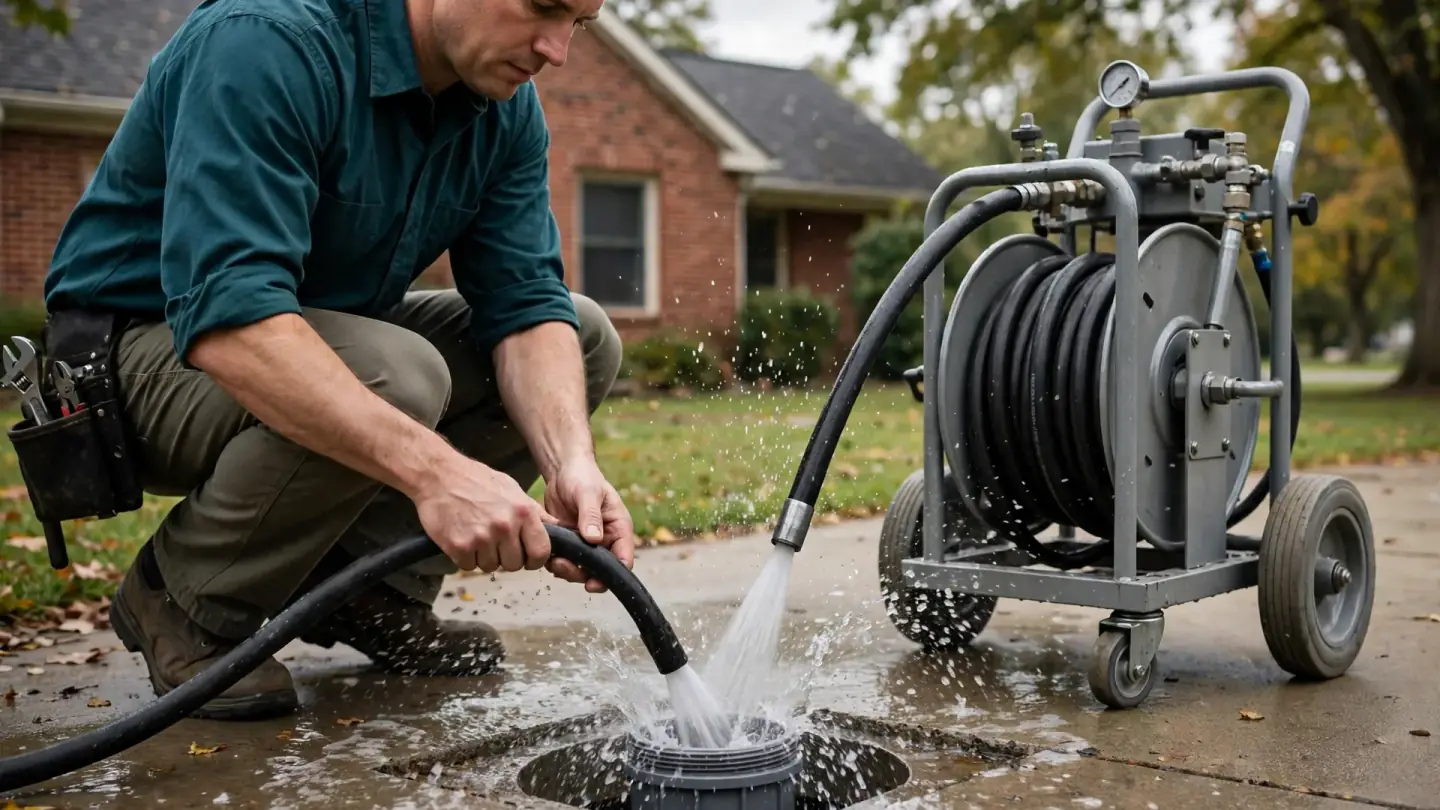
Hydro jetting scours fat from the pipe wall instead of punching a hole through it.
- 5
Camera to check the result
A camera pass shows whether the pipe wall is clean or still coated further down.
Jetting removes the coating, not just the plug
Prevention
A grease routine that keeps the kitchen line open
- Keep a lidded can or jar near the stove for pan drippings and used oil; put it in the trash when full [1].
- Wipe pans, plates and utensils with a paper towel before washing them [1].
- Scrape food scraps into the bin rather than the sink or disposal [1].
- Use a sink strainer to catch solids.
- Tell roommates, guests and anyone helping with holiday cooking where the grease container is.
On the call
What to mention about a suspected grease clog
- Which drains are slow: only the kitchen, or the basement too.
- Whether the house has a disposal and how often it runs.
- How long the sink has been slowing down.
- The age of the house, if you know, and whether the pipes are cast iron, clay or plastic.
- Any chemical opener already poured in, so the contractor can take care.
FAQ
Cooking grease questions from Columbus households
Can I pour bacon grease down the drain if I run hot water after it?
No, hot water only moves the grease a short way before it cools and sticks to the pipe. Columbus advises letting grease cool, pouring it into a sealed container and throwing it in the trash [1]. Wipe the pan with a paper towel before washing so the last film of fat stays out of the drain too.
What do I do with a pot of used fryer oil after cooking?
Let the oil cool completely, pour it into a container with a tight lid, and put it in the trash. Liquid oil still separates from water and coats pipes downstream, so it should not go down the sink or toilet. For large holiday batches, use several sealed containers rather than one overfilled bag.
Is it okay to put grease in the garbage disposal in Ohio?
It is not a good idea anywhere, and the City of Columbus specifically says not to pour grease down drains even if the home has a disposal [1]. The disposal grinds food but does not stop fat from hardening on pipe walls further down. Scrape and wipe plates before they reach the sink.
How do I know if grease is what's clogging my kitchen sink?
A grease clog usually builds slowly, with a sink that drains more sluggishly over weeks and a sour smell. When the trap is opened, the material looks waxy and grey or white. Hair and soap point to a bathroom clog instead. Kitchen drain cleaning explains what a contractor does next.
Why did the city leave a grease door hanger on my street?
The City of Columbus hands out educational door hangers in neighborhoods prone to grease blockages or that recently had one in the public sewer [1]. It is a reminder that kitchen grease from homes on the street is collecting in the shared pipe. Following the container-and-trash advice helps keep that sewer, and your basement, clear.
Will boiling water and dish soap dissolve a grease clog?
Boiling water and dish soap may loosen a small, fresh grease film, but they rarely clear a clog that has built up for months. The fat re-hardens further down the pipe. If the sink is still slow after one attempt, stop and have the line cleaned, ideally with jetting for heavy buildup.