Key facts: Emergency Sewer Line Cleaning
- If sewage is rising in a Columbus basement, call the city sewer line at 614-645-7102 alongside a contractor, and keep the service request number for any Project Dry Basement application [1].
- Project Dry Basement pays for an approved backflow valve for qualifying one- and two-unit Columbus houses flooded when the public sewer surcharged [1].
- Rain water entering cracked laterals and foundation drains can overload the sanitary sewer and cause basement backups, which Blueprint Columbus aims to reduce [2].
- Sewer gas contains hydrogen sulfide, which smells of rotten eggs and is harmful in enclosed spaces [3].
Recognise it
How does a main sewer line backup announce itself?
A main sewer line blockage looks different from a clogged fixture. Instead of one sink holding water, you see water appear where nobody used it. The basement floor drain fills with grey water when the washer drains. The lower-level toilet bubbles when an upstairs shower runs. A laundry tub fills with brown water and a sewage smell. All of that means the pipe that carries everything out of the house is blocked, and every gallon used upstairs now has nowhere to go but the lowest drain.
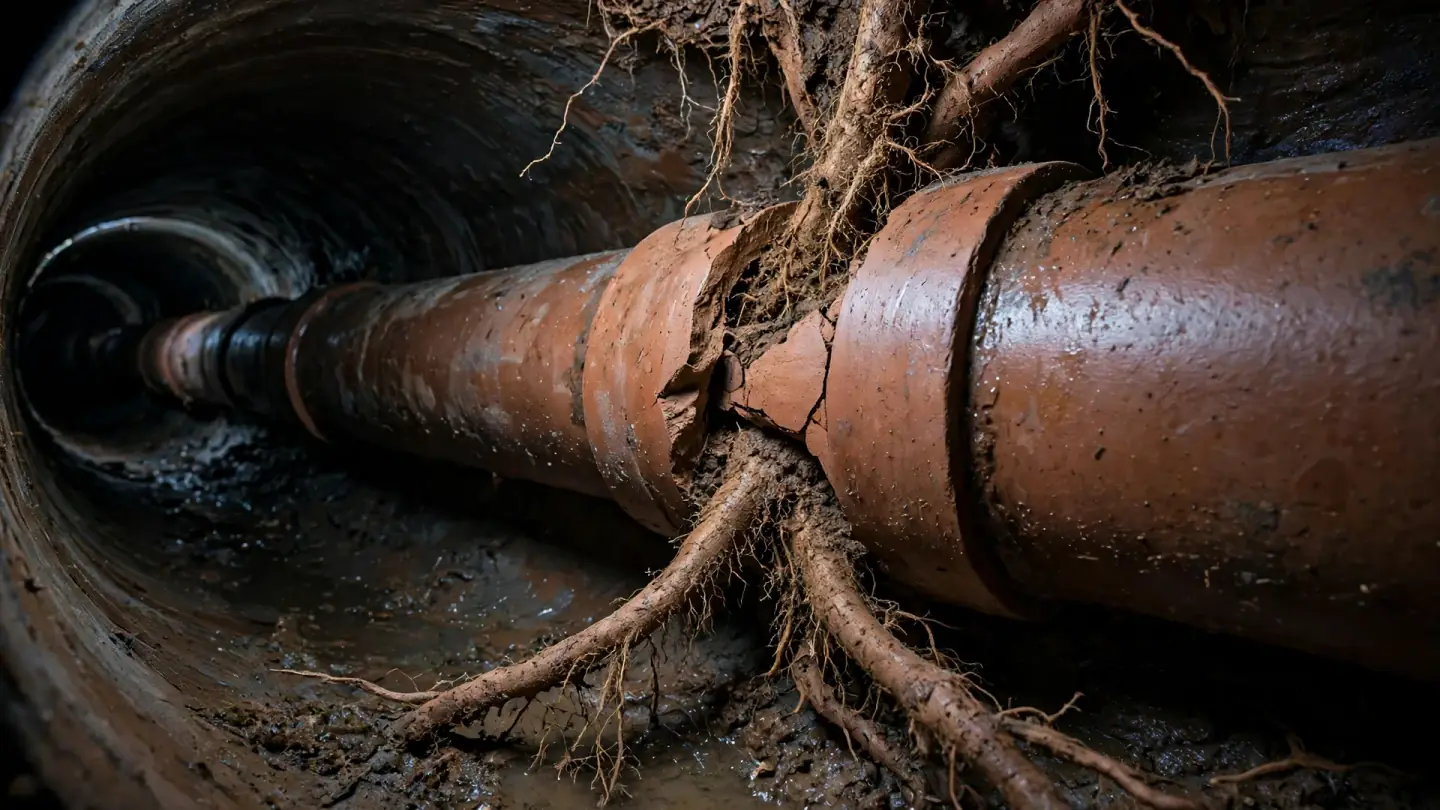
In Columbus the timing often gives a clue. A backup that starts during or right after heavy rain can be the public sewer surcharging, especially in areas where rain water still gets into the sanitary system through cracked laterals and old connections [2]. A backup on a dry day, affecting only your house, is much more likely to be in your own line: tree roots in an old clay joint, a grease build-up, a collapsed section, or something flushed that should not have been.
Either way, the first job is the same: stop adding water. The second job depends on where the blockage is, and that is what the rest of this page helps with.
Signals
Signs the main sewer line, not one drain, is blocked
Floor drain fills during laundry
The washing machine dumps a large volume quickly. If the floor drain overflows during the drain cycle, the building drain cannot carry that flow.
Toilets gurgle when other fixtures run
Air being pushed back through a toilet's trap when a tub drains is a sign the shared line downstream is full of water.
Water at the cleanout
If you open the outside or basement cleanout cap and water is standing in it, the blockage is between that point and the city sewer.
Rotten-egg smell in the basement
Sewer gas escaping from a drain that is holding sewage carries hydrogen sulfide [3]. Ventilate and keep people out of a closed basement.
Report it
Why should I report a basement backup to the city?
Calling the city can feel unnecessary if you think the problem is your own pipe. It is still worth doing. The city's Project Dry Basement program, which has run since July 2004, pays for approved backflow protection at eligible one- and two-family Columbus houses whose basements flooded because the public sewer surcharging in wet weather or blockages [1]. Eligibility starts with a reported backup and a service request number.
The city department that runs the program is Columbus Water & Power, the new name of the Department of Public Utilities [4]. If the city finds a problem in its main, it handles that work. If the main is flowing and the blockage is on your side, you will need a private contractor to open your line.
A backflow device is a valve that closes when the sewer rises, so sewage cannot flow back into the floor drain [5]. The city says to inspect and clean these devices monthly [1]. If you already have one and still had a backup, mention that on the call: the valve may be stuck open with debris, or the blockage may be between the valve and the house.
The visit
What urgent sewer line cleaning involves
- 1
Locating the cleanout
The contractor looks for the main cleanout in the basement floor, on the wall near where the line exits, or outside. Older houses sometimes have none that is usable, so a toilet may come up instead.
- 2
Relieving the water
Opening a cleanout on a full line releases sewage under pressure, so the contractor controls that release and protects the floor before running a cable.
- 3
Cutting through the stoppage
A sectional or drum cable machine with a root or blade cutter is run toward the street until the line opens and water drains with a rush.
- 4
Flushing and camera check
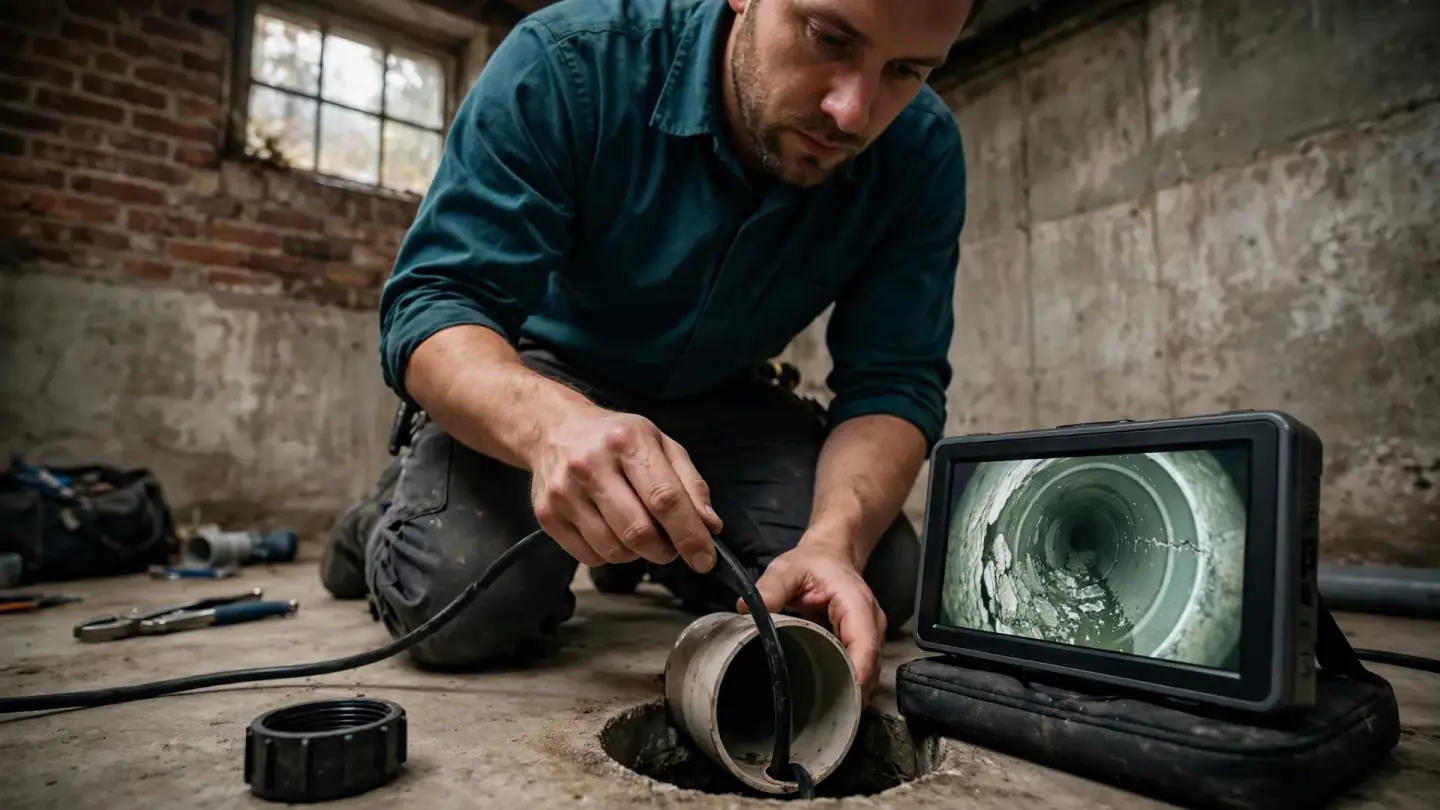
Running water through the cleared line confirms flow. A camera pass is often recommended to find out why it blocked and whether it is likely to again.
- 5
Your decision on next steps
If roots or a broken section caused it, the contractor explains the options, from routine cleaning to repair. You decide what happens next.
Afterwards
After the main line is open again
Once water is flowing, do not rush to run every appliance. Let the contractor finish testing, then use water lightly for the rest of the day while you clean up. Disinfect hard surfaces that sewage touched, and throw out porous items such as cardboard boxes and rugs that soaked it up.
Ask what came out of the line. Roots point to a joint or crack that will let them back in; grease points to habits in the kitchen; wipes point to what is being flushed. For roots or a repeat backup, the standard main sewer line cleaning page and the sewer line inspection page explain what longer-term options look like. If you are weighing whether the line is worth cleaning again or needs replacement, read the replace or clean guide.
What if only one fixture is backing up?
Sewage at one toilet or one sink, with the basement dry, usually points to a branch rather than the lateral. The broader emergency drain cleaning page walks through that distinction.
FAQ
Sewer backup questions from Columbus homeowners
How can I tell whether the city sewer or my own sewer lateral is blocked?
Ask neighbors whether their basements are backing up too; a shared problem points to the public sewer. Backups during heavy rain also suggest a surcharged city sewer. If only your house is affected in dry weather, the blockage is usually in your own lateral. Reporting it to the city lets them check the public main [1].
Does a Columbus homeowner have to report a basement sewer backup to the city?
Reporting is not always required, but it is strongly advised. The city sewer line, 614-645-7102, logs the backup and gives you a service request number. That number matters if you later apply to Project Dry Basement for a backflow device. Report it as soon as you can, ideally before cleanup [1].
Can I flush the upstairs toilet while sewage is coming up in the basement?
Every flush upstairs adds water to a blocked main line, and that water comes out at the basement drain. Stop flushing, stop running taps, washers and dishwashers, and ask everyone in the house to do the same. Leave the water off until the contractor has cleared the main line and confirmed it drains.
Will installing a backwater valve stop sewage from coming up my basement drain again?
A backwater valve helps when the public sewer surcharges, because it closes to stop sewage flowing back into the house. It does not prevent a blockage in your own lateral. Project Dry Basement may cover an approved backflow device for eligible single and two-family Columbus homes [1].
How do I keep my family safe from sewer gas after a basement sewage backup?
Keep people and pets out of the basement and ventilate it by opening windows if it is safe. Sewer gas can contain hydrogen sulfide, which smells of rotten eggs and is harmful in enclosed spaces [3]. Do not light flames or run gas appliances there until the smell clears and the area has been cleaned.
Why do Columbus basements back up during heavy rain even with clear drains?
Storm water entering cracked laterals and foundation drains can overload the sanitary sewer during heavy rain, pushing sewage back into basements. Blueprint Columbus aims to reduce that inflow [2]. A sewer line inspection can show whether your lateral lets rain water in. See the sewer camera inspection page.
What does emergency sewer line cleaning involve once the contractor arrives?
The contractor usually opens the main cleanout, lets standing sewage drain once the blockage is reached, and runs a cable or jetter to the city connection. A camera may follow to find the cause. The planned main sewer line cleaning page has detail, the repair or clean guide covers next steps, and the services directory lists the rest.