Key facts: When to replace vs clean a sewer line
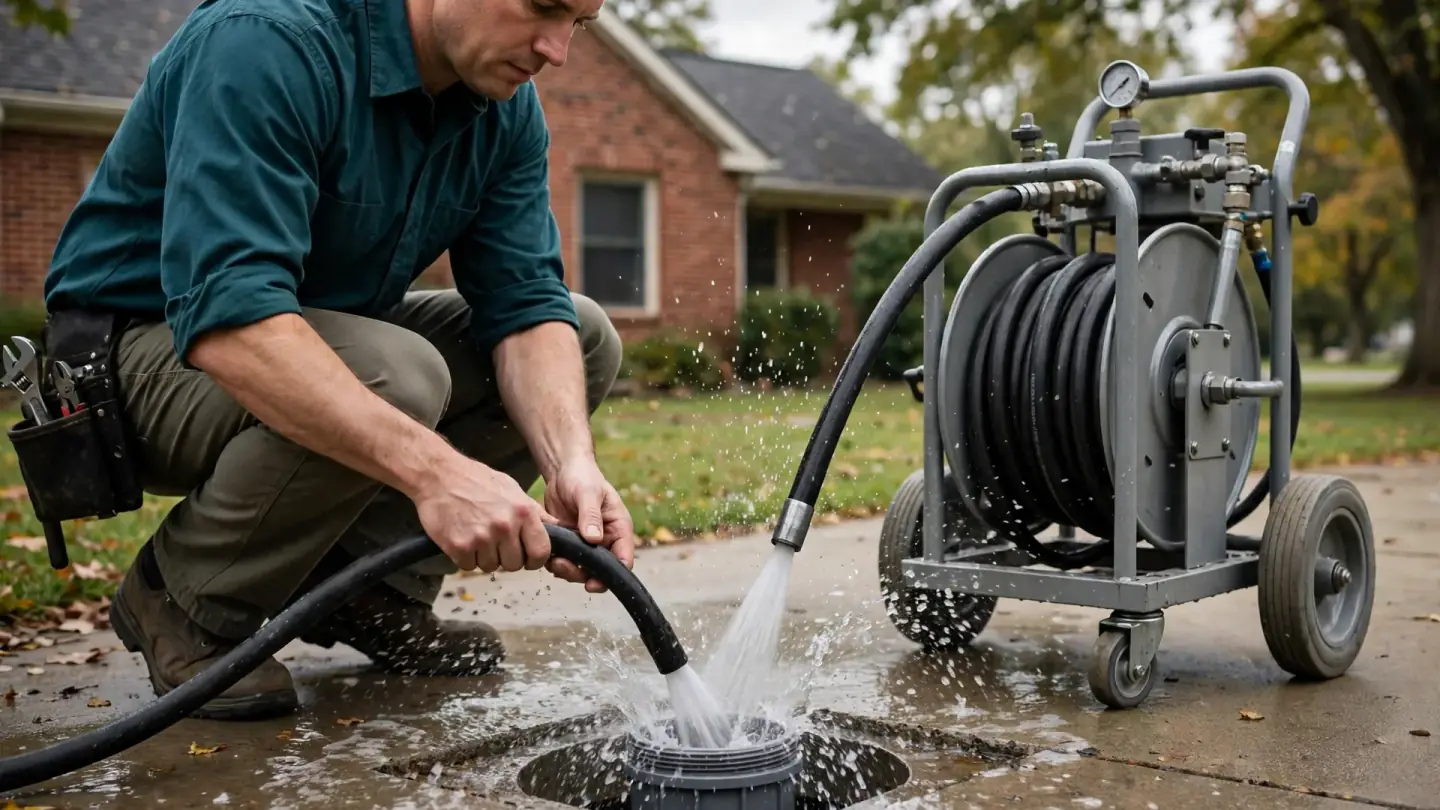
- Cleaning restores flow but does not seal cracks or joints, so roots and debris return where the pipe is damaged.
- In Blueprint Columbus project areas the city has lined private laterals to keep rain water out of the sanitary sewer [1].
- Bituminous fibre (Orangeburg) pipe deforms with age and is generally replaced rather than repaired [2].
- Ohio excavation requires an OHIO811 notice no less than two business days before digging [3].
Short answer
Which three questions settle replace versus clean?
Clean the line when the pipe is structurally sound and the blockage came from something in it: grease, wipes, a single root intrusion. Consider lining when the pipe still holds its shape but has cracks or root-prone joints along its length. Consider replacing when the pipe has collapsed, is badly offset or sagging, or is made of a material that is failing everywhere. Three questions decide which bucket you are in: what is the pipe made of, what does the camera show, and how often has it backed up.
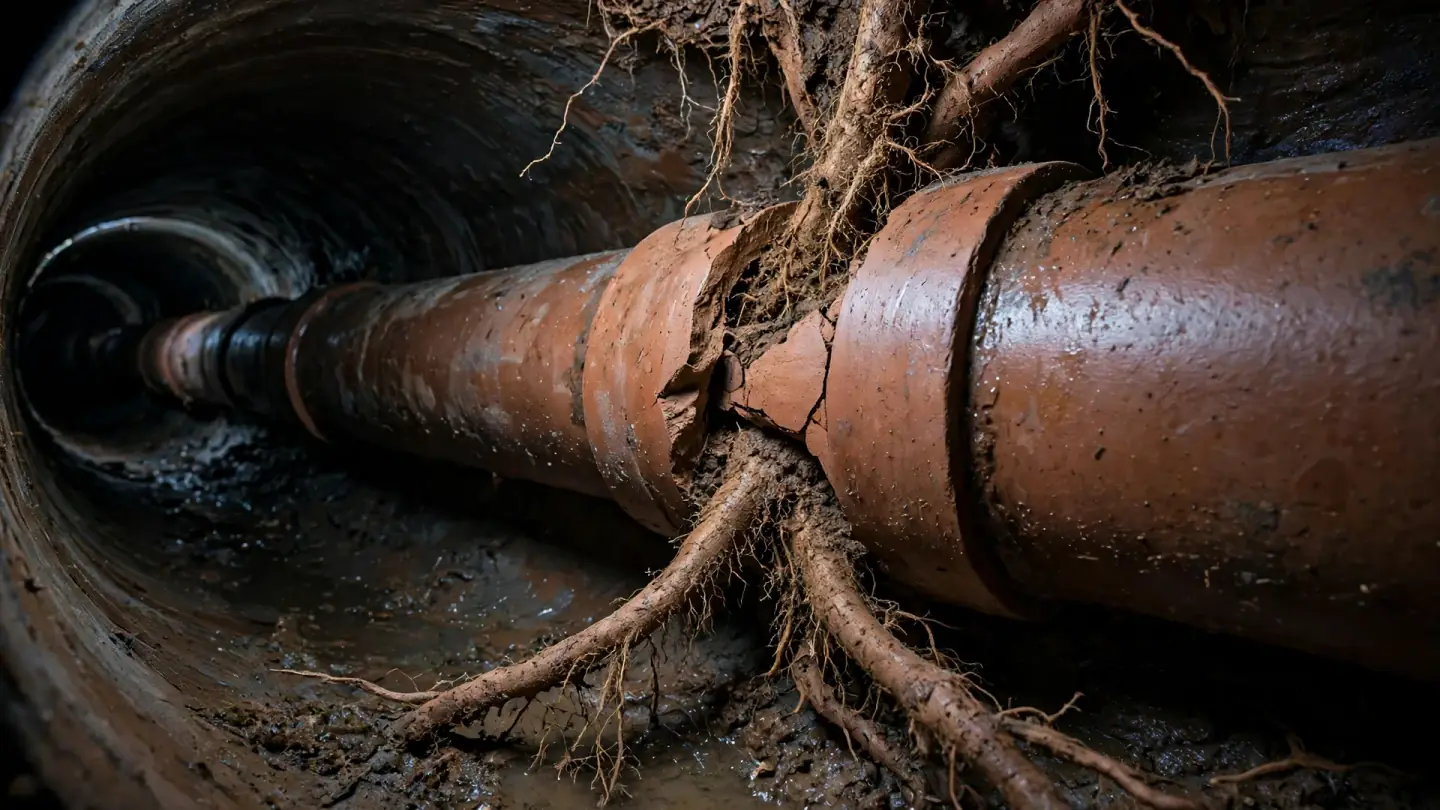
A single backup in years is a cleaning job. Backups every few months, roots at many joints, or a pipe that is out of round are the signals that cleaning has stopped being a fix.
Decision table
Camera findings and the usual response
Use the camera footage, not the symptoms alone, to place your line in this table.
| What you see | Likely cause | What to do |
|---|---|---|
| Grease or debris, pipe walls intact | Blockage from use, not damage | Clean; change habits |
| Roots at one or two joints | Localized entry points | Clean and monitor, or spot repair |
| Roots or cracks at many joints, pipe round | Widespread joint failure, structure intact | Lining is often suitable |
| Belly holding water | Settled section | Spot repair at the sag |
| Collapsed, crushed or badly offset section | Structural failure | Replace that section or the line |
| Pipe flattening or blistering throughout | Failing material such as bituminous fibre | Replacement |
Every decision starts at the cleanout
Safe checks
What you can gather before talking to anyone
- Write down every backup you remember, with approximate dates. Frequency is one of the strongest signals.
- Find out roughly when the house was built and whether the lateral has ever been replaced.
- Locate past inspection videos or reports, including from a home purchase.
- Ask the city or neighbors whether your street has been part of a Blueprint Columbus lateral-lining project [1].
- Do not dig to look at the pipe yourself. Excavation needs an OHIO811 notice first, and the lateral itself will not be marked [3].
Pipe material
How pipe material shapes the choice
Vitrified clay is common in Columbus's older neighborhoods. The pipe body resists corrosion well, but it comes in short lengths with many joints, and those joints are where roots and leaks start [4]. A clay line with sound bodies and leaky joints is often a candidate for lining. Cast iron, found under many basements, corrodes from the inside and can crack along its length; it may be lined if it still holds shape. Bituminous fibre pipe, used in some mid-twentieth-century construction, softens and deforms over time [2]; once it starts flattening, lining has nothing firm to bond to and replacement is the usual answer. PVC is the modern standard and, when installed correctly, usually needs only cleaning.
Camera findings
What does the camera footage need to show?
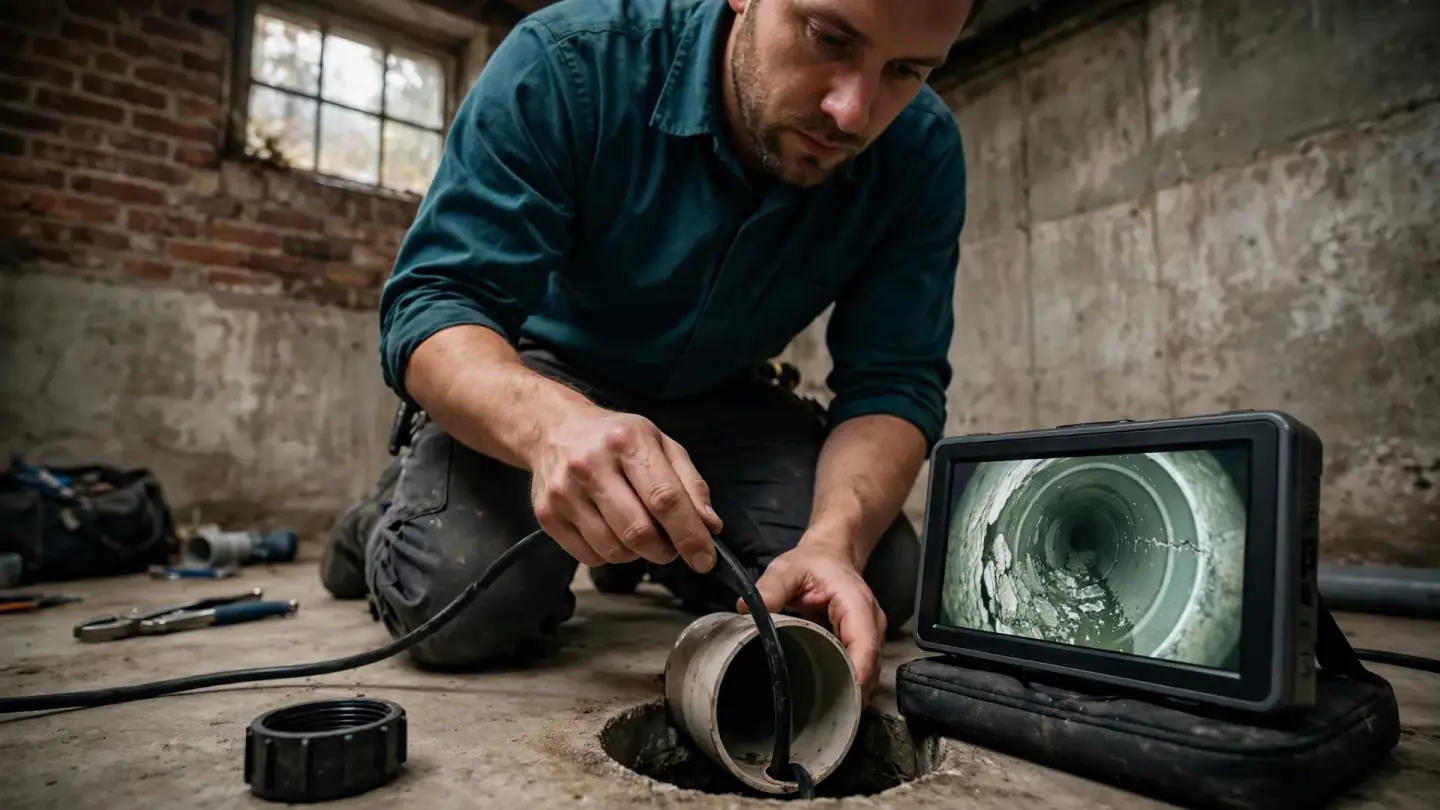
A good drain camera inspection gives you a video of the full lateral with a distance counter, and a contractor narrating what each feature is. Look for the difference between buildup, which can be cleaned off, and defects, which cannot: cracks, holes, separated or offset joints, deformation and standing water. Ask how far from the cleanout each defect sits and whether it falls on your property. A single defect near the house is a very different decision from defects spread along the whole run.
Recurrence
Why the backup pattern matters
How often the line backs up is the practical test. If cleaning keeps it clear for years, it is doing its job. If roots return within months, or the same belly refills with solids every season, cleaning is managing a defect rather than fixing it. Regular hydro jetting can stretch the interval on a root-prone line, but it cannot close the joints.
Blueprint Columbus
The city's lateral lining program and your line
Columbus's Blueprint program lines laterals in selected project areas to keep stormwater from reaching the sanitary sewer, alongside roof water redirection, a voluntary sump pump program and green infrastructure [1]. One such project covers part of Clintonville and Old Beechwold [5]. If your street is in a planned or recent project, find out what was or will be lined before arranging private work, so you are not duplicating effort or working on a section the city is about to address.
Diagnosis
How the contractor builds a recommendation
- 1
Clear the line
The line is cleaned so the camera can see the pipe walls, not just debris.
- 2
Record the full run
The camera travels from the cleanout to the city connection, recording distance and defects.
- 3
Locate defects
A locator marks the ground above problem spots so any repair can be targeted.
- 4
Identify materials
The contractor notes what each section is made of and where materials change.
- 5
Explain the options
You get a plain explanation of what cleaning, lining or replacement would each achieve for your specific defects.
Fix decision
Cleaning, lining or replacement compared
Cleaning keeps the pipe you have and suits sound pipe. Lining forms a new pipe inside the old one, sealing joints and cracks, and needs a host pipe that is still round and continuous. Replacement removes the old pipe, by excavation or a trenchless method, and is the answer for collapsed, crushed or failing-material sections. A sewer line inspection before and after any repair documents the result. Repairs must meet the Ohio Plumbing Code [6], and in Columbus plumbing permits are issued by Building and Zoning Services, with the contractor's city registration number on the application [7]. Ask the contractor you're connected with which permits apply to the option you choose.
Prevention
Making a sound line last longer
- Keep grease, wipes and paper towels out of every drain.
- Schedule cleaning based on camera evidence rather than waiting for a backup.
- Plant new trees away from the lateral's path.
- Keep a copy of every inspection video so changes can be compared over time.
On the call
What to have ready when you discuss options
- The dates of past backups and of the most recent cleaning, even if they are rough guesses.
- The age of the house and any known lateral repairs.
- Any camera footage or reports you already have.
- Whether your street has had Blueprint Columbus work.
- Access to the cleanout, inside or outside.
FAQ
Questions about replacing or cleaning a sewer line
How can I tell if my sewer line needs replacing instead of cleaning?
Camera footage is the clearest way to tell if a sewer line needs replacing. Collapsed, crushed or badly offset sections, or pipe deforming along its length, usually mean replacement. Occasional blockages in pipe that keeps its round shape usually mean cleaning. Symptoms alone cannot settle it, so ask for a sewer line inspection and the recording.
Is lining a sewer lateral as good as replacing it?
Lining a sewer lateral can be as effective as replacing it when the old pipe still holds its shape but leaks at joints or cracks. The liner seals those openings without digging the whole run. Lining cannot fix a collapsed section, needs a continuous host pipe, and is unsuitable where the pipe has sagged enough to hold standing water.
Can I just keep cleaning a sewer line that has roots?
Keeping a root-prone sewer line on regular cleaning works for some owners for years, when roots enter at only a few joints. Once roots return within months or appear through many joints, cleaning is only managing a defect. Sealing those joints by lining or replacement then becomes the better long-term choice, as the tree roots guide explains.
Does a lined Columbus lateral still need cleaning sometimes?
A lined lateral can still need cleaning when grease, wipes or other debris collect inside it, though roots should no longer get through sealed joints. Tell the contractor the line was lined, including any Blueprint Columbus lining [1], because aggressive cutting heads can damage a liner. Gentler tools and a camera check are normally used on lined pipe.
Do I need a permit to replace a sewer lateral in Columbus?
Replacing a sewer lateral inside Columbus city limits involves a plumbing permit from Building and Zoning Services, and the contractor's city registration number goes on the application [7]. Digging also requires an OHIO811 notice a minimum of two working days ahead [3]. Westerville and Hilliard run their own building departments, so the contractor should confirm which rules apply.
What is Orangeburg pipe and should it be replaced?
Orangeburg pipe is a bituminous fibre sewer pipe used in the mid-twentieth century that softens and flattens with age [2]. A lateral of Orangeburg pipe is generally replaced rather than cleaned or lined, because the pipe loses the round shape a liner depends on. A camera can usually identify it by its blistered, oval interior.
Sources and citations
- [1]City of Columbus, Blueprint Columbus four pillars
- [2]Wikipedia, Orangeburg pipe
- [3]OHIO811, Information for homeowners
- [4]Wikipedia, Vitrified clay pipe
- [5]City of Columbus, Blueprint Clintonville Old Beechwold lateral lining review
- [6]Ohio Administrative Code 4101:3, Ohio Plumbing Code
- [7]City of Columbus, Plumbing permit application 2026