Key facts: Main Sewer Line Cleaning
- The main sewer line, or lateral, carries every drain in the house to the public sewer, so a blockage there backs up the lowest fixtures first, usually a basement floor drain.
- Report sewage at a basement floor drain to the city at 614-645-7102 even when the lateral is private: the city checks the public main and logs the event, which can matter for Project Dry Basement later [1].
- Blueprint Columbus lines laterals and redirects roof water because cracked pipes and leaky joints let rain water into the sanitary sewer [2].
- Anyone digging to reach a lateral must notify OHIO811 two working days or more ahead, and private lines such as a sewer lateral are not marked [3].
How it works
What main line cleaning actually clears
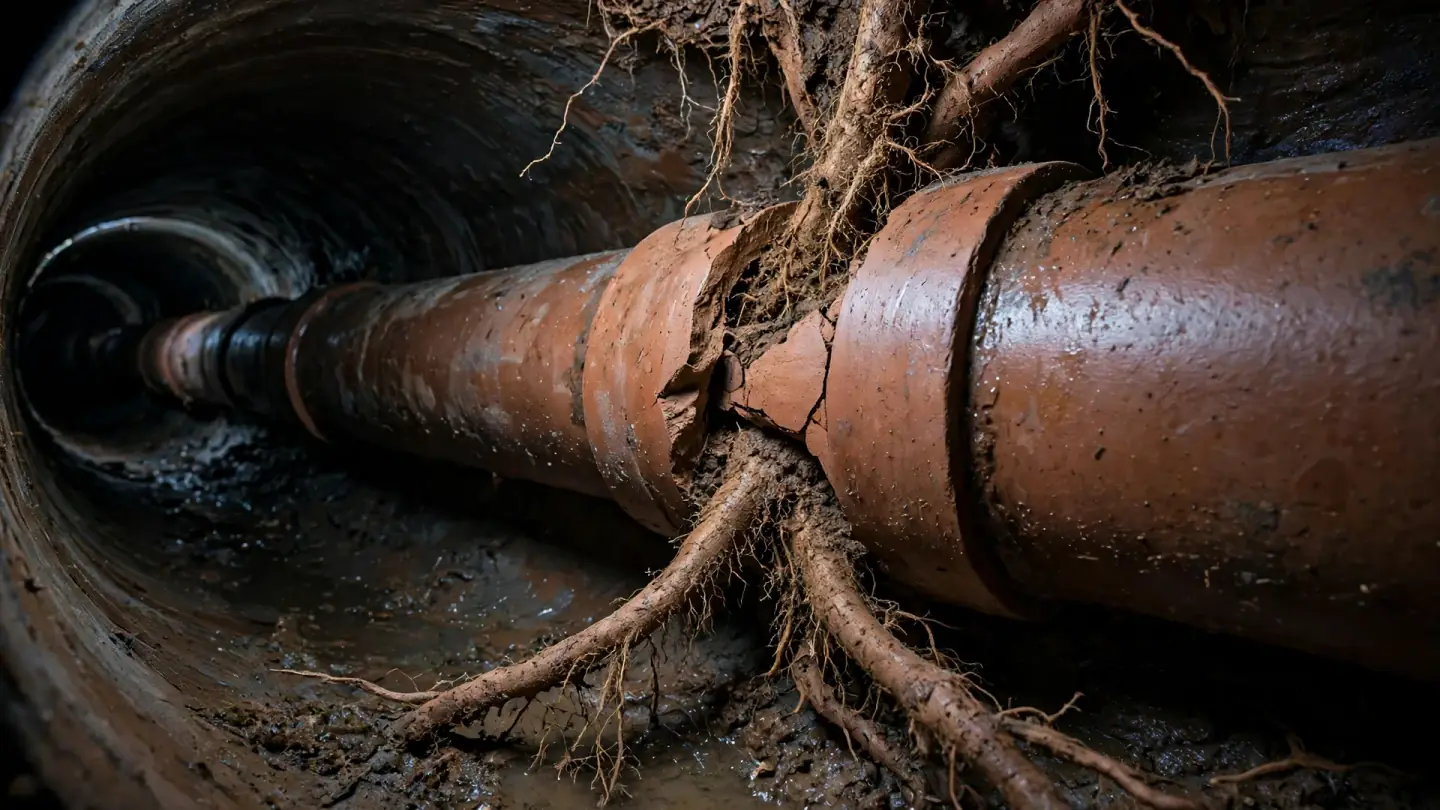
Branch drains are small pipes that serve one room. The main line is the larger pipe they all feed into, typically running from a stack in the basement or crawlspace, out through the foundation wall, and under the front or back yard to the public sewer. Because it is the last stop before the city system, anything that gets past the branch lines ends up here: grease that cooled and hardened, wipes labelled flushable, paper, hair mats, sand and silt, and in older yards, roots that found their way in through a joint.
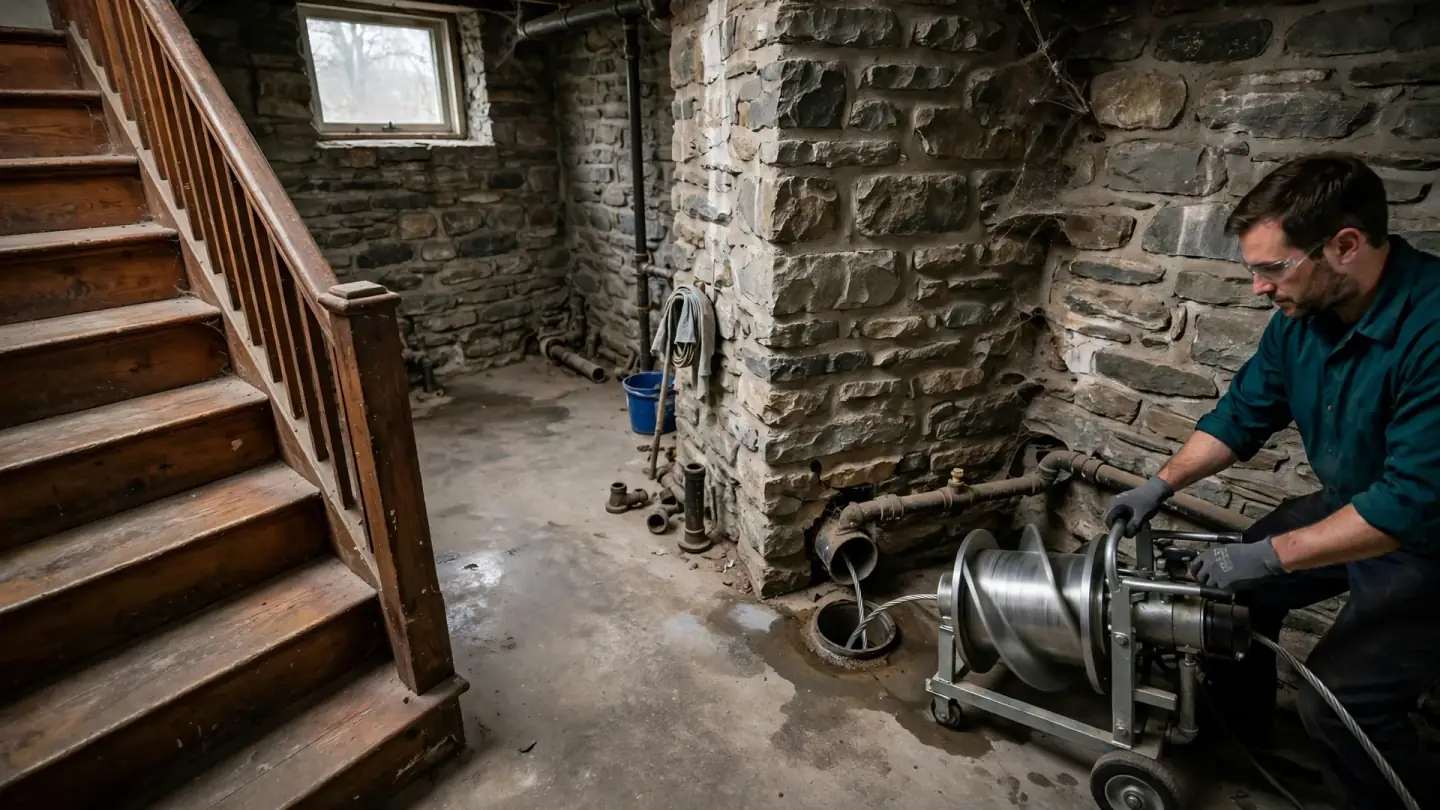
Cleaning the main line means opening a path through that material from end to end, not just poking a hole in it. A contractor usually starts at a cleanout, a capped access pipe meant for exactly this job, and feeds a sectional or drum cable machine toward the street. The cutting head on the end of the cable chews through soft blockages and shears off roots. On lines with heavy grease or packed sludge, water jetting is often the second pass, because a cable leaves a tunnel through a deposit while a jet scours the pipe wall.
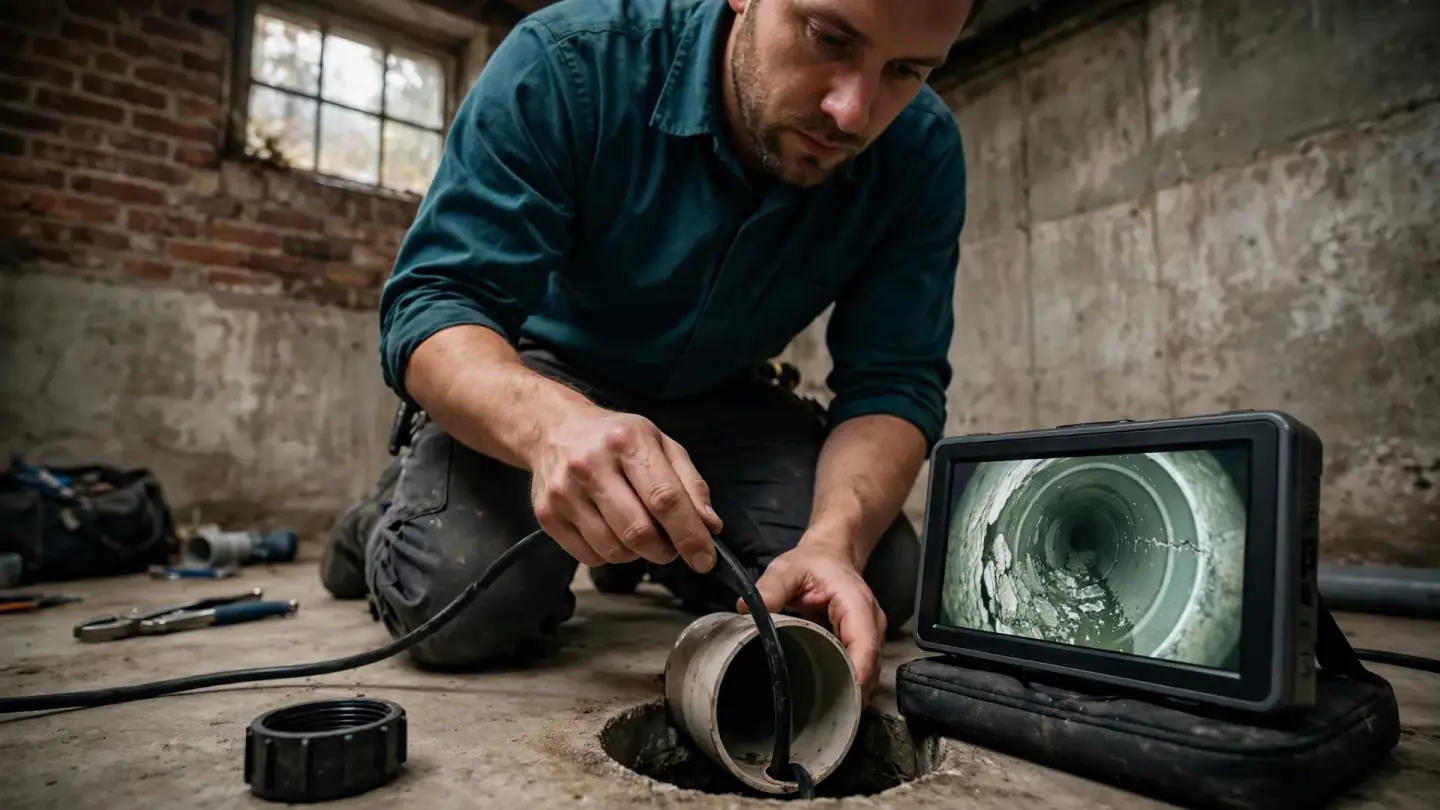
The goal is a line that drains at full flow with the blockage removed, and an answer about why it clogged. A camera run after cleaning is how that answer is found. Without it, a root intrusion, a sag that holds water, or a cracked clay joint looks exactly like a simple clog and comes back months later.
When you call, you describe the symptoms on the line itself and the contractor you are connected with talks through what they would likely do first. Nothing is arranged until you have both agreed on it during that conversation.
Compare all Columbus drain services, or read about a whole-lateral camera survey and basement floor drain work.
Signs
How can you tell the blockage is in the main line, not one drain?
More than one fixture misbehaves at once
A toilet that gurgles when the washer drains, or a tub that fills when you flush, points past the branch lines. Our guide to multiple drains backing up walks through the pattern.
Water at the basement floor drain
The floor drain is usually the lowest opening on the system, so main line water appears there first. See basement floor drain backing up for what to check.
A sewer odor near the lowest level
A partly blocked main can push gas back through dry traps and loose cleanout caps. The sewer smell in the house guide covers the other causes too.
The same clog every few months
Recurring backups on an older lateral are often roots at a joint. Read about tree roots in sewer lines before deciding what to do.
The visit
How a main sewer line cleaning visit usually runs
- 1
Talk through the symptoms on the call
Which drains back up, whether it happens after rain or laundry, the age of the house, and whether there is a known cleanout. This shapes what the contractor brings.
- 2
Locate and open the access point
A basement cleanout, an outside cleanout near the foundation, or a pulled toilet on houses without one. Opening a cleanout on a full line releases water, so it is done slowly with a container ready.
- 3
Run the cable toward the street
The contractor feeds cable until it reaches the obstruction and works it until the water drops. Depth into the line and what comes back on the head are both useful clues.
- 4
Flush and check the flow
Running several fixtures at once confirms the line now carries a real load, not just a trickle.
- 5
Camera the line if the cause is unclear
A camera shows roots, offsets, sags or broken pipe and the distance to each one, which decides whether cleaning alone is enough.
- 6
Agree on next steps
If the camera finds damage, you and the contractor talk through repair options. Any permit work in Columbus goes through Building and Zoning Services [4].
Methods compared
Cable, jetting and camera on a main sewer line
| Method | Best at | Limits |
|---|---|---|
| Sectional or drum cable | Opening a full blockage, cutting roots, retrieving wipes and solids | Leaves grease film and sludge on the pipe wall; can snag on broken pipe |
| Water jetting | Scouring grease, scale and silt; flushing root fragments to the main | Needs a clear path and a pipe sound enough for the pressure |
| Camera inspection | Finding the cause, its depth and distance from the access point | Does not clear anything; needs the line drained enough to see |
| Enzyme or bacterial treatments | Slow upkeep on grease-prone lines between cleanings | Will not open a backed-up main |
What you can do yourself
Safe things to do before the contractor arrives, and where to stop
- Stop running water anywhere in the house: no laundry, dishwasher, showers or flushing until the line is open.
- If sewage reached the basement, keep children and pets away and wear gloves and boots near the water.
- Find the cleanout if you can, usually a capped pipe in the basement floor or near the foundation outside, so the contractor can reach it quickly.
- Do not pour chemical drain openers into a backed-up main. They sit in standing water, rarely reach the blockage, and make the work hazardous for whoever opens the line.
- Do not rent a machine and push a cable into an old clay lateral without knowing its condition; a cable can lodge in a broken joint.
- If you live in Columbus and the backup came from the public sewer, report it to the sewer maintenance staff at 614-645-7102 and keep the service request number [1].
Local specifics
Columbus sewer laterals: older pipe, wet weather and city programs
Much of central Columbus was built before plastic drain pipe existed. Streetcar-era neighborhoods such as Clintonville, brick-cottage German Village and the early-1900s Hilltop commonly have laterals of clay tile or cast iron, joined every few feet. Those joints are where roots enter and where shifting soil creates offsets. If your home is in one of those areas, the German Village and Clintonville pages explain what that housing stock tends to mean for drains.
Wet weather matters here too. Columbus Water & Power describes cracked pipes, leaky joints and foundation drains as routes for rain water into the sanitary sewer, which can overload the system and push water back into basements [2]. Its Blueprint Columbus program responds with lining laterals, redirecting roof water, an opt-in sump pump program and green infrastructure [2]. A backup that only happens in heavy rain may be the public system surcharging rather than a clog in your pipe, and the cleaning visit helps tell the two apart.
If the city sewer is the source, Columbus's Project Dry Basement program can cover approved backflow protection for qualifying one- and two-unit houses that had backups from wet weather surcharging or blockages [1]. The first step is reporting the backup to the Sewer Maintenance Operations Center [1]. A contractor can tell you what they found in your own line, which is useful information when you talk to the city.
Where a lateral needs digging rather than cleaning, the excavator must notify OHIO811 before work starts, and private lines like a sewer lateral are not located by that service [3]. Repair permits inside Columbus go through Building and Zoning Services [4]. Westerville and Hilliard are separate cities with their own building departments; see the Westerville page for how that works there.
Clean or repair
When cleaning the main line is enough and when it is not
Cleaning is enough when the camera shows a sound pipe and the blockage was material that should not have been there: wipes, grease, a toy, a buildup of paper. A clean line with good slope will usually stay clear if the habits that caused the clog change.
Cleaning buys time but does not fix the cause when roots are growing through a cracked joint, when a section has sagged and holds standing water, or when an offset joint catches paper every time. In those cases the line can be cleaned on a schedule, or the damaged section repaired or lined. The when to replace vs clean a sewer line guide lays out how people usually make that call.
Cleaning is the wrong first step when the pipe has collapsed. A cable that stops at the same spot and returns soil rather than paper or roots, or a camera image of earth where pipe should be, means the line needs repair. Pushing harder on a collapse does not open it.
Whatever the result, ask to see the camera footage or the cable head. A clear explanation of what was in the line is the best basis for deciding what happens next.
FAQ
What do Columbus homeowners ask about main sewer lines?
How do I know if my main sewer line is clogged or just one drain?
A main sewer line clog usually affects several fixtures at once, with the lowest drains reacting first. Watch for a basement floor drain rising when a toilet flushes or a tub filling when the washer drains. If only one sink is slow and nothing else changes, the clog is probably in that fixture's branch.
Does my house need a cleanout for the main sewer line to be cleaned?
A cleanout makes main line cleaning easier, but a contractor can often reach the line by pulling a toilet or working through a roof vent if none exists. Many Columbus homes have a cleanout in the basement near the foundation wall. If yours is missing or buried, mention it on the call.
Should I call the City of Columbus or a drain contractor first for a sewer backup?
For a sewer backup in Columbus, calling the city's sewer-backup line first is reasonable, because the city checks whether the public main is blocked [1]. If the public sewer is flowing normally, the blockage is in your private lateral, and a drain contractor clears that portion.
Will main sewer line cleaning remove tree roots permanently?
Main line cleaning removes the roots that are in the pipe now, but roots usually grow back through the same joints within months to a few years. A camera after cleaning shows where they enter. Repairing or lining those joints, or scheduling regular cleaning, keeps the line open longer.
What should I tell a contractor on the phone about a main sewer line backup?
On the call about a main line backup, say which fixtures back up, where water appears first, whether you know of a cleanout, and how old the home is. Mention recent heavy rain or tree work. Those details help the contractor bring the right cable or jetter.
Do I need to call OHIO811 before a sewer line is dug up?
Ohio requires a call to OHIO811 before digging so buried utility lines can be marked [3]. Simple cleaning through a cleanout involves no digging. If cleaning reveals a broken pipe that has to be excavated, the contractor doing the repair arranges the locate request before work starts.