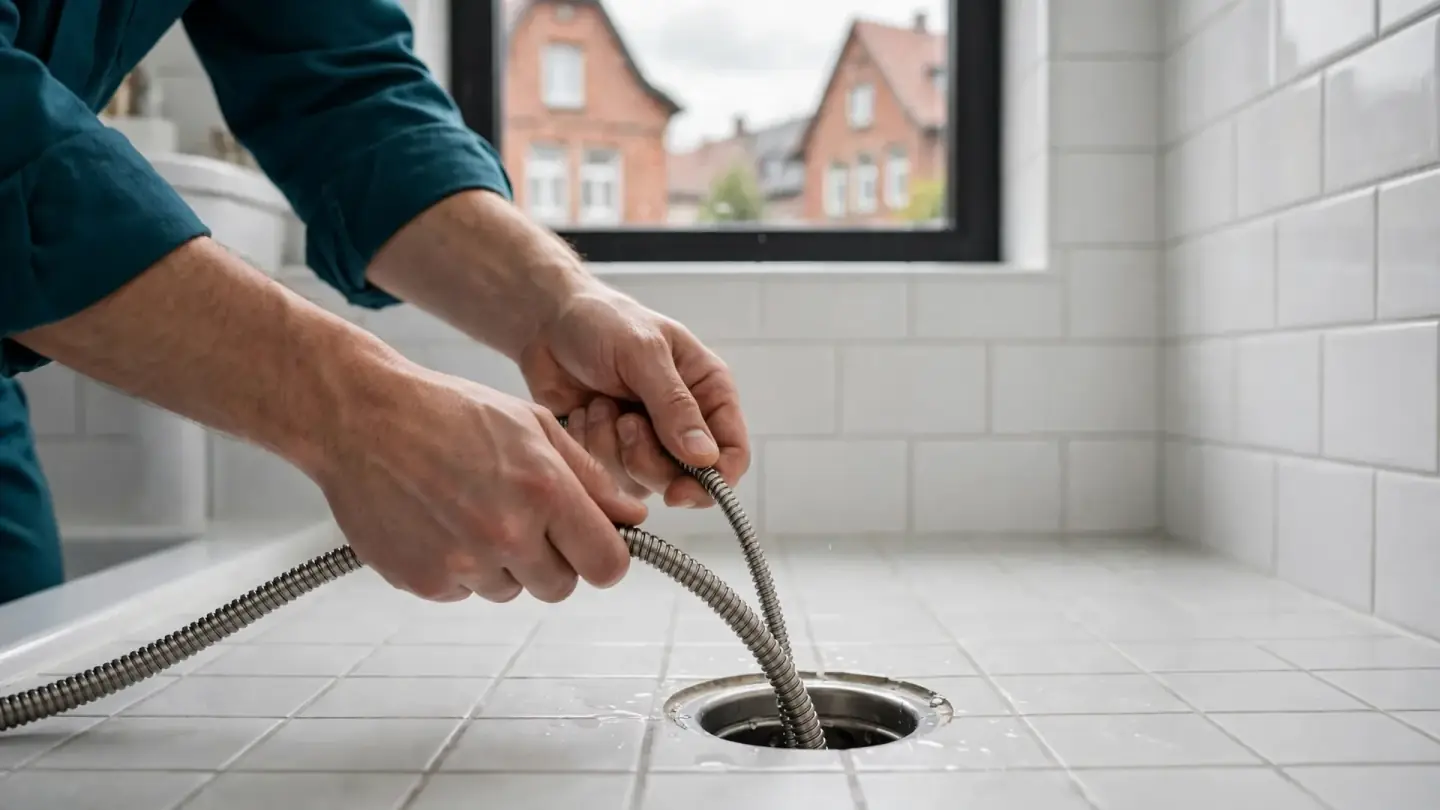

Key facts: Bathroom Drain Cleaning
- Bathroom sink clogs are mostly hair bound with soap scum and toothpaste, usually caught on the pop-up stopper linkage or in the trap.
- Sinks, tub and toilet in one bathroom often drain into a single branch; when two of them act up together, the shared line is the likely spot.
- Every fixture needs a working trap seal; an unused guest-bath sink can dry out and let sewer gas in [2].
- Older Columbus homes may have galvanized or cast-iron bathroom branches whose rough interiors hold buildup; replacing pipe requires a city permit [3].
How it works
How bathroom drains are laid out and where they block
Behind most bathroom walls there is a single drain line, often an inch and a half or two inches wide, that collects the sink, the tub or shower and sometimes a second sink before joining the larger pipe the toilet uses. Each fixture connects through its own trap, the curved section that holds a little water to keep sewer gas out. The sink trap is the easiest to reach and the most frequently blocked, but it is not the only place bathroom clogs form.
Bathroom sink clogs build in a predictable way. Hair goes down while shaving, brushing or washing, and catches on the metal rod of the pop-up stopper. Soap residue, toothpaste and skin oils coat that hair and the pipe wall, and the mat thickens until the sink drains in a slow spiral. Because it happens gradually, many people only notice once the basin holds water for minutes after use.
When a sink is the only slow fixture, the work is local: pull the stopper, clean the linkage, remove the trap and run a small hand cable through the arm into the wall. When the sink and the tub are both slow, or the sink gurgles when the toilet flushes, the shared branch is restricted and needs a longer cable from a larger opening. In multi-story houses the contractor may enter that branch through the tub's overflow or, in some cases, from the vent on the roof.
Bathrooms in older homes add one more variable. Before plastic drains became standard, branch lines were usually galvanized steel or cast iron. Both corrode on the inside, leaving a rough surface that grabs hair and scale, and galvanized pipe in particular can narrow to a pencil-sized opening over decades. On those lines, cleaning restores flow but the clog returns sooner, and the conversation shifts to replacing the worst section.
For other fixtures, browse the full list of drain services, or compare tub and shower clog work and toilet clog clearing. For clogs that do not stay inside the bathroom, see the overview of clogged drain repair in Columbus.
Signs
What does a slow bathroom drain point to?
Basin drains in a slow spiral
Classic hair-and-soap buildup at the stopper or trap. Our slow draining sink guide covers what to check first.
Sink gurgles when the toilet flushes
The bathroom's shared branch or its vent is restricted, so air is pulled through the sink trap.
A musty or rotten-egg smell near the vanity
Either a dried trap in a rarely used sink or buildup in the overflow channel. See sewer smell in the house.
Both vanity sinks slow at once
A double vanity usually shares one trap or one wall connection, so the blockage is below where the two meet.
Water rising in the tub while the sink drains
A sign of a blockage further along the bathroom branch, and possibly the main line if other floors are affected.
The repair
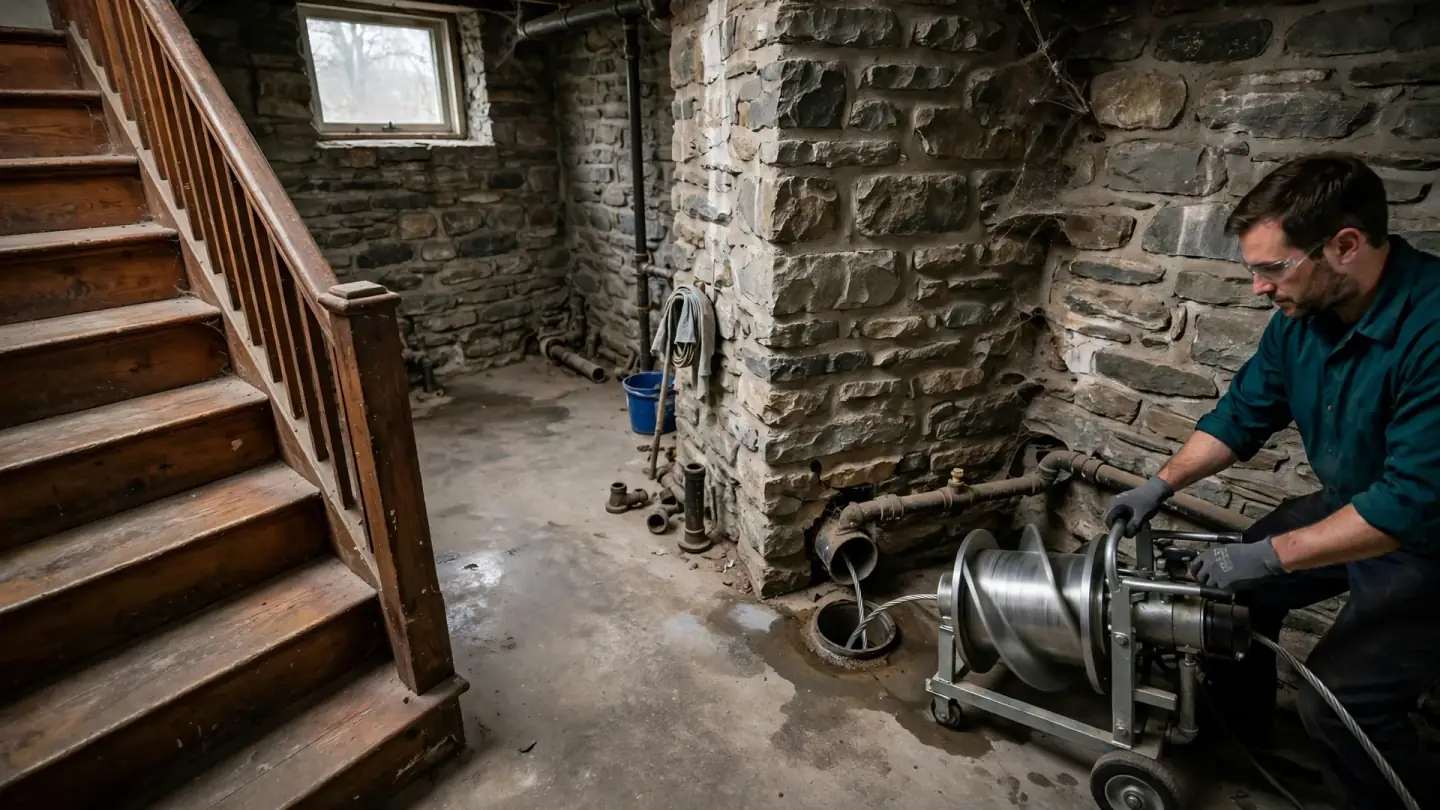
Bathroom drain cleaning from stopper to branch line
- 1
Map which fixtures are slow
The contractor runs the sink, tub and toilet in turn to see whether the problem is one fixture or the shared line.
- 2
Clear the stopper and overflow
The pop-up rod is disconnected, the stopper pulled and cleaned, and the overflow channel flushed, since it collects slime that smells.
- 3
Remove and clean the trap
A bucket goes under the trap before it is loosened. Slip-joint washers are checked and replaced if they are flattened or cracked.
- 4
Cable the trap arm and branch
A small cable is fed into the wall opening until it reaches the obstruction or the larger pipe beyond. The contractor retrieves debris rather than pushing it further.
- 5
Reassemble without leaks
Fittings are snugged by hand plus a small turn; over-tightening plastic nuts is a common cause of slow leaks inside vanities.
- 6
Run every fixture together
Filling the basin and tub and releasing them with a flush loads the branch the way a busy morning does, confirming the line is truly clear.
Fixture types
Bathroom sink styles and how each one clogs
| Sink type | Typical clog location | Access notes |
|---|---|---|
| Vanity sink with pop-up stopper | Stopper rod and trap | Easy access inside the cabinet |
| Pedestal sink | Trap behind the pedestal | Pedestal may need loosening for room to work |
| Double vanity | Shared tailpiece or wall connection | One blocked side often means the shared section |
| Vessel sink | Short tailpiece and grid drain | Grid drains catch hair right at the top |
| Wall-hung sink in older homes | Trap and galvanized trap arm | Old fittings may be seized and need care |
What you can do yourself
Bathroom drain care you can handle, and where to stop
- Pull the stopper and clean itMost pop-up stoppers lift straight out or release with a quarter turn; some need the rod behind the drain loosened first.
- Use a plastic barbed stripA disposable plastic drain strip pulls hair out of the first few inches without scratching the finish.
- Run water in unused sinksA guest-bath sink that sits idle can dry out its trap. Running it for a minute every couple of weeks keeps the seal.
- Leave chemical openers on the shelfThey rarely dissolve a hair mat, and they sit in the trap waiting for whoever opens it.
- Do not force corroded fittingsIf the trap is metal and will not turn, more force can crack the old pipe inside the wall.
- Call when two fixtures are involvedThat points past the sink to the shared branch, which needs a longer cable and the right access point.
Local specifics
Bathroom drains in Columbus houses, old and new
Columbus housing runs from 19th-century brick cottages to recent suburban builds, and bathrooms tell that story. In German Village, where homes were mostly built between 1840 and 1914 [4], many bathrooms were added or relocated long after construction. That often means long horizontal drain runs to reach an existing stack, sometimes with less slope than a modern layout would use, and those runs collect hair and soap more readily.
Interior bathroom work in a historic district generally does not need design review, because the German Village Commission reviews exterior changes [5]. But if a contractor needs to replace a section of drain to fix a recurring bathroom clog, that is a plumbing alteration. In Columbus the permit is issued by Building and Zoning Services to a registered contractor, and the Ohio Plumbing Code sets the standards for the new pipe [3][6].
Newer homes in places like Hilliard and Westerville mostly have plastic drains, which resist buildup better. There the common bathroom complaint is a hair clog at the stopper, or an upstairs bath that gurgles because a vent was undersized or capped during a remodel.
Odor is a frequent reason Columbus homeowners ask about bathroom drains. Basement and guest bathrooms see little use, their traps dry out, and sewer gas, which contains hydrogen sulfide and smells like rotten eggs [2], drifts into the room. Running water in each fixture is the first check before anyone assumes a broken pipe.
Rental duplexes and doubles are common in older Columbus neighborhoods, and they bring a particular bathroom pattern: two units stacked or side by side, sometimes sharing a stack or a building drain. A clog in one unit's bathroom branch stays in that unit, but a blockage below the point where the two units join shows up in both. When you call about a bathroom drain in a double, mention whether the neighbors are having trouble too, because that tells the contractor which side of the junction to start on.
When it is worth repairing
Cleaning a bathroom line versus fixing what is behind the wall
For most bathroom drains, cleaning is the complete fix. A hair clog removed from the stopper and trap, with the branch cabled through, stays clear for a long time if a hair catcher goes in afterward.
If the sink is clean within the first foot and still drains slowly, the trap arm or branch is the restriction. On plastic pipe that is usually still a cleaning job. On galvanized steel, the pipe itself may be the problem: decades of rust can leave only a narrow channel, and no cable restores the original opening. Replacing that short run is often the real repair.
A camera can confirm what is inside a bathroom branch when the cause is unclear, and our page on drain camera inspection describes how that works. For tub and shower clogs see shower and bathtub drain cleaning, and for an overflowing bathroom see emergency bathroom drain cleaning.
FAQ
Which bathroom drain questions come up most?
Why does my bathroom sink smell like rotten eggs even when it drains fine?
A bathroom sink that smells but still drains usually has slime coating the overflow channel or the tailpiece above the trap. Bacteria feeding on soap and skin produce sulfur gases. Scrubbing the overflow hole and the pop-up stopper often fixes it; if the odor persists, the trap seal or a vent connection may need a contractor to check.
Can one clog in the bathroom wall slow down the sink, tub and toilet together?
Yes, one clog in the shared bathroom branch can slow every fixture that empties into it. Sinks and tubs often join one horizontal pipe before it meets the stack. If the sink gurgles when the tub drains, describe that pattern on the call so the contractor starts at the branch rather than at a single trap.
Will a contractor have to cut open my bathroom wall to clear a drain?
Cutting into a bathroom wall is rarely needed just to clear a clog. Most branch blockages are reached through the sink trap, the tub overflow or a cleanout fitting. Opening a wall usually comes up only when a camera shows a broken fitting or a pipe that has separated, which is a repair rather than a cleaning job.
Do I need a permit in Columbus to have a bathroom drain cleaned?
Routine bathroom drain cleaning normally does not involve a permit in Columbus. Permits from the city building division apply to plumbing alterations such as replacing or relocating drain piping [3]. If cleaning turns into a repair, ask the contractor you are connected with whether their work needs a permit and who will pull it.
What is the easiest way to keep hair out of a bathroom sink drain?
A simple mesh hair catcher or a pop-up stopper cleaned every week or two stops most bathroom sink hair clogs. Pull the stopper, wipe off the hair and soap ring, and rinse with hot tap water. Avoid pouring caustic openers into a sink that is fully blocked, since the trapped chemical makes later cable work hazardous.
Why does the upstairs bathroom drain slower than the downstairs one?
An upstairs bathroom often drains slower because its branch is longer, flatter or partly blocked where it joins the stack. Hair and soap settle in low spots on longer runs. A vent problem can also slow drainage and cause gurgling. A contractor can cable the upstairs branch and check whether venting is part of the issue.
Is it normal for a bathroom sink to gurgle after the tub drains?
Occasional gurgling after a large tub drains is common, but steady gurgling points to a partial clog or a blocked vent on the shared bathroom line. Draining water pulls air through the nearest trap when the vent cannot supply it. Mention which fixture gurgles and when, so the contractor knows to check the branch and the vent.