
Key facts: Cast iron and clay drains in historic homes
- Vitrified clay pipe was widely used for sewers and its joints can let roots in [1].
- Orangeburg pipe, a bituminized fibre pipe, was used for sewer laterals in the mid-twentieth century and tends to deform over time [2].
- German Village was developed mainly between the eighteen-forties and nineteen-fourteen and is on the National Register of Historic Places [3].
- Columbus historic districts such as Victorian Village have commissions that issue Certificates of Appropriateness for exterior alterations [4].
Short answer
What drain pipes are in an old Columbus house?
In most houses built before the middle of the last century, waste water leaves each fixture through cast iron or galvanized branches, drops down a cast iron stack, runs along a cast iron building drain in the basement, and leaves the house through a clay lateral to the street. German Village, developed mainly between the eighteen-forties and the First World War [3], and South Clintonville, mostly built before nineteen-thirty [5], are full of houses that started out this way, though many have been partly repiped since.
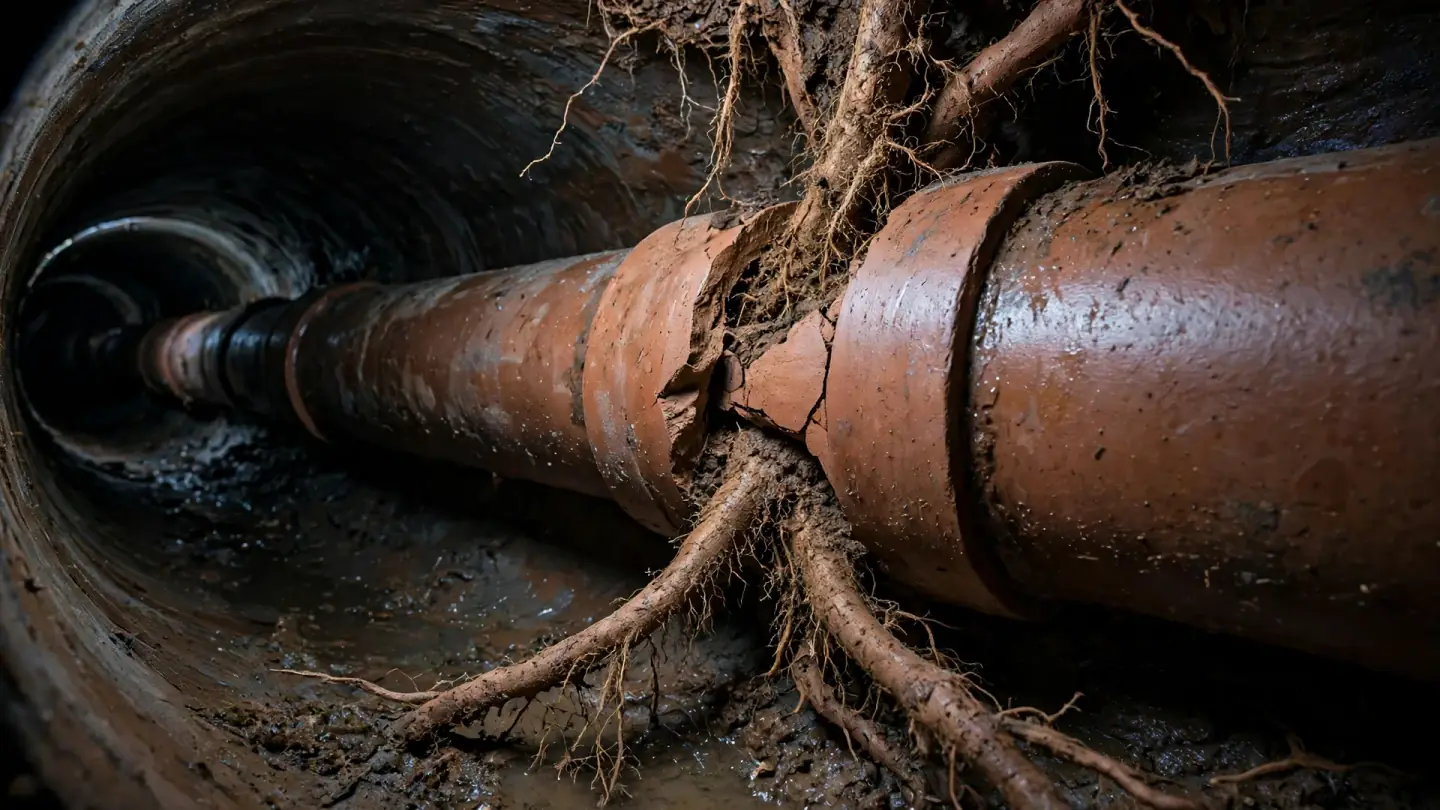
These materials last a long time, but they age in different ways. Cast iron rusts and builds scale inside, narrowing the pipe until paper and grease catch on it. Clay is hard and smooth but comes in short sections joined end to end, and those joints are where roots and soil get in [1]. Knowing which one is giving trouble decides how the line should be cleaned.
Old-pipe table
Old drain pipe symptoms in historic houses
| What you see | Likely cause | What to do |
|---|---|---|
| Toilets and tubs slow throughout, no single bad fixture | Scale narrowing a cast iron building drain | Ask about descaling and a camera check |
| Rust-coloured flakes or water stains on the basement stack | Cast iron corroding or cracking | Have the stack inspected before it leaks |
| Main line clogs every year or two, often in late summer | Roots at clay joints | Root cutting, then camera the lateral |
| Clog the cable keeps hitting at the same distance | Offset clay joint or collapsed section | Camera to locate and assess it |
| Repairs found a black fibre pipe outside | Orangeburg pipe deforming | Plan for replacement of that section |
Roots find the joints in clay laterals
Safe checks
Old-pipe checks you can do from the basement
- Look along the cast iron stack and building drain for rust bloom, wet spots or hairline cracks.
- Find the main cleanout and check that the plug turns or at least is visible and reachable.
- Note which large trees stand between the house and the street.
- Write down how often the main line has clogged and in which season.
- Avoid chemical openers; they can attack old metal and sit in a clay line that will not drain.
Cast iron
How century-old cast iron drains wear out
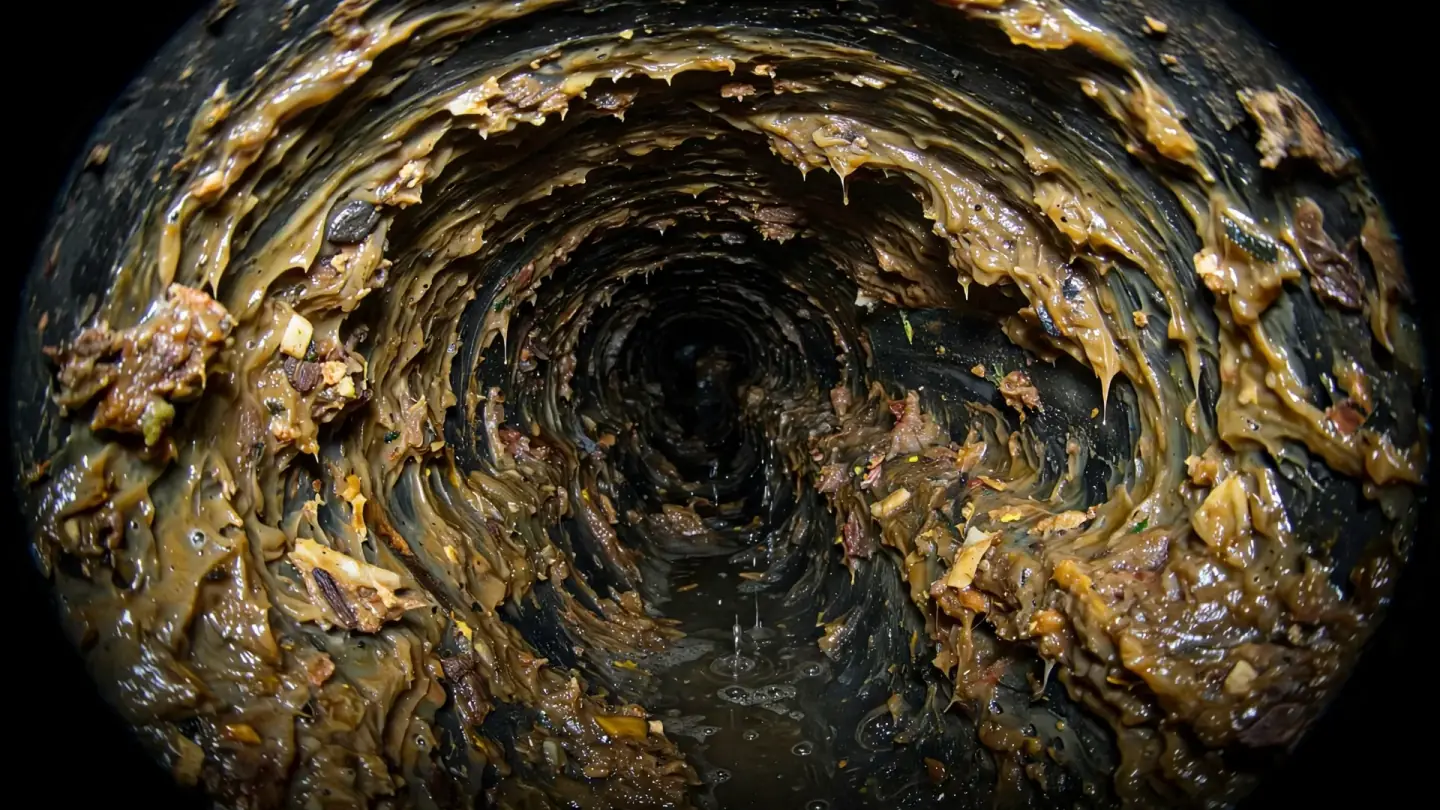
Cast iron does not usually fail all at once. The inside surface rusts and develops nodules of scale, especially along the bottom of horizontal runs where water sits. Over decades the opening narrows and turns rough, and paper, grease and hair catch on it. Owners notice a whole house that drains a little slower every year rather than one fixture that stops.
Cleaning old cast iron is a judgement call. A cable with an aggressive cutter can bite into weak pipe, while a hydro jetting nozzle or descaling chain chosen for the pipe's condition removes scale more evenly. A drain camera inspection before and after shows how much wall is left. Work on drain piping falls under the Ohio Plumbing Code [6], and replacement may need a permit from the city's Building and Zoning Services.
Clay and fibre
Clay laterals, roots and the occasional Orangeburg section
Vitrified clay resists the chemicals in sewage well, but its short sections and mortar or gasketed joints give roots a way in [1]. Clintonville's tree-lined streets and German Village's old shade trees make root intrusion a familiar story. Cutting roots clears the line, and the tree roots guide explains why they return.
Some homes also have sections of Orangeburg pipe, a bituminized fibre pipe used for laterals in the mid-twentieth century, often where a clay line was repaired. It softens and flattens under soil load over time [2]. Orangeburg cannot be cleaned back to round, so a camera finding it usually leads to a repair conversation, which the replace or clean guide covers.
Historic districts
Do historic district rules affect drain work?
Cleaning a drain from inside the house does not change anything a historic commission reviews. Excavating a lateral can, if the work disturbs a brick sidewalk, a front yard feature or other exterior elements. Columbus historic districts such as German Village and Victorian Village have commissions that issue Certificates of Appropriateness for exterior alterations [4]. The rules around those certificates have been changing, so ask the city's Historic Preservation Office before any dig in a historic district.
Trenchless lining and spot repairs through a cleanout often disturb less of the exterior, which is worth raising with the contractor when the house sits in a historic district.
Diagnosis
How a contractor assesses old cast iron and clay
- 1
History
Expect questions about the age of the house, past repairs and how often the line clogs.
- 2
Reach the old pipe through a fitting
The main cleanout is opened and any blockage cleared with a tool suited to the pipe.
- 3
Camera both materials
The camera follows the cast iron indoors and the clay outside, noting scale, cracks, roots and offsets.
- 4
Locate problems
A locator marks where trouble spots sit and how deep, which matters near trees and sidewalks.
- 5
Lay out options
You see the footage and hear the choices, from maintenance cleaning to repair.
Prevention
Looking after historic drain lines
- Schedule root cutting before the season your line usually clogs.
- Keep grease and wipes out; rough old pipe catches them more easily.
- Get a camera inspection when you buy an older house, before the first backup.
- Ask for gentle methods matched to the pipe's condition.
On the call
Facts about your historic home's drains to mention
- Roughly when the house was built and any known repiping.
- Whether the line has been cameraed and what was found.
- Large trees near the lateral route.
- Whether the house is in a historic district.
- Where the cleanout is and whether it opens.
FAQ
Questions about old pipes in historic Columbus houses
Is it safe to snake an old cast iron drain pipe?
Usually yes, with the right tool and care. Thin or heavily scaled cast iron can be damaged by an aggressive cutter, so a contractor often chooses a gentler head or jetting and checks the pipe with a camera first. Mention the age of the house on the call.
How do I know if my old house has clay sewer pipe?
Most Columbus homes from before the middle of the last century were built with clay laterals [1]. A camera inspection from the cleanout shows the material, the joints and any later repairs, including plastic or Orangeburg sections.
Why does my clay sewer line keep filling with roots?
Roots grow into clay pipe through the joints between short sections, drawn by moisture inside [1]. Cutting removes them but leaves the joint open, so they return. Regular cleaning or a repair that seals the joints are the long-term options.
What is Orangeburg pipe and should I worry about it?
Orangeburg is a bituminized fibre pipe used for some sewer laterals in the mid-twentieth century. It tends to soften and flatten over time [2], so if a camera finds it, plan to have that section repaired rather than relying on cleaning.
Do I need permission to dig up my sewer in German Village?
Plumbing work needs the usual city permit, and exterior changes in German Village have been reviewed by the German Village Commission through Certificates of Appropriateness [4]. Rules have been changing, so ask the Historic Preservation Office before excavating.
Should I replace old cast iron pipes before they fail?
Not automatically. Many old cast iron drains still have years of service. A camera inspection shows wall condition, scale and cracks so you can decide based on what is actually there. The replace or clean guide walks through that choice.