Key facts: Emergency Bathroom Drain Cleaning
- In most houses the toilet, tub and sink of one bathroom share a branch drain, so water rising in the tub when the toilet flushes points to a blockage downstream of all three.
- Each fixture's trap holds a water seal against sewer gas; a backup that empties or overfills traps can let odours into the room [1].
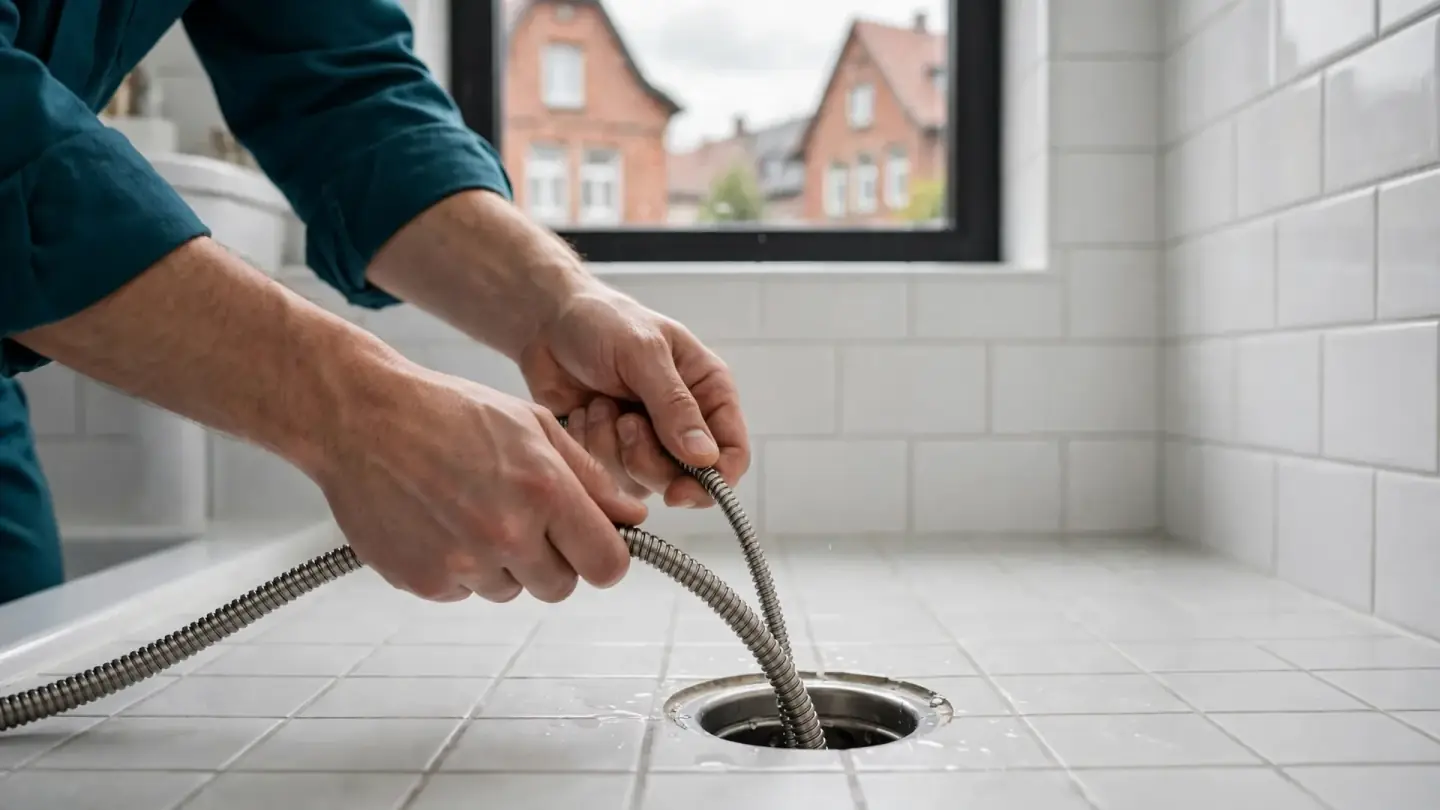
- Hair combined with soap residue is the usual cause of tub and shower clogs, and a drum or hand auger is the standard tool to clear it [2].
- Never combine two drain products in a bathroom fixture; mixed caustic and acid cleaners can react violently [3].
Reading the bathroom
Is a backed-up bathroom drain really an emergency?
The first kind is simple but disruptive. A household with one full bathroom loses its only shower, or the tub fills ankle-deep every time someone washes. Hair and soap have built up in the tub drain or the shower trap until water barely moves. Nothing is overflowing yet, but nobody can get clean, and that is reason enough to want it handled quickly.
The second kind is more serious. You flush the toilet and the bathtub fills with dirty water. You drain the sink and the shower gurgles and rises. Those connections are not coincidences. In most homes the bathroom fixtures drain into one shared branch line that joins the main stack. When that branch, or the stack below it, is blocked, water from one fixture looks for the nearest way out, which is usually the tub, because it sits lowest. Water appearing in the tub after a flush often contains sewage, so treat it as contaminated.
Upstairs bathrooms add a third worry: the ceiling below. A tub or toilet that overflows on a second floor can soak through to a kitchen or living room ceiling in minutes. Stopping the water is the priority, before cleaning or trying to clear anything.
Signs
Bathroom warning signs that point to a blocked branch line
Tub fills after a flush
Toilet water appearing in the tub or shower means the shared bathroom drain is stopped below the tub. Stop flushing immediately.
Shower drain gurgles when the sink runs
Air bubbling up through one fixture while another drains shows that the line between them is full of water.
Water at the toilet base
A toilet that leaks at the base during a backup may have pushed water past its wax ring. That can stain the ceiling below even after the clog is fixed.
Brown stain on the ceiling below
A new or growing stain under an upstairs bathroom after a backup means water got into the floor. Mention it when you call.

The visit
What happens on an urgent bathroom drain call
- 1
Working out which line is blocked
The contractor asks which fixtures fill and when. If only the tub is slow, it is the tub drain. If the tub fills from the toilet, it is the shared branch or stack.
- 2
Accessing the right point
For a tub, that may be through the overflow plate or the drain itself. For a branch line, the contractor may pull the toilet to reach the closet bend, or use a cleanout on the stack.
- 3
Clearing hair and debris
A drum auger sized for small drains removes hair and soap mats [2]. Larger blockages in the branch need a heavier cable.
- 4
Resetting and testing
If the toilet came up, it goes back on a new wax ring. Each fixture is then run in turn to confirm nothing rises elsewhere.
Where to look
Bathroom backup patterns at a glance
| What happens | Where the blockage usually is | What to read |
|---|---|---|
| Only the tub is slow | Tub trap, hair and soap | Shower and bathtub drain cleaning |
| Only the sink is slow | Sink pop-up or trap | Bathroom drain cleaning |
| Tub fills when toilet flushes | Shared branch or stack | Call; stop using the bathroom |
| Basement floor drain also backs up | Main line below the stack | Emergency sewer line cleaning |
After the fix
Once the bathroom drains again
Clean and disinfect the tub and floor if toilet water came up into them. Keep an eye on the ceiling below for a few days: a stain that keeps spreading means the wax ring or a joint is still leaking and needs a second look.
For long-term care, a drain screen in the tub and shower catches most hair before it enters the pipe. Wipes, even ones labelled flushable, are a common cause of branch-line backups in bathrooms because they do not break down like toilet paper. Older Columbus homes with original cast-iron stacks can also narrow inside over the years, which makes them more prone to repeat clogs; a camera check can show whether that is happening.
Before you call
What to note about a bathroom backup before the call
A few details make the call shorter and the visit more accurate. Note which floor the bathroom is on, whether it is the only one, and which fixtures misbehave when. For example: the tub fills with grey water about ten seconds after the toilet flushes, but the sink drains normally. That one sentence tells the contractor the branch is blocked between the toilet and the stack, and that the tub sits lowest on it.
Also say whether the house has a basement floor drain and whether it is dry. If it is, the main line is probably flowing and the clog is higher up in the bathroom branch. If it holds water, the problem is lower, and the contractor will likely start from a basement cleanout rather than the bathroom.
Finally, mention anything that may have gone down recently: a child's bath toy, a pile of wipes, hair from a haircut in the tub. Small facts like these often explain a sudden backup better than any test.
Why does only the upstairs bathroom back up?
If every bathroom in the house is draining badly at once, treat it as a whole-house issue: the emergency drain cleaning page covers the first ten minutes for that situation.
FAQ
Bathroom drain emergency questions
Why does my bathtub fill with dirty water every time someone flushes the toilet?
A blockage in the branch drain shared by the toilet and tub is the usual reason. Flush water cannot get past the clog, so it climbs out of the lowest opening on that branch, which is often the tub. Stop flushing that toilet, keep the tub drain open so you can watch the level, and call to check emergency availability for clearing the shared bathroom line.
Can I keep using the bathroom sink if the shower drain is the one that is slow?
Light sink use is usually fine when only the shower is slow and nothing else gurgles or rises. A slow shower alone points to hair and soap in its own trap. If the sink starts draining into the tub, or water appears around the toilet base, stop using every fixture in that bathroom and treat it as a branch line blockage.
Is the grey water that backs up into a tub after a flush a health risk?
Water pushed up from a toilet line can carry sewage bacteria, so treat it as contaminated. Keep children and pets away, wear rubber gloves, and do not bathe in that tub until it has been cleaned and disinfected. Wash hands and any towels used to mop it, and tell the contractor that toilet water reached the tub.
Will the drain contractor have to pull the toilet off the floor to clear a bathroom backup?
Sometimes pulling the toilet is the cleanest way to reach a blockage in the bathroom branch. Many contractors can run a cable through the toilet flange or a vent instead, but removing the toilet gives a straight path and a chance to replace the wax ring. Ask on the call which approach they expect.
How do I stop bathroom water from leaking through the ceiling below?
Stop all water use in that bathroom first, then shut the toilet supply valve. Soak up standing water before it finds gaps around the tub or toilet base. Put a bucket under any drip below and turn off lights on that ceiling if water reaches the fixture. Mention ceiling damage when you call so the contractor knows what to look for.
Should I pour a drain cleaner into a shower that has standing water during a bathroom backup?
No drain chemical should go into a shower or tub that is holding water. The product sits on the clog, mixes with whatever comes next, and can splash on whoever plunges or opens the drain later. Mixed acid and caustic cleaners can react violently. Bail the water out instead and leave the chemistry to the professional [3].
What should I note about my bathroom backup before calling for emergency drain help?
Note which fixture overflowed first, what was being used at the time, and whether other bathrooms or the basement drain are affected. Say if the house has one bathroom or several. Those details tell the contractor whether a shower and tub cleaning or a deeper emergency drain cleaning visit is likely. Browse every drain service for comparison, or read the sewer smell guide if odour is the main sign.