Key facts: Sewer Line Inspection
- A sewer line inspection records the condition of the full lateral, from the house to the public sewer, rather than chasing one clog.
- Blueprint Columbus lines laterals because cracked pipes and leaky joints let rain water into the sanitary sewer and can cause basement backups [1].
- Clay tile was a common sewer pipe for generations; its short sections and many joints are where roots and offsets typically appear [2].
- Orangeburg fibre pipe, used in some mid-century homes, can deform and blister with age, which a camera shows clearly [3].
How it works
What a whole-lateral inspection covers
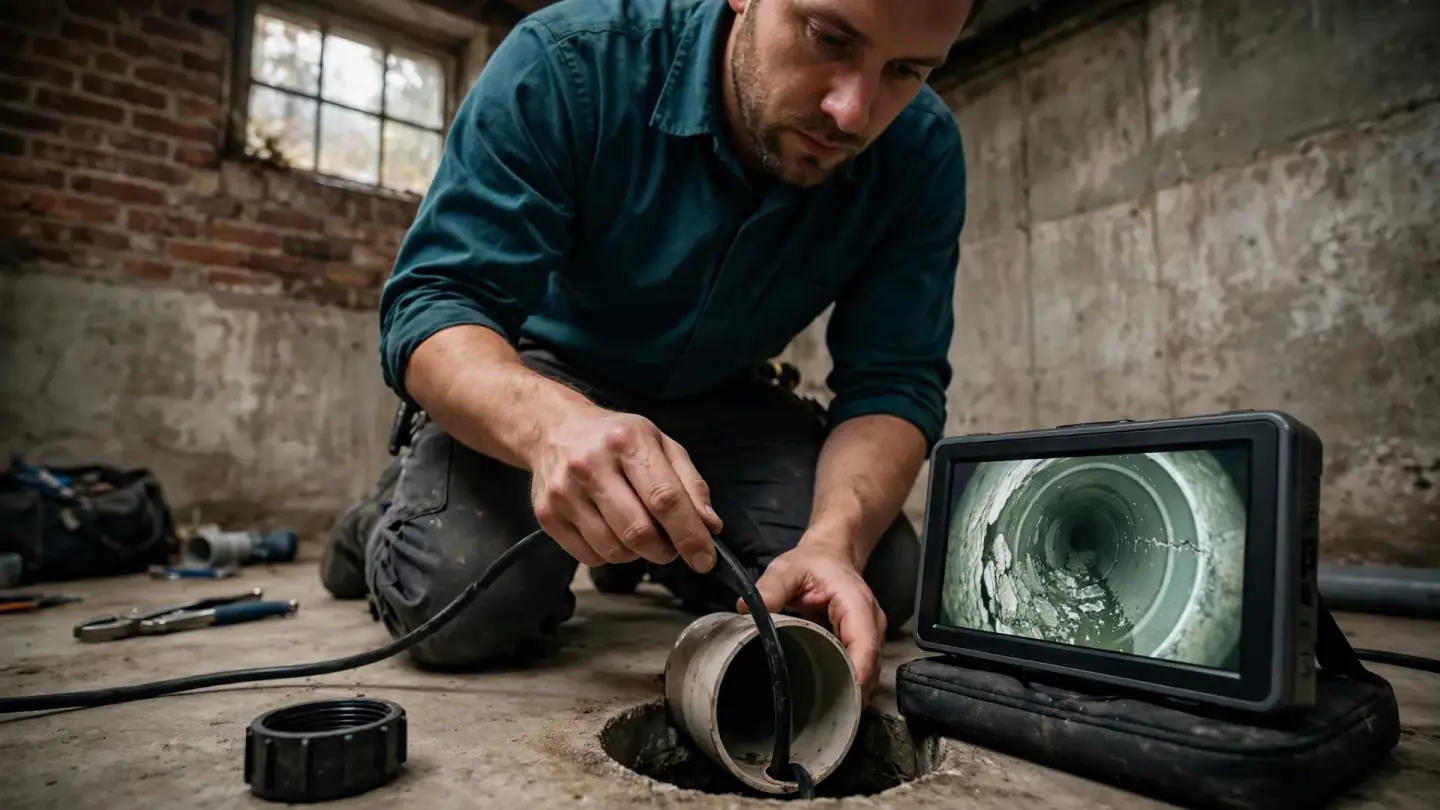
Most sewer problems are found in a hurry, in the middle of a backup. A sewer line inspection is the opposite: a planned look at the entire lateral while it is working, so you know what you have before something goes wrong. The contractor pushes a waterproof camera on a semi-rigid cable from a cleanout or other access point out toward the street, recording video and noting the distance at each feature.
The result should tell you four things. First, the pipe material and whether it changes partway, which is common where an older clay line was repaired with plastic. Second, the condition of every joint: whether it is tight, offset, or letting roots in. Third, the grade: whether water flows away or pools in a belly. Fourth, the end point: whether the camera reaches the connection to the public sewer and what that connection looks like.
An inspection differs from a drain camera inspection aimed at one indoor problem. That service follows a specific symptom, such as a kitchen line that keeps slowing, into the branch pipes inside the house. A lateral inspection is a condition survey of the main line outside, done to inform a decision.
If the line is blocked, it usually has to be cleared before the camera can see much. In that case the visit becomes main sewer line cleaning followed by the inspection.
Find related work in the Columbus drain services list, including single-branch camera checks and lateral cleaning.
Signs
When does a sewer lateral inspection pay off?
Buying an older house
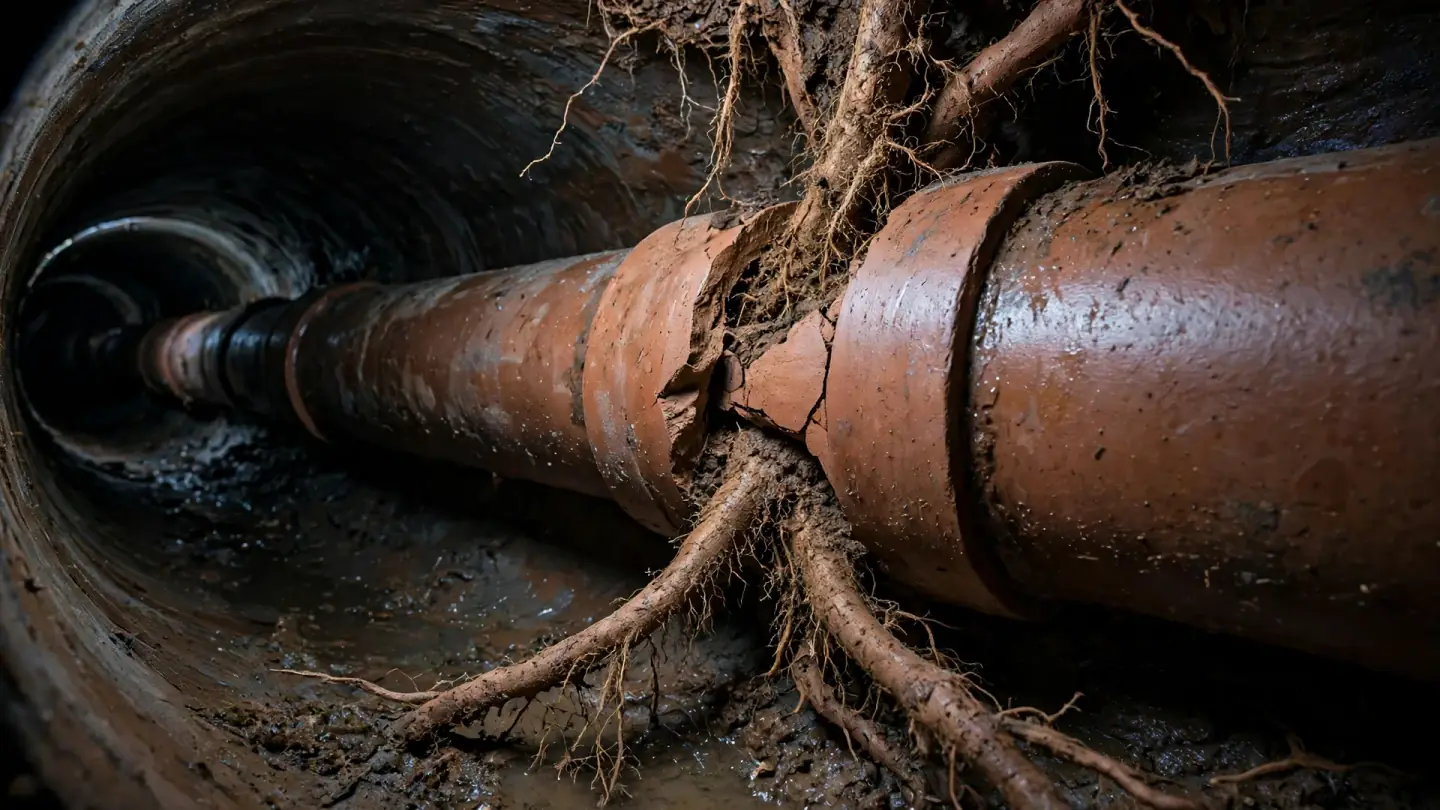
A standard home inspection usually stops at the foundation. A lateral survey shows the part under the yard, where roots in a clay line are common. Our guide on tree roots in sewer lines explains why.
Backups that keep returning
If the main has been cleared more than once, an inspection explains why. The replace vs clean guide shows how findings feed that decision.
Wet-weather basement water
Water at the floor drain only during storms can mean rain water entering the system. See basement floor drain backing up.
A persistent sewer odor
A cracked or separated lateral can vent gas into soil near the foundation. The sewer smell in the house guide lists the indoor causes to rule out first.
The inspection
Steps in a sewer line condition survey
- 1
Describe the house and the reason on the call
Age of the home, whether you are buying or already own it, past backups, and where trees stand relative to the line. This tells the contractor how long a run to expect.
- 2
Pick where the camera enters
An outside cleanout is ideal. A basement cleanout works well too. On homes without either, a toilet may be pulled or a roof vent used.
- 3
Run water and push the camera
A little water helps the camera slide and shows how flow behaves at each joint. The cable counter records distance from the access point.
- 4
Mark the findings
Each root intrusion, offset, crack, belly or material change is noted with its distance. Some cameras include a locator so the spot can be marked on the ground.
- 5
Reach the connection
The survey ends where the lateral meets the public sewer, or where the camera cannot go further, which is itself a finding.
- 6
Review the recording together
Ask for the video file and a plain-language summary so you can share it with a seller, an agent or another contractor.
Pipe materials
Lateral materials a Columbus camera survey may find
| Material | Where it is found | What the camera watches for |
|---|---|---|
| Vitrified clay tile | Older city neighborhoods built before plastic pipe | Root intrusion at joints, offset sections, cracks, missing pieces |
| Cast iron | Under basement floors and some older laterals | Scale and rust buildup, channeling along the bottom, cracks |
| Orangeburg fibre pipe | Some mid-twentieth-century homes | Blistering, flattening into an oval, collapse |
| PVC or ABS plastic | Newer homes and repaired sections | Bellies where bedding settled, poorly glued joints, transitions to older pipe |
| Lined pipe | Laterals rehabilitated with a cured-in-place liner | Wrinkles, liner ends, reinstated connections |
Your part
Preparing for an inspection, and what to leave alone
- Clear a path to the cleanout and move stored boxes away from basement access points.
- Avoid heavy water use for an hour beforehand so the line is not running full when the camera goes in.
- If you are buying, ask the seller for permission and any records of past sewer work or city lateral lining.
- Do not remove a stuck or corroded cleanout cap yourself; cast iron caps can crack the fitting.
- Do not try to push a garden hose or rented camera down an old clay line to save a visit; snagged equipment in a broken joint becomes its own problem.
- Keep the recording. It is the best record you will have of the line's condition on that date.
Local specifics
Inspecting laterals in Columbus: Blueprint lining, rain water and permits
Columbus Water & Power runs Blueprint Columbus to keep stormwater from reaching the sanitary sewer. The approach combines lateral lining, downspout redirection, a sump pump option homeowners can choose, and green stormwater features [1]. The reasoning is that cracked pipes, leaky joints and foundation drains let storm water into a system built for wastewater, and that extra flow can cause overflows and basement backups [1]. In neighborhoods where the program has worked, some laterals have been lined. An inspection shows whether your line has a liner and where it ends, which matters if you are planning other work.
Older housing is a big part of why inspections are common here. German Village was developed mostly between 1840 and 1914, Clintonville's southern blocks were mostly built before 1930, and the Hilltop grew quickly in the early twentieth century. Clay tile laterals are typical of those eras, and clay joints are where roots and offsets show up [2]. The area pages for German Village, Clintonville and the Hilltop give more detail.
Some mid-century homes may have Orangeburg pipe, a fibre and pitch pipe that tends to deform with age [3]. Seeing a round pipe gradually flatten into an oval on camera is a strong sign the line is near the end of its life.
If an inspection leads to repair inside Columbus, plumbing permits go through Building and Zoning Services, and the application asks for the contractor's City of Columbus registration number [4]. Digging requires notice to OHIO811 no less than two business days ahead [5]. In Westerville and Hilliard, which are separate cities, the local building department handles permits.
What the results mean
Reading an inspection: clean, monitor, repair or reline
A good result is a continuous pipe with tight joints and steady grade all the way to the connection. That line needs nothing beyond sensible habits.
Light root hair at one or two joints, or a mild belly that holds a little water, usually means cleaning now and monitoring with another look in a year or two. Many people put the line on a preventative maintenance schedule at that point.
Heavy roots at many joints, a large offset, a crack along the pipe, or Orangeburg that has lost its shape point toward repair or lining. The inspection video is what lets a contractor tell you which section needs work and how far from the house it is, so the scope can be discussed accurately rather than guessed.
A camera that cannot get past a point, or shows soil inside the pipe, means a collapse. At that point the discussion is about repair rather than cleaning.
Buying a home
Using a sewer inspection during a Columbus home purchase
For buyers, the lateral is one of the few major systems nobody can see during a showing. The house may look well kept while the pipe under the front lawn is full of roots at every joint. Scheduling a sewer inspection inside the inspection window of a purchase contract gives you facts while you still have room to act on them.
Timing matters. The seller usually needs to agree to access, someone has to be home to open the basement, and the line should be in normal use for a day or two beforehand so it shows how it really behaves. Ask the seller or listing agent whether the line has been cleaned recently; a freshly cleaned line can look better than its everyday condition, and knowing about it helps you read the video fairly.
Share the recording with your agent and keep a copy. If the inspection shows defects, the conversation with the seller is about facts on video, with distances and descriptions, rather than general worries about an old house. If it shows a sound line, you have a baseline to compare against years from now.
Older homes on large lots with big trees near the line deserve particular attention. So do homes where the basement floor drain has visible staining or a strong odor, or where the seller mentions past backups. None of these mean the line is bad, but they are good reasons to look before you commit.
FAQ
What do Columbus buyers and owners ask about sewer inspections?
Is a sewer line inspection part of a standard home inspection in Ohio?
A sewer line camera inspection is usually not part of a standard home inspection and is typically ordered separately. General inspectors check visible plumbing but rarely run a camera to the street. For older homes, buyers often add a sewer scope before closing so lateral problems are known early.
How far can a sewer inspection camera travel?
A sewer inspection camera can usually travel the full length of a typical residential lateral, from the cleanout to the public sewer connection. Range depends on the camera cable, pipe diameter, bends and debris. Heavy roots or a collapse may stop the camera, which is itself a useful finding.
Can a camera inspection show whether Columbus lined my sewer lateral?
A camera can show whether a sewer lateral has a smooth liner inside the original pipe, which looks different from clay or cast iron joints. Columbus has lined some private laterals in Blueprint Columbus project areas [1]. Confirming whether your street was included is best done through the city.
Do I get a copy of the sewer inspection video?
Many contractors provide a recording or still images from a sewer inspection, but practices vary. Ask on the call whether you will receive video, a written summary or marked distances. A recording is helpful when getting a second opinion or when negotiating repairs during a home sale.
What is the difference between a sewer line inspection and a drain camera inspection?
A sewer line inspection surveys the whole lateral from the house to the public sewer, while a drain camera inspection follows one indoor branch to diagnose a single problem fixture. Both use cameras. The difference is scope: the lateral survey is about overall condition, the drain camera about one repeat clog.
Should I inspect the sewer line before buying an older house in Columbus?
Inspecting the sewer line is a sensible step before buying an older Columbus house, especially one with mature trees or clay pipe [2]. Root intrusion, offsets and old materials like Orangeburg pipe are not visible from the basement [3]. Knowing the condition before closing helps you plan.