Key facts: Clogged Drain Repair
- A single slow fixture usually means a blockage in that fixture's trap or branch line; several fixtures backing up together points to the main building drain or sewer lateral.
- Chemical drain openers can damage older pipe and make a contractor's work dangerous; a cable or water jet is the standard mechanical fix [5].
- Columbus plumbing work that alters piping needs a Building and Zoning Services permit; routine clearing of a clog does not change the piping [2].
- If sewage comes up a basement drain during rain, report it to Columbus's Sewer Maintenance Operations Center first; that report starts any Project Dry Basement eligibility [1].
How it works
How a clogged drain gets located before it gets cleared
Every drain in a house runs downhill through a branch line into a vertical stack or a horizontal building drain, and from there into the sewer lateral that leaves the property. A clog can form at any of those points, and the symptoms change depending on where it is. A bathroom sink that drains slowly while the tub next to it runs freely has a problem in the sink's own trap or the short arm behind the wall. A sink and tub that both gurgle when the toilet flushes share a blocked branch. A basement floor drain that rises when the washing machine empties is telling you the main line downstream is restricted.
That is why the first part of any clogged drain repair is a set of questions rather than a tool. Which fixtures are slow? Which ones are fine? Did the problem start suddenly after something went down, or creep up over weeks? Does it get worse when it rains? The answers narrow the search to one section of pipe, and that decides whether a hand auger through a sink opening is enough or whether the contractor needs to open a cleanout and run a larger machine toward the street.
Most household clogs are made of a few familiar things. Bathroom lines collect hair bound together with soap residue. Kitchen lines collect fats that cool and harden on the pipe wall, trapping food particles. Toilets and main lines catch wipes, paper towels and anything else that does not break apart in water. In older Columbus neighborhoods, the main line may also hold roots that have pushed through the joints of clay pipe, or scale that has built up inside cast iron over many decades. Each material behaves differently under a cable or a water jet, which is part of what the contractor is reading for when the line opens up.
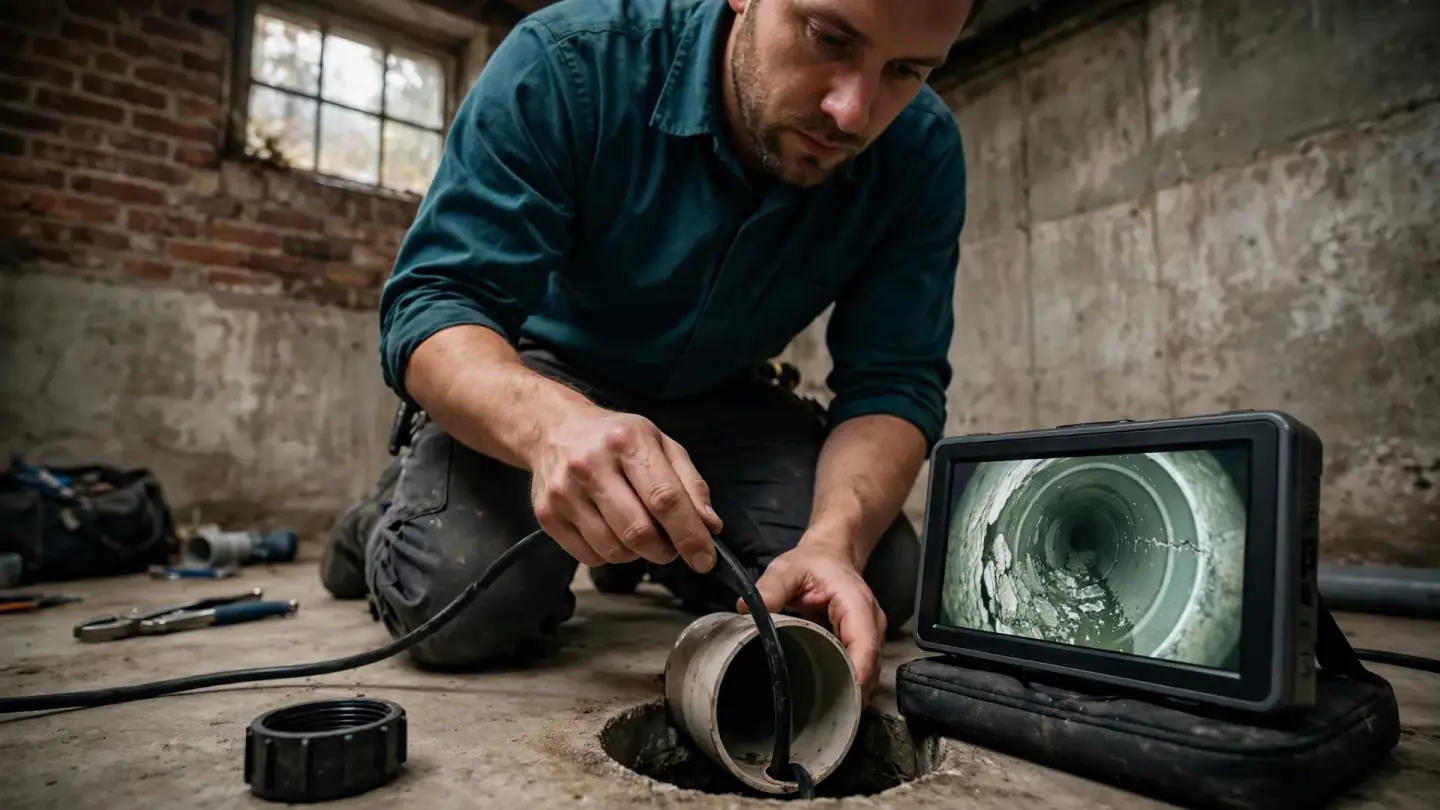
Clearing the clog is only half of the repair. The other half is understanding why it formed, because a line that clogged once for a structural reason will clog again. A blockage that keeps returning at the same distance from the cleanout often sits at a sag, a broken joint or an offset section. In those cases a drain camera inspection after clearing shows what the cable could only feel.
See the Columbus drain services overview for every fixture, or read about a cable-and-camera main line visit and high-pressure jetting.
Signs
When does a clog need more than a plunger?
Water rising in a fixture you did not use
When a tub fills from the bottom as the toilet flushes, the blockage is below where those fixtures join. That is a branch or main-line problem, covered in our guide to multiple drains backing up.
The same sink slows down every few weeks
A clog that returns quickly was pushed aside rather than removed, or something in the pipe keeps catching debris. The slow draining sink guide explains how to tell the two apart.
Gurgling after a fixture drains
Air being pulled through a trap means water is struggling to move past a restriction, or the vent serving that line is partly blocked.
A sewage odor that comes and goes
A partial blockage can hold waste in the line long enough to smell, and a dried-out trap can let sewer gas in. Our sewer smell guide walks through both.
Backups that follow heavy rain
If drains are fine on dry days and struggle in storms, rainwater may be entering the sanitary line, or the public sewer may be surcharging. That changes who you call first.
A store-bought opener made it worse
Caustic openers often leave standing water that is now hazardous. Tell the contractor exactly what product went in before any tool goes down the drain.

The repair
Clogged drain repair, step by step
- 1
Explain the symptoms when you ring
You explain which fixtures are affected, when it started and anything you have already tried. The contractor you are connected with uses that to decide what equipment to bring and whether the main line is likely involved.
- 2
Confirm the blockage zone on site
The contractor runs water in a few fixtures and watches where it backs up. This takes minutes and stops anyone from cabling the wrong line.
- 3
Pick the best opening to work from
For a single fixture that may mean removing a trap or a toilet. For a main-line clog it usually means opening a cleanout in the basement, crawlspace or yard. Pulling a toilet is sometimes the cleanest route into a stack.
- 4
Clear with a cable or jet
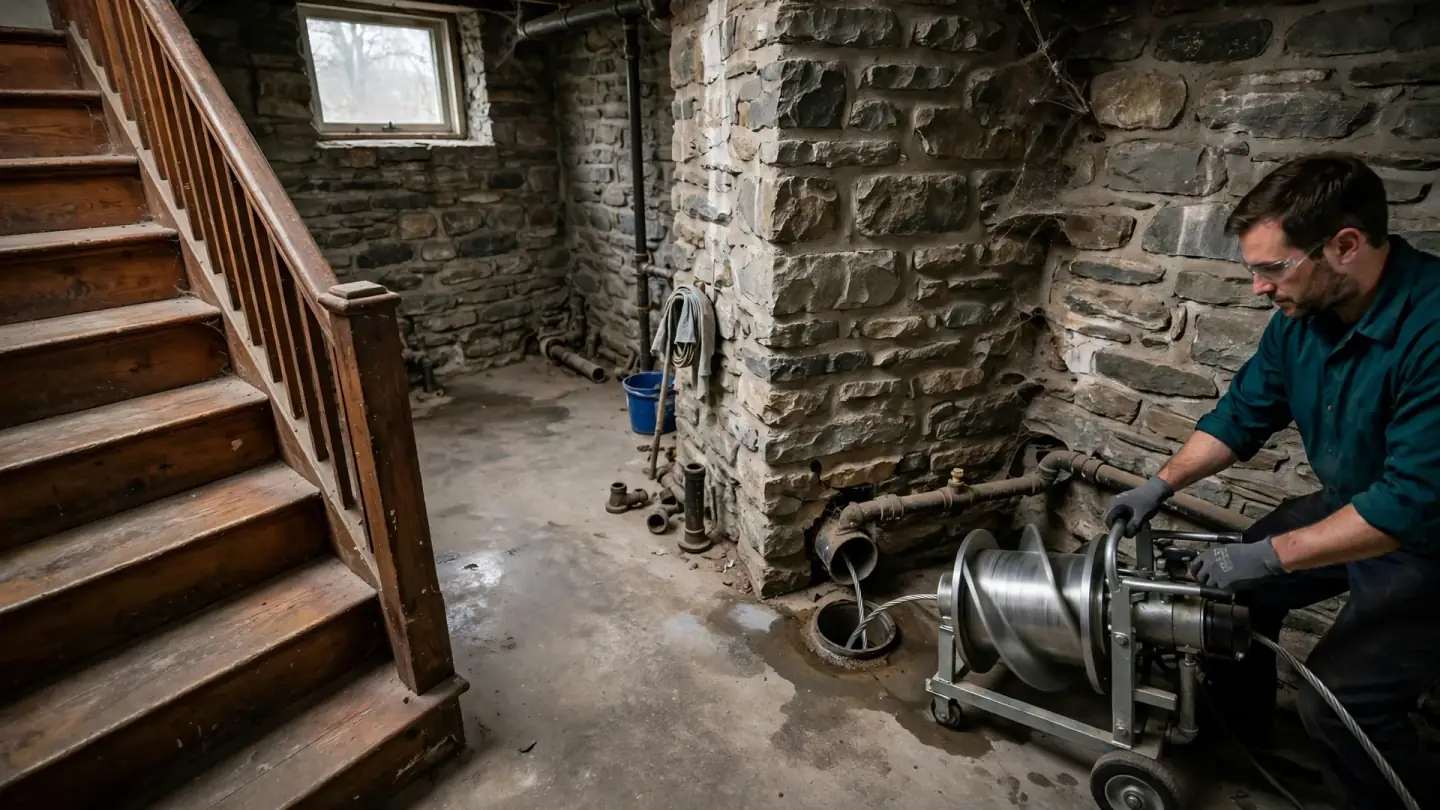
A cable with a cutting or retrieval head is fed through the line until it reaches the blockage, then worked back and forth. Grease-heavy or sludge-lined pipe may call for hydro jetting instead, which scours the full wall rather than punching a hole through the clog.
- 5
Run a full-volume flow test
A proper test runs several fixtures at once, or fills a tub and releases it, to load the line the way daily use will. A drain that handles a trickle can still fail under a full laundry cycle.
- 6
Explain what came out and what to watch
What the cable retrieves tells a story: hair, grease, roots, paper, scale. You should leave knowing the likely cause and whether a camera look is worth doing.
Tools and methods
Which clearing method fits which clogged line?
| Method | Best suited to | Limits |
|---|---|---|
| Plunger (cup or flange) | Fresh clogs in a single toilet or sink close to the fixture | Does little against grease buildup or anything past the trap |
| Hand auger or drum auger | Hair and soap in sink, tub and shower branches | Short reach; can push soft clogs further rather than retrieving them |
| Closet auger | Toilet bowl and trapway obstructions | Only reaches the toilet itself, not the line beyond |
| Sectional or drum cable machine | Main building drains and laterals, roots, heavy paper clogs | Opens a path but can leave grease or scale on the pipe wall |
| Hydro jetter | Grease, sludge and scale lining long runs; root fines after cutting | Needs a suitable access point; not for pipe already badly broken |
| Camera inspection | Finding why a clog keeps returning | Diagnostic only; the line usually has to be cleared first to see |
What you can do yourself
Safe first steps for a clogged drain, and where to stop
- Stop running water into the affected lineEvery extra load raises the water behind the clog. If the main line is involved, that includes the dishwasher and washing machine.
- Try a plunger on a single fixtureBlock any overflow opening and the second basin of a double sink so the pressure goes toward the clog rather than out another opening.
- Clean what you can reachPop-up stoppers and tub strainers often hold the bulk of a bathroom clog. Pulling them out and clearing the hair is safe and often enough.
- Skip the chemical openersCaustic and acid openers generate heat, can soften older plastic and attack corroded metal, and leave a hazard for whoever opens the line next. Never mix two products.
- Do not open a main cleanout under pressureIf water is backed up in the basement, a cleanout cap can release a rush of sewage when loosened. Leave that one to the contractor.
- Stop when more than one fixture is involvedOnce two or more fixtures are affected, repeated plunging just pushes waste toward the lowest opening in the house, which is usually a basement floor drain.
Local specifics
Clogged drains in Columbus homes: what is different here
Columbus has a wide spread of housing ages, and the city's older neighborhoods change what a clog usually turns out to be. In German Village, where most of the brick cottages and doubles went up between 1840 and 1914 [6], a recurring main-line clog is often a root or joint problem in an old lateral rather than something that was flushed. In newer subdivisions, by contrast, the pipe is more often sound and the blockage is grease, wipes or a construction-era defect.
Rain matters too. The city's Blueprint Columbus program exists because cracked pipes, leaky joints and connected foundation drains let rainwater into the sanitary sewer, which can overload the system and push sewage back into basements [3]. If your drains only struggle during storms, that pattern is worth mentioning on the call, because a clog and a wet-weather surcharge look similar from inside the house but call for different responses.
When sewage backs up into a Columbus basement, phone the city sewer maintenance line at 614-645-7102, staffed day and night, and note the request number. That report is the first step toward the city's Project Dry Basement program, which covers a city-approved backflow device for eligible one- and two-family homes that backed up because the public sewer surcharged [1]. A private contractor can clear your line, but only the city can tell you whether the public sewer was the cause.
Clearing a clog does not usually require a permit, because nothing in the piping changes. If the cause turns out to be a broken section that needs replacing, that is plumbing work, and the City of Columbus Building and Zoning Services issues those permits to registered contractors [2]. Westerville and Hilliard are separate cities with their own building departments, so the permit route there is different; see the Westerville and Hilliard pages.
When it is worth repairing
When clearing the clog is enough, and when the pipe needs attention
Most clogs are a one-time event with an obvious cause: a wad of hair, a holiday's worth of grease, a toy in the toilet. Once the line is cleared and tested, nothing else needs doing. A good rule is that a clog with a clear cause and a clean test is finished.
The picture changes when the same line blocks again within a few months, when the cable comes back with roots or pieces of pipe, or when the contractor feels the cable catch at the same spot every time. Those are signs of a structural defect: a cracked or offset joint, a belly where the pipe has settled and holds water, or a section that has collapsed partway. Cleaning keeps such a line working for a while, but it does not fix the cause.
At that point, a camera inspection is the step that turns guesswork into a decision. It shows the material, the depth and the exact location of the problem, and whether the rest of the line is in reasonable shape. From there the options range from routine preventative drain maintenance to a spot repair or a full replacement, and our guide on when to replace vs clean a sewer line lays out how that choice is usually made.
If water is actively rising and you cannot stop it by shutting off fixtures, treat it as urgent. The emergency clogged drain service page covers what to do in the first hour.
FAQ
Questions about clogged drain repair in Columbus
How can I tell if a clog is in my main sewer line or just one drain?
A clog is likely in the main line when several fixtures slow at once, especially the lowest ones like a basement floor drain or a first-floor toilet. A single slow sink with everything else normal points to that fixture's trap or branch. Running the washer and watching the floor drain is a quick, safe clue.
Can a clogged drain be cleared without opening walls or floors?
Most clogged drains are cleared through existing openings, so walls and floors stay closed. Contractors work through traps, overflows, toilet bowls and cleanout fittings with cables or jetting hoses. Opening finishes is generally needed only when a camera shows the pipe itself is broken, collapsed or separated at a joint.
Should I pour a store-bought drain opener into a clogged sink first?
A store-bought opener may help with a small, partial clog, but it is a poor choice for a fully blocked drain. Caustic or acid products can sit in the pipe, damage older fittings and splash the person who later clears the line. If you have already used one, say so on the call.
Why does my drain clog again a week after it was cleared?
A drain that clogs again soon after clearing usually still has buildup on the pipe walls or a defect that catches debris. A small cable can punch a hole through grease or roots without scouring them away. A camera look or jetting often explains and fixes repeat clogs better than another quick clearing.
Who should I contact if my Columbus basement backs up during a heavy storm?
If sewage comes up during heavy rain in Columbus, report it to the city's sewer-backup line, since public sewers can surcharge in storms [1]. If the city finds the public main flowing normally, the blockage may be in your private lateral, and a drain contractor is the next call.
Is a slow drain worth fixing before it fully clogs?
A slow drain is worth fixing early because a partial clog is usually quicker and less disruptive to clear than a full blockage. Slow drainage means debris is already narrowing the pipe. Waiting raises the chance of an overflow at a bad moment, especially with kitchen grease or bathroom hair.
Should I call a plumber or a drain cleaning company for a clogged drain?
For a plain clog, a drain cleaning company is usually the right call, because clearing blockages with cables, jetters and cameras is its core work. A licensed plumber is needed when pipe must be repaired, replaced or rerouted. Many Columbus contractors do both, so describe the symptoms and ask.