Key facts: Toilet Drain Clearing
- Most toilet clogs sit in the porcelain trapway, the S-shaped passage inside the bowl, and clear with a flange plunger or closet auger.
- If the toilet clogs and a tub or floor drain also rises, the blockage is in the branch or main line, and the toilet is just the first fixture to show it.
- Wipes, even those labelled flushable, do not break apart like toilet paper and combine with grease into sewer blockages [1].
- Pulling a toilet to clear a line means resetting it on a new wax ring; replacing a toilet flange is plumbing work governed by the Ohio Plumbing Code [2].
How it works
Inside a toilet drain: trapway, flange and closet bend
A toilet has its trap built into the porcelain. Water leaves the bowl through a curved passage called the trapway, rises over a weir to keep a water seal in the bowl, then drops through the outlet at the base into a three- or four-inch pipe known as the closet bend. From there it joins the stack or building drain. The trapway is narrower than the pipe below it, and it has tight turns, so that is where most objects stop.
Typical trapway clogs are too much paper at once, wipes, paper towels, cotton swabs, dental floss and small objects such as toys or toothbrush caps. Paper alone usually softens and clears with a plunger. Wipes and towels do not break down; they snag on the weir and catch everything that follows.
Clogs beyond the toilet are a different matter. If the bowl drains slowly but the trapway is clear, or if water rises in the tub or a basement floor drain when you flush, the blockage is in the closet bend, the branch or the main line. A toilet sends a large slug of water and solids into the drain at once, so it is often the first fixture to reveal a main-line restriction that the sinks have been quietly tolerating.
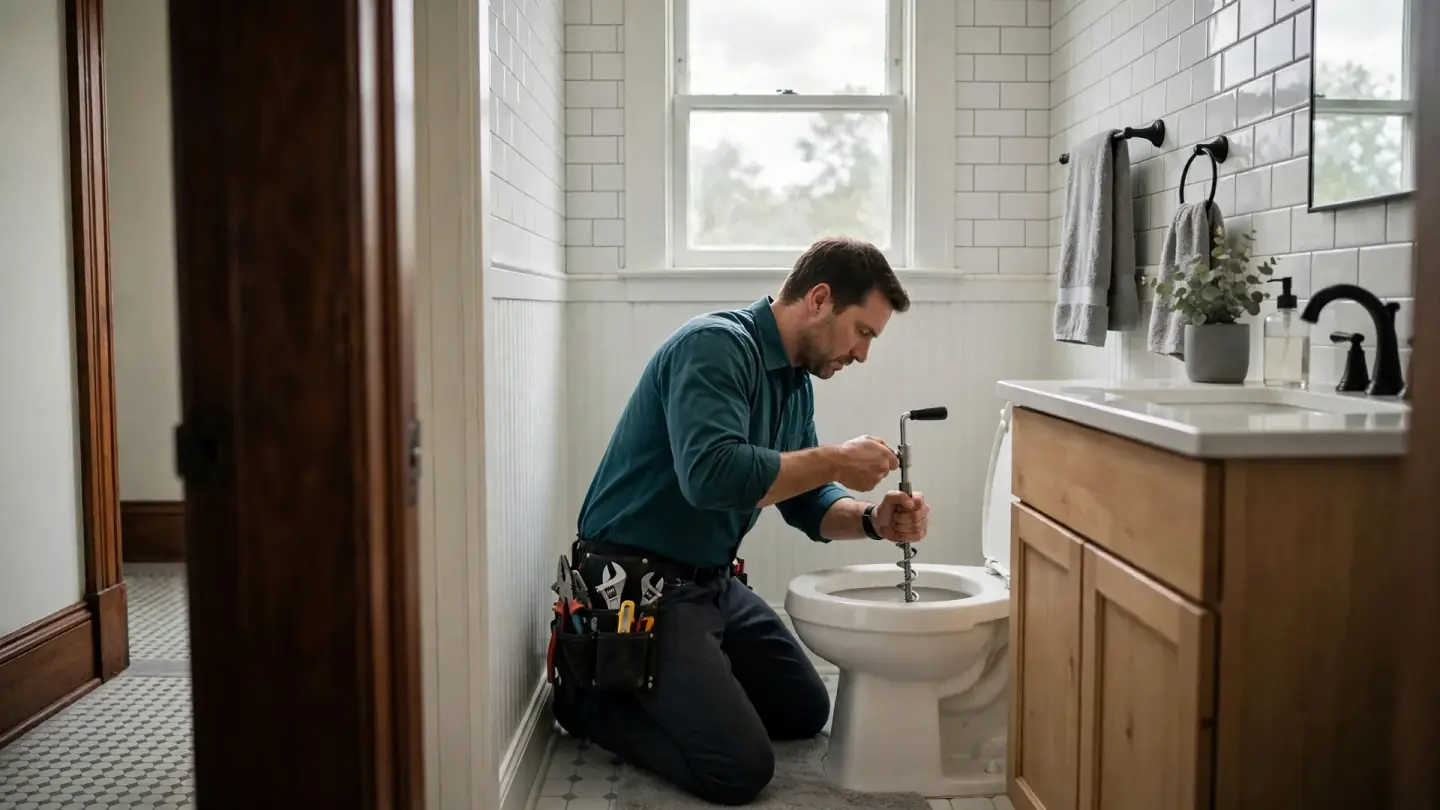
Clearing a toilet therefore follows a clear order. The contractor starts with a flange plunger and a closet auger, which reach the trapway without scratching porcelain. If that fails or the problem is clearly downstream, the toilet may be lifted off its flange so a larger cable can go straight into the closet bend and stack. That route is often cleaner and faster than working from a basement cleanout, especially when the cleanout is buried or seized.
Related: bathroom sink and branch cleaning, main sewer line clearing and the Columbus drain services hub. Toilets are one part of a bigger picture; clogs anywhere in the house follow similar logic.
Signs
What does each toilet symptom mean?
Bowl fills high, then slowly drains
A partial trapway clog. Water gets past it, slowly. A plunger or closet auger usually clears it.
Flush makes the tub gurgle or fill
The blockage is downstream of the toilet, in the shared branch or main line. See our guide to multiple drains backing up.
Weak flush with a low water level in the bowl
Often a partly blocked trapway or a clogged vent rather than a tank problem.
Sewage smell around the base
A failed wax ring or a loose toilet lets sewer gas escape. The sewer smell guide helps narrow it down.
Toilet clogs again every few weeks
Something is lodged in the trapway, or the line beyond is restricted by roots, scale or a sag.
Basement floor drain rises when you flush upstairs
A main-line blockage. Stop flushing and see the basement floor drain guide.
The repair
How a toilet drain is cleared without damage
- 1
Stop the water
The supply valve behind the toilet is closed and the tank flapper checked so no more water enters the bowl.
- 2
Test the other fixtures
Running a nearby sink or tub tells the contractor whether the problem is the toilet alone or the line below it.
- 3
Flange plunger first
A proper flange plunger seals into the outlet and moves the water column without splashing. Many clogs end here.
- 4
Closet auger through the trapway
A short auger with a rubber-sleeved bend follows the trapway curve and either breaks up or hooks the obstruction.
- 5
Pull the toilet if needed
For objects lodged in the porcelain or clogs further down, the toilet is unbolted, lifted and set aside. The object can then be pushed out backward, or a cable run into the closet bend.
- 6
Reset on a new wax ring
The toilet goes back down on a fresh wax ring with the bolts snugged evenly, then is flushed several times to confirm a clean seal and full flow.
What blocks toilets
Common toilet obstructions and how they are cleared
| Obstruction | Where it stops | Usual remedy |
|---|---|---|
| Excess toilet paper | Trapway | Flange plunger |
| Wipes and paper towels | Weir in the trapway or the closet bend | Closet auger to hook and retrieve |
| Small toys or hard objects | Tightest turn of the trapway | Toilet pulled and object removed from the outlet side |
| Feminine products and cotton | Trapway or branch line | Closet auger, then cable if downstream |
| Scale buildup in hard-water areas | Rim jets and trapway | Descaling; does not block fully but weakens flush |
| Main-line roots or grease | Building drain or lateral | Cable from a cleanout or through the pulled toilet |
What you can do yourself
Toilet clog steps that are safe, and when to put the plunger down
- Close the supply valveTurn the oval handle behind the toilet clockwise. If it will not move, lift the tank lid and hold the flapper closed.
- Use a flange plunger, not a cupA flat cup plunger cannot seal into a toilet outlet. Push gently at first to remove air, then work in firm strokes.
- Do not flush again to testA second flush on a blocked toilet is how most bathroom floods start. Wait until the bowl level drops on its own.
- Never pour chemicals into a toiletCaustic products can crack porcelain from heat and splash back on whoever plunges next.
- Do not use a wire hangerBare metal scratches the glaze inside the trapway, and those scratches catch paper from then on.
- Stop if another drain respondsIf the tub, shower or a floor drain changes when you plunge, the problem is further down and plunging will push waste toward it.
Local specifics
Toilet clogs and Columbus sewers
What leaves a Columbus toilet ends up in a lateral, then in the public sewer and eventually at one of the city's treatment plants. Along the way, wipes are a recurring problem. They do not fall apart the way toilet paper does, and combined with grease they form the masses known as fatbergs [1], which block private lines and city mains alike. Keeping wipes, paper towels and hygiene products in the trash is the simplest way to avoid both a toilet clog and a main-line backup.
Homes in older neighborhoods often have a toilet sitting on a cast-iron closet bend and a lead or cast-iron flange. When a toilet is pulled to clear a line in these houses, the flange may turn out to be cracked or corroded. Replacing it is plumbing work, and in Columbus it is permitted through Building and Zoning Services [3] and done to the standards of the Ohio Plumbing Code [2]. That is worth knowing in advance, because a toilet that rocks or leaks after being reset often has a flange problem rather than a wax ring problem.
A basement toilet is the lowest fixture in many Columbus homes, and it can be where sewage appears first when the main line or the public sewer backs up. If that happens during heavy rain, report it to the city's Sewer Maintenance Operations Center at 614-645-7102 and keep the request number, which is required for the Project Dry Basement program [4].
For areas outside the city such as Westerville, the city's own building division handles plumbing permits instead of Columbus.
When it is worth repairing
When a toilet clog is a one-off and when it is a warning
A toilet that clogs after an obvious overload and then flushes normally once cleared is fine. Nothing else needs to happen.
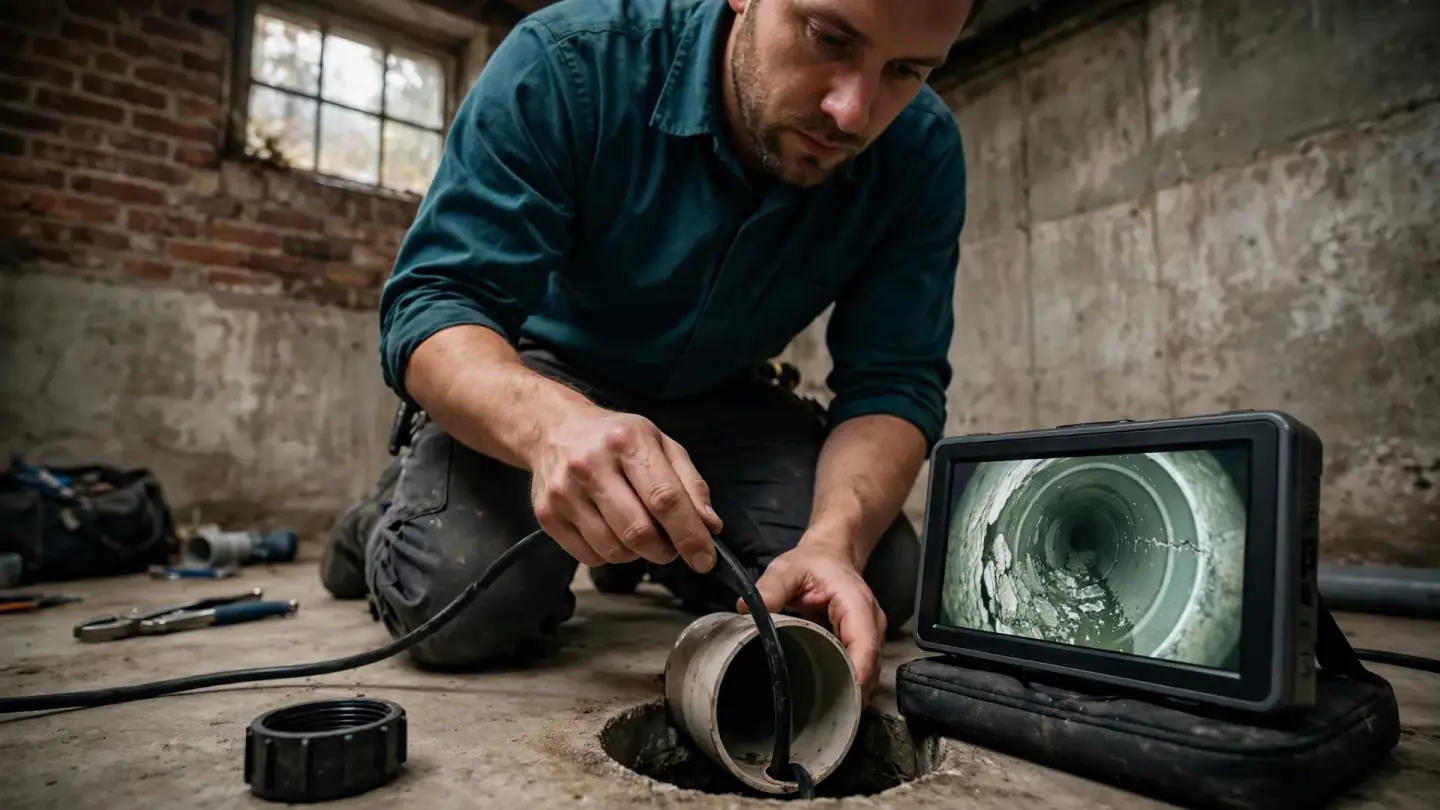
Repeated clogs tell a different story. If the toilet clogs every week or two with normal use, there may be a hard object stuck in the trapway that lets water past but catches paper. Pulling the toilet and checking from the outlet side usually finds it. If the toilet is clear but still slow, the line below is the suspect, and a camera inspection through the closet bend or a cleanout shows whether roots, scale or a broken section is the cause. Our main sewer line cleaning page explains the next step.
Some older low-flow toilets simply move waste poorly because of their trapway design. In that case no amount of clearing changes the result, and replacing the fixture is the lasting answer.
Vent problems are the other quiet cause. Every toilet relies on a vent pipe that lets air into the drain so water can fall freely. If that vent is blocked by leaves, a bird nest or ice at the roof, or was cut off during a remodel, the toilet flushes sluggishly, the bowl level drops between uses and nearby traps gurgle. The bowl may look clogged when the pipe below is actually open. A contractor who finds the trapway and closet bend clear will usually check the vent next before recommending anything bigger.
If the bowl is overflowing right now, close the supply valve and go to emergency toilet drain cleaning.
FAQ
What do people ask about clogged toilets?
Why is my toilet clogged when I only flushed toilet paper?
A toilet can clog on toilet paper alone when a lot is used at once, when the toilet is a low-flow model with a weak flush, or when buildup partly narrows the trapway. Flushing twice with less paper helps. Repeated clogs may mean a partial blockage in the pipe beyond the toilet.
Are flushable wipes really safe to flush down the toilet?
Flushable wipes are generally not safe for toilets and sewers as they stay intact long after toilet paper has dissolved. Wipes snag on roots, rough joints and grease, forming masses that block laterals and public sewers [1]. Put wipes in the trash, even if the package says they can be flushed.
Does the contractor have to remove my toilet to clear the drain?
Most toilet clogs are cleared with a closet auger through the bowl without removing the toilet. Pulling the toilet is needed when an object is stuck in the trapway, when the auger cannot reach the blockage, or when the main line is being cleared through the toilet flange.
What should I do if my toilet is about to overflow?
If a toilet is about to overflow, lift the tank lid and push the flapper down to stop more water, then turn the shutoff valve behind the toilet clockwise. Do not flush again. Wait for the bowl level to drop, then plunge gently or call for help if it stays blocked.
Why does my toilet gurgle when the washing machine drains?
A toilet that gurgles when the washer drains usually signals a partial clog or vent problem on the shared line. Air pulled through the toilet trap makes the bubbling sound. If the floor drain also rises, the main line is likely partly blocked and should be cleared before it backs up.
Can a toy or object stuck in a toilet be removed without breaking it?
An object stuck in a toilet trapway can usually be removed without breaking the toilet, often by pulling the toilet and working from below. Do not plunge hard on a hard object, since that can wedge it farther. Tell the contractor what went down so they bring the right tools.
Why won't my toilet flush all the way even though it is not clogged?
A weak flush without a clog usually comes from the tank side: a low water level, a worn flapper that closes too early, or mineral buildup in the rim holes. A partly blocked drain vent can also weaken the flush. If the bowl drains slowly after flushing, the drain line may be the issue.