

Key facts: Getting drains ready for winter
- Federal preparedness guidance advises learning how to keep pipes from freezing and sealing homes against the cold before winter [1].
- Columbus asks residents to make sure downspouts and foundation drains are not connected to the sanitary sewer, a common arrangement in older homes [2].
- Floor drain traps can lose their water seal to evaporation, which is faster in heated winter air [3].
- Ice dams form when heat escaping a roof melts snow that refreezes at the eaves, and the meltwater can back up into the building [4].
Short answer
What should a Columbus homeowner check on drains before winter?
Work from the roof down. Clear gutters and downspouts and see where they discharge. Check that the outdoor cleanout cap is in place and not cracked. Refill basement floor drain traps and test the backwater valve if you have one. Run every drain in the house and note any that are slow, because a sluggish line in fall is far easier to clear before the ground is frozen and the holidays fill the kitchen sink.
Federal preparedness guidance keeps it general: seal the house against cold and learn how to keep pipes from freezing [1]. For drains specifically, the risks are a little different from water supply lines, and the sections below cover them.
Fall checklist
Fall drain checks and what each one prevents
| What you see | Likely cause | What to do |
|---|---|---|
| Downspout runs into a pipe in the ground | Possible connection to the sanitary sewer | Ask whether it should be disconnected |
| Outdoor cleanout cap cracked or missing | Mower damage or frost heave | Replace the cap before snow hides it |
| Basement smells faintly of sewer gas | Floor drain trap drying in heated air | Refill the trap and keep it topped up |
| One drain slow before the holidays | Partial clog that heavy use will finish | Have it cleared before guests arrive |
| Drain line runs through an unheated crawl space or garage | Exposure to freezing air | Insulate the space or the pipe |
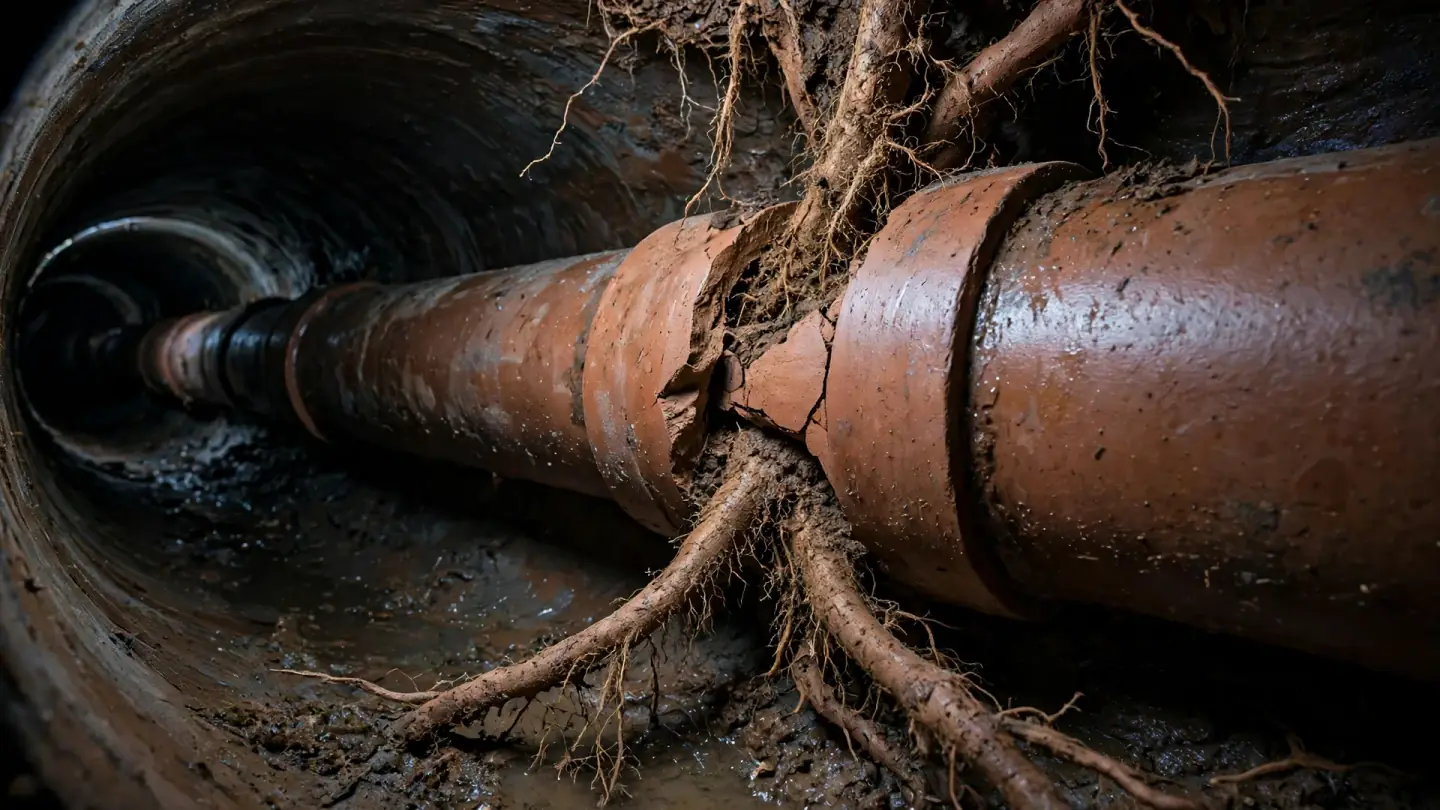
The fall camera check on a slow line
Safe checks
A weekend walk-around before the first hard freeze
- Clear leaves from gutters and look at where each downspout ends.
- Find the outdoor cleanout, usually a capped pipe near the foundation, and mark it with a stake so snow does not hide it.
- Pour water into basement floor drains and any rarely used shower or laundry tub [3].
- Run the washer and a full sink together and watch the basement floor drain for any rise.
- Disconnect garden hoses and check that the area around outdoor drains slopes away from the house.
Roof water
Downspouts, gutters and the sanitary sewer
Columbus asks residents to check that downspouts and foundation drains are not connected to the sanitary sewer, noting that these connections are common in older homes [2]. Every connection adds rain and snowmelt to a pipe meant for household waste. In a wet stretch of late winter, that extra water helps overload the sewer and push backups into basements. Blueprint Columbus includes redirecting roof water as one of its main tools for that reason, and the combined sewers guide explains how this plays out in different parts of the city.
Gutters matter for another reason too. When heat escaping through a roof melts snow that then refreezes at the cold eaves, it can form an ice dam, and meltwater behind it may leak into the house [4]. Clean gutters and downspouts give that meltwater somewhere to go.
Cold pipes
Can drain lines freeze in an Ohio winter?
Drain pipes inside heated space rarely freeze because they hold little standing water. The parts that can are the ones in unheated places: drain lines running through a crawl space, an attached garage, an exterior wall cavity, or a laundry or bathroom added on over a porch. The trap under a sink on an exterior wall is the most likely spot, since it always holds water. Keeping cabinet doors open on very cold nights helps warm air reach it.
Buried sewer laterals are far less exposed than pipes in a crawl space, so a problem there in winter is more often a clog that formed earlier and was finished off by holiday use than frozen water. If you suspect a drain is frozen, avoid open flames and chemical openers; heat guns and torches near old pipe are a fire risk and chemicals can damage pipe that is under strain.
Kitchen season
Holiday cooking and the kitchen line
Late fall and winter bring roasts, frying and large batches of dishes. That is when grease poured away in the kitchen does the most harm. Columbus advises cooling grease, sealing it in a container and putting it in the trash, and wiping pans before washing [5]. If the kitchen sink was already slow in fall, have it cleared before the season rather than during a house full of guests. The fats, oils and grease guide has the full routine.
Pro visit
What a fall drain check by a contractor looks like
- 1
Walk the system
The contractor asks which drains have been slow, where the cleanouts are and how roof water leaves the property.
- 2
Test the main line
Running several fixtures together shows whether the building drain and lateral keep up.
- 3
Clear any slow line
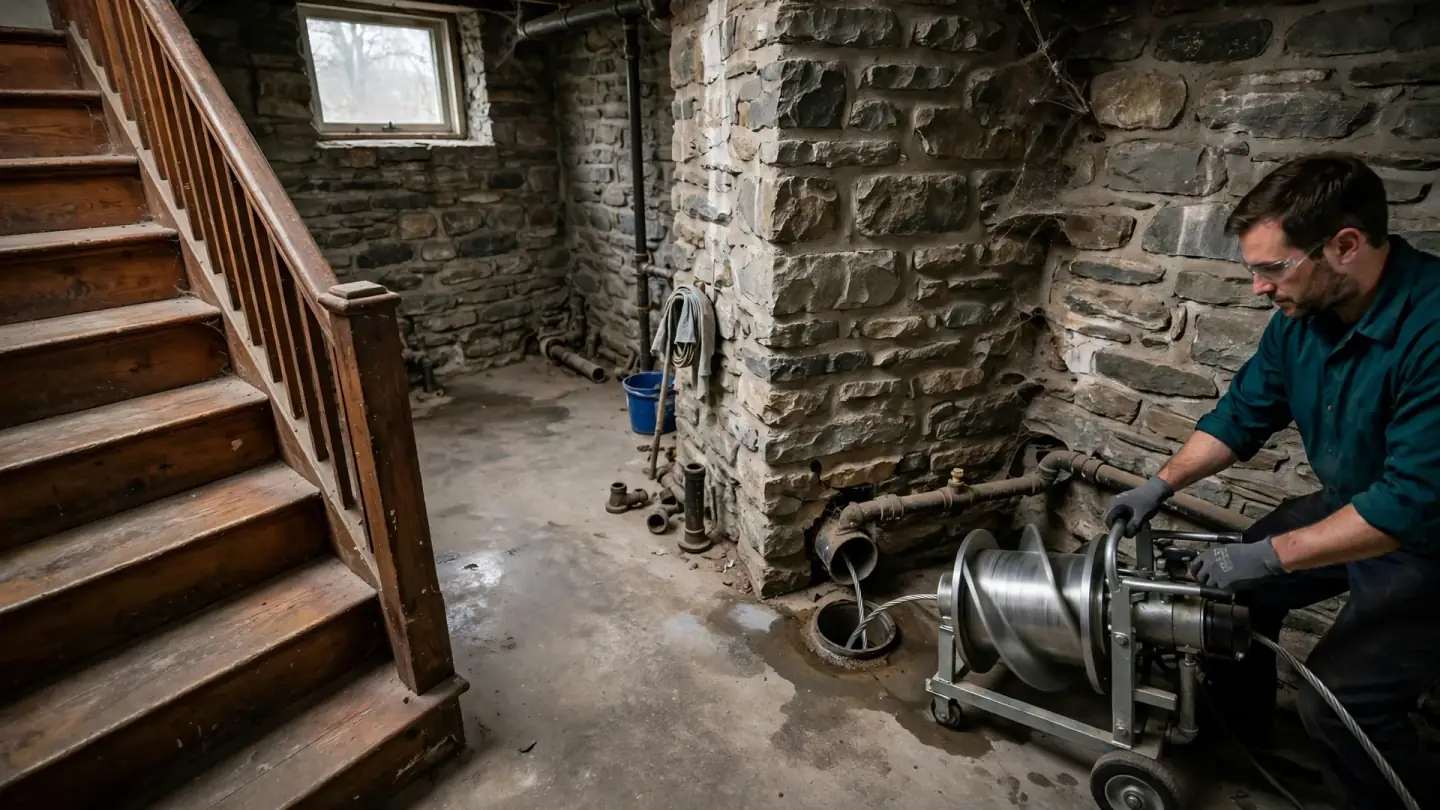
A cable or jetter opens partial clogs before heavy winter use.
- 4
Camera older laterals
In clay or cast iron, a camera pass shows roots or cracks that may need attention.
- 5
Check traps and valves
Floor drain traps, cleanout caps and any backwater valve are checked for a proper seal.
Clearing a lateral before the ground freezes
Prevention
Habits that carry drains through the cold months
- Top up basement floor drain traps every couple of weeks during the heating season [3].
- Keep the outdoor cleanout visible and accessible.
- Leave sink cabinet doors open on exterior walls during deep cold.
- Use the grease container all season [5].
- Book preventative drain maintenance if a line clogs every winter.
On the call
Useful details for a fall drain visit
- Which drains slowed during the past year and when.
- Where downspouts go and whether any disappear into the ground.
- Whether the house has a backwater valve and when it was last cleaned.
- Any drains in a crawl space, garage or addition.
- The rough age of the house and the sewer lateral, if known.
FAQ
Winter drain preparation questions
Is fall a good time to have my sewer line cleaned in Columbus?
Yes, fall works well for older laterals because roots have grown all summer and heavy holiday use is ahead. Clearing a slow line while the ground is still workable is simpler than dealing with a midwinter backup. A main sewer line cleaning visit can include a camera check.
Should I disconnect my downspout from the sewer before winter?
If a downspout runs into a pipe in the ground, ask whether it ties into the sanitary sewer. Columbus says such connections are common in older homes and asks residents to disconnect them [2]. Any change should direct water safely away from the foundation, so get advice before cutting a downspout.
Why does my basement drain smell more once the furnace is on?
Warm, dry air from the furnace evaporates the water in a floor drain trap faster, so the seal that blocks sewer gas disappears sooner [3]. Pour water into the drain regularly through winter. The floor drain smell guide covers plugs and valve lids if refilling does not work.
Can I use a heat gun on a frozen drain pipe under the sink?
It is safer not to. Open flames and heat guns near old pipe, wood framing and insulation are a fire risk, and plastic drain pipe can deform. Open the cabinet, let room heat reach the pipe and call for help if the drain stays stopped.
Where is the outdoor sewer cleanout on most Columbus houses?
It is usually a capped pipe a few inches above the ground near the foundation, on the side where the sewer leaves the house, though many older homes only have a basement cleanout. Mark it with a stake before snow so it can be reached quickly if the main line clogs in winter.
Do drains need any care if I leave the house for the holidays?
Before a trip, run water in every fixture so traps are full, check that the heat stays on, and make sure nothing is left in the washer. On return, run water in each drain again. Dry traps are the usual cause of odors after an empty spell.