Key facts: Emergency Kitchen Drain Cleaning
- Kitchen line blockages are usually congealed fats, oils and grease combined with food solids, the same material that forms fatbergs in public sewers [1].
- A dishwasher normally drains through the sink drain or disposal, so a blocked kitchen line often shows up as dishwasher water in the sink.
- Caustic drain openers in a sink with standing water create a burn hazard for whoever plunges or opens the trap later [3].
- Columbus asks residents not to pour fats, oils and grease down drains because they block both house lines and city sewers [4].
Why kitchens are different
Why is a kitchen drain backup its own kind of urgent?
Kitchen drains block differently from bathroom drains. Instead of hair, the culprit is usually fat. Cooking grease, butter, meat juices and dairy go down the sink warm and liquid, then cool and stick to the pipe wall a few feet along, often where the line runs through a cold outside wall or into the basement. Food scraps and coffee grounds catch on that sticky coating, and over months the opening narrows until one big holiday meal finishes the job [1].
The result is a sink full of cloudy, greasy water that smells sour within hours. If you have a dishwasher, it may add to the problem: the dishwasher pumps its waste into the same drain, so a blocked line can send dirty dishwasher water up into the sink basin. A disposal makes things harder too, because it holds water and food in its chamber and can jam when the line backs up.
What makes this urgent is mainly practical. A kitchen without a working sink is hard to live with, standing food waste smells and attracts pests, and a full basin is one bumped tap away from an overflow onto the floor and the cabinet below.
What you are seeing
Kitchen drain warning signs that cannot wait
Both basins full
If both sides of a double sink hold water, the blockage is past the point where they join, in the trap arm or the line in the wall.
Dishwasher water in the sink
Water rising into the basin during a dishwasher cycle means the kitchen line cannot carry the pump's discharge. Stop the cycle.
Disposal hums but will not spin
A jammed disposal is a separate issue from the drain, but the two often go together. Switch it off at the wall switch before doing anything else.
Water under the sink cabinet
A leak at the trap or the disposal flange under pressure from a backed-up line can soak the cabinet floor quickly. Put a pan down and stop using the sink.
The visit
How an urgent kitchen drain cleaning visit runs
- 1
Clearing the basin
The contractor empties the standing water and checks whether any opener or other chemical is present before removing the trap.
- 2
Checking the disposal and trap
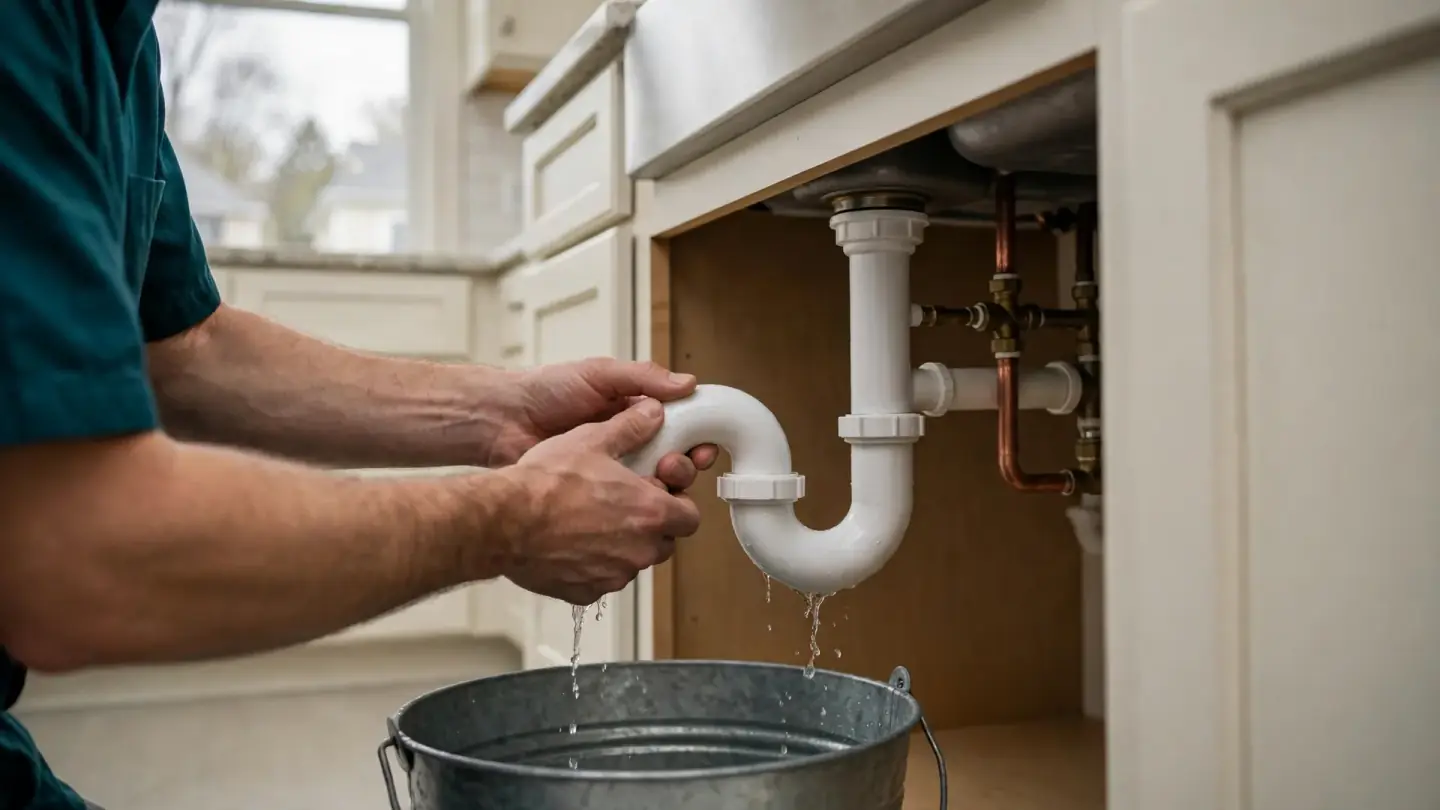
The trap, the water-holding bend that blocks sewer gas, is taken off and cleaned [2]. If the disposal is jammed, it is freed with its hex key; a blockage inside the disposal outlet is cleared at the same time.
- 3
Cabling the kitchen line
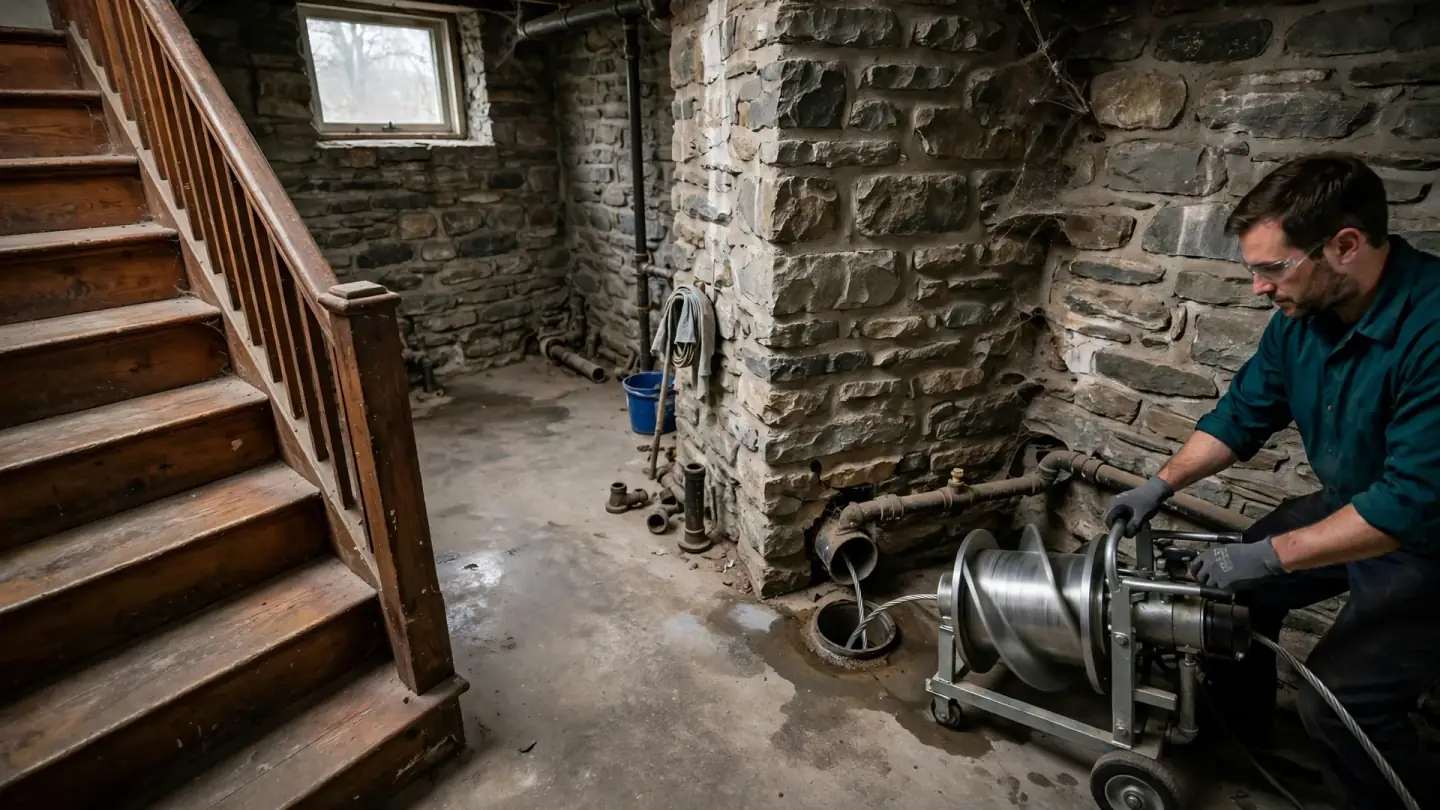
A small cable machine is run from the trap arm through the wall line, often to where it meets the main stack in the basement. Grease usually comes back on the cable head.
- 4
Flushing and testing
Hot water is run at volume, then the dishwasher is run to drain while the contractor watches for leaks and backup.
What it is likely to be
Reading a kitchen drain backup
| Pattern | Likely cause | Next step |
|---|---|---|
| Only the disposal side holds water | Clog in the disposal or its outlet | Free the disposal; clean the trap |
| Both basins hold water | Trap arm or wall line clogged with grease | Cable the kitchen branch |
| Kitchen sink and basement floor drain both back up | Blockage further down, in the building drain | Treat as a main-line problem |
| Clears, then backs up again within weeks | Heavy grease coating along the line | Ask about hydro jetting |
After the emergency
Keeping the kitchen line open once it is cleared
Once the sink drains again, the coating that caused it is usually still on parts of the pipe. Cable machines punch a hole through grease; they do not always scrape the whole wall clean. If your kitchen line has blocked more than once, the standard kitchen drain cleaning page explains how a scheduled cleaning differs from an urgent one and when jetting is worth considering.
The habits that matter most are simple. Wipe greasy pans with a paper towel before washing. Pour cooking fat into a can, let it set, and put it in the trash. Keep coffee grounds and eggshells out of the disposal. Columbus asks residents and businesses alike to keep fats, oils and grease out of drains for the same reason: it is one of the main causes of blockages in the city's sewers as well as in houses [4].
If you see water appear in the basement floor drain while the kitchen sink is running, the issue is no longer just the kitchen. Read the emergency sewer line cleaning page instead.
Holidays
Why kitchen drains back up after big meals
Kitchen backups cluster around holidays and gatherings for a simple reason: more cooking means more fat, starch and food waste in a short time. Potato peels, rice, pasta and turkey drippings all go down the sink or disposal in one evening, into a line that may already be half coated. Running the disposal for longer with more water does not help much once the line itself is narrowed. If you are planning a large meal, scrape plates into the trash and run the dishwasher in smaller loads.
What if more than the kitchen sink is affected?
A kitchen sink that backs up while the basement floor drain also fills is a main-line problem, not a kitchen one. The emergency drain cleaning page explains how to tell the two apart before you call.
FAQ
Urgent kitchen drain questions
Can I run the dishwasher when the kitchen sink is draining slowly but not full?
Hold off on the dishwasher until the kitchen line drains normally. A dishwasher pumps a large volume of water into the sink drain or disposal in a short time, and a partly blocked line will push that water up into the sink. If the sink fills during a cycle, stop the dishwasher and leave the door closed.
Will pouring boiling water down a greasy kitchen sink melt the clog?
Hot water may soften a small grease film, but it rarely clears a real kitchen blockage. Grease moves further down the line and sets again as the water cools. Boiling water can also soften plastic traps and joints. Columbus asks residents to keep fats, oils and grease out of drains entirely [4].
Is a jammed garbage disposal the same problem as a clogged kitchen drain?
A jammed disposal is a motor or blade problem, while a clogged drain is a blockage in the trap or pipe beyond it. The two often appear together, because disposal waste feeds kitchen clogs. Turn the disposal off at the switch and do not put hands inside. Tell the contractor whether the unit hums, is silent or trips the breaker.
Why does my kitchen sink clog more often in the colder months?
Grease cools and hardens faster in winter, and holiday cooking adds more fats and food scraps to the line. Pipes in exterior walls get colder too. The result is often more frequent kitchen blockages in late autumn and winter. Scrape plates into the trash and wipe greasy pans before washing to slow the build-up [1].
Is the standing water in a backed-up kitchen sink safe to scoop out by hand?
Standing kitchen water is safe to bail with gloves if no drain chemicals went in. Use a cup to move it into a bucket and pour it into a toilet that drains properly. If you already used a drain opener, leave the water alone and tell the contractor, because caustic products in the sink can burn skin [3].
What does a contractor usually do on an urgent kitchen drain visit?
Most urgent kitchen calls start at the trap or a cleanout, where the contractor runs a cable through the line to break up grease and food waste. If the line closes again quickly, jetting may be suggested. See the planned kitchen drain cleaning page and the hydro jetting page for both options.
When does a kitchen sink backup mean the main sewer line is blocked?
The main line is likely involved when the kitchen sink backs up along with a basement floor drain, a toilet or a tub. A kitchen problem alone is usually in its own branch. If several fixtures are affected, use the sewer backup page and the slow sink guide. All options are on the drain services hub.