Key facts: Kitchen Drain Cleaning
- Most kitchen clogs are fats, oils and grease that cool and harden on the pipe wall, trapping food solids; a cable opens them, but jetting removes the coating [2].
- A dishwasher usually drains through the sink's disposal or tailpiece, so a blocked sink line often shows up first as water left in the dishwasher.
- Columbus requires food service businesses to keep a fats, oils and grease plan with interceptor cleaning logs; households are asked to keep grease out of drains too [1].
- Hot water and dish soap move grease further down the line rather than dissolving it; it re-sets where the pipe cools.
How it works
Why kitchen lines clog and how they get cleaned
A kitchen sink drain is a short run of pipe that carries some of the hardest material a house produces. Cooking fat, butter, pan drippings and dairy all leave the sink as warm liquid and then cool inside the pipe, sticking to the wall a little at a time. Starches from rice and pasta, eggshell grit and coffee grounds embed in that layer. Over months the usable opening of a two-inch pipe can shrink to a fraction of its size, and one evening it simply stops.
The clog rarely sits right under the sink. The trap and tailpiece stay warm and are flushed often, so grease tends to set further along, where the line runs through a cold exterior wall, drops into a basement, or joins the main stack. That is why plunging a kitchen sink often moves the water for a day and then fails again: the plug of grease is several feet away and only flexes under the pressure.
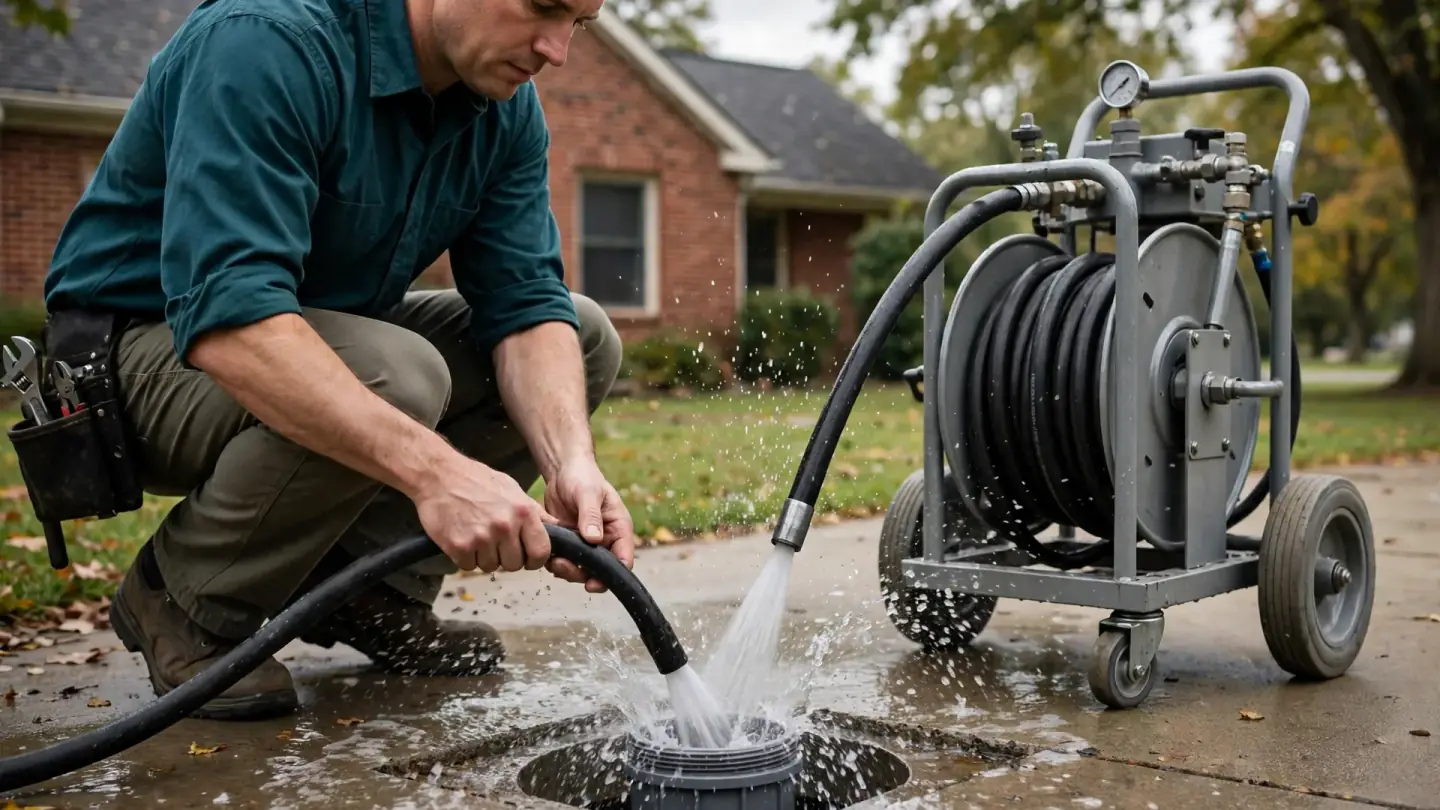
Cleaning a kitchen line properly has two parts. First the contractor opens a path, usually by removing the trap and running a cable with a cutting head through the branch line toward the stack. That restores flow quickly. Second, the remaining coating on the pipe wall has to come off, or the line narrows back down within weeks. A cable leaves much of that coating behind, so for heavy grease the better tool is a water jet, which scours the full circumference of the pipe and flushes the loosened fat downstream. Our hydro jetting page explains how that works.
Kitchens also have equipment attached to the drain. A garbage disposal sits above the trap, a dishwasher usually empties through the disposal or a branch tailpiece, and some homes have a second prep sink or an ice maker drain sharing the same line. Each connection is a place where a blockage can hide, so the contractor checks them in order rather than assuming the main line is at fault.
Browse every drain service we cover, or read about jetting greasy pipes and bathroom sink lines. If you are not sure the sink is the only drain involved, the wider guide to clearing a clogged drain covers branch and main-line clogs too.
Signs
Which kitchen drain warning signs are worth acting on?
Water left in the dishwasher
If the dishwasher finishes a cycle with water standing in the tub, the sink drain it empties into is often the restriction.
One basin fills when the other drains
On a double sink, water rising in the second bowl means the shared line below both baskets is narrowing. Read more in the slow draining sink guide.
A greasy, sour smell from the drain
Rotting food held in grease along the pipe wall gives off a distinct odor that comes back no matter how often the basin is scrubbed.
The disposal hums but water will not leave
A disposal that grinds but leaves water in the sink may be fine itself; the line beyond it is often packed with ground food.
Water appears in a basement drain
If kitchen water shows up in a basement floor drain or laundry tub, the blockage is in the main line, not the sink branch. See multiple drains backing up.
The visit
How a kitchen drain is cleared, in order
- 1
Rule out the disposal and dishwasher
The contractor checks whether the disposal turns freely and whether the dishwasher drain hose or air gap is plugged. These are quick fixes that look exactly like a line clog.
- 2
Open the trap
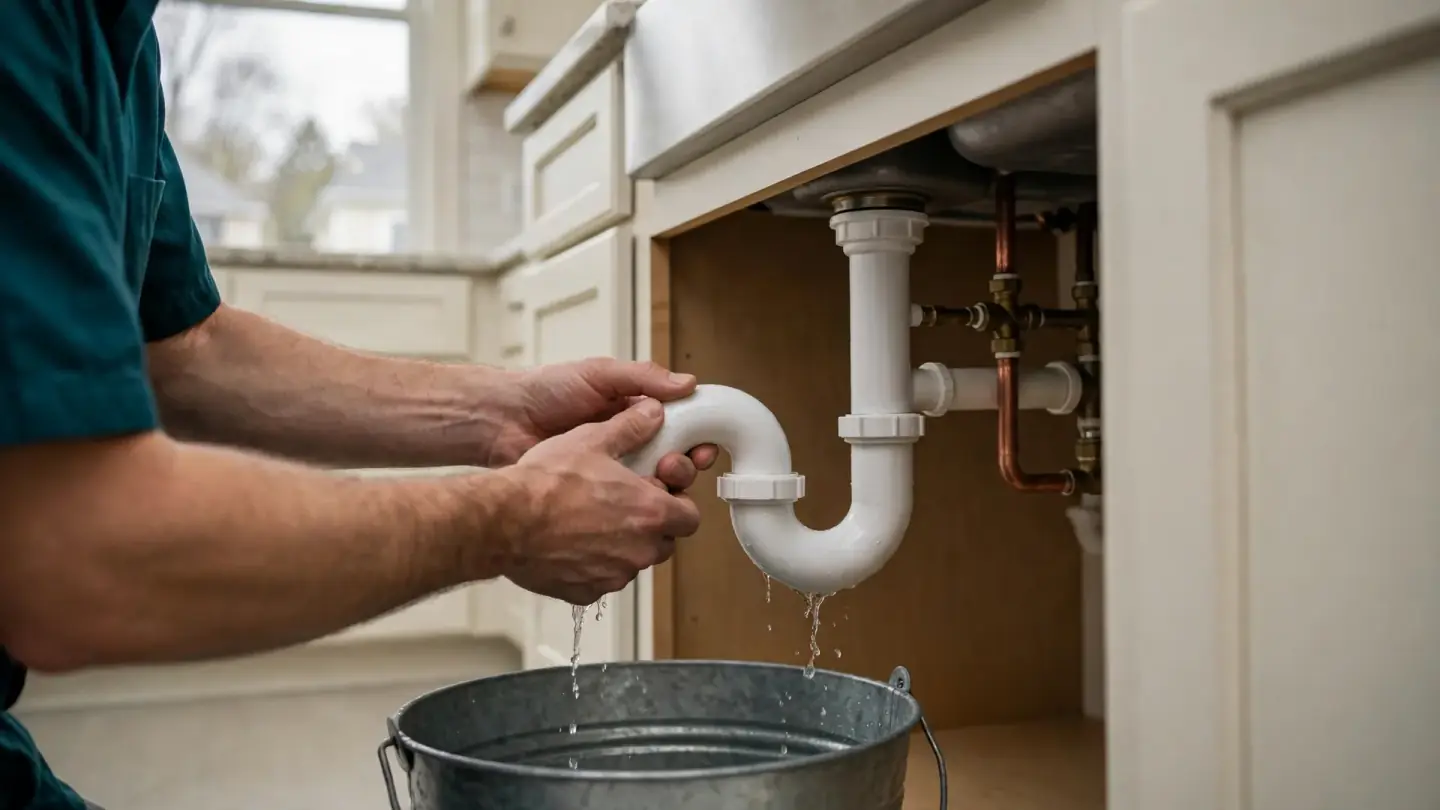
With a bucket under the cabinet, the trap is removed and inspected. Sometimes the plug is right there; more often the trap is clean and the problem lies further in.
- 3
Cable the branch line
A small cable machine goes through the trap arm into the wall, toward the stack. The contractor feels for where the cable meets resistance and notes the distance.
- 4
Decide whether to jet
If the cable comes back coated in grease or the line is long, jetting is usually recommended to clean the pipe wall rather than leave it half-blocked.
- 5
Reassemble and load test
The trap is refitted with fresh washers if needed, both basins are filled and released together, and the dishwasher is run through a drain cycle.
- 6
Talk through habits
You get a plain explanation of what was in the line and which kitchen habits were feeding it, so the next clog is years away rather than weeks.
What goes down the sink
Kitchen waste and what it does to the drain
| Material | What happens in the pipe | Better route |
|---|---|---|
| Cooking fat and pan drippings | Liquid when warm, sets hard on the pipe wall as it cools | Cool in a can or jar and put it in the trash |
| Coffee grounds | Do not dissolve; settle in low spots and bind with grease | Trash or compost |
| Rice, pasta, oats | Swell with water and form a paste | Scrape plates into the trash before rinsing |
| Eggshells | Grind into grit that acts like sand in a grease layer | Trash or compost |
| Fibrous peels and stalks | Wrap around disposal blades and form mats | Trash or compost |
| Dairy and sauces | Carry fat that coats the line the same way oil does | Wipe pans before washing |
What you can do yourself
Kitchen sink fixes you can try, and the line not to cross
- Reset the disposalWith the power off, use the hex key in the bottom of the unit to turn it by hand, then press the red reset button. Never put a hand into the disposal.
- Plunge with the other basin sealedOn a double sink, plug the second drain with a wet cloth or stopper, otherwise the plunger just pushes water across.
- Check the dishwasher air gapThe small cap beside the faucet can clog with food. Lift it off and clean it.
- Do not pour boiling water into PVCVery hot water can soften plastic fittings and only moves grease a little further down, where it sets again.
- Avoid caustic openers in a kitchen lineThey react with grease and can leave a hot, corrosive pool in the sink, which is unsafe for anyone who later removes the trap.
- Stop if basement drains are involvedOnce kitchen water shows up below, it is a main-line problem and plunging will only push more water downstairs.
Local specifics
Kitchen drains and grease in Columbus
The City of Columbus runs a fats, oils and grease program because grease that leaves kitchens collects in public sewers as well as private ones. Restaurants and other food service establishments in the city, and in the communities whose sewage Columbus treats, must keep a written best management plan that includes a log of grease interceptor cleanings [1]. Homes have no interceptor, so the pipe under the sink and the lateral to the street become the place where household grease builds up.
When grease from many homes reaches the public sewer, it can combine with wipes and other solids into the large masses known as fatbergs [3], which block mains and contribute to overflows and backups. Keeping cooking fat in the trash rather than the sink is one of the few things a household can do that protects both its own line and the street sewer.
Older Columbus homes add another factor. Kitchens in streetcar-era houses in neighborhoods like Clintonville were often remodeled more than once, and the drain under the sink may be a mix of newer plastic and older galvanized steel or cast iron inside the wall. Galvanized pipe rusts on the inside, which gives grease a rough surface to grab, so these lines clog more often and respond better to jetting than to repeated cabling.
If a kitchen clog is caused by a corroded section that must be replaced, that is a plumbing alteration, and in Columbus the permit comes from Building and Zoning Services, issued to a registered contractor [4]. Restaurant kitchens are a different service entirely; see commercial drain cleaning.
When it is worth repairing
Is a kitchen line due for cleaning or for replacement?
A kitchen line that clogs once every few years after a big holiday meal is a healthy line with a predictable cause. Clearing it and changing a habit or two is the whole job.
A line that slows down again within a couple of months of being cleared deserves a closer look. Common reasons include old galvanized pipe with heavy internal rust, a horizontal run without enough slope, or a section that sags where the pipe was poorly supported. Jetting followed by a camera inspection shows which one applies. Rust and slope problems usually mean replacing that stretch of pipe; grease alone usually does not.
If the sink is full, the dishwasher is backing up and you have guests arriving, the emergency kitchen drain cleaning page covers how to contain the problem and what to ask when you call.
FAQ
What do Columbus homeowners ask about kitchen drains?
Why does my kitchen sink keep clogging when I am careful with grease?
A kitchen sink can still clog because small amounts of fat from dishes, sauces and dairy add up inside the pipe. Rinsing with hot water only moves grease a little farther before it cools and sticks. Coffee grounds and starchy scraps bind to that layer. Wiping pans before washing helps more than hot water [1].
Can a garbage disposal cause a clogged kitchen drain?
A garbage disposal can contribute to kitchen drain clogs when fibrous, starchy or greasy waste is ground and sent down a line with too little water. Peels, rice and pasta form paste that settles in the trap or branch. Run plenty of cold water during and after grinding, and put scraps in the trash when possible.
Why is there dirty water left in my dishwasher after a cycle?
Dirty water sitting in a dishwasher after a cycle often means the dishwasher drain hose, the disposal inlet or the sink trap is partly blocked. The dishwasher shares the kitchen drain, so a clog there stops it emptying. Check the dishwasher filter first; if that is clean, the kitchen line likely needs clearing.
How often should a home kitchen drain line be cleaned?
Most home kitchen drain lines only need cleaning when they slow down or clog. Kitchens that cook with a lot of fat may see buildup sooner. If the same sink clogs more than a couple of times a year, ask about a camera look or jetting rather than repeated quick fixes.
What should I tell the contractor when I call about a kitchen sink clog?
When calling about a kitchen sink clog, mention whether one or both basins are blocked, whether the dishwasher or disposal is backing up, and whether other drains are slow. Say whether you used a chemical opener. That helps the contractor decide whether the clog is in the trap, the branch or farther down.
Is it safe to pour boiling water down a clogged kitchen sink?
Boiling water is not a reliable fix for a clogged kitchen sink and can soften plastic traps or crack porcelain. It may move a little grease, which then cools and sticks farther down the pipe. Plunging with the dishwasher hose clamped, or calling for cable clearing, is usually safer.