
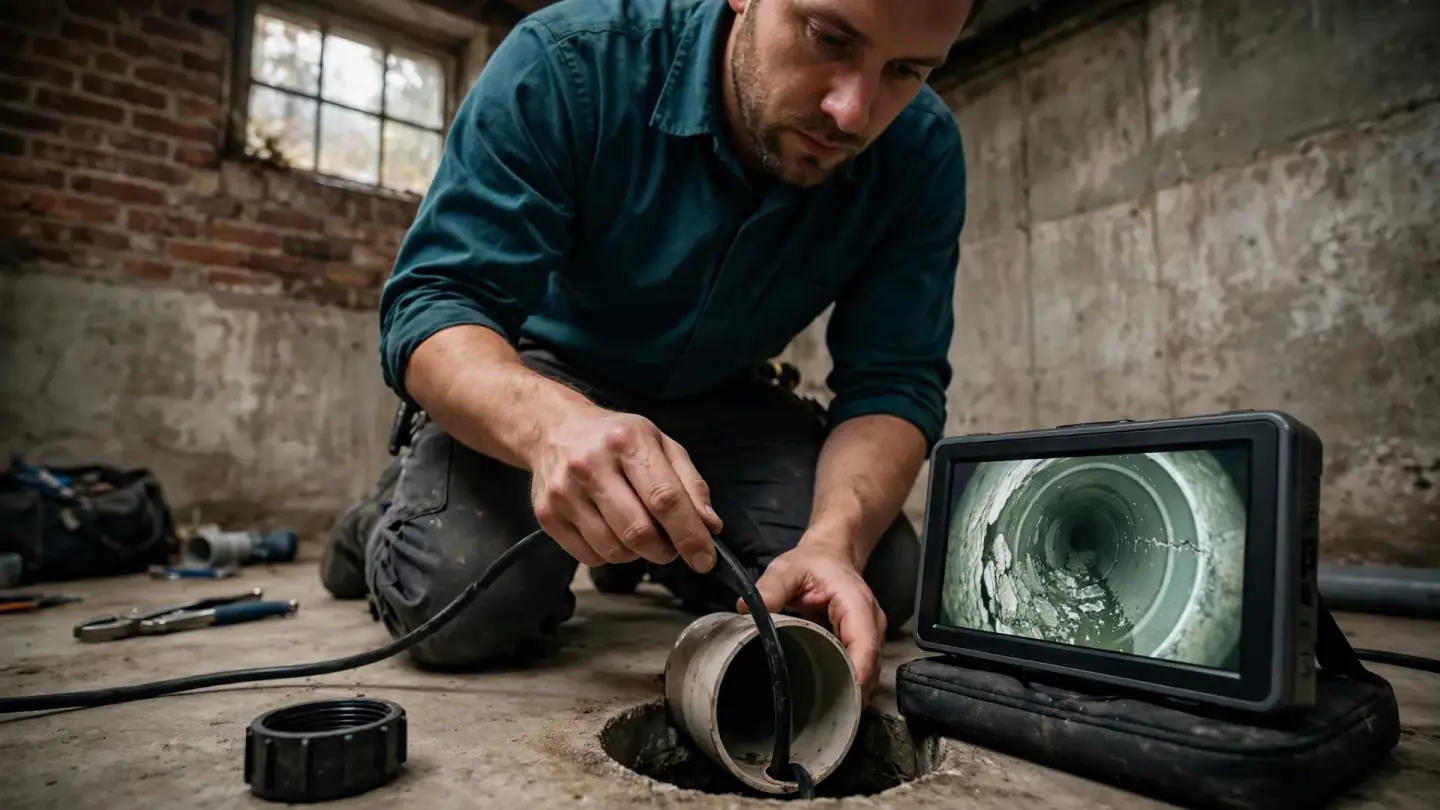
Key facts: Drain Camera Inspection
- A drain camera inspection targets one recurring problem drain inside the building and traces it to a specific cause and location.
- Every fixture drain has a trap that holds water to block sewer gas; a camera often enters past the trap or through a cleanout [1].
- Cast iron drain pipe under older basement floors can rust and scale internally, narrowing the bore over time [2].
- Grease and wipes form hardened masses in drain lines, which show clearly on camera as a coated or ragged pipe wall [3].
How it works
Following one drain from the fixture to the cause
Most clogs are cleared without anyone seeing what caused them. That works once. When a kitchen sink needs clearing for the third time in a year, or a basement shower drain backs up every few weeks, the useful question is no longer how to open it but why it keeps closing.
A drain camera inspection answers that question for a specific drain. The contractor feeds a small, flexible camera head into the line, usually through a cleanout, a removed trap, or the fixture opening itself. Smaller cameras are made for the narrow branch pipes inside a house, which bend through tight fittings that a sewer camera could not get around. As the camera travels, the screen shows the pipe wall, the joints and fittings, and anything stuck inside, with a distance count from the starting point.
This is different from a sewer line inspection, which surveys the main lateral outside under the yard. A drain camera inspection stays with the problem drain inside the building: under the cabinet, in the wall, under the basement floor, and up to where that branch joins the main stack or building drain.
Often the camera is used alongside cleaning. A contractor may open the line first so the camera can see, then look to confirm the cause and that the pipe is clean.
Compare this with a full sewer lateral survey, or return to all drain services in Columbus. If the camera finds buildup, jetting is a common next step.
Signs
When does one drain deserve a camera instead of another clearing?
The same sink slows every few weeks
A slow draining sink that returns soon after clearing often has grease buildup or a fitting that catches debris.
A floor drain that backs up without rain
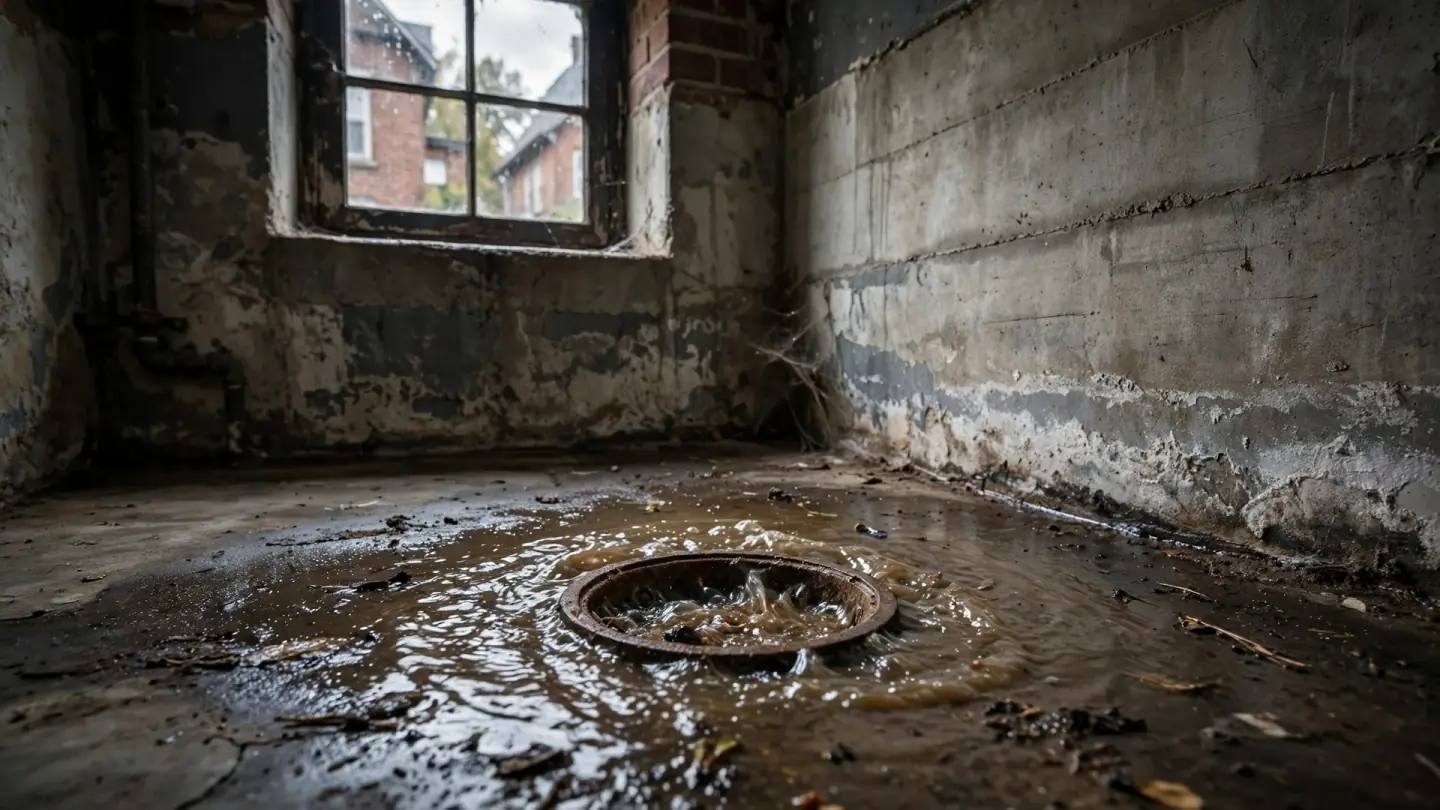
If the basement floor drain backs up in dry weather, a camera can check the drain line under the slab.
A sewer smell from one room
A camera can find a cracked or disconnected drain behind a wall. See sewer smell in the house for other causes.
Clogs after a renovation
New work can leave a poorly sloped section or debris in the line. A camera shows whether the new piping is part of the problem.
The visit
How a drain camera visit is carried out
- 1
Name the problem drain on the call
Say which fixture, how often it fails, what clearing has been tried, and whether anything else in the house is affected.
- 2
Choose an entry point
A cleanout near the fixture, the trap arm under a sink, or the drain opening on a tub or floor drain.
- 3
Clear enough to see
If the drain is full of standing water or debris, a quick clearing usually comes first.
- 4
Run the camera and note distances
Each fitting, sag, crack or buildup is noted with its distance, which tells you roughly where it is in the wall or floor.
- 5
Locate from above if needed
Many camera heads carry a transmitter, so the contractor can find the spot through a floor or wall with a handheld locator.
- 6
Explain what was found
You get a plain description of the cause and what would correct it, and ideally a copy of the video.
Findings
What a branch-drain camera commonly shows, and what it means
| What the camera shows | Likely meaning | Usual next step |
|---|---|---|
| Thick coating on the pipe wall | Grease or soap buildup narrowing the bore | Jetting, then changes in what goes down the drain |
| Rough, flaky interior on metal pipe | Rust and scale in old cast iron or galvanized pipe | Descaling, or replacing the worst section |
| Standing water along a stretch | A sag or belly with too little slope | Regrading or replacing that run |
| Hair mat or object lodged at a fitting | A catch point at a tight bend or joint | Removal; sometimes a fitting change |
| Crack, gap or separated joint | Damaged pipe, possible leak or odor source | Spot repair of that section |
| Clean pipe all the way | The problem is elsewhere, such as venting or the main | Check vents or inspect the main line |
Before the visit
Helping the camera visit go well
- Note when the drain fails: after dishes, after showers, after laundry, or at random. Patterns point to causes.
- Clear the cabinet under a sink or the area around a floor drain so there is room to work.
- Stop using chemical drain openers several days before; caustic residue in the trap is unpleasant and unsafe to work around.
- Do not remove a stuck trap or cleanout plug by force, especially on older metal fittings that can crack.
- If you have had renovation work done, have any drawings or notes ready; they help explain what the camera finds.
- Ask on the call whether the video can be saved for you.
Local specifics
Camera diagnosis in Columbus homes, old and new
Central Columbus has a lot of older housing, and the drains inside those homes have often been changed piece by piece over decades. In brick cottages in German Village or early-twentieth-century homes on the Hilltop, it is common to find cast iron under the basement floor joined to newer plastic above. Cast iron can rust and scale on the inside, narrowing the pipe [2]. A camera shows how much of the original bore is left and where the old and new pipe meet.
In newer suburban homes, like much of the housing in Westerville and Hilliard, the drains are plastic and rarely corroded. The camera findings there tend to be about installation and use: a sag in a long horizontal run, grease in a kitchen line, or wipes caught at a fitting.
Every fixture has a trap, a bend that holds water to stop sewer gas from entering the room [1]. A camera has to get past it, which is why contractors often remove the trap or use a nearby cleanout. A trap that is dry or missing can itself be the cause of an odor complaint.
If the camera shows that a section needs replacing, plumbing work inside Columbus is permitted through Building and Zoning Services, and the application calls for a City of Columbus contractor registration number [4]. Westerville and Hilliard handle permits through their own city building departments.
What comes next
From camera findings to the right fix
Often the answer is simple: a grease coating that jetting removes, or a mat of hair caught on a fitting. In those cases the camera saves you from repeated visits by making it clear that a thorough cleaning, plus a change in habits, is enough. Hydro jetting is the usual tool for coated lines.
Sometimes the camera shows a defect that cleaning will never fix: a sag that holds water, a cracked section under the slab, or a fitting installed backward. Knowing exactly where it is, and how far from the access point, lets the contractor talk with you about repairing just that piece instead of guessing.
And sometimes the branch line is fine. If the camera reaches the main stack without finding anything, the problem may be a blocked vent or a partial blockage in the main sewer line. That result is still useful, because it rules out a whole set of causes.
Room by room
What the camera usually finds in each part of the house
Kitchen lines are the most common camera job. The pipe from the sink runs into the wall and then horizontally toward the stack, and that horizontal run is where grease cools and sticks. On camera it looks like a soft, uneven lining, sometimes with food particles embedded, narrowing the opening a little more each month. The kitchen drain cleaning page covers the cleaning side.
Bathroom lines tell a different story. Hair binds with soap residue into mats that catch at the first tight bend after the trap, and the camera often shows a long, stringy mass rather than a coating. Shower and tub drains in older homes may also show corroded metal fittings where the drain shoe meets the pipe.
Basement floor drains and laundry standpipes are where older Columbus homes show their age. The camera may find scale and rust in cast iron, sand and silt that washed in over years, or a section where the pipe under the slab has cracked. Lint from a washer without a filter can also build up in these lines.
Second-floor additions and remodeled bathrooms deserve a look whenever drains slow soon after the work. A long horizontal run with too little slope, or a fitting with debris left inside from construction, is easy to spot on camera and hard to find any other way.
Knowing which pattern you are dealing with turns a frustrating cycle of clearing into one clear decision. It also gives you something concrete to compare against if the drain starts to slow again a year or two later, because a saved video shows exactly how the pipe looked when it was last cleaned and inspected.
FAQ
What do people ask about drain camera inspections?
Can a drain inspection camera go through a sink trap?
A small drain camera can sometimes pass a sink trap, but contractors usually remove the trap or enter through a cleanout instead. Tight bends in a trap can jam or damage the camera head. Removing the trap gives a straight path into the branch line and lets the camera travel farther.
Will a drain camera show a leak inside my wall?
A drain camera can show cracks, separated joints and gaps inside a drain pipe, which are common leak points. It cannot see water pooling outside the pipe or inside the wall cavity. Stains, odors or damp drywall together with a camera finding at the same spot give a fairly clear picture.
Do I need a camera inspection for a single clog?
A single clog that clears easily and stays clear usually does not need a camera inspection. A camera makes more sense when the same drain clogs again within weeks, when the cable brings back roots or pipe fragments, or when you are deciding whether to repair a line.
Can a camera find the exact spot of a problem under my basement floor?
Many inspection cameras carry a locating transmitter, so a contractor can mark the problem spot on the floor above. That mark guides any later repair to the right place. Ask whether the contractor you are connected with uses a locator, since depth and accuracy vary with equipment.
Is a drain camera inspection messy?
A drain camera inspection is usually a clean job because the camera enters through an existing opening. The contractor may lay down drop cloths and run a little water to help the camera move. If the line is still fully blocked, it usually has to be cleared first, which can involve more cleanup.
Should I get a camera inspection before remodeling a Columbus bathroom or kitchen?
A camera inspection before a bathroom or kitchen remodel is a sensible step in older Columbus homes. It shows whether the drain under the new fixtures is cast iron, galvanized or plastic and whether it has cracks or heavy scale. Finding that before new tile goes down avoids tearing up finished work later [2].