Key facts: Emergency Toilet Drain Cleaning
- A toilet has its own built-in trap, a curved passage that holds water against sewer gas; most toilet clogs sit in that passage [1].
- Closing the small supply valve behind the toilet, turned clockwise, stops the tank from refilling and the bowl from rising further.
- A toilet auger, also called a closet auger, has a protective sleeve to reach the trap without scratching the bowl [2].
- If other drains back up when the toilet is flushed, the blockage is in the line below, not the toilet.
Right now
How do I stop an overflowing toilet in the first thirty seconds?
If the bowl is rising toward the rim, do not flush again. Reach behind the toilet to the small valve on the water line coming out of the wall or floor and turn it clockwise until it stops. If the valve is stuck or there is not one, lift off the tank lid and push the rubber flapper at the bottom of the tank down onto its seat. That stops water flowing from the tank into the bowl. You can also lift the float arm or float cup to stop the tank refilling.
Once the water has stopped rising, the bowl usually drains down slowly over a few minutes as water seeps past the clog. That does not mean it is clear. A toilet that drains slowly after an overflow still has something lodged in its trap or the pipe below.
Now the question is whether it is just this toilet or something bigger. Run a bathroom sink for a few seconds and watch the tub, and check any basement floor drain. If nothing else is affected, the clog is in the toilet or right below it. If other fixtures gurgle or fill, the blockage is in a shared line, and the emergency sewer line cleaning page is more relevant.
What kind of clog
Toilet clog types that need help quickly
Solid object flushed
A toy, phone, toothbrush or cap will lodge in the trap. Plunging pushes it further in. Stop and call; it usually needs to be pulled out, sometimes with the toilet off the floor.
Wipes and paper wad
Wipes do not break down the way toilet paper does. A wad of them can block the trap or the bend below the floor.
Plunges clear, then clogs again
A toilet that clogs every few days likely has something partially caught in its trap, or a problem in the line beyond it.
Only toilet in the house
Even a simple clog is urgent when there is no other toilet. Say so on the call so the contractor can plan around it.

The visit
What the contractor does on an urgent toilet call
- 1
Confirming it is the toilet
A quick test of other fixtures tells the contractor whether the clog is in the toilet or in the line below.
- 2
Augering the trap
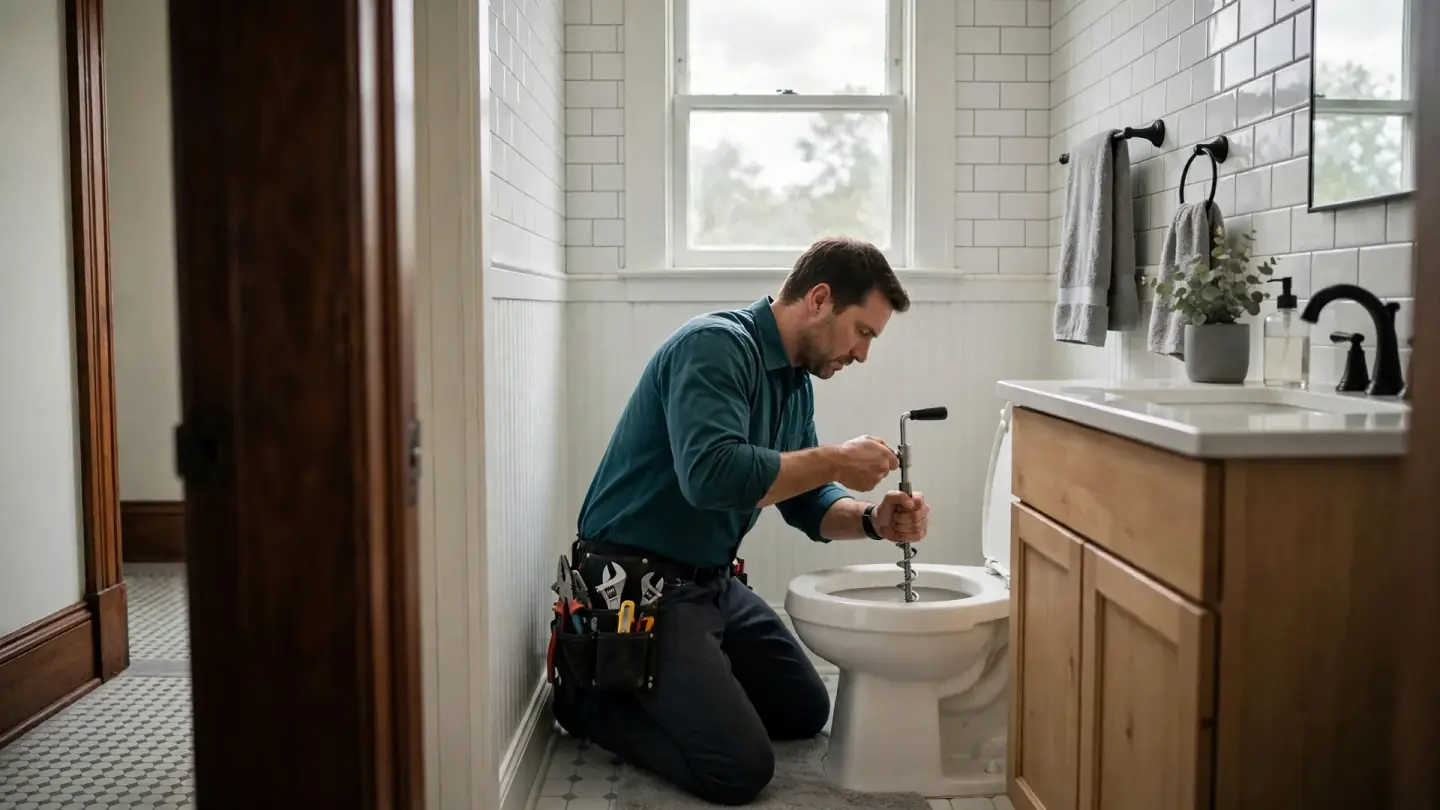
A closet auger is fed through the bowl's trap to break up or hook the blockage [2].
- 3
Pulling the toilet if needed
If an object will not come out through the bowl, the toilet is unbolted, lifted, and the object is removed from below. The toilet goes back on a new wax ring.
- 4
Clearing the closet bend
With the toilet off, the contractor can also cable the bend and branch line under the floor if the clog goes further.
- 5
Test flushes
Several full flushes confirm the toilet and the line are carrying water normally, and the base is checked for leaks.
Clog location
Toilet trap clog or line blockage?
| Check | Toilet trap clog | Line blockage below |
|---|---|---|
| Other fixtures | Drain normally | Gurgle, fill or back up |
| Plunger | May help with soft clogs | Little or no effect |
| Basement floor drain | Dry | May hold water |
| Usual fix | Closet auger or pull the toilet | Cable the branch or main line |
Stop the repeat
Keeping a toilet from clogging again
Most repeat toilet clogs come down to what gets flushed. Toilet paper is designed to break apart in water; wipes, paper towels, cotton swabs and feminine products are not. Low-flow toilets in particular have less water per flush to push solids along, so a line that coped with older toilets may struggle with heavy use.
If a toilet keeps clogging with normal use, the standard toilet drain clearing page explains the longer-term causes, including partial blockages in the closet bend and narrowed old cast-iron lines common in older Columbus houses. A drain camera inspection can show whether something is stuck further down.
Older homes
Toilet clogs in older Columbus houses
Toilets in older houses often drain into a cast-iron closet bend and stack that have been in place for many decades. Over that time, scale and rust build up inside the pipe, reducing the opening. A modern low-flow toilet sending a smaller volume of water into a narrowed bend is more likely to leave waste and paper sitting in the line. The toilet itself may be fine; the pipe below it is the bottleneck.
If a toilet in an older home clogs repeatedly, mention the age of the house and whether the toilet was replaced recently. Those two facts help the contractor decide whether to check the bend and branch line with a cable or camera after the immediate clog is cleared.
In homes where the only toilet is on an upper floor, say so on the call as well. An overflow there threatens the ceiling below, and the contractor may suggest checking the floor around the flange once the clog is gone so a slow leak does not go unnoticed.
Why is the tub filling when the toilet is fine?
Water coming up in a tub or shower when you flush means the blockage is past the toilet. Read the general emergency drain cleaning page for the shut-offs that matter in that case.
FAQ
Overflowing toilet questions
Where is the water shut-off valve for a toilet that is about to overflow?
The supply valve is usually low on the wall or floor behind the toilet, on the pipe feeding the tank. Turn it clockwise until it stops. If it is stuck, lift the tank lid and raise the float to stop the refill, then shut off the main water supply to the house if the bowl keeps rising.
My child flushed a toy down the toilet. Should I plunge it or leave it?
Do not plunge if you know a solid object went down, because plunging can push it deeper into the line where it is harder to reach. Shut the supply valve, stop using that toilet, and tell the contractor what the object was. A toilet auger or pulling the toilet often retrieves it from the built-in trap.
Can we use a second toilet in the house while the first one is clogged?
A second toilet is usually fine if the clog is in the first toilet only. Watch the first one while flushing the other. If water rises in the blocked bowl, the tub or a floor drain, the problem is in the shared line, so stop using all fixtures and call about clearing the main line.
Why is water leaking around the base of the toilet after a clog?
Water at the base after a clog often means the wax ring seal has been pushed or broken by pressure from plunging. It can also be overflow water that ran down the outside. Dry the floor and watch whether new water appears with each flush. A failed wax ring lets waste water reach the subfloor.
How long should I plunge a clogged toilet before calling for help?
Ten to fifteen firm plunges with a flange plunger is a fair try. If the bowl still will not drain, stop, because more force can break the wax seal or crack an old bowl. Never add chemical openers to a toilet you plan to plunge. The planned toilet clog clearing page explains next steps.
Do flushable wipes cause many toilet emergencies in Columbus homes?
Wipes are a frequent cause of toilet and sewer blockages since they hold together where toilet paper falls apart. They catch in the toilet trap, the line and the city sewer. Toys, paper towels and hygiene products also cause many clogs. Flush only toilet paper and human waste, and keep a trash bin beside the toilet.
When does an overflowing toilet point to a bigger drain line problem?
A bigger problem is likely when the tub, shower or basement floor drain backs up as the toilet is flushed. Those signs mean the blockage sits in the line below. The whole-house drain guide explains that pattern, and the services index lists every option including general emergency drain help.