
Key facts: Slow draining sink
- Every sink has a trap, a curved section that holds water to block sewer gas, and it is a common place for debris to collect [1].
- Chemical drain cleaners are corrosive and can injure skin and eyes if water splashes back from a blocked sink [2].
- A plumber's snake, or drain auger, reaches clogs beyond the trap that a plunger cannot move [3].
- Columbus requires food service businesses to follow a fats, oils and grease plan because grease blocks sewers [4].
Short answer
What is a slow sink telling you?
If only one sink is slow, the clog is almost certainly in that sink's own drain: the stopper, the trap under the cabinet, or the short branch pipe in the wall. Bathroom basins collect hair bound with soap and toothpaste. Kitchen sinks collect grease, coffee grounds and starch that cool and stick to the pipe wall further down the line. If two or more fixtures are slow at once, or the sink gurgles when a toilet flushes, the problem is further downstream and needs a different approach.
Most single-sink slowdowns can be cleared without chemicals. When they keep coming back, or the clog is past the trap, a cable machine or, for heavy grease, a jetter is the tool that reaches it.
Diagnosis table
Slow sink signs, causes and next steps
| What you see | Likely cause | What to do |
|---|---|---|
| Bathroom basin slow, stopper slimy | Hair and soap on the pop-up rod | Pull and clean the stopper |
| Kitchen sink slow, worse after cooking | Grease building up in the branch line | Stop pouring grease, have the line cleared |
| Sink gurgles when it drains | Partial clog or blocked vent | Clear the drain; ask about the vent if it persists |
| Kitchen sink backs up into the other basin | Clog below where the two basins join | Plunge with the other side sealed, then call |
| Sink slow and the tub or toilet too | Blockage in a shared or main line | Limit water use and call for a main line check |
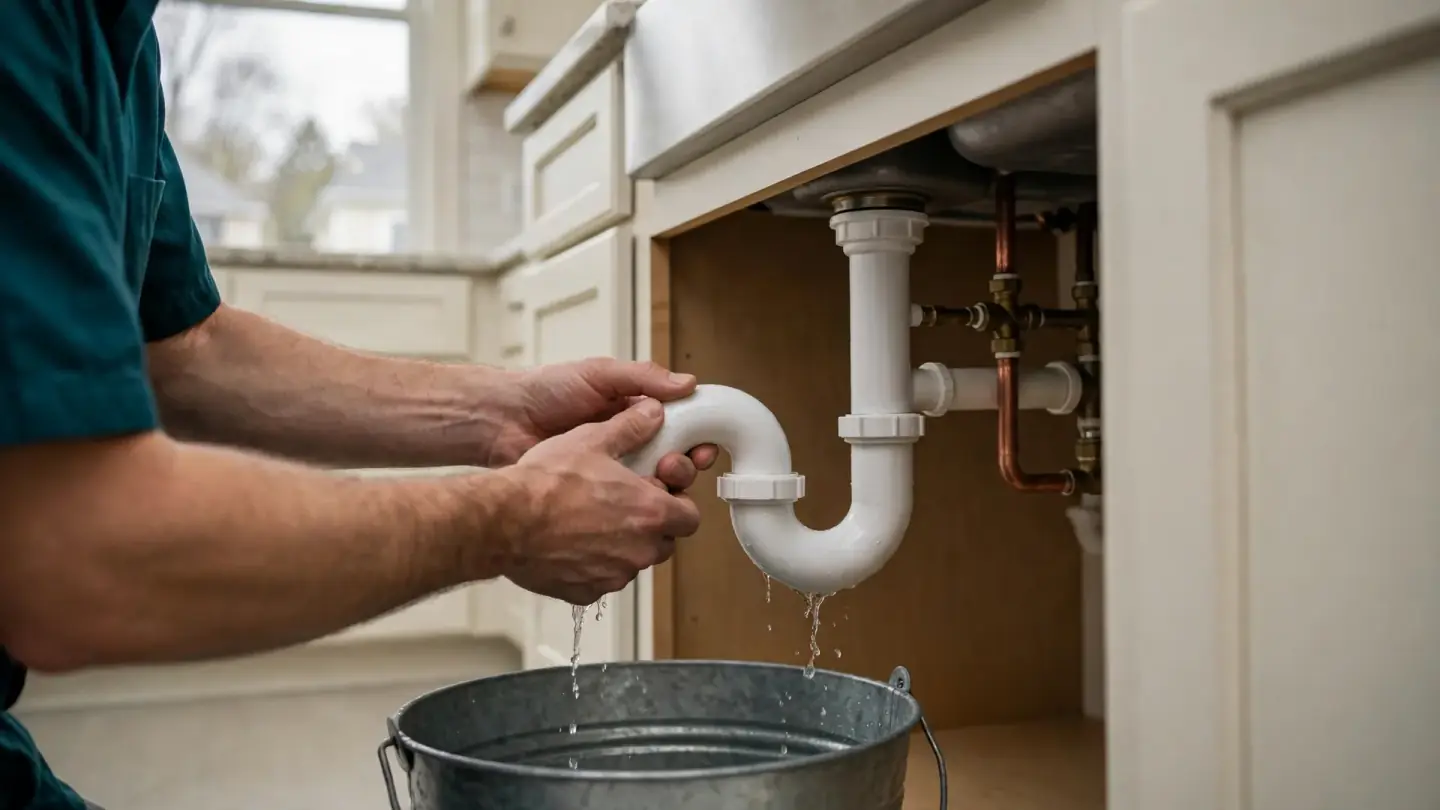
The trap under the cabinet
Safe checks
Things worth trying before you call
- Pull out the bathroom pop-up stopper and clean off the hair and soap. This alone fixes a large share of slow basins.
- Run hot tap water for a minute. If it starts to back up, stop, so you do not flood the cabinet.
- Use a cup plunger with a few inches of water in the sink. On a double kitchen sink, hold a wet cloth over the other drain while you plunge.
- If you are comfortable, put a bucket under the trap and remove it to check for debris. Hand-tighten it back on and check for drips.
- Do not mix drain products, and never plunge after pouring a chemical cleaner; splashback can burn skin and eyes [2].
Bathroom basins
Hair, soap and the overflow channel
Bathroom basins clog in a predictable place. Hair falls into the drain, wraps around the pop-up rod or the stopper, and soap and toothpaste glue it into a mat. Because the pipe is only about an inch and a quarter across, it does not take much. The overflow channel near the rim can also hold buildup that smells even when the drain runs. Cleaning the stopper and the first few inches of pipe usually restores full flow. When it does not, the clog has moved into the trap or the branch in the wall, which is where bathroom drain cleaning with a small hand auger takes over [3].
Kitchen sinks
Grease that hardens where you cannot see it
Kitchen clogs build more slowly and sit further away. Warm grease looks harmless going down the drain but cools on the pipe wall, and every rinse of starch, rice or coffee grounds sticks to that layer. Eventually the bore narrows to a fraction of its original size. Hot water and dish soap move it a little further but rarely remove it. On a larger scale this is the same process that creates fatbergs in city sewers [5], and it is why Columbus requires restaurants to keep a grease management plan [4]. For a home sink, a cable machine opens the line, and a jetter can scour the walls clean when grease keeps returning. Kitchen drain cleaning covers both.
Venting
Why does the sink gurgle when nothing seems stuck?
Drains need air to flow smoothly. Each fixture connects to a vent that lets air in behind the water [1]. If the vent is blocked by a bird's nest, leaves or ice at the roof, the sink drains slowly and gurgles even with a clean pipe. Vent problems usually affect a group of nearby fixtures and do not improve with plunging. A contractor can tell from the pattern whether the vent or the drain is the problem.
Diagnosis
How the contractor works on a slow sink
- 1
Listen to the description
On the call you will be asked which sink, how slow, and whether other fixtures are affected. That narrows the clog's location.
- 2
Check the trap and stopper
The quickest causes are ruled out first, often by removing the trap.
- 3
Run a cable through the branch
A small drain auger goes through the trap arm into the wall to reach and break up the clog.
- 4
Test with volume
Running water at full flow for a few minutes confirms the line is clear, not just open a crack.
- 5
Look further if needed
If the clog is deeper or keeps coming back, a camera shows whether grease buildup or a sagging pipe is to blame.
Fix decision
When a sink clog points to a bigger repair
Most slow sinks need cleaning, not repair. Repeated kitchen clogs at the same spot can mean the branch pipe has too little slope, and very old galvanized or cast iron drains can narrow from the inside with corrosion. In those cases replacing a short section of pipe solves what cleaning cannot. Any change to drain piping must follow the Ohio Plumbing Code [6], and the contractor will mention on the call if a permit is likely. If the slowdown is part of a wider pattern, see clogged drain repair.
Prevention
Habits that keep sinks draining
- Wipe greasy pans with a paper towel before washing and put the fat in the trash.
- Use a mesh strainer in the kitchen sink and a hair catcher in bathroom basins.
- Clean the bathroom stopper every few weeks.
- Run plenty of water after using the garbage disposal, and keep fibrous peels and grounds out of it.
On the call
What to tell the contractor about a slow sink
- Which sink, and whether it is kitchen or bathroom.
- Whether any other drains are slow or gurgling.
- What you have already tried, especially any chemical products, so the contractor can protect themselves.
- Whether the sink has a garbage disposal or dishwasher connected.
- How long it has been getting worse.
FAQ
Slow draining sink questions
Should I pour chemical drain cleaner into a slow bathroom sink?
Chemical drain cleaner is not a good choice for a slow sink. Caustic and acid products can splash back and burn skin and eyes, they often leave hair and grease only partly dissolved, and the treated water stays hazardous for whoever opens the trap next [2]. Cleaning the stopper or using a hand auger is safer and usually works better.
Why is my bathroom sink slow when the tub next to it drains fine?
A slow bathroom sink beside a normal tub means the clog is in the sink's own drain, not the shared line. Hair and soap scum usually collect on the pop-up stopper rod or in the trap below [1]. Pull and clean the stopper first. If water still lingers, the bathroom drain cleaning page explains what the contractor does next.
Why does my kitchen sink clog again every few months?
A kitchen sink that clogs every few months usually has grease coating the inside of the pipe. Each clearing punches a channel through, but the remaining layer catches more food and fat [5]. Jetting can strip the coating back to the pipe wall, and scraping plates into the trash instead of the sink slows the buildup. See kitchen drain cleaning for the method.
Can a slow sink mean the main sewer line is blocked?
A slow sink can point to a blocked main sewer line when other fixtures are sluggish too, especially toilets and lower-floor drains. A single slow sink is nearly always a local clog in its own trap or branch. If two or more drains slow down together, read the multiple drains guide and stop running water.
What does a gurgling sink drain mean?
A gurgling sink drain means air is struggling to move through the pipe, either because of a partial clog downstream or a blocked vent. Clearing the drain usually stops the noise. If the gurgle continues once water flows freely, ask the contractor to check the vent, since a blocked vent can also pull water out of traps and let odors in.
How long should a bathroom sink take to drain?
A full bathroom sink should drain in well under a minute with a steady swirl. Standing water after that, a ring of soap scum or a slow trickle with the stopper open means debris is narrowing the drain. Pull the stopper and clean it, then test again with a full basin to see if the flow has recovered.
How do I unclog a bathroom sink without using chemicals?
Remove the pop-up stopper and pull out the hair and soap wrapped around it, which clears many slow bathroom sinks. If that fails, cup a small plunger over the drain while blocking the overflow hole, or take the trap off over a bucket and clean it. Deeper clogs need a cable.